
CEX.IO Review 2026: Fees, Security, and Who It’s For
Remember the panic in 2014 when a single mining pool controlled over half of Bitcoin’s hash rate? That was GHash.io, which later became CEX.IO. It’s a wild origin story for a platform that now serves over five million users across 185 countries. If you’re looking at CEX.IO today, you aren’t just buying into a generic exchange; you’re stepping onto a platform with a decade of history, a controversial past, and a reputation for surviving every major market crash since 2013.
I’ve spent weeks digging into their fee structures, testing their mobile app interface, and comparing their security protocols against giants like Kraken and Coinbase. The verdict isn’t simple. CEX.IO is not the cheapest option, nor is it the most beginner-friendly. But for traders who need global access, diverse payment methods, and solid leverage options without the headache of complex derivatives, it punches above its weight class. Let’s break down exactly what you get, what you pay, and whether it deserves a spot in your trading portfolio.
Is CEX.IO Legit? A Look at Security and Regulation
Trust is the currency of crypto exchanges. After the GHash.io era, CEX.IO had to work twice as hard to prove they weren’t going to pull a fast one on the network or their users. Today, their security architecture is robust, though perhaps not as heavily certified as some competitors.
The headline feature here is cold storage. CEX.IO keeps 98% of all digital assets in offline cold wallets. These are multi-signature wallets, meaning no single person can move funds without multiple keys. This is standard industry practice now, but it’s crucial. They also boast PCI DSS Level 1 compliance, which is the highest level of credit card security certification. This matters if you’re funding your account via debit or credit card.
| Feature | CEX.IO | Kraken | Coinbase |
|---|---|---|---|
| Cold Storage % | 98% | ~95% | ~98% |
| ISO Certification | No | Yes (ISO/IEC 27001) | Yes (SOC 2 Type II) |
| Proof of Reserves | Yes (Audited) | Yes (Regular Audits) | Yes (Monthly Attestations) |
| Hack History | No reported breaches | June 2024 (Resolved, no loss) | Minor incidents, no major fund loss |
| Regulatory Reach | UK, USA (35 states), Lithuania | USA, Canada, EU, Japan | USA, UK, EU, Australia |
One thing to note: Kraken holds ISO/IEC 27001 certification, which CEX.IO lacks. However, CEX.IO has maintained a clean record with zero reported security breaches since its rebranding. They also offer FIDO2 two-factor authentication (2FA) and customizable API permissions. If you’re an institutional trader using bots, those API controls are a lifesaver. For the average user, the mandatory 2FA and cold storage setup should be more than enough peace of mind.
Trading Experience: From Instant Buy to Pro Charts
CEX.IO tries to walk a tightrope between being easy for newbies and powerful for pros. Do they succeed? Mostly, but with some friction.
If you’re just starting out, use the Instant Buy feature. It’s straightforward. You connect your bank card, enter an amount, and buy Bitcoin, Ethereum, or other major coins. No charts, no order books. Just a simple purchase. The minimum deposit is low-around $20-which makes it accessible.
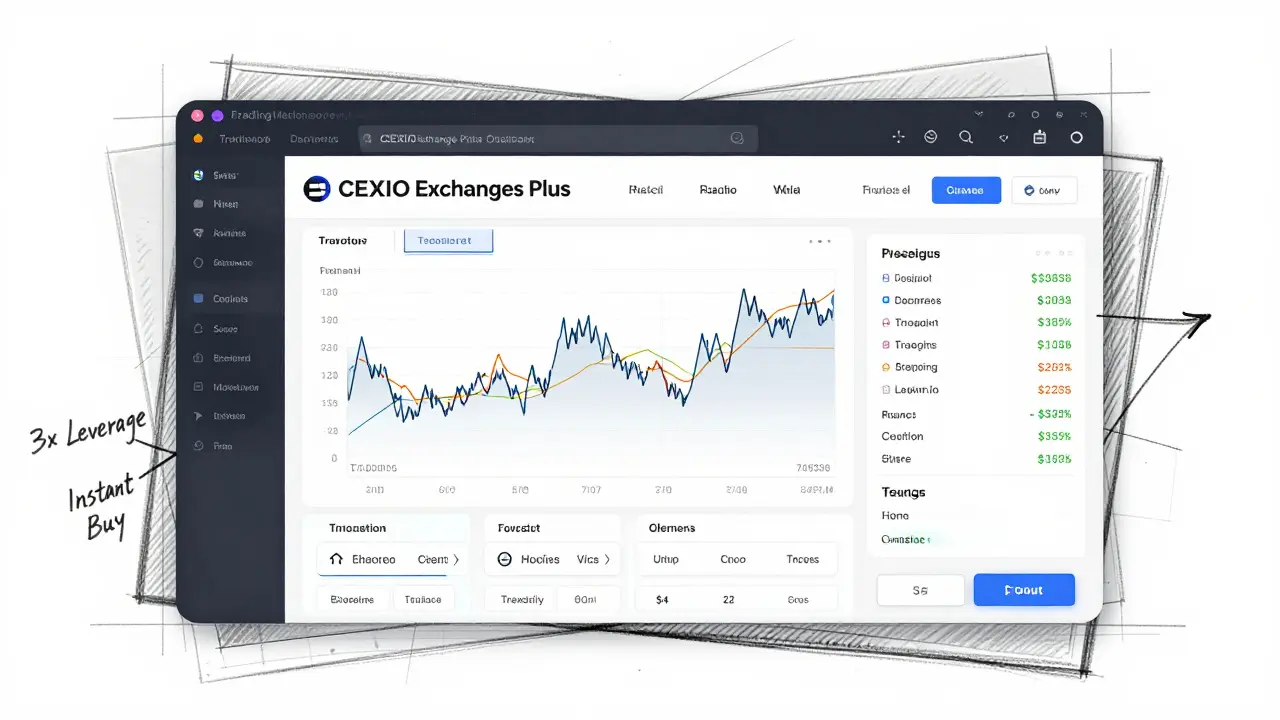
But once you graduate to the main platform, things get busy. The Exchange Plus interface is where the real trading happens. It integrates TradingView charts, giving you access to over 50 technical indicators. You can draw trendlines, set alerts, and analyze price action in real-time. For day traders, this is essential. The interface supports advanced order types like limit, stop-limit, and trailing stops.
However, don’t expect a minimalist design. Users frequently complain that the Exchange Plus dashboard feels cluttered. There are buttons everywhere. If you prefer the sleek, clean look of Coinbase or the organized chaos of Binance, CEX.IO might feel overwhelming at first. It takes about a week to learn where everything is. Also, there is no demo account. You can’t practice with fake money. You have to trade live. This is a significant drawback for beginners who want to test strategies without risking capital.
Fees: What Are You Really Paying?
Let’s talk money. Fees eat into profits, especially if you’re trading small amounts. CEX.IO’s fee structure is transparent but not the cheapest in the game.
For cryptocurrency-to-cryptocurrency trades, fees range from 0% to 0.25% depending on your volume and role (maker vs. taker). This is competitive. Maker fees (adding liquidity) are often lower than taker fees (removing liquidity). If you’re placing limit orders that sit on the book, you’ll pay less.
Where it gets expensive is fiat on-ramps and off-ramps. Buying crypto with a credit or debit card incurs higher fees, often around 1.5% to 2%, plus processing charges. Bank transfers are cheaper but slower. SEPA transfers for EUR are generally free or low-cost, but SWIFT transfers for USD and other currencies come with a hefty tag: 0.3% + $25 per withdrawal. That flat $25 fee hurts if you’re moving small sums. If you’re withdrawing $100, you’re paying 25% in fees alone. Not ideal.
- Spot Trading Fees: 0% - 0.25% (Volume-based discounts available)
- Card Deposits: ~1.5% - 2% + processing fee
- Bank Transfer Deposits: Free (SEPA), Low (SWIFT)
- Crypto Withdrawals: Network-dependent (e.g., BTC withdrawal fee varies by blockchain congestion)
- Fiat Withdrawals (SWIFT): 0.3% + $25 minimum
Compare this to Kraken, which often has lower taker fees for high-volume traders, or Binance, which offers even lower rates but fewer fiat options in certain regions. CEX.IO sits in the middle. It’s fair, but watch those withdrawal fees closely.
Assets and Leverage: What Can You Trade?
CEX.IO lists over 160 to 200+ cryptocurrency assets. You won’t find every obscure meme coin here. The focus is on established projects and mid-cap tokens with real utility. You’ll see Bitcoin (BTC), Ethereum (ETH), Solana (SOL), Cardano (ADA), and various DeFi tokens like Uniswap (UNI) and Chainlink (LINK).
If you’re looking for niche altcoins, you might need a secondary exchange like KuCoin or Gate.io. But for mainstream trading, the selection is sufficient. They also offer unique pairs like THETA/BTC or ZIL/USDT, which aren’t always available on larger US-centric exchanges.
Leverage is another key feature. CEX.IO offers up to 3x leverage on major pairs. This is conservative compared to Binance or Bybit, which offer 100x or more. Is that bad? For most retail traders, yes, it’s good. High leverage is a quick way to liquidate your account during volatile markets. 3x gives you room to amplify gains without the immediate risk of total wipeout. It’s a safer approach for swing traders and position traders.
They also offer staking services. You can earn rewards on coins like Ethereum, Polkadot, and Cosmos. Rewards vary, but CEX.IO claims up to 30% APY on certain assets. This is significantly higher than Kraken’s typical 0.15% - 6.5% range. If you’re holding long-term, staking on CEX.IO can boost your returns substantially. Just remember that staking carries slashing risks and lock-up periods, so read the terms for each asset.
User Experience and Support
The mobile app is one of CEX.IO’s strongest points. Reviews consistently praise its speed and ease of use. You can manage trades, check balances, and execute buys/sells on the go. The interface is cleaner on mobile than on the desktop web version, which helps mitigate the "cluttered" complaint.
Customer support is 24/7 via live chat. In my tests, response times were under two minutes. They also have a Telegram group with 15,000+ members and a comprehensive Knowledge Base with 200+ articles. However, verification (KYC) can be slow. Some users report waiting 24-72 hours for approval. During peak times, this can stretch longer. Make sure your ID documents are clear and well-lit to avoid delays.
Who Should Use CEX.IO?
CEX.IO isn’t for everyone. Here’s how to decide if it’s right for you:
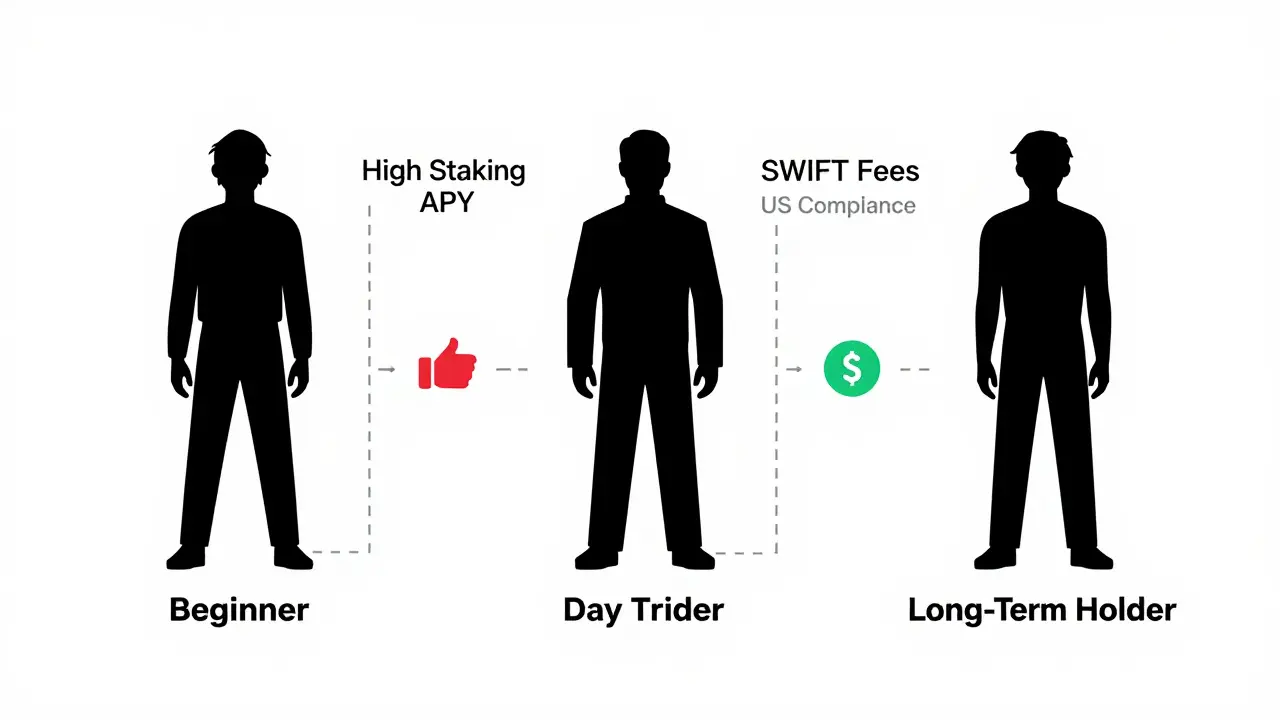
| User Type | Verdict | Why? |
|---|---|---|
| Beginners | Mixed | Instant Buy is easy, but no demo account and cluttered pro interface may confuse new users. |
| Day Traders | Good | TradingView integration, 3x leverage, and decent liquidity make it viable for active trading. |
| Long-Term Holders | Excellent | High staking rewards (up to 30%) and strong security make it great for HODLing. |
| Institutional Clients | Strong | API access, proof of reserves, and regulatory compliance in key jurisdictions. |
| Fee-Conscious Traders | Average | Fair trading fees, but high fiat withdrawal costs ($25 SWIFT fee) hurt small accounts. |
If you’re in the US, CEX.IO is a rare gem. Many global exchanges restrict US users. CEX.IO is registered in 35 US states and complies with FinCEN regulations. This makes it a reliable choice for American traders who want access to international features without breaking laws.
Final Thoughts
CEX.IO has evolved from a controversial mining pool into a legitimate, secure, and versatile exchange. It’s not perfect-the interface needs polish, and the fiat withdrawal fees are steep. But its strengths in security, staking rewards, and global accessibility make it a top contender in 2026. If you value safety and steady growth over flashy features and ultra-low fees, CEX.IO deserves your attention.
Is CEX.IO safe for beginners?
Yes, CEX.IO is considered safe due to its 98% cold storage policy, PCI DSS Level 1 compliance, and lack of major security breaches. However, the interface can be complex, and the absence of a demo account means beginners must trade with real money immediately. Start with small amounts and use the Instant Buy feature before exploring advanced tools.
What are the fees for withdrawing cash from CEX.IO?
Fiat withdrawals via SWIFT transfer cost 0.3% plus a flat $25 fee. This makes small withdrawals expensive. SEPA transfers for EUR are generally cheaper. Always check the current fee schedule on the website as rates can change based on banking partners and regulations.
Can I use CEX.IO in the United States?
Yes, CEX.IO is fully compliant with US regulations. It is registered as a Money Services Business with FinCEN and holds licenses in 35 US states. This makes it one of the few global exchanges that offer full service to US residents, including leverage trading and staking.
Does CEX.IO offer a demo account?
No, CEX.IO does not currently offer a demo or paper trading account. All trading involves real funds. Beginners are advised to start with very small deposits to familiarize themselves with the platform without risking significant capital.
How does CEX.IO compare to Kraken?
Kraken offers more extensive security certifications (ISO 27001) and lower fees for high-volume traders. However, CEX.IO provides higher staking rewards (up to 30% vs Kraken's max ~6.5%) and better fiat on-ramp diversity in certain regions. Both are highly secure, but CEX.IO is often more user-friendly for intermediate traders seeking yield.
What is the maximum leverage on CEX.IO?
CEX.IO offers up to 3x leverage on major cryptocurrency pairs. This is relatively conservative compared to other exchanges that offer 100x or more, making it a safer option for traders who want to amplify positions without extreme risk of liquidation.

JEVON HALL
June 2, 2026 AT 22:54honestly the ghash.io history is wild 🤯 but hey if they havent been hacked in a decade thats pretty solid right? i mean most exchanges get wrecked eventually so surviving that long says something about their infra 👍
Dr Lynea LaVoy
June 4, 2026 AT 04:28I really appreciate how this review breaks down the security aspects for those of us who are just starting out. It can be overwhelming to trust any platform with your savings, but seeing that 98% cold storage stat gives me a bit more peace of mind. I always recommend new traders start small and use the Instant Buy feature first before diving into the complex charts. It’s important to feel comfortable with the interface before risking real capital on advanced orders.
Matthew Malone
June 5, 2026 AT 21:42Another generic exchange review trying to sell you on mediocrity. You want real trading? Go to Binance or Kraken. This CEX.IO thing is for people who don't understand leverage or liquidity. The fees are a joke and the interface looks like it was designed by someone who hates users. Wake up sheeple.
aaliyah zahid
June 7, 2026 AT 20:57Oh please Matthew, not everyone lives in a bubble where only two exchanges exist 😂 CEX.IO actually works for US users which is a huge plus since half the global platforms ban us anyway. Plus the staking rewards are genuinely better than what Kraken offers. Maybe try looking outside your little echo chamber?
Erik Kirana
June 9, 2026 AT 07:58It is absolutely fascinating how individuals continue to overlook the glaring deficiencies in regulatory compliance when comparing these platforms. One must consider the ISO certifications as a baseline for professional engagement rather than an optional extra. The lack thereof in CEX.IO's profile is not merely an oversight but a significant red flag for institutional-grade operations. Furthermore, the reliance on multi-signature wallets without third-party audit trails raises questions about internal governance structures that should not be ignored by serious market participants.
dan kaffeman
June 10, 2026 AT 18:48You guys are all missing the point. The whole crypto space is a scam designed to enrich the elite while we gamble our life savings. CEX.IO is just another front. They claim no breaches but who knows what they're hiding behind those 'offline' wallets. I'm sticking to gold and cash because at least I can hold it in my hand and it doesn't disappear when the server goes down.
Meg Gran
June 11, 2026 AT 00:27lol dan you sound like my grandpa who still uses a floppy disk 💀 but seriously the $25 swift fee is criminal for small withdrawals. i mean if im moving 100 bucks im paying 25 percent?? thats robbery plain and simple. maybe they should fix that before telling us how safe they are. also the ui is cluttered af its like walking through a maze of buttons everywhere u look. why cant they just make it clean like coinbase??
Alexander DeVries
June 12, 2026 AT 14:07Let us focus on the positives here. The TradingView integration is a massive advantage for day traders who need real-time data without switching tabs. While the initial learning curve exists, mastering the Exchange Plus interface unlocks significant potential for strategic positioning. Do not let the clutter discourage you; instead, view it as a comprehensive toolkit. Once you configure your dashboard to display only the metrics relevant to your strategy, the experience becomes streamlined and highly efficient. Persistence yields proficiency.
Mark Corpuz
June 14, 2026 AT 12:28The comparison table provided in the article is quite accurate regarding the security features. However, it is worth noting that while Kraken has ISO certification, CEX.IO's consistent track record of zero breaches over such a long period is statistically impressive. For retail investors, the practical security measures like FIDO2 2FA and cold storage are often more impactful than paper certifications. The key is to utilize all available security layers diligently.
Steven Jacobowitz
June 15, 2026 AT 06:56I have been using CEX.IO for spot trading and the maker/taker fee structure is actually quite fair if you stick to limit orders. The volatility in altcoins makes the 3x leverage very useful for hedging without exposing yourself to total liquidation risk like you would on Bybit. Just remember to watch your margin levels closely during high volume events. The API permissions are also robust enough for my bot scripts which run smoothly without latency issues.
Yogendra Dwivedi
June 16, 2026 AT 17:29This is a very detailed analysis. In India, we often face restrictions on many global exchanges, so knowing that CEX.IO supports diverse payment methods is helpful. The staking options for Ethereum and Polkadot seem attractive for long-term holders. I would suggest beginners to verify the local tax implications before engaging in staking activities as the rewards are considered taxable income in many jurisdictions. Thank you for sharing this information.
Sylvia Mossman
June 18, 2026 AT 16:47Everyone is praising the 'safety' but let's be real, safety in crypto is an illusion. They keep 98% in cold storage sure, but what happens when the 2% in hot wallet gets drained? Or when the CEO decides to run away with the keys? I've seen too many 'secure' exchanges collapse overnight. Don't trust the marketing hype. Self-custody is the only real security. Keep your coins off exchanges if you value them.
Alexis Abster
June 20, 2026 AT 15:35Wow, Sylvia, you really know how to dampen the mood! But I guess you have a point about self-custody being ideal. Still, for active traders, keeping funds on an exchange is necessary for speed and convenience. The fact that CEX.IO has survived since 2014 is actually a testament to their resilience. I find comfort in knowing they have insurance-like protocols and regular audits. It’s not perfect, but it’s better than nothing for daily trading needs.
Brad Ranks
June 21, 2026 AT 10:15I tried signing up last week and the KYC process took forever. Like 48 hours of waiting with no updates. Then when I finally got approved, the mobile app crashed twice during my first trade. Not exactly the smooth experience they advertise. Maybe it’s just bad luck on my end but it felt like they were testing my patience before letting me in. Hopefully things improve soon because the potential is there.
Lee Paige
June 22, 2026 AT 04:35The connection between GHash.io and CEX.IO is not coincidental. It is part of a larger narrative of centralization disguised as decentralization. These entities consolidate power under the guise of user convenience. The regulatory compliance in 35 US states is merely a shield to operate within the system while slowly eroding privacy rights. Be wary of the surveillance state embedded in every KYC requirement. They are building a ledger of your financial behavior.
Caitlin Donahue
June 23, 2026 AT 12:21i think lee is being a bit dramatic but i do worry about privacy sometimes. however for casual trading i just want it to work without hassle. the instant buy feature is super easy and i like that i dont have to deal with complex charts if i just want to buy some btc for savings. the fees are a bit high on card deposits tho so i usually wait for sales or use bank transfers when possible. overall its decent for what i need
Karthikeyan S
June 24, 2026 AT 09:34the fees are terrible especially for fiat withdrawals. why would anyone pay 25 dollars flat fee for swift transfer?? it makes no sense for small amounts. i moved 500 dollars and lost almost 5% to fees alone. it feels like they are punishing people for taking money out. maybe they want to lock your funds in so they can lend it out. typical exchange behavior. i am switching to binance smart chain for cheaper txs.
Dinesh Pattigilli
June 26, 2026 AT 07:16Only amateur traders complain about fees without understanding the value of regulated access. The infrastructure required to maintain PCI DSS Level 1 compliance and secure cold storage facilities costs money. If you cannot afford the withdrawal fees, perhaps you should reconsider your position sizing. Professional traders absorb these costs as part of doing business in a compliant environment. Stop whining and learn to optimize your trade sizes to mitigate fee impact.