VCC Exchange Review: Why It Closed & What You Should Do Now
Imagine finding a shiny new cryptocurrency exchange that promises regional compliance, easy mobile trading, and free tokens just for learning. That was the pitch from VCC Exchange, a platform launched in 2019 with backing from major institutional investors. If you are searching for this name today, however, you might be hitting dead ends or wondering if your funds are safe. Here is the hard truth upfront: VCC Exchange is no longer operational. By 2025, it had joined the long list of closed crypto exchanges that failed to survive the brutal competition of the digital asset market.
This review isn't just about what went wrong; it’s a case study in why regional-focused exchanges struggle against global giants. Whether you were a former user trying to understand the closure or a new trader looking for similar features, understanding the rise and fall of VCC Exchange helps you spot red flags in other platforms.
The Rise of VCC Exchange: A Regional Promise
VCC Exchange entered the scene on May 19, 2019, with headquarters in Singapore. Unlike generic global platforms, it targeted a specific niche: the Southeast Asian market, particularly Singapore and Vietnam. This wasn't a random choice. At the time, regulatory clarity in Singapore was improving, and Vietnam showed massive adoption rates for cryptocurrencies. The founders aimed to bridge these markets with a compliant, user-friendly interface.
The platform didn't launch alone. It secured significant backing from Signum Capital and Axiom Associates Capital. John NG Pangilinan, founder of Signum Capital, publicly endorsed the project, stating he believed VCC would become one of the most prominent digital asset exchanges in the region. This institutional support gave early users confidence. It suggested stability and a serious long-term vision, which is rare for startups in the volatile crypto space.
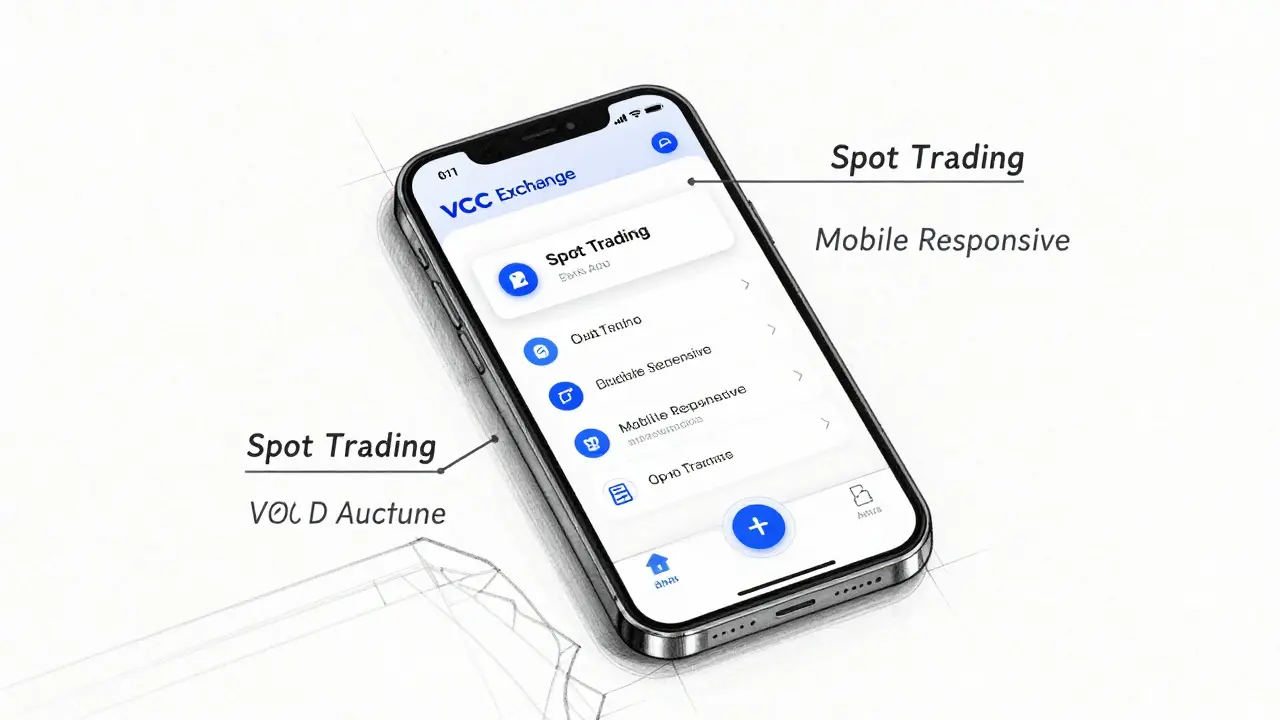
The core value proposition was simple: accessibility. VCC focused heavily on mobile responsiveness, catering to the growing segment of traders who prefer smartphones over desktops. They offered spot trading for Bitcoin (BTC), Ethereum (ETH), and Tether (USDT), alongside pairs for over 100 other assets like XRP, BNB, and SOL. For a beginner in Singapore or Vietnam, this looked like a perfect entry point.
The "Learn & Earn" Differentiator
One feature set VCC Exchange apart from competitors like Binance or Coinbase at the time: its "Learn & Earn" program. While many exchanges now offer this, it was relatively novel when VCC launched it. Users could complete educational modules about specific blockchain projects, pass quizzes, and receive actual tokens as rewards.
For example, users learned about projects like Vite and Alpaca Finance and earned their respective tokens. This approach served two purposes. First, it onboarded new users by lowering the barrier to entry-learning felt less risky than investing. Second, it provided marketing exposure for smaller projects. Reviews from 2022 noted this feature as "innovative and unique," rarely seen on other exchanges then. It created a sticky user experience that encouraged daily engagement beyond just checking prices.
Major Limitations That Held It Back
Despite the strong start, VCC Exchange suffered from critical limitations that prevented it from scaling globally. The first and most glaring issue was its limited cryptocurrency selection. While it supported over 100 coins, it missed several top-20 market cap assets. Notably, it did not support Terra (LUNA), Polkadot (DOT), Cardano (ADA), Litecoin (LTC), or Avalanche (AVAX). For serious traders building diversified portfolios, this was a dealbreaker. You couldn't manage your entire strategy on one platform.
Secondly, the geographic restriction was severe. If you weren't in Singapore or Vietnam, you were largely locked out. In an industry where liquidity drives price stability, limiting your user base to two countries meant lower trading volumes. Low volume leads to wider spreads and slippage, making trades more expensive for users. Competitors like Binance offered thousands of pairs and global coverage, absorbing users who wanted flexibility.
Finally, the fee structure, while described as "competitive" in local reviews, lacked transparency compared to tiered models used by larger exchanges. Without clear data on maker/taker fees or withdrawal costs, it was hard for advanced users to calculate true profitability. This ambiguity often pushes experienced traders toward platforms with clearer pricing structures.

Why Did VCC Exchange Close?
The closure of VCC Exchange serves as a stark reminder of the "survival of the fittest" nature of the crypto industry. By 2025, Myfxbook listed it under "Closed Crypto Exchanges." The exact date of shutdown remains unspecified, but the silence after 2022 reviews suggests operations wound down between late 2022 and early 2025.
Several factors likely contributed to this outcome:
- Competition from Giants: Global exchanges lowered fees and expanded into Southeast Asia, offering better liquidity and more coin options. VCC couldn't compete on scale.
- Regulatory Pressure: As regulations tightened globally, maintaining compliance across borders became expensive. Focusing only on two regions limited revenue growth needed to fund legal teams.
- Lack of Diversification: Relying heavily on spot trading without derivatives or staking products limited income streams during bear markets.
- User Trust Issues: With minimal user reviews and low social media presence, VCC struggled to build the community trust necessary for retention. When doubts arose, users fled to established names.
The contrast between John NG Pangilinan's 2020 optimism and the 2025 reality highlights how quickly tides turn in crypto. Institutional backing doesn't guarantee survival if product-market fit and scalability aren't achieved.
Comparison: VCC vs. Active Alternatives
| Feature | VCC Exchange (Closed) | Binance | Coinbase |
|---|---|---|---|
| Status | Closed (2025) | Active | Active |
| Supported Regions | Singapore, Vietnam | Global (mostly) | USA, Europe, others |
| Coin Selection | ~100 (missing top caps) | 350+ | 200+ |
| Learn & Earn | Yes (Unique feature) | Yes (Binance Academy) | Yes (Base Rewards) |
| Mobile App | Yes | Yes | Yes |
| Institutional Backing | Signum Capital | Multiple VC firms | Publicly Traded |
If you were a VCC user, moving to a platform like Binance or Coinbase offers broader access but requires navigating different interfaces. Both alternatives now have robust "Learn & Earn" programs, negating VCC's primary unique selling point.
What Should Former Users Do?
If you had funds on VCC Exchange, the situation is delicate. Since the platform is categorized as closed, standard login procedures may no longer work. Here are practical steps:
- Check Official Channels: Look for any final announcements on their archived website or official social media pages. Sometimes exchanges provide a window for withdrawals before total shutdown.
- Contact Support: Even if unresponsive, send emails to any listed support addresses. Keep records of all communications.
- Tax Implications: Remember that for tax purposes, assets on a closed exchange may still be considered held until officially written off. Consult a tax professional in your jurisdiction (Singapore or Vietnam) to handle potential capital gains or losses correctly. Tools like CryptoTaxCalculator still reference VCC for historical data integration.
- Avoid Scams: Be wary of third-party services claiming they can recover your funds. These are often scams targeting distressed users.
Lessons for Future Crypto Investors
The story of VCC Exchange teaches valuable lessons. First, don't rely solely on institutional backing. Second, prioritize exchanges with high liquidity and broad coin selection to avoid being trapped in a niche. Third, always verify if an exchange is actively maintained. Check recent reviews, update logs, and community activity. An exchange that hasn't updated its app or blog in months is a red flag.
For beginners, the "Learn & Earn" model is great, but ensure the platform hosting it is stable. Today, major players offer similar educational incentives with much higher security standards. Don't sacrifice safety for novelty.
Is VCC Exchange still active in 2026?
No, VCC Exchange is no longer active. It was listed as a closed crypto exchange by 2025, indicating it ceased operations sometime between late 2022 and early 2025.
Who founded VCC Exchange?
VCC Exchange was founded by a team backed by institutional investors Signum Capital and Axiom Associates Capital. John NG Pangilinan, founder of Signum Capital, was a key public supporter.
Did VCC Exchange have a Learn and Earn program?
Yes, VCC Exchange featured a "Learn & Earn" program where users could complete quizzes about projects like Vite and Alpaca Finance to earn tokens. This was one of its main differentiators.
Which countries could use VCC Exchange?
VCC Exchange primarily served users in Singapore and Vietnam. Its geographic restrictions limited its global appeal and liquidity.
What happened to my funds on VCC Exchange?
Since the exchange is closed, accessing funds is difficult. Users should check archived official channels for final withdrawal instructions and consult tax professionals regarding the status of their assets.
Are there good alternatives to VCC Exchange?
Yes, major exchanges like Binance and Coinbase offer similar features, including Learn and Earn programs, but with much larger coin selections, higher liquidity, and global availability.