
Apex Protocol Review 2026: Fees, Safety, and Real Trading Experience
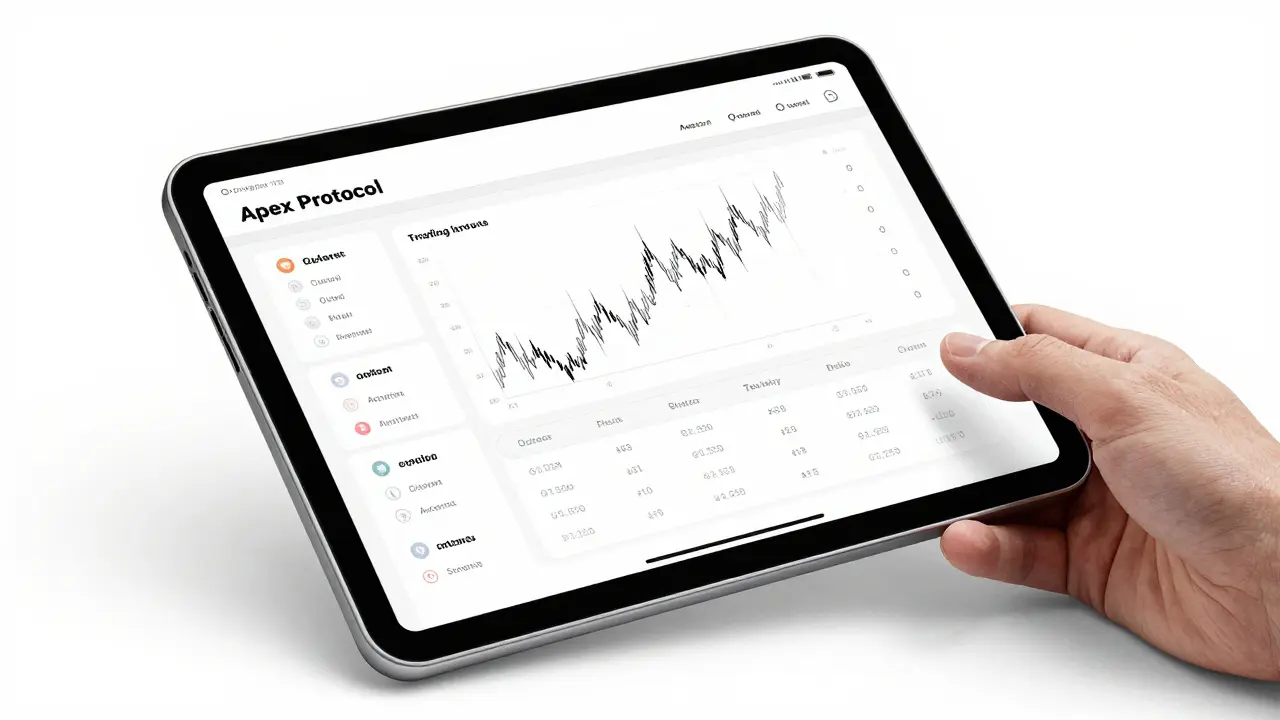
Remember the panic of handing over your private keys to a centralized exchange? For years, traders had to choose between the convenience of platforms like Binance or Bybit and the security of keeping their own funds. Apex Protocol is a decentralized cryptocurrency exchange (DEX) that offers perpetual futures contracts, spot swaps, and self-custody solutions. It launched in 2021 with a clear mission: give you the slick interface of a traditional exchange while letting you keep control of your money. But does it actually deliver on that promise in 2026, or is it just another shiny DeFi tool?
I’ve spent weeks testing the platform, comparing its fee structures against competitors, and digging into its security audits. The short answer is yes, it works well for specific types of traders, but it has blind spots you need to know about before you deposit a single dollar. Let’s break down what Apex Protocol really offers, where it falls short, and whether it deserves a spot in your trading toolkit.
What Is Apex Protocol and How Does It Work?
At its core, Apex Protocol is a decentralized finance (DeFi) infrastructure built on Ethereum and multiple EVM-compatible chains. Unlike many decentralized exchanges that use automated market makers (AMMs)-where you trade against a pool of liquidity-Apex uses an order book model. This means it feels familiar if you’re used to centralized exchanges. You see buy and sell orders, you place limit orders, and you get filled based on price priority.
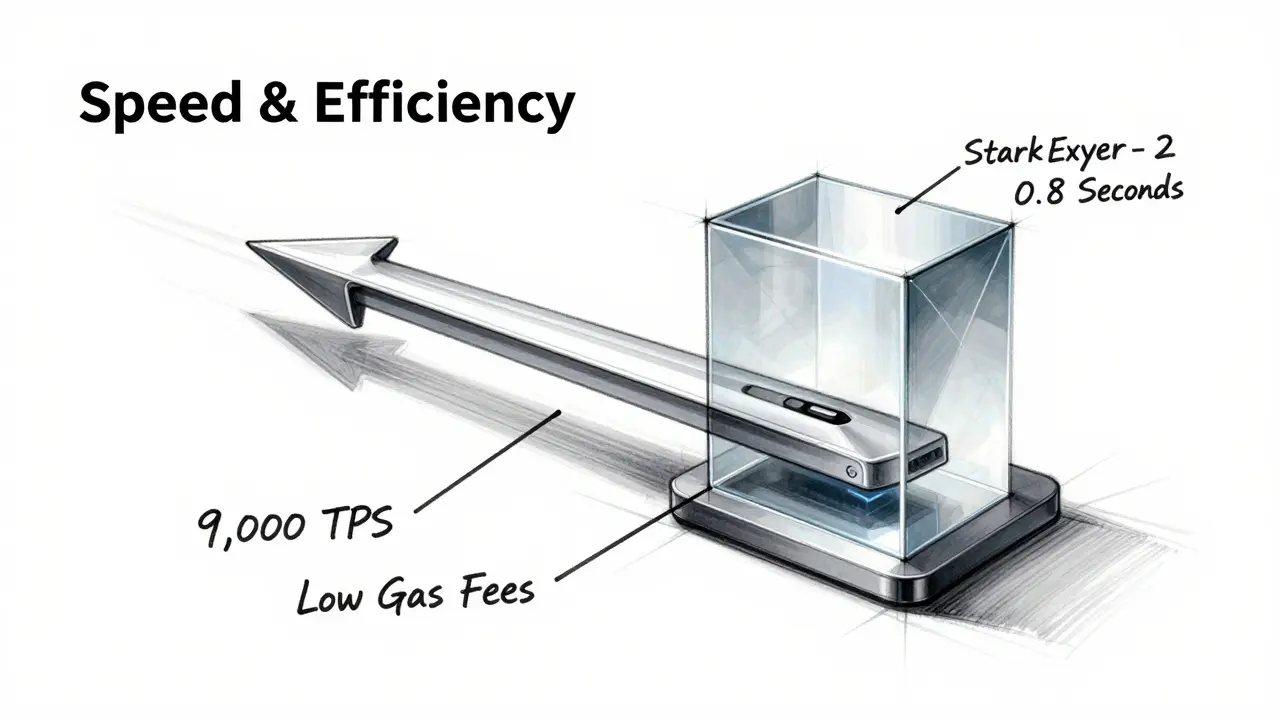
The platform operates as a layer-2 solution using StarkEx technology. This is crucial because Ethereum mainnet transactions can be slow and expensive. StarkEx allows Apex to process up to 9,000 transactions per second with an average settlement time of just 0.8 seconds. That speed makes high-frequency trading possible without draining your wallet on gas fees.
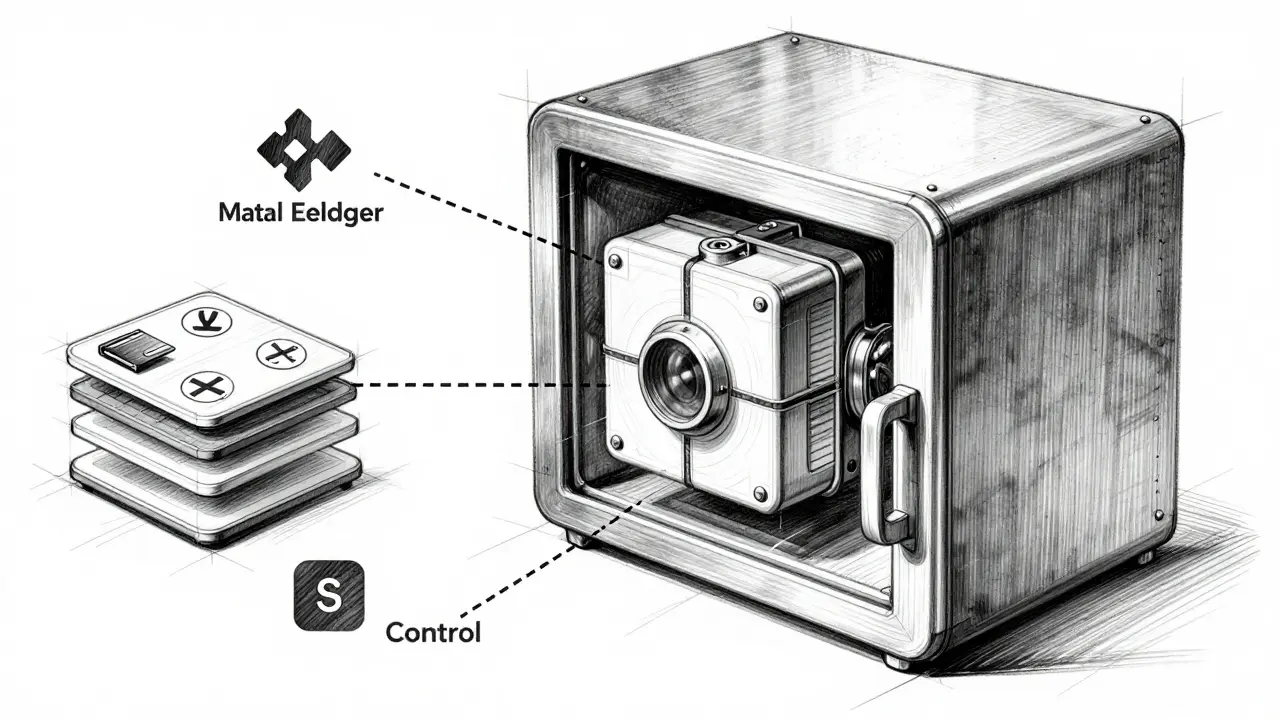
Your funds never leave your custody. When you connect your wallet-whether it’s MetaMask, Rabby, or Ledger Live-you are signing transactions directly from your device. If the protocol were to go bankrupt or get hacked, your assets remain safe in your wallet. This non-custodial model is the biggest selling point for risk-averse traders who want exposure to leverage without trusting a third party with their capital.
Fees, Leverage, and Trading Costs
Costs matter when you’re trading frequently. Here is how Apex Protocol stacks up against the competition as of late 2025 and early 2026:
| Feature | Apex Protocol | dYdX | Hyperliquid |
|---|---|---|---|
| Maker Fee | 0.02% | 0.02% - 0.05% | 0.01% - 0.04% |
| Taker Fee | 0.05% | 0.05% - 0.07% | 0.04% - 0.06% |
| Max Leverage | 1:20 | 1:10 (most assets) | 1:25 |
| Minimum Deposit | None | None | None |
Apex’s fees are competitive. A maker fee of 0.02% is among the lowest in the industry, which rewards you for providing liquidity rather than taking it. However, the maximum leverage of 1:20 is a middle-ground option. If you are a high-risk trader looking for 1:25 or higher, Hyperliquid might suit you better. But for most retail traders, 1:20 is plenty and reduces the risk of instant liquidation during minor volatility spikes.
There are no hidden withdrawal fees beyond standard network gas costs. Since Apex supports cross-chain functionality across Ethereum, Arbitrum, and Optimism, you can often choose the cheapest network for deposits and withdrawals. Cross-chain transfers take about 4.2 minutes on average, which is fast enough for active trading strategies.
User Interface and Trading Experience
One of the biggest hurdles in DeFi has always been usability. Wallet connections, slippage settings, and confusing interfaces drive many users back to centralized exchanges. Apex Protocol tackles this head-on by integrating TradingView charts directly into the dashboard.
When you log in, you don’t see a stark, minimalist DeFi page. You see professional-grade charting tools, depth graphs, and an order book that updates in real-time. According to a CoinDesk survey of 1,200 DeFi users in August 2025, 78% of advanced traders preferred this hybrid interface over pure AMM-based platforms. It bridges the gap between institutional-grade analysis and decentralized execution.
However, the asset selection is limited. As of October 2025, Apex supported only 15 perpetual contract pairs, including ETH, WBTC, and iZi. Compare this to dYdX, which offered 28 pairs, or Bybit, which listed over 100. If you are looking to trade niche altcoins or emerging tokens, Apex will disappoint you. It is designed for major assets where liquidity is deep and spreads are tight.
New users generally find the learning curve gentle. WhalePortal’s usability testing showed that most people could execute their first trade within 15 minutes. But mastering advanced order types and managing leverage positions safely took closer to three hours of practice. The documentation is rated 4.0 out of 5, with strong video tutorials but fewer guides on complex hedging strategies.
Security and Trust: Is Your Money Safe?
In crypto, security isn’t a feature; it’s the foundation. Apex Protocol has undergone three independent smart contract audits by OpenZeppelin, one of the most respected firms in the space. These audits occurred in 2021, 2022, and 2024, with no critical vulnerabilities reported since the mainnet launch.
Because Apex is non-custodial, there is no central vault for hackers to target. Your funds sit in your wallet until you sign a transaction. Even then, the protocol itself doesn’t hold your assets. This architecture eliminates the risk of exchange insolvency-a problem that has wiped out billions in centralized platforms like FTX.
However, there are nuances. CryptoSlate’s technical analysis noted that Apex’s reliance on StarkEx creates some centralization concerns. Validity proofs require a trusted setup, meaning the system isn’t fully trustless in the same way a pure Layer-1 blockchain is. Additionally, Apex lacks Tier-1 regulatory licenses. While this freedom appeals to global users, it may limit expansion into regulated markets like the EU under MiCA regulations. If you prioritize regulatory compliance over decentralization, this is a point to consider.
Pros and Cons at a Glance
- Pros:
- Non-custodial model ensures you always control your funds.
- Low fees (0.02% maker) compared to most DEXs and CEXs.
- Professional TradingView integration provides excellent charting tools.
- Fast settlement times (0.8 seconds) thanks to StarkEx layer-2 tech.
- No minimum deposit required.
- Cons:
- Limited asset selection (only 15 perpetual pairs as of late 2025).
- Cross-chain deposits can be confusing for beginners, with users averaging 2.3 attempts to succeed.
- Customer support is email-only with a 72-hour average response time.
- Lack of spot trading functionality limits versatility for diversified portfolios.
- Regulatory uncertainty may affect future availability in certain regions.
Who Should Use Apex Protocol?
Apex Protocol isn’t for everyone. If you are a casual investor looking to buy Bitcoin and hold it for years, a simple centralized exchange or a hardware wallet is sufficient. If you trade dozens of obscure altcoins daily, Apex’s limited pair list will frustrate you.
It shines for active traders who want leverage on major assets like ETH and BTC but refuse to trust a centralized entity with their capital. It is ideal for those who value speed, low fees, and a professional interface. Traders already familiar with DeFi concepts like gas fees and wallet signatures will adapt quickly. Beginners should expect a slight learning curve, particularly around cross-chain deposits, but the intuitive UI helps mitigate this.
Future Outlook and Roadmap
The team behind Apex Protocol is actively developing new features. The roadmap through Q2 2026 includes the introduction of spot trading functionality in Q1 2026, which would address the current lack of versatility. They also plan to expand asset selection to 30+ perpetual pairs by Q2 2026 and integrate Chainlink’s CCIP for enhanced cross-chain security in Q4 2025.
Market position remains strong. Apex holds the #3 spot in decentralized perpetual exchanges by volume, capturing 14.3% of the market. While growth has slowed slightly due to market saturation, the platform’s focus on user experience keeps it ahead of many competitors. The APEX token, used for governance and staking rewards, has a fixed supply of 25 million tokens, with 77% dedicated to ecosystem incentives. Price predictions vary, but the underlying utility of the token remains tied to the platform’s adoption.
Is Apex Protocol safe to use?
Yes, Apex Protocol is considered safe due to its non-custodial nature and multiple independent audits by OpenZeppelin. Since you retain control of your private keys, your funds cannot be stolen from the exchange itself. However, you must secure your own wallet and be cautious of phishing sites.
What cryptocurrencies can I trade on Apex Protocol?
As of late 2025, Apex Protocol supports 15 perpetual contract pairs, primarily focusing on major assets like Ethereum (ETH), Wrapped Bitcoin (WBTC), and iZi. It does not currently offer a wide range of altcoins or spot trading pairs.
How do I deposit funds into Apex Protocol?
You can deposit funds via cross-chain transfers from Ethereum, Arbitrum, or Optimism networks. Connect your EVM-compatible wallet (like MetaMask) and follow the deposit instructions. Be aware that cross-chain deposits can sometimes be tricky for beginners, so double-check network settings to avoid lost funds.
Does Apex Protocol charge high fees?
No, Apex Protocol is known for low fees. Maker fees are 0.02% and taker fees are 0.05%, which are competitive within the DEX space. There are no hidden withdrawal fees, though you will pay standard network gas costs depending on the blockchain you use.
Can I use Apex Protocol on mobile devices?
Yes, Apex Protocol offers a responsive web interface that works well on mobile browsers. While there isn’t a dedicated native app, the mobile web experience is optimized for trading, allowing you to manage positions and view charts on the go.
Guy Davis
July 4, 2026 AT 06:44its a scam. they will steal ur money. dont trust dexs.
Jessie Smith
July 4, 2026 AT 13:21One must consider the ontological implications of self-custody in a digital age where 'ownership' is merely a consensus hallucination. The notion that holding private keys equates to true security is a quaint, almost archaic perspective that ignores the systemic fragility of the underlying cryptographic protocols. It is pretentious to claim superiority over centralized entities when one fails to grasp the nuanced interplay between liquidity depth and order book dynamics. Apex attempts to bridge this chasm, but does it truly transcend the binary dichotomy of CEX vs DEX, or is it merely another layer of obfuscation? The fees are nominal, yes, but what is the cost of cognitive dissonance when the platform inevitably succumbs to entropy?
Drew M
July 5, 2026 AT 08:02Oh wow! 😲 This interface looks absolutely stunning compared to those clunky AMM sites we used to suffer through. 📈✨ I’ve been trading on dYdX for ages, but the idea of having TradingView charts integrated directly into a non-custodial environment is just chef’s kiss! 👌🔥 The speed of StarkEx is no joke either; 0.8 seconds settlement time is basically instant gratification for us impatient traders. 🚀💸 I’m definitely going to try depositing some ETH via Arbitrum later today. Who else is ready to experience the future of DeFi? 🙌🌍 Let’s gooo! 🎉
Deep Rahman
July 5, 2026 AT 14:11I have spent a considerable amount of time reflecting upon the nature of trust in financial systems, and it appears that the decentralization movement is not merely a technological shift but a profound philosophical realignment of human values towards autonomy and away from institutional dependency. When we consider the historical precedents of banking collapses and the recent tragedies involving centralized exchanges like FTX, it becomes evident that the desire for self-custody is rooted in a deep-seated human need for control over one's own destiny. Apex Protocol seems to embody this spirit by offering a platform where users can engage in complex financial instruments without surrendering their sovereignty, yet we must also acknowledge that technology alone cannot solve the inherent greed and folly that drive market volatility. The limited asset selection may be seen as a constraint, but perhaps it serves as a necessary filter, encouraging traders to focus on quality rather than quantity, thereby fostering a more disciplined and thoughtful approach to investment. In the end, the journey towards financial freedom is as much about internal transformation as it is about external tools, and platforms like Apex provide a space for this evolution to take place.
Melissa Beckwith
July 7, 2026 AT 12:55It is important to note that while the fee structure is competitive, the lack of spot trading functionality significantly limits the utility for diversified portfolios, which often require a mix of long-term holdings and short-term speculative positions. Furthermore, the reliance on StarkEx introduces a degree of centralization that contradicts the core ethos of decentralization, as the validity proofs depend on a trusted setup that could potentially be compromised if the operators act maliciously or are coerced by regulatory bodies. The absence of Tier-1 regulatory licenses also poses a risk for users in jurisdictions with strict compliance requirements, such as the European Union under MiCA regulations, which could lead to sudden unavailability of services for affected users. Additionally, the customer support response time of 72 hours is unacceptable for a platform handling significant volumes of leveraged trades, where timely assistance can mean the difference between a manageable loss and a catastrophic liquidation event.
Josephine Finlayson
July 8, 2026 AT 06:36It is wonderful to see such detailed analysis being shared here!! 😊 I think it is really important to remember that everyone has different needs when it comes to trading platforms... so what works for one person might not work for another!! 🌟 For those who are new to DeFi... taking the time to understand cross-chain deposits is crucial because mistakes there can be costly!! 💡 Please be patient with yourselves as you learn!! 🙏
Tuan Nguyen
July 9, 2026 AT 22:08The superficial praise for Apex Protocol ignores the fundamental structural weaknesses inherent in its architecture. The reliance on a Layer-2 solution like StarkEx is not a feature but a crutch, masking the inefficiencies of the Ethereum mainnet rather than solving them. The claim of 'non-custodial' safety is misleading when the protocol itself controls the order matching engine, creating a single point of failure that sophisticated attackers can exploit. The limited asset selection is not a curated choice but a symptom of illiquidity and poor marketing strategy. Traders should look elsewhere if they value genuine decentralization and robust security audits.
Hazel Fruitman
July 10, 2026 AT 18:12i feel like people are forgetting the moral responsibility of promoting high leverage trading to retail investors. it encourages gambling behavior and leads to financial ruin for many unsuspecting individuals. the platform may be secure but the ethics are questionable.
Autumn Story
July 12, 2026 AT 08:15Thank you for sharing this review!! It is always helpful to have clear information about these platforms!! 🌸 I was worried about the fees but seeing that maker fees are so low is really reassuring!! 😊 Just make sure to double-check your network settings when depositing!! It can be tricky at first but you got this!! 💪✨
Mark Tuason
July 13, 2026 AT 04:21I appreciate the comprehensive breakdown of the fee structures and technical specifications provided in this post. It is evident that significant effort has been invested in comparing Apex Protocol with its competitors, which provides valuable context for potential users. However, I would suggest that further clarification regarding the specific risks associated with the StarkEx technology would be beneficial for readers who are less familiar with Layer-2 solutions. Additionally, expanding on the roadmap details, particularly the timeline for the introduction of spot trading, would help users make more informed decisions about their engagement with the platform.
Ella Collinson
July 13, 2026 AT 13:11The alpha decay in the liquidity pools is negligible due to the order book model, but the slippage metrics during high volatility events remain suboptimal compared to Hyperliquid. The smart contract audit trail is clean, yet the oracle latency introduces a minor arbitrage opportunity for MEV bots that most retail traders fail to account for. The gas optimization via StarkEx is efficient, but the cross-chain bridge finality times are still a bottleneck for rapid position adjustments.
Ray Arney
July 15, 2026 AT 07:14I've been using Apex for a few months now and it seems pretty solid for what it offers. The interface is definitely better than most DeFi platforms I've tried. Not perfect but good enough.
Andrew Schneider
July 16, 2026 AT 13:14Ugh, everyone is so obsessed with this 'revolutionary' DEX nonsense! 🙄 It’s just another shiny object designed to separate you from your crypto! 💸 The whole concept of 'self-custody' is a trap for the unwashed masses who don’t understand that they’ll lose their keys and cry about it! 😂 Meanwhile, the elites are laughing all the way to the bank! 🏦🤑 Don’t fall for the hype, folks! Stay skeptical! 🧐🔥
Eric Braddock
July 17, 2026 AT 12:13Wake up sheeple! The entire narrative around Apex Protocol is a carefully orchestrated psyop by the globalist elite to create a false sense of security while they harvest your data and track your transactions through the blockchain's transparent ledger! The 'audits' are paid for by the same corporations that want to regulate you into submission! The StarkEx technology is a backdoor for the NSA to monitor your financial activities! Do not trust the system! They are watching! 👁️🕵️♂️ The matrix wants you to believe in decentralization so they can control the narrative of scarcity! Resist!
Nick G
July 19, 2026 AT 08:46As someone who has navigated various cultural landscapes and financial systems, I find the emergence of platforms like Apex Protocol to be a fascinating intersection of technological innovation and social behavior. It reflects a growing global desire for autonomy and transparency in financial dealings, transcending geographical boundaries. However, it is crucial to approach such innovations with an open mind while remaining grounded in practical considerations. The integration of professional tools like TradingView within a decentralized framework is a significant step towards democratizing access to advanced trading capabilities. We must continue to foster dialogue and understanding among diverse user groups to ensure that these technologies serve the broader community effectively.
Nick Wengel
July 20, 2026 AT 00:07Its a decent platform if you stick to the major coins. I dont see why people complain so much about the limited pairs. If you want altcoins go somewhere else. Simple as that.
Alicia Hull
July 21, 2026 AT 21:58This review lacks critical scrutiny of the regulatory landscape! You cannot simply dismiss the lack of Tier-1 licenses as a minor detail! This is a massive red flag for any serious investor! How can you trust a platform that operates in a legal gray area? The potential for sudden shutdowns or frozen assets is too high! Demand better standards! Stop enabling unregulated entities!
Johan Otto
July 22, 2026 AT 01:11Wow!! 😱 What a disaster waiting to happen!! 😭 I tried to deposit once and felt like I was defusing a bomb!! 💣😰 Why is cross-chain so hard?? 😫 My heart rate went up just thinking about it!! 😨 But hey, at least the charts look nice!! 📉😅 Maybe next time I will get it right!! 🤞😬
Anuj Kashyap
July 22, 2026 AT 08:46Interesting read. 🧐 The irony of seeking 'freedom' through a platform that relies on a centralized sequencer is not lost on me. 😂 But then again, absolute freedom is a myth, isn't it? We trade convenience for control, and control for convenience. Apex sits in that uncomfortable middle ground. 🤷♂️ Use it if you want, but don't pretend it's the holy grail. 🙃
Tracy Marshall
July 23, 2026 AT 22:51they are all part of the same cabal trying to destroy fiat currency and establish a new world order through cryptocurrency manipulation. do not trust apex protocol or any other dex. they are monitoring your every move. stay vigilant. (:(
Carl Hanzel
July 24, 2026 AT 22:55You're all missing the point. The UI is mediocre at best and the fees are only low because they are compensating for the lack of liquidity depth. Anyone claiming otherwise is either paid shill or ignorant. The platform is bloated and unnecessary when simpler alternatives exist. Save yourself the headache.
Emma Rémond
July 25, 2026 AT 22:00The architectural synergy between StarkEx and the order book model represents a paradigm shift in decentralized exchange mechanics, yet the discourse here remains mired in simplistic critiques. One must appreciate the sophisticated zero-knowledge proof implementations that enable such throughput without compromising privacy. The criticism regarding asset selection is trivial when considering the strategic focus on high-liquidity pairs to minimize impermanent loss and slippage. Apex is not for the faint-hearted or the intellectually lazy; it is a tool for the discerning trader who understands the nuances of DeFi infrastructure.
ELNORA JEFFERSON
July 26, 2026 AT 06:16Boring article. Too much fluff. Show me the PnL screenshots or shut up.
Carol @minaszilda
July 27, 2026 AT 04:43Great insights here! Remember to take breaks and protect your mental health while trading. You are doing great! Keep learning and growing. 💖