
Are Crypto Payments Legal in Russia? 2026 Regulatory Guide

If you're thinking about using Bitcoin to buy a coffee in Moscow or paying a freelancer in Saint Petersburg with Ethereum, you need to stop right there. While the world often views digital assets as the future of money, the Russian government has a very different take. In short: owning crypto is fine, but using it to buy things inside the country is a fast track to some very expensive legal trouble.
The core of the issue is that the Russian ruble is the only legal tender in the country. The Russian authorities treat cryptocurrency not as money, but as a piece of property or an investment. This distinction is everything. If you treat your digital coins like cash for domestic shopping, you're breaking the law.
The Divide Between Owning and Spending
It's a bit of a paradox. You can legally hold a massive portfolio of various tokens on a hardware wallet, and you can trade them for a profit. However, the moment you try to use that crypto to settle a debt or pay for a service within Russia, you cross a legal line. The Central Bank of Russia is the primary monetary authority of the Russian Federation, and it has spent years fighting against the integration of crypto into the domestic economy.
Why the hostility? The government wants to prevent the ruble from losing its dominance and keep a tight grip on the shadow economy. By banning crypto payments, they ensure that every transaction is traceable and tied to the national currency. For the average person, this means your crypto is an asset you hold for the future, not a tool for your daily expenses.
The Loophole: Experimental Legal Regime (ELR)
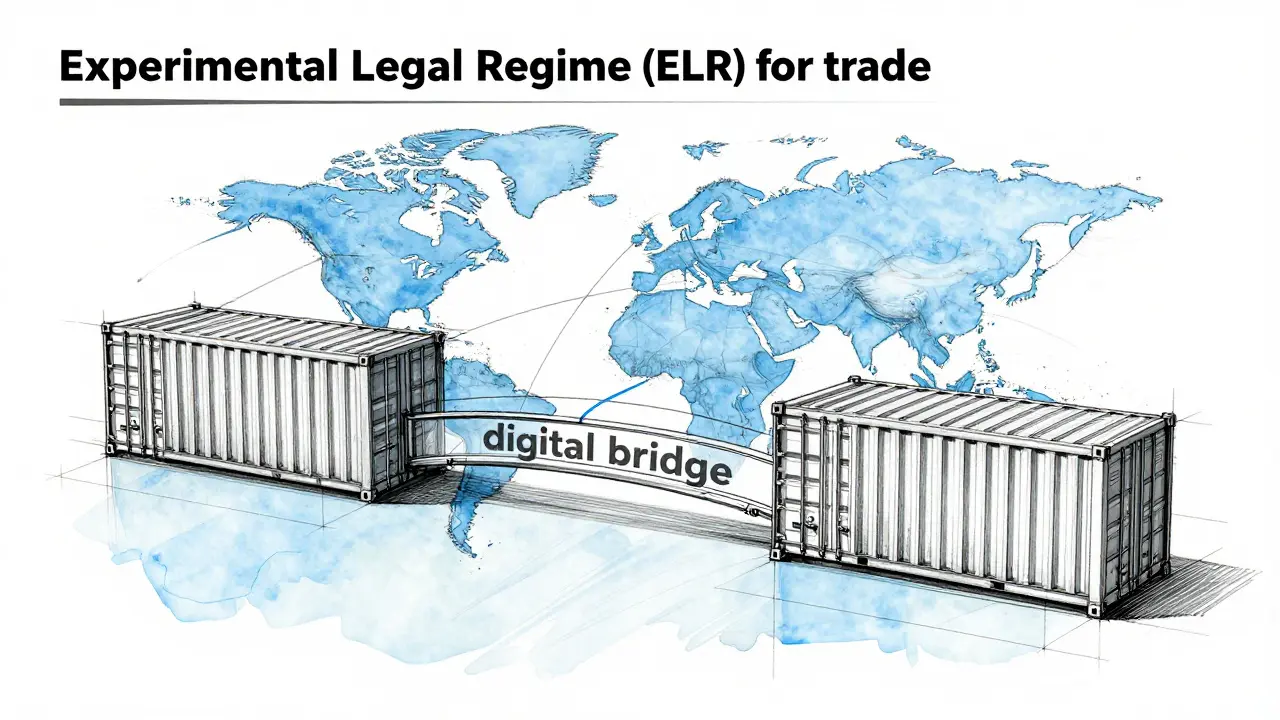
Now, you might have heard stories about Russian companies using crypto. They aren't necessarily lying, but they're operating in a very narrow window called the Experimental Legal Regime (ELR). This is basically a government-sanctioned sandbox where specific rules are relaxed for a limited time.
The ELR is specifically designed for international settlements. Because Western sanctions have made traditional banking nearly impossible for many Russian firms, the government allows a few "highly qualified" investors and specific companies to use crypto to trade with partners abroad. This isn't for the general public; it's a strategic move to keep the economy breathing by bypassing global financial restrictions.
| Feature | Domestic Transactions | International (via ELR) |
|---|---|---|
| Legal Status | Prohibited | Allowed for approved entities |
| Primary Goal | Protect the Ruble | Bypass sanctions/Trade |
| Who can use it? | Nobody (Legally) | "Highly Qualified" Investors/Companies |
| Risk Level | High (Fines/Confiscation) | Regulated/Low (if compliant) |
What Happens if You Get Caught?
If you thought the government was just "strongly suggesting" you don't use crypto for payments, think again. Starting in 2026, the enforcement hammer is coming down hard. The State Duma has moved toward a system of heavy fines and asset seizures to close the loopholes that people have been using since 2021.
For individuals, a single violation could result in a fine between 100,000 and 200,000 rubles. For companies, the stakes are much higher, with penalties ranging from 700,000 up to 1 million rubles. But the real sting isn't just the fine-the authorities will also confiscate any cryptocurrency used in the illegal payment. Essentially, you lose the money you were trying to spend and you pay a massive penalty on top of it.
The Taxman Always Gets His Cut
Even if you never use crypto to buy a single item, you still have to deal with the Federal Tax Service of Russia. The government might hate crypto as a currency, but they love it as a source of tax revenue. If you make money from your digital assets, you are legally required to report it.
You're expected to file your crypto-related income by April 30th for the previous year and settle the bill by July 15th. This applies to almost everything: spot trades, staking rewards, airdrops, and even selling NFTs. All these values must be converted into rubles using the official exchange rate at the time of the transaction.
The penalties for lying to the tax office are terrifying. If you fail to report transactions exceeding 45 million rubles over a three-year period, you aren't just looking at a fine. You could face forced labor for up to five years or a prison sentence starting from 18 months. The authorities are now using automated detection systems to spot undisclosed holdings, so "hoping they don't find it" is no longer a viable strategy.

The Bigger Picture: Why the Mixed Signals?
You might wonder why the Russian Treasury wants a national digital asset strategy while the Central Bank wants a total ban. It's a classic internal power struggle. One side sees cryptocurrency as a tool to modernize the economy and escape foreign influence; the other sees it as a chaotic threat to financial stability.
This tension has made Russia a bit of a volatile place for crypto users. While the market value of crypto held by Russians is estimated to be over $40 billion, the actual adoption rate has dipped. Russia recently slid down the global adoption rankings because the lack of local, licensed exchanges forces people to use foreign platforms, which adds another layer of risk and complexity.
Can I legally own Bitcoin in Russia?
Yes, owning cryptocurrency is not illegal in Russia. You can buy, hold, and trade digital assets as investments. The prohibition only applies to using them as a means of payment for goods or services within the country.
What is the Experimental Legal Regime (ELR)?
The ELR is a specialized legal framework that allows certain "highly qualified" investors and companies to use cryptocurrency for international trade and settlements. It is essentially a legal loophole created to help Russian businesses bypass Western sanctions.
Do I have to pay taxes on my crypto gains in Russia?
Yes. All economic benefits from crypto-including trading profits, staking, and mining-are subject to income tax. You must report this income by April 30th each year and pay the tax by July 15th.
What are the fines for using crypto as payment in 2026?
For individuals, fines range from 100,000 to 200,000 rubles. For legal entities, fines range from 700,000 to 1 million rubles. Additionally, any cryptocurrency used in the transaction will be confiscated by the state.
Can Russian companies use crypto to pay foreign suppliers?
Only if they are operating under the Experimental Legal Regime (ELR). Outside of this specific government-approved framework, using crypto for commercial settlements remains legally precarious.
What to do now
If you're a resident or a business operating in Russia, the safest bet is to keep your crypto activities strictly in the realm of investment. Avoid any"under the table" agreements to pay for services in USDT or BTC, as the 2026 enforcement measures are specifically designed to catch these shadow transactions.
For those with significant holdings, prioritize your tax documentation. Ensure every trade is logged and converted to rubles correctly. If you're a business looking to expand internationally, investigate whether you qualify for the ELR, as it's currently the only legitimate way to integrate digital assets into your commercial workflow.
Benjamin Forg
April 24, 2026 AT 07:15just another way for the state to track every single penny and keep the population in a digital cage while the elites use the elr to move billions in the shadows it's all a simulation of control anyway
Robert Mosolygo
April 25, 2026 AT 08:22The irony of the Russian Treasury and Central Bank fighting while the ruble continues its slow descent into irrelevance is almost poetic. This isn't about stability; it's a desperate attempt by a decaying regime to maintain a facade of monetary sovereignty through brute force and intimidation. The implementation of automated detection systems for undisclosed holdings is merely the next step in a predictable trajectory toward total financial surveillance. One must wonder how many 'highly qualified' investors are simply cronies of the current administration using the ELR to liquidate assets before the inevitable collapse. It is a textbook example of institutional schizophrenia where the state pretends to embrace the future while actively strangling it in the crib to protect a handful of bureaucrats. Truly pathetic.
Greg Reynolds
April 25, 2026 AT 21:24The ELR isn't a loophole; it's a targeted instrument for state-sponsored capital flight management. Most people assume the ban is about the ruble, but it's actually about ensuring the government can selectively choose who survives the sanctions.
Kathleen Bergin
April 27, 2026 AT 02:35It is basically just a tax trap.
Candace Sherrard
April 28, 2026 AT 08:29There is something deeply fascinating about the dichotomy between the digital freedom that Bitcoin promises and the rigid, old-world structures of a state that refuses to let go of the wheel, especially when you consider that the very tools meant to liberate us are being repurposed as instruments of state survival in a geopolitical chess match. It makes one ponder whether any technology is truly neutral or if it simply adapts to the morality of the power structure it inhabits, leading us to a future where the only difference between a government bank and a crypto wallet is who holds the private keys to our autonomy.
Paige Raulerson
April 29, 2026 AT 18:18Honestly, the whole thing feels so dated. Imagine still worrying about the 'dominance' of a fiat currency in 2026. It's a bit embarrassing, really.
Matthew Morse
May 1, 2026 AT 09:56fines are a joke anyway just use a mixer and a cold wallet and they'll never find it
Larry Yang
May 3, 2026 AT 05:14Actually, if you think mixers work against state-level chain analysis in 2026 you're deluding yourself. The 'automated detection' mentioned is probably just a basic implementation of tools that US agencies have used for years. Absolute amateur hour over here.
praveen subbiah
May 3, 2026 AT 12:03This is exactly why my country is so much better at integrating technology! We embrace the future with open arms and a heart full of pride while others just build walls!
Guy Bianco
May 5, 2026 AT 02:23It is prudent to ensure all tax obligations are met to avoid the severe penalties described here. 🛡️
Findlay Duncan Lyon
May 5, 2026 AT 21:36Brutal laws. Typical.
Alex Wan
May 7, 2026 AT 00:58I am simply astounded by the sheer audacity of these regulatons! It is an absolute travesty that honest investors might fall into such a trap!! 😱
Sarah Fisher
May 7, 2026 AT 22:38I think there's a middle ground here where digital assets could actually help the economy if the government stopped treating it like a war zone.
jill huyo-a
May 9, 2026 AT 16:49It's interesting how the ELR basically creates a two-tier society of 'qualified' people and everyone else.
Sara Ellis
May 10, 2026 AT 10:38who cares about the ruble anyway just use usdt and hide it
debashish sahu
May 11, 2026 AT 16:14In my experience, these kinds of restrictions often lead to a more robust underground market which ironically makes the currency even less stable.