
Bank of Namibia Crypto Policy: What You Need to Know in 2026
The Bank of Namibia doesn’t recognize Bitcoin or any other cryptocurrency as legal tender. But here’s the twist: you can still use it to buy coffee in Windhoek-if the shop owner agrees. That’s the reality of crypto in Namibia in 2026. It’s not legal. It’s not banned. It’s stuck in a gray zone, carefully managed by rules that change faster than most people realize.
How Did We Get Here?
Back in 2018, the Bank of Namibia was clear: cryptocurrencies weren’t commodities, and they weren’t welcome on any financial market. That stance lasted for years. But by 2022, things started shifting. The central bank quietly acknowledged that merchants could accept Bitcoin as payment, even if it had no official status. It wasn’t endorsement-it was recognition of what was already happening on the ground. The real turning point came in June 2023, when Namibia’s National Assembly passed the Virtual Assets Act (Act No. 10 of 2023). This wasn’t just a policy tweak. It was a full legal overhaul. Around the same time, the Payment System Management Act was also signed into law. Together, these two laws created the first real regulatory structure for crypto in the country. Now, here’s the catch: while the law allows crypto to be used as payment, it still doesn’t give it legal tender status. That means no one has to accept it. No bank has to process it. And the government won’t back it. But if you and the shopkeeper both agree to use Bitcoin for your groceries? That’s perfectly fine under current rules.How Crypto Businesses Must Operate
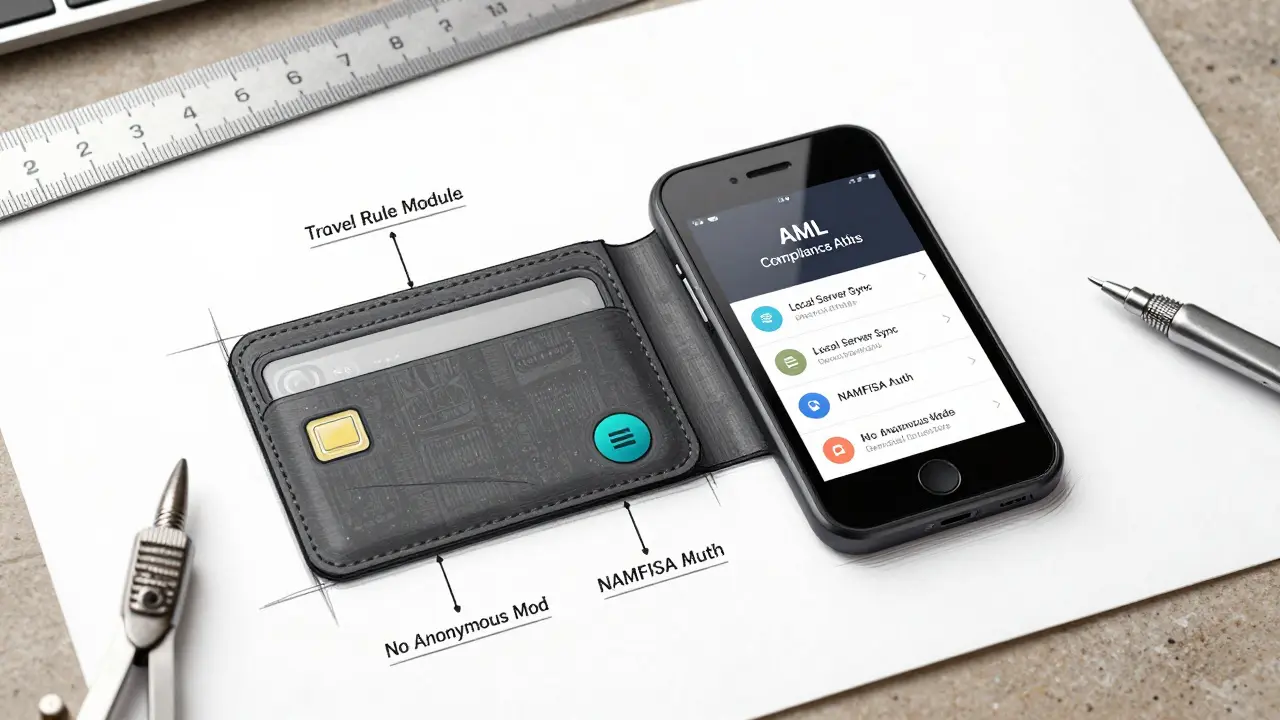
If you want to run a crypto exchange, ATM, or wallet service in Namibia, you can’t just open a website and start taking money. You need a license. And the only body that can issue one is the Namibia Financial Institutions Supervisory Authority (NAMFISA), working under the Bank of Namibia’s oversight. The licensing process is strict and slow. First, you apply for provisional authorization. This isn’t a green light to start business. It’s a six-month trial period where you’re allowed to set up your tech, hire staff, install security systems, and get your compliance software running. But you can’t interact with any customers in Namibia-not even one transaction. During this time, you must comply with full anti-money laundering (AML) and counter-terrorist financing (CTF) rules. That includes the Travel Rule: for any transaction over NAD 20,000 (about $1,000), you have to collect and store the full name, ID number, and account details of both sender and receiver. No exceptions. You also can’t operate any foreign-based exchange. All services must be physically based in Namibia. And you must keep detailed records of every user and every transaction. No deleting logs. No anonymous accounts. Only after those six months-and only after NAMFISA confirms you’ve met every requirement-do you get your full license. Even then, you’re still under constant supervision.Who’s Already Licensed?
On January 13, 2025, the Bank of Namibia granted provisional authorization to four companies:- Finatic Technologies (Pty) Ltd. - Payment services
- United PayPoint (Pty) Ltd. - Payment services
- Mindex Virtual Asset Exchange (Pty) Ltd. - Crypto exchange
- Landifa Bitcoin Trade CC - Crypto exchange
What’s Not Allowed
There are clear red lines. The Bank of Namibia has said outright: initial coin offerings (ICOs) are dangerous. They’re prone to fraud, manipulation, and misleading claims. The central bank doesn’t support them. And if you try to launch one in Namibia, you’ll face serious legal consequences. You also can’t use crypto to evade currency controls. You can’t use it to move money out of the country illegally. And you can’t use it to avoid taxes. The rules are designed to prevent the same problems that have plagued crypto markets elsewhere: money laundering, scams, and tax evasion. Even more telling: the Bank has made it clear it doesn’t support the use of blockchain technology for public infrastructure. That’s a big deal. While other African countries are testing blockchain for land registries, voting, or supply chains, Namibia is holding back. The U.S. Department of State’s 2025 Investment Climate Statement pointed this out directly, calling the Bank’s reluctance a barrier to innovation.How Namibia Compares to Other African Countries
Namibia isn’t the most open. It’s not the most restrictive. It’s somewhere in the middle. Nigeria banned banks from handling crypto transactions in 2021. It’s still that way. Botswana outright prohibits crypto trading. Tanzania has a full ban. Kenya? Almost no rules-just a wild west market. South Africa has had VASP licensing since 2022 and is more advanced. Ghana is planning its rules by the end of 2025. But Namibia? It’s the first country in southern Africa to pass a full, detailed law with enforcement mechanisms. The six-month sandbox period is unique. No other African country requires you to build your entire operation in secret before you can even talk to a customer. It’s cautious. It’s slow. But it’s also one of the most thorough systems on the continent.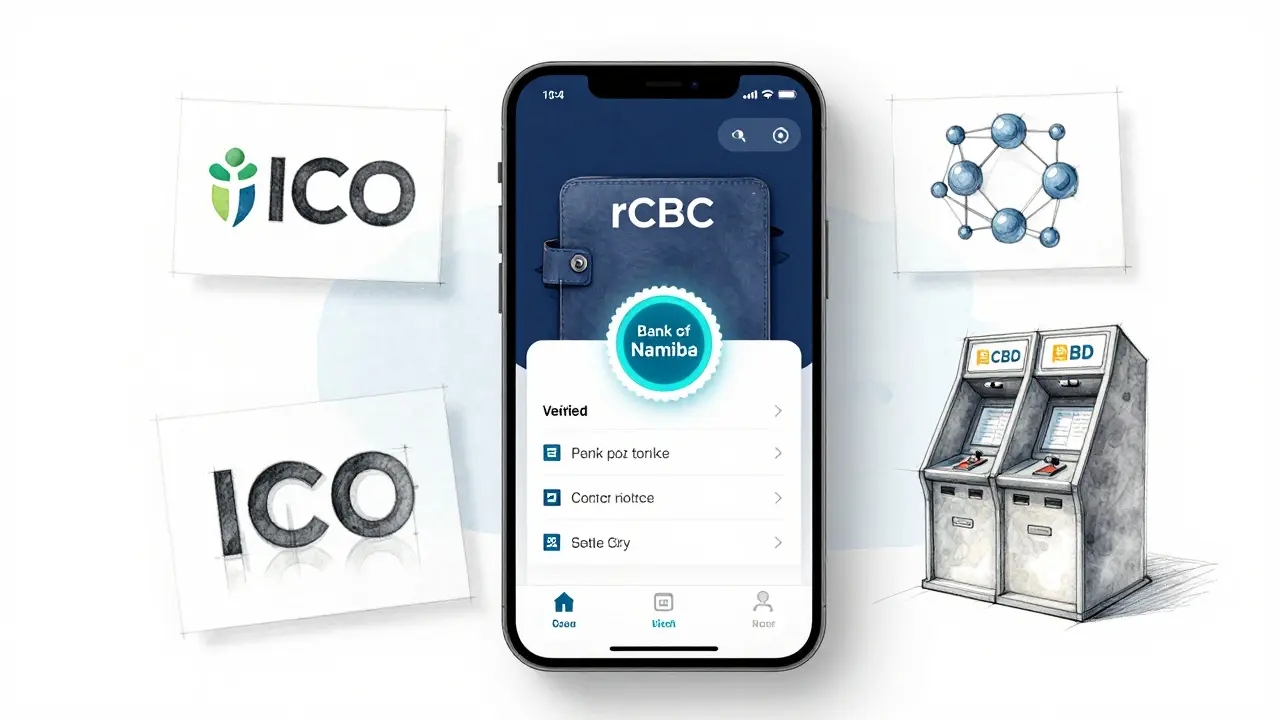
The Big Question: What’s Next?
The Bank of Namibia isn’t just regulating crypto. It’s also exploring its own digital currency-the retail Central Bank Digital Currency (rCBDC). The goal? Financial inclusion, faster payments, and modernizing the banking system. That’s important. It means the Bank isn’t trying to kill crypto. It’s trying to control it-and eventually replace it with something it can fully manage. Right now, Namibia has a dual-track system: regulated private crypto services operating under tight rules, and a parallel effort to build a state-backed digital currency. That’s not a contradiction. It’s strategy. The message is clear: if you want to use crypto, you can-but only if you play by our rules. If you want to innovate, you can-but only if you do it under our supervision. And if you think you can bypass the system? You’re wrong.What This Means for You
If you’re a regular user: you can still buy things with Bitcoin if the store accepts it. But don’t expect banks to help you cash out. Don’t assume it’s safe. And don’t think it’s protected by law. If you’re a business: get ready for a long, expensive process. You need legal counsel, compliance software, local office space, and patience. There’s no shortcut. And if you skip the provisional phase? You’re risking jail time. If you’re an investor: be careful. The market is small. Liquidity is low. And the rules could change tomorrow. The Bank has shown it’s willing to shut things down fast if things go wrong. The bottom line: Namibia’s crypto policy isn’t about banning crypto. It’s about controlling it. It’s about making sure that if crypto grows here, it grows on their terms-not yours.The Bank of Namibia isn’t afraid of technology. It’s afraid of chaos. And right now, it’s betting that slow, strict, and supervised is the only way to avoid it.
steven sun
January 24, 2026 AT 18:19soo like u can buy coffee with btc but not pay ur rent? lol namibia be playin chess while the rest of africa is still tryna figure out how to use atm
Shamari Harrison
January 26, 2026 AT 13:06This is actually one of the most balanced approaches I've seen in Africa. Most countries either ban it outright or let it run wild. Namibia’s sandbox model gives startups a real chance to get compliant without throwing them into the deep end. Smart move.
David Zinger
January 27, 2026 AT 02:37lol namibia thinks they're europe now? 🤡 blockchain for land registries? nah we ain't doin that. also i'm pretty sure the bank is just scared of losing control. crypto ain't gonna die just because some bureaucrat says so 💪
Sara Delgado Rivero
January 27, 2026 AT 22:06People still using crypto for groceries? That's not innovation that's just irresponsible. If you're not going to use legal tender then you're enabling tax evasion and money laundering. The bank is right to be strict. This isn't a game.
Bonnie Sands
January 29, 2026 AT 18:54Wait… the bank is developing its own digital currency? That’s not innovation. That’s surveillance. They’re building a digital leash for every citizen. You think this is about financial inclusion? Nah. It’s about control. They’ll track every coffee you buy with their rCBDC. Wake up people.
Arielle Hernandez
January 31, 2026 AT 18:10It's fascinating how Namibia has crafted a regulatory framework that acknowledges real-world behavior without granting formal legitimacy. The six-month provisional period is particularly thoughtful-it allows firms to prove operational integrity before customer exposure. This is textbook responsible fintech governance.
carol johnson
February 1, 2026 AT 02:56OMG the fact that they don't allow foreign exchanges?? 😭 I just moved to Namibia and my Binance account is useless now. This is so unfair. I thought Africa was supposed to be open? 🤦♀️💸
Melissa Contreras López
February 3, 2026 AT 02:34I love how Namibia is walking the tightrope-neither banning crypto nor pretending it’s safe. It’s like saying, ‘You can dance, but only in this one room with the lights on.’ Honestly? That’s the only way to do it. No panic, no rush. Just steady hands.
Andy Simms
February 3, 2026 AT 16:45The Travel Rule requirement for transactions over NAD 20,000 is actually pretty standard internationally. What’s impressive is that Namibia is enforcing it with local infrastructure instead of outsourcing compliance. That’s rare in emerging markets. They’re building real institutional capacity.
Harshal Parmar
February 4, 2026 AT 10:02man i been watching this for years and honestly namibia is doing better than most countries i know in africa i mean nigeria banned it but everyone still uses it anyway and botswana just says no and then nothing happens but here they actually made rules and are trying to enforce them not like some countries that just write laws and forget about them
Matthew Kelly
February 5, 2026 AT 08:51Just wanted to say props to NAMFISA. I know the process is brutal but I’ve seen what happens when crypto companies rush in without compliance. People lose money. People get scammed. Slow and steady wins this race. 🙌
Chidimma Catherine
February 5, 2026 AT 11:24As a Nigerian who has watched crypto evolve in Africa, I must say Namibia’s approach is remarkably mature. The emphasis on local infrastructure and AML compliance shows deep understanding of systemic risk. This is not fear-it is foresight. I wish more nations would emulate this model rather than react with panic or indifference.
Brenda Platt
February 6, 2026 AT 12:28Y’all are overthinking this. If I can buy my morning coffee with Bitcoin and no one’s getting arrested? That’s freedom. The bank doesn’t have to like it. They just have to let it happen. Stop trying to control everything. 🤷♀️☕️
Nadia Silva
February 7, 2026 AT 04:13Canada has a more rational framework. We allow crypto exchanges but require KYC, AML, and reporting. Namibia’s sandbox is cute, but it’s not innovation-it’s bureaucratic theater. If you want real growth, stop forcing companies to build in the dark for six months. Just license them and audit them later.
Clark Dilworth
February 7, 2026 AT 08:00The rCBDC initiative is the real story here. This isn’t about crypto-it’s about monetary sovereignty. The Bank is preemptively neutralizing decentralized alternatives by offering a state-backed digital currency with full traceability. This is a strategic pivot, not a policy tweak. Expect the rCBDC to be rolled out in phases by Q3 2027.