
Bitcoin and Ethereum ETFs in the US: How In-Kind Approvals Changed the Game
The landscape of investing in digital assets has shifted dramatically over the last two years. If you are looking at the Bitcoin and Ethereum ETF approvals in US market today, you are seeing a system that looks nothing like the one that launched in early 2024. The initial excitement of regulatory clearance has settled into a more mature, efficient, and complex reality. For investors, this means lower costs, better tax efficiency, and clearer rules-but also new complexities regarding how these funds operate behind the scenes.
When the Securities and Exchange Commission (SEC) first greenlit spot Bitcoin exchange-traded funds on January 10, 2024, it was a historic moment after thirteen years of rejections. Six months later, on July 23, 2024, the same body approved spot Ethereum ETFs. These decisions validated both cryptocurrencies as legitimate asset classes within traditional capital markets. However, the story didn't end with those approvals. The real transformation happened in mid-to-late 2025 when the SEC fundamentally changed how these ETFs are created and redeemed.
From Cash-Only to In-Kind: The Structural Shift
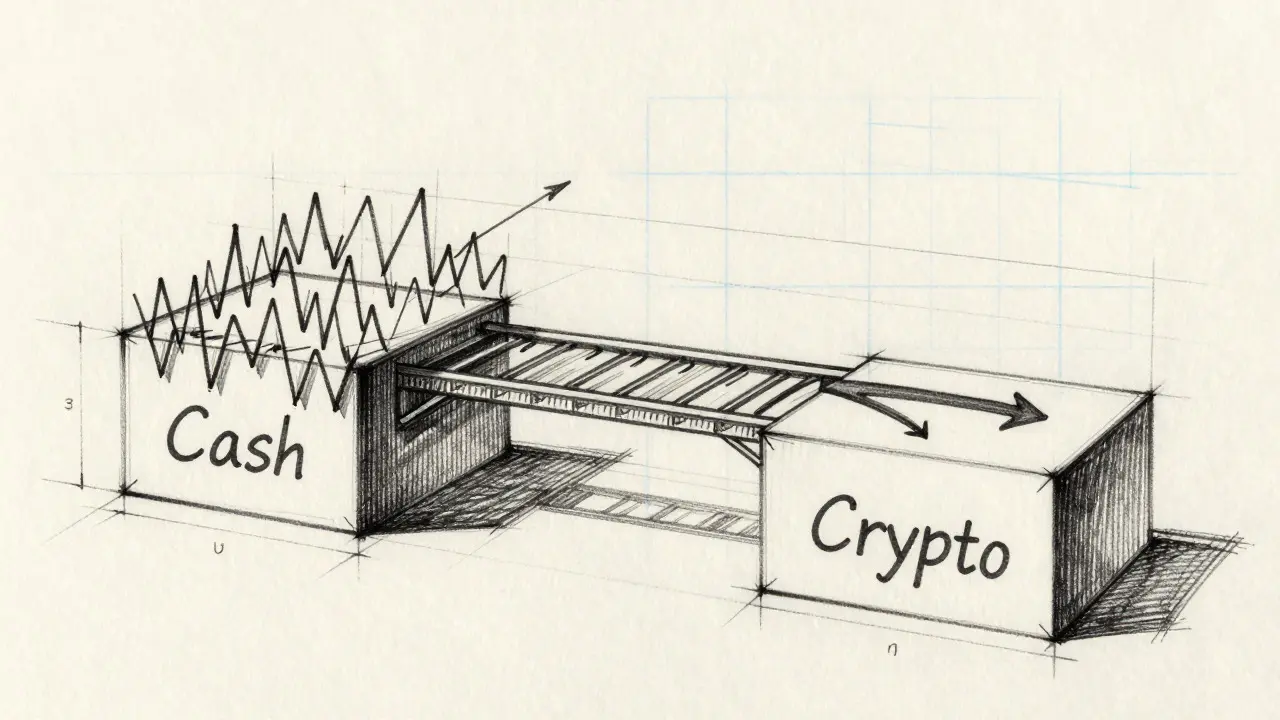
To understand why the current state of crypto ETFs matters, you need to look at the mechanics. When Bitcoin and Ethereum ETFs first launched, they operated on a "cash-only" creation and redemption model. This meant that Authorized Participants (APs)-the large financial institutions that keep ETF prices aligned with their underlying value-had to use cash to create new shares or redeem existing ones.
This structure created significant friction. APs had to buy or sell actual Bitcoin or Ether on the open market to fulfill orders, which introduced slippage, tax liabilities, and operational delays. It was inefficient compared to traditional commodity ETFs like gold, which have used an "in-kind" mechanism since 2004.
That changed on July 29, 2025. The SEC approved in-kind creation and redemption mechanisms for crypto asset exchange-traded products. Under this new framework, APs can deliver or receive the underlying cryptocurrency directly. If an AP wants to create shares of a Bitcoin ETF, they hand over Bitcoin. If they want to redeem shares, they get Bitcoin back. No cash conversion is needed.
| Feature | Cash-Only Model (Pre-2025) | In-Kind Model (Post-July 2025) |
|---|---|---|
| Mechanism | AP buys/sells crypto with cash | AP transfers actual crypto assets |
| Tax Impact | High (capital gains triggered on every trade) | Low (non-taxable event for APs) |
| Market Efficiency | Lower (slippage and delay) | Higher (instant alignment with NAV) |
| Operational Cost | Higher (~0.40% annually) | Lower (~0.15-0.25% annually) |
| Example Asset | Early IBIT shares | GLD (Gold), Post-2025 IBIT shares |
This shift was not just technical; it was philosophical. SEC Chairman Paul S. Atkins explicitly stated that developing a "fit-for-purpose regulatory framework" was a key priority. By aligning crypto ETFs with traditional commodity standards, the regulator signaled that these assets were no longer outliers but integrated components of the financial system.
Bitcoin vs. Ethereum: Diverging Paths
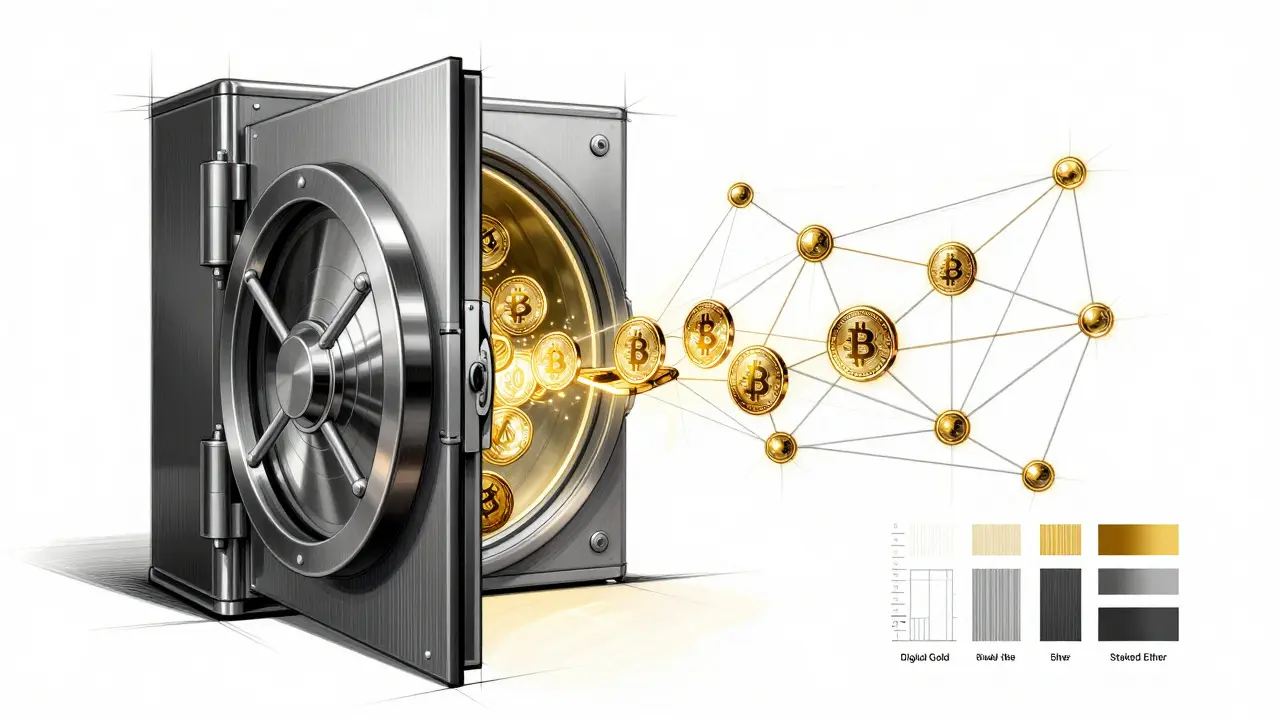
While both Bitcoin and Ethereum ETFs share the same regulatory umbrella, they operate differently under the hood. Bitcoin’s proof-of-work consensus mechanism is straightforward: miners secure the network, and holders simply store their coins. There is no yield generation inherent to holding Bitcoin itself.
Ethereum, however, runs on proof-of-stake. This introduces a layer of complexity: staking rewards. When Ethereum ETFs launched in July 2024, providers faced a choice. Should they stake the underlying Ether to generate yield for shareholders, or hold it cold? As of September 2025, only five of the eleven approved Ethereum ETFs elected to participate in staking. Grayscale’s ETHE led this charge, allocating 4.2% of its holdings to staking and distributing $127 million in quarterly rewards to shareholders.
This difference creates distinct risk profiles. Bitcoin ETFs are pure price-play vehicles. Ethereum ETFs offer potential yield but introduce counterparty risks associated with staking validators. Furthermore, fee structures reflect these differences. Bitcoin ETFs average a 0.25% management fee, with Fidelity’s FBTC offering 0.00%. Ethereum ETFs average higher fees at 0.35%, with VanEck’s EETH at a competitive 0.15% and Grayscale’s ETHE charging 1.50% due to its legacy trust conversion costs.

Market Dynamics and Institutional Adoption
The transition to in-kind processing has reshaped who holds these assets. Large institutional investors, often referred to as "whales," have embraced the new structure for estate planning and collateralization purposes. A Bloomberg report from October 2025 noted that 78% of surveyed institutional investors prefer holding Bitcoin through ETFs because it simplifies prime brokerage arrangements. They can use ETF shares as collateral for other trades without moving the underlying crypto, which would trigger taxable events.
By September 2025, the spot Bitcoin ETF market reached $54.3 billion in assets under management (AUM). BlackRock’s iShares Bitcoin Trust (IBIT) dominated with 31.2% market share ($16.9 billion). Ethereum ETFs collectively held $18.7 billion, with Grayscale’s ETHE leading at $5.1 billion.
However, market sentiment has diverged. In Q3 2025, Bitcoin ETFs experienced $1.2 billion in net outflows amid rising interest rates, while Ethereum ETFs saw $478 million in net inflows. This suggests that investors view Ethereum not just as digital gold, but as a productive asset with utility in decentralized finance (DeFi). The validation of Ethereum as a "blue chip" asset class distinct from Bitcoin has accelerated the convergence of traditional finance and DeFi infrastructure.
Regulatory Risks and Future Outlook
Despite the progress, caution remains warranted. John Coates, former SEC Acting Chairman and professor at Harvard Law School, warned in a September 2025 paper that the rapid approval of Ethereum ETFs without clear regulatory clarity on staking could create systemic risks. With 68% of Ethereum’s network security derived from staked ETH, any disruption to major stakers (like ETF providers) could theoretically impact network stability.
Furthermore, the SEC’s stance is not universally permissive. Chairman Atkins noted that "not all crypto assets will qualify for ETP treatment." This implies a case-by-case evaluation for future candidates. While Hong Kong approved its first spot Solana ETF in October 2025, and Singapore and the EU are expected to follow by Q2 2026, the US path remains selective. XRP and Solana face higher hurdles due to past securities law ambiguities.
Looking ahead, analysts project the combined spot Bitcoin and Ethereum ETF market will reach $150 billion in AUM by December 2026. The in-kind processing alone is expected to reduce operational costs by $500 million annually across the ecosystem. For the average investor, this means tighter spreads, lower tracking errors, and a more seamless experience buying exposure to crypto through standard brokerage accounts.
Practical Implications for Investors
If you are considering adding crypto exposure to your portfolio via ETFs, here are three critical factors to evaluate:
- Fee Structure: Compare expense ratios carefully. The gap between low-cost providers like Fidelity (0.00% for BTC) and high-cost legacy trusts like Grayscale (1.50% for ETH) significantly impacts long-term returns.
- Staking Policy: For Ethereum ETFs, decide if you want yield. Staking ETFs offer higher potential returns but carry validator risk. Non-staking ETFs are simpler but miss out on protocol rewards.
- Liquidity and Premiums: Check the premium to Net Asset Value (NAV). As of October 2025, Bitcoin ETFs traded at an average 0.08% premium, while Ethereum ETFs traded at 0.23%. High premiums indicate strong demand but may signal short-term overvaluation.
The era of experimental crypto regulation is ending. The US market has moved from asking "if" crypto belongs in traditional finance to optimizing "how" it fits. The shift to in-kind processing marks the maturation of this asset class, bringing efficiency and transparency that benefits both retail and institutional participants.
What is the difference between cash-only and in-kind ETF creation?
In a cash-only model, Authorized Participants must buy or sell the underlying cryptocurrency on the open market using cash to create or redeem ETF shares. This triggers taxable events and adds operational costs. In an in-kind model, APs transfer the actual cryptocurrency assets directly to the ETF issuer in exchange for shares. This process is tax-efficient, reduces slippage, and lowers annual operational costs by approximately 0.15-0.25%.
Do all Ethereum ETFs stake their holdings?
No. As of September 2025, only five of the eleven approved spot Ethereum ETFs elect to stake their underlying Ether. Providers like Grayscale (ETHE) distribute staking rewards to shareholders, while others hold the assets in cold storage without generating yield. Investors should check the specific fund's prospectus to determine its staking policy.
Why did the SEC approve in-kind processing in 2025?
The SEC approved in-kind processing to align crypto ETFs with traditional commodity ETFs like gold (GLD). This change aims to improve market efficiency, reduce operational costs, and eliminate tax inefficiencies associated with cash-based creations. It reflects a broader regulatory shift toward integrating digital assets into standard financial infrastructure.
Which Bitcoin ETF has the lowest fees?
Fidelity’s Wise Origin Bitcoin Fund (FBTC) offers a 0.00% expense ratio, making it the lowest-cost option among major spot Bitcoin ETFs. Other low-cost competitors include Bitwise (BITB) and Franklin Templeton (EBIT) at 0.25%. Grayscale’s GBTC charges a significantly higher 0.90% fee.
Are there risks associated with Ethereum ETF staking?
Yes. Staking involves entrusting assets to third-party validators, introducing counterparty risk. If a validator fails or acts maliciously, staked ETH can be "slashed" (penalized). Additionally, regulatory uncertainty remains regarding whether staking rewards constitute taxable income or dividends. Experts warn that heavy concentration of staked ETH in ETFs could pose systemic risks to the Ethereum network's decentralization.