
Censorship Resistance with Blockchain Social Networks
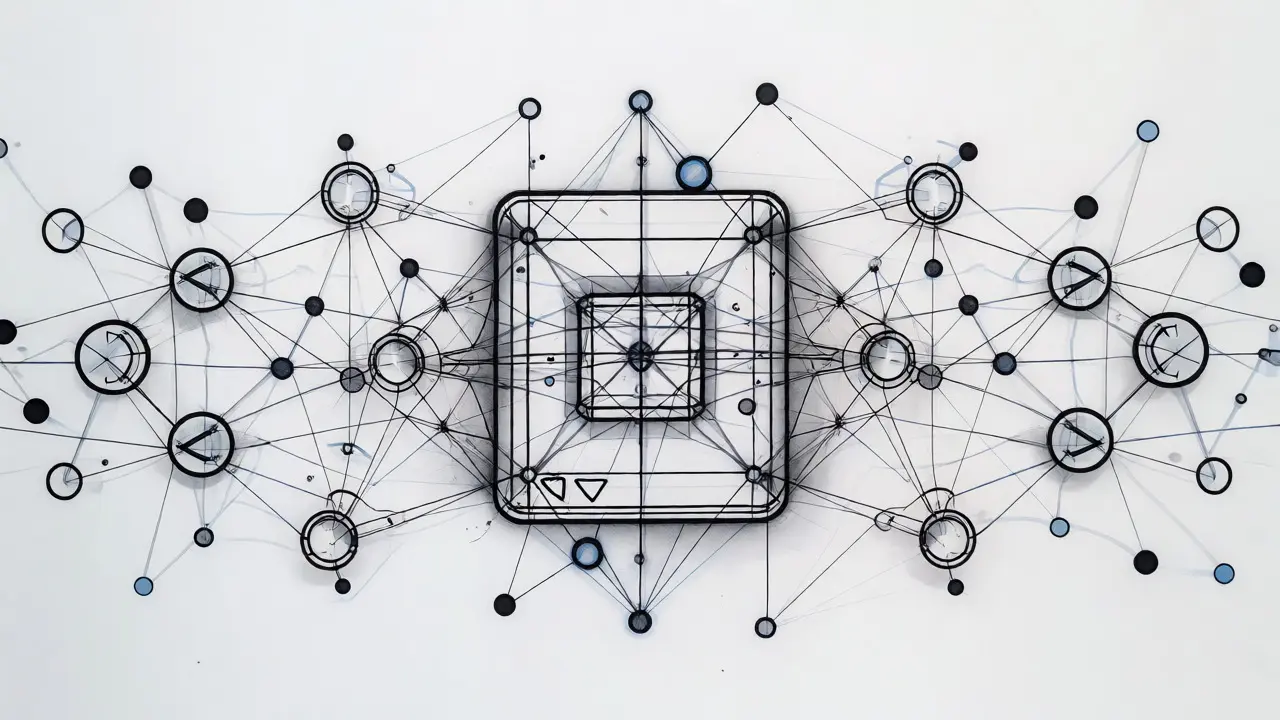
Imagine waking up tomorrow to find your favorite social platform blocked in your country. No warning, no appeal process, just a blank screen or a government-mandated error page. This isn't hypothetical. In recent years, we've seen X (formerly Twitter) restricted in Brazil, Iran, and Venezuela, while Telegram faced bans in Russia and other regions. For millions of users, this means losing their digital voice overnight. Traditional platforms like Facebook or Instagram rely on central servers that can be pressured by governments or corporate boards to silence specific voices. But what if the internet didn't have a single "off" switch? That's the promise behind censorship resistance in blockchain social networks.
This concept isn't just about free speech; it's about architectural inevitability. When data lives on a distributed ledger rather than a company's server farm, removing content becomes nearly impossible without shutting down the entire network. Let's break down how this works, why it matters for your digital freedom, and the real-world trade-offs you need to know before jumping in.
The Five Pillars of Uncensorable Data
Censorship resistance isn't magic. It relies on five technical mechanisms working together to ensure that once information is posted, it stays there. If any one of these pillars fails, the system becomes vulnerable.
First is decentralization. Unlike traditional apps where a single company controls the database, blockchain networks spread control across thousands of independent computers, known as nodes. No single party has complete authority over the network. To censor a post, an adversary would need to convince the majority of these globally dispersed nodes to reject the transaction simultaneously. That’s a logistical nightmare compared to sending an email to a CEO at Meta.
Second is immutability. Once data is written to a block and added to the chain, it cannot be changed or deleted. Each block contains a cryptographic hash of the previous block, creating an unbreakable link. If someone tries to alter a past message, the hash changes, breaking the chain and alerting every node in the network. This creates a permanent historical record that resists revisionist history.
Third, transparency acts as a watchdog. On public blockchains, all transactions are visible to anyone. This openness discourages hidden censorship because any attempt to manipulate data is immediately obvious to the community. You can audit the flow of information yourself, ensuring no silent deletions occur.
Fourth, cryptography protects both privacy and integrity. Strong encryption ensures that only those with the correct keys can access private messages, while also verifying that public posts haven't been tampered with during transmission. Censors can’t easily intercept or alter data without permission.
Finally, consensus mechanisms like Proof-of-Work or Proof-of-Stake require network agreement for any change. One person-or even a powerful corporation-can’t unilaterally decide to blacklist an address or freeze a transaction. The network rules apply equally to everyone, from the newest user to the largest whale.
How It Works: Storing Posts On-Chain
You might wonder how a tweet fits into a blockchain. It doesn’t go into a separate "social media app" layer alone; often, the content itself is embedded directly into financial transactions. This is where technologies like OP_RETURN come into play. Originally designed for Bitcoin to embed small amounts of arbitrary data in transactions, OP_RETURN allows users to attach text or metadata to a payment.
For example, researchers in the Bitcoin Cash community have demonstrated posting messages directly on-chain using OP_RETURN transactions. Instead of relying on third-party services like Memo.cash-which can be blocked or shut down-the message lives permanently in the blockchain ledger. To censor this message, a government wouldn't just ban an app; they’d effectively have to ban the use of money itself within that jurisdiction. If you can send cash, you can send a message.
However, space is limited. Current standards often cap OP_RETURN data at around 220 bytes. Community discussions suggest increasing this limit to 300 bytes to allow for more coherent messages and richer metadata. While this seems small, it’s enough for short status updates, links, or hashes pointing to larger files stored elsewhere. This approach ensures that even if the link breaks, the proof of existence remains on-chain forever.
Real-World Impact: Beyond Theory
The theory sounds great, but does it hold up when governments flex their muscles? Recent events provide stark evidence. The imprisonment of Pavel Durov, founder of Telegram, and the blocking of X in multiple countries highlight the fragility of centralized platforms. When a platform is hosted on centralized servers, legal threats work. When the platform is a protocol running on thousands of nodes, legal threats lose their teeth.
In jurisdictions with heavy internet censorship, blockchain social networks offer a lifeline. Users report that while interface layers (the websites or apps you use to view the blockchain) can be blocked, the underlying data remains accessible via direct node connections or alternative front-ends. This resilience makes blockchain-based alternatives particularly valuable for journalists, activists, and communities requiring guaranteed free speech protections.
Consider the case of Brazil’s recent restrictions on X. While users struggled to access the main domain, those using decentralized protocols could still interact with the network through different gateways. The data wasn’t gone; it was just harder to reach. This distinction between "blocked access" and "deleted content" is crucial. Centralized platforms delete; decentralized networks hide.
The Trade-Offs: Speed, Cost, and Complexity
If blockchain social media is so robust, why isn’t everyone using it? Because censorship resistance comes with significant costs. You’re trading convenience for permanence.
| Feature | Centralized (e.g., X, Facebook) | Decentralized (e.g., Blockchain-based) |
|---|---|---|
| Content Removal | Instant deletion by admins/governments | Near-impossible removal; requires network consensus |
| Cost Model | Free for users (ad-supported) | User pays transaction fees per action |
| Speed | Millisecond latency | Seconds to minutes (block confirmation time) |
| Scalability | High (millions of TPS possible) | Limited (varies by chain, e.g., BTC ~7 TPS) |
| User Experience | Familiar, seamless login | Requires wallet management, key backups |
First, there’s the cost. On traditional platforms, you don’t pay to post. On blockchain networks, every like, comment, or post is a transaction that requires a fee. During network congestion, these fees can spike, making casual interaction expensive. Second, speed is slower. You wait for blocks to confirm, which can take seconds or minutes depending on the chain. Third, complexity is high. Managing private keys, understanding wallets, and handling gas fees create a steep learning curve for average users.
Moreover, scalability remains a critical bottleneck. Most blockchain networks process significantly fewer transactions per second than required for large-scale social media usage. While Layer 2 solutions and newer chains aim to solve this, mainstream adoption will likely require significant improvements in throughput and cost efficiency.
Who Is This For?
Blockchain social networks aren’t for everyone-at least not yet. They are ideal for specific niches:
- Journalists and Activists: Those who need an immutable record of their reporting that cannot be retroactively altered.
- Users in Censored Regions: Individuals living under regimes where internet shutdowns or platform bans are common.
- Privacy-Conscious Individuals: People who prefer cryptographic ownership of their identity over handing data to corporations.
- Creators Seeking Direct Monetization: Platforms that allow tipping or paying for content directly without middlemen taking a cut.
For the average user scrolling through memes, the friction of connecting a wallet and paying fees might outweigh the benefits of uncensorable posts. However, as user experience improves-think easier wallet integrations and lower fees-the barrier to entry continues to drop.
The Future of Free Speech Online
The trend toward censorship is undeniable. Governments worldwide are grappling with how to regulate online spaces, often leaning toward tighter controls. Blockchain technology offers a counterweight, not by fighting regulation head-on, but by operating outside its traditional reach. It shifts the power dynamic from intermediaries to individuals.
Current developments focus on improving usability while maintaining core principles. We’re seeing efforts to increase data limits (like the push for 300-byte OP_RETURN), reduce transaction costs, and simplify key management. The goal isn’t to replace Web2 entirely but to provide a resilient backbone for communication that survives political and corporate upheaval.
As we move deeper into 2026, expect more hybrid models. These might combine the ease of use of traditional apps with the security of blockchain backends. The ultimate victory for censorship resistance won’t look like a radical overhaul of the internet, but rather a quiet assurance that your voice, once spoken, cannot be erased.
Can governments completely shut down a blockchain social network?
Governments can block access to popular front-end websites or apps, but they cannot easily stop the underlying network. Since the data resides on thousands of independent nodes globally, shutting down the network would require disconnecting the entire internet infrastructure or banning cryptocurrency transactions entirely, which is economically disruptive.
Is my data truly private on a blockchain social network?
Not necessarily. Public blockchains are transparent, meaning anyone can see transactions and associated data. While cryptography protects ownership, the content itself is often public unless encrypted. Privacy-focused blockchains or zero-knowledge proofs are emerging to address this, but standard public ledgers prioritize transparency over secrecy.
What happens if I lose my private key?
You lose access to your account and any funds associated with it. Unlike traditional platforms where you can reset a password via email, blockchain accounts rely solely on cryptographic keys. There is no customer support to recover lost keys, making secure backup essential.
Why do I have to pay fees to post on blockchain social media?
Fees compensate the miners or validators who secure the network and process transactions. In centralized platforms, advertisers subsidize the service. In decentralized networks, users pay directly for the computational resources required to store and verify their data on the global ledger.
Are blockchain social networks faster than traditional ones?
Generally, no. Traditional platforms operate on centralized databases with millisecond response times. Blockchains require time for block confirmation, which can range from seconds to minutes. Additionally, network congestion can slow processing further, though Layer 2 scaling solutions are improving this.