
Common Reporting Standard and Crypto Taxation: What You Need to Know in 2026
Crypto Tax Calculator
Estimate your cryptocurrency capital gains tax liability based on purchase and sale prices. Note: Actual tax rates vary by jurisdiction and holding period.
Estimated Tax Liability
⚠️ CRS and CARF require reporting of all transactions. Missing this could result in penalties up to 75% of unpaid tax.
Note: Actual tax rates depend on jurisdiction, holding period, and cost basis method (FIFO/LIFO).
Before 2026, tax authorities had a blind spot when it came to crypto. You could buy Bitcoin in one country, trade it on a platform based in another, and cash out in a third-without anyone knowing. That’s changing. Starting January 1, 2026, the Common Reporting Standard gets a major upgrade to close that gap. And it’s not just about bank accounts anymore. Crypto is now in the crosshairs.
What the CRS Actually Covers Now
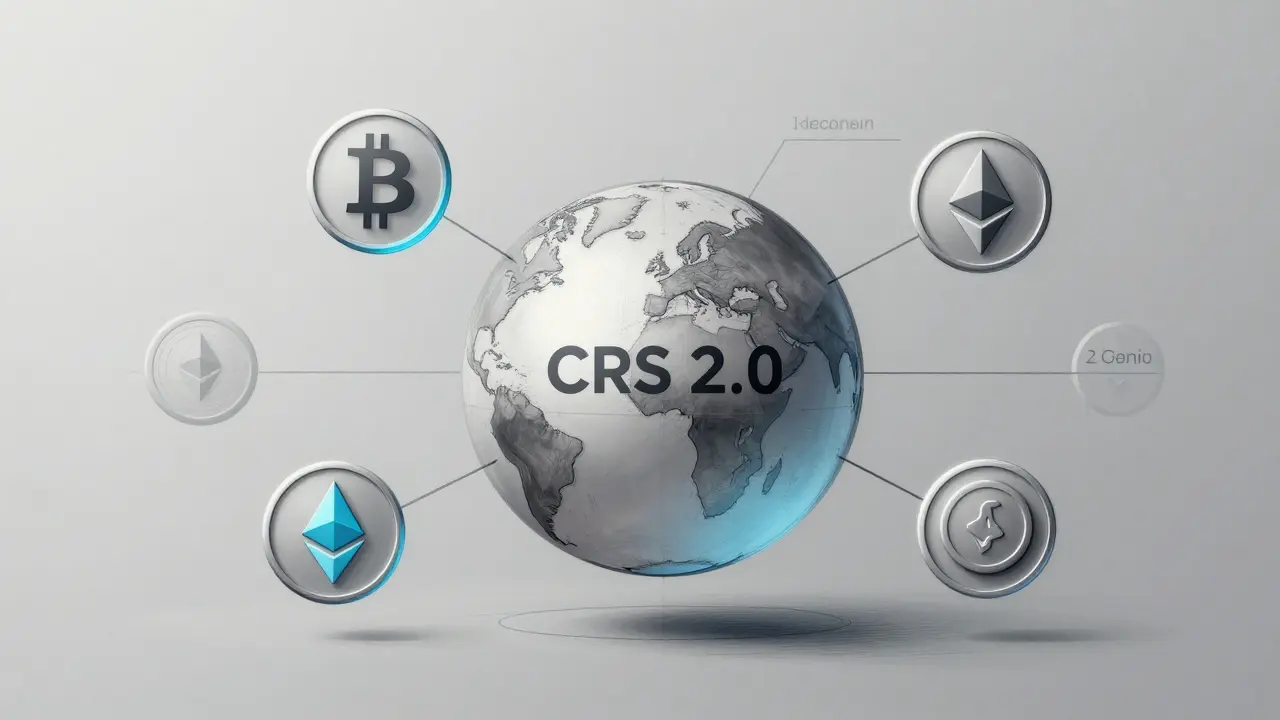
The Common Reporting Standard was never meant for crypto. Back in 2014, it was built to catch people hiding money in offshore bank accounts. But digital assets don’t sit in banks. They live on wallets, exchanges, and decentralized platforms. So the OECD updated it. The new version, called CRS 2.0, now includes crypto-assets as reportable financial holdings.Under CRS 2.0, if you hold crypto through a financial institution-like a crypto exchange, a custodial wallet provider, or an investment fund that trades digital assets-that institution must report your holdings to your home country’s tax authority. This includes Bitcoin, Ethereum, stablecoins like USDC, and even certain NFTs if they’re traded like investment products.
The key change? It’s not about transactions anymore. It’s about ownership. If you have $5,000 worth of crypto in a custodial account on a platform that reports under CRS, that gets reported. No matter where you live or where the exchange is based.
How CARF Is Different (And Why It Matters)
CRS doesn’t track trades. That’s where CARF comes in. The Crypto-Asset Reporting Framework is the new sibling to CRS. While CRS watches what you own, CARF watches what you do. Every time you swap Bitcoin for Ethereum, sell a token for fiat, or pay for something with crypto, CARF requires the platform to report that transaction.Think of it like this: CRS tells your tax office, “John has $12,000 in crypto.” CARF tells them, “John sold $8,000 of that Bitcoin last year and bought $5,000 in Solana.” Together, they give tax authorities a full picture: holdings, activity, and gains.
Both frameworks start reporting in 2026, but CARF’s data won’t be exchanged until 2027. That gives institutions time to build the systems needed to track every trade. But don’t wait. If you’re using a platform that reports under CRS now, they’re already preparing for CARF.
Who Has to Report? (It’s Not Just You)
You might think this only affects big investors. It doesn’t. Any financial institution that holds crypto for clients must comply. That includes:- Centralized crypto exchanges (Binance, Kraken, Coinbase)
- Custodial wallet providers (Coinbase Custody, BitGo)
- Investment funds that trade crypto
- Insurance companies offering crypto-backed products
- Banks that offer crypto trading or custody services
These entities are now legally required to identify foreign tax residents, collect their personal details (name, address, tax ID), and report their crypto holdings and transactions annually. If you’re a New Zealander using a U.S.-based exchange, your data goes to Inland Revenue. If you’re a German citizen holding crypto on a Singaporean platform, your tax office gets it.
There’s no opt-out. Even if you don’t file a tax return, the platform will report anyway. And your home country will match that data against what you declare-or don’t declare.
What Counts as a Crypto-Asset? (It’s Broader Than You Think)
The OECD doesn’t just mean Bitcoin. The official definition covers any digital representation of value that uses blockchain or similar tech to verify transactions. That includes:- Bitcoin, Ethereum, and other major cryptocurrencies
- Stablecoins (USDT, USDC, DAI) tied to fiat currencies
- Derivatives based on crypto (futures, options, perpetual swaps)
- Some NFTs-if they’re held as investments, not collectibles
- Central Bank Digital Currencies (CBDCs) like the digital euro or e-CNY
Non-fungible tokens (NFTs) are tricky. If you bought an NFT as a digital painting to hang on your wall? Probably not reportable. But if you bought it as an investment, traded it for profit, or used it as collateral? That’s reportable under CRS.
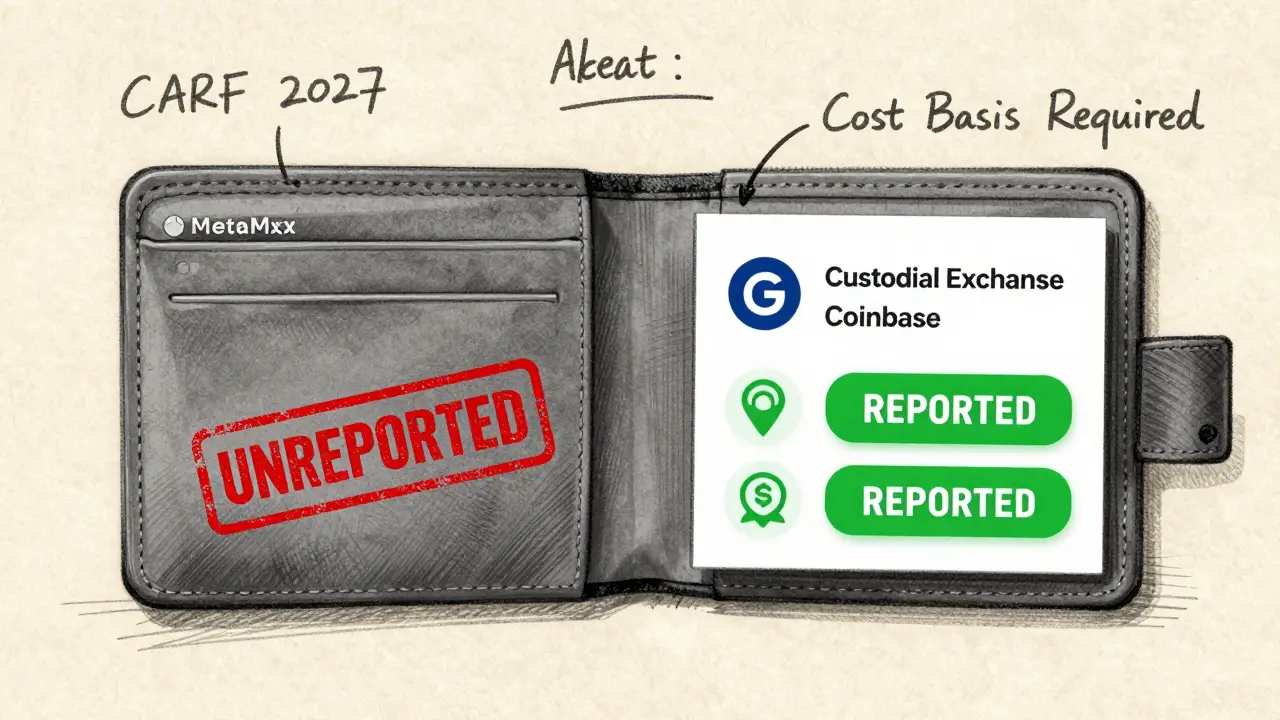
And here’s the catch: if you hold crypto in a non-custodial wallet-like MetaMask or Ledger-your platform doesn’t report it. But if you later move that crypto to a custodial wallet on an exchange, the exchange will report the incoming balance. So hiding crypto off-exchange only delays the report. It doesn’t avoid it.
How This Changes Your Tax Obligations
If you’ve been ignoring crypto taxes because “no one’s watching,” you’re in for a surprise. Tax authorities already have your bank data. Now they’ll have your crypto data too. And they’re getting better at connecting the dots.Let’s say you bought $10,000 of Ethereum in 2023 and sold it for $18,000 in 2025. You didn’t report the $8,000 gain. In 2027, your home country receives a CARF report showing that sale. They cross-check it with your tax return. If it’s missing? You’ll get a notice. Penalties can be steep-up to 75% of the unpaid tax in some countries.
Even small trades matter. Swapping $500 of Dogecoin for Shiba Inu? That’s a taxable event. The platform reports it. The tax office sees it. If you didn’t record the cost basis, you’ll owe tax on the full $500 as a gain.
And if you’re a non-resident? CRS doesn’t care. If you’re a tax resident of New Zealand and you hold crypto on a Swiss exchange, Switzerland reports your holdings to New Zealand’s Inland Revenue. It doesn’t matter where the exchange is. It matters where you live.
What Countries Are Doing This?
As of 2025, 120 countries have adopted CRS. The 2026 amendments are being rolled out by the same group. The European Union is implementing it through DAC8, a new tax transparency directive. The UK, Guernsey, the U.S., Canada, Australia, Japan, and Singapore are all on board. Even countries with strict capital controls-like India and Brazil-are preparing to join.The U.S. doesn’t technically use CRS. It uses FATCA. But FATCA already covers crypto. And since the U.S. is part of the CARF agreement, American exchanges will report to foreign tax authorities too. So if you’re a U.S. citizen living abroad, your crypto data goes to your home country-and back to the IRS.
There’s no safe haven anymore. Even if you move to a country that hasn’t adopted CRS yet, your home country will still report your holdings if you use a platform in a CRS country. And if you later return home? They’ll have the records.
What Should You Do Now?
You can’t stop the system. But you can prepare for it.- Track every transaction. Use a crypto tax tool like Koinly, CoinTracker, or TaxBit. Record buys, sells, swaps, staking rewards, and airdrops. Don’t rely on exchange summaries-they’re not always accurate.
- Know your cost basis. You need to know how much you paid for each coin. FIFO, LIFO, or specific identification? Pick a method and stick with it.
- Don’t use non-custodial wallets for long-term storage if you’re a frequent trader. Moving crypto to a wallet to avoid reporting doesn’t work. When you cash out later, the exchange will report the sale-and they’ll know the asset came from you.
- File your crypto taxes, even if you think you owe nothing. Zero gains? Still report. It shows you’re compliant.
- Update your records for 2026. If you held crypto in 2025, make sure your records are clean. That’s the year that will be reported in 2026.
Platforms are upgrading their systems. You should upgrade yours too. The days of hoping your crypto activity stays invisible are over. The system is built. It’s global. And it’s watching.
What Happens If You Don’t Comply?
The penalties aren’t just about money. In many countries, failing to report crypto income can lead to:- Back taxes with interest
- Fines up to 75% of the unpaid tax
- Loss of tax credits or deductions
- Legal action for tax evasion
- Difficulty opening bank accounts or getting loans
Some countries, like the UK and Australia, have already launched crypto tax amnesty programs. They’re giving people a chance to come forward and pay what they owe-with reduced penalties. But those windows are closing. If you wait until you get a letter, you won’t get a second chance.
And remember: your crypto exchange isn’t going to protect you. Their job is to report. They’re not your accountant. They’re not your tax advisor. They’re the middleman handing your data to the taxman.
What’s Next After 2026?
CRS and CARF are just the beginning. The OECD is already looking at DeFi protocols, DAOs, and privacy coins. If you’re using a decentralized exchange like Uniswap or swapping crypto via a smart contract, don’t assume you’re safe. The next update will likely require platforms to report DeFi transactions too.Expect more integration with other systems-like anti-money laundering databases, KYC records, and even blockchain analytics tools. Tax authorities are using Chainalysis and Elliptic to trace transactions across wallets. They don’t need your permission. They just need the data.
By 2030, crypto tax compliance won’t be optional. It’ll be as routine as filing your income tax. The question isn’t whether you’ll be caught. It’s whether you’ve been ready for it all along.
Scott Sơn
December 9, 2025 AT 00:49So let me get this straight - the government is now gonna track my NFTs like they’re stocks? I bought a pixelated ape for $300 and now I’m supposed to report it like I’m filing a 1099? This isn’t taxation, this is digital surveillance with a side of bureaucracy 🤡
Stanley Wong
December 10, 2025 AT 06:51Look I get that transparency is good but when you start treating every single swap of Dogecoin into Shiba Inu like a taxable event you’re not helping the system you’re just making it impossible for regular people to participate without hiring a CPA who charges by the blockchain transaction. I mean how many of us even know what FIFO means in this context? And why does the IRS care if I traded 50 bucks worth of crypto last Tuesday? This feels like trying to count every drop of rain in a hurricane
Cristal Consulting
December 11, 2025 AT 20:56Just use Koinly. Seriously. It’s free for basic use and it connects to your wallets and exchanges. I used to panic every April until I started tracking everything in real time. Now tax season is just a formality. You got this 💪
Ben VanDyk
December 13, 2025 AT 06:07CRS 2.0. CARF. DAC8. You guys are really out here inventing acronyms like it’s a sci-fi novel. Meanwhile my uncle in Ohio still thinks Bitcoin is a type of pizza. This whole thing is a tax collector’s fantasy wrapped in OECD jargon.
michael cuevas
December 14, 2025 AT 17:08So if I swap my ETH for SOL on a DEX and then move it to Coinbase later they’re gonna report the whole chain? Bro that’s like telling the FBI every time you change your underwear. Who’s gonna audit the auditors? 🤔
Nina Meretoile
December 14, 2025 AT 17:38It’s wild how we’re all suddenly living in a world where your crypto wallet is your new bank account 🌍✨ But honestly? I’m kinda relieved. No more guessing if I owe taxes. No more hiding. Just clean, clear, digital truth. Even if it’s scary. We’re growing up as a community. 🙌
Barb Pooley
December 15, 2025 AT 08:27Of course they’re doing this. They know people are getting rich off crypto. They’re terrified. This isn’t about fairness - it’s about control. They’ll come for your DeFi next. Then your private keys. Then your thoughts. Next thing you know they’ll tax your dreams. 🔐👁️
Shane Budge
December 17, 2025 AT 04:43Does CARF cover staking rewards?
sonia sifflet
December 18, 2025 AT 11:44Why are Americans so shocked? In India we’ve been reporting crypto since 2022. 30% tax on every gain, no deductions, no mercy. If you think this is bad, wait till you see what happens when your government has real-time blockchain analytics. You think this is invasive? You haven’t seen anything yet.
Adam Bosworth
December 19, 2025 AT 15:28They’re gonna come for my memecoins next. My entire identity is built on Shiba Inu and Dogecoin. What am I supposed to do? Sell everything and go live in a van? This is the end of financial freedom. The system is rigged. They know we’re all just trying to survive. And now they want to tax our hope.
Uzoma Jenfrancis
December 21, 2025 AT 11:39Why should Nigeria follow Western rules? We don’t even have reliable electricity but now we’re supposed to track every crypto transaction? This is cultural imperialism dressed as financial reform. Let us build our own systems.
Renelle Wilson
December 23, 2025 AT 09:24It’s important to recognize that this shift, while daunting, represents a maturation of the crypto ecosystem. For too long, we’ve operated in a gray zone - and now, with institutional compliance frameworks like CRS and CARF, we’re being invited into the mainstream financial world. This doesn’t mean the end of autonomy - it means the beginning of legitimacy. With proper recordkeeping, education, and support, we can navigate this transition with dignity and clarity. The tools exist. The knowledge is available. We just need to meet this moment with patience, not panic.
Elizabeth Miranda
December 23, 2025 AT 22:03I’ve been holding crypto since 2017 and never filed taxes. I’m not proud of it. But I’m not a criminal either. I just didn’t know how. Now I’m using a tax tool, tracking everything, and actually feeling… calm? Like maybe I can finally stop living in fear of a letter in the mail.
Chloe Hayslett
December 25, 2025 AT 02:15Oh so now the U.S. gets to tell the world how to tax crypto? Cute. We don’t need your FATCA, your CRS, your CARF. We’ve got our own blockchain, our own rules. You want to track us? Good luck with that. The rest of the world isn’t your tax colony.
Jonathan Sundqvist
December 26, 2025 AT 06:30My exchange just emailed me saying they’re gonna report everything. I didn’t even know I had to do anything. Now I’m scrambling to find my 2023 buys. Why is this so hard? Why can’t they just auto-fill it? This feels like being forced to do your taxes in Latin.
Thomas Downey
December 27, 2025 AT 03:51It is deeply concerning that the general public continues to treat crypto as a speculative playground rather than a legitimate financial instrument. The introduction of CRS 2.0 and CARF is not an overreach - it is a necessary corrective to a decade of regulatory negligence. Those who resist compliance are not freedom fighters; they are fiscal anarchists who endanger the integrity of the global financial system. One must ask: if you are not willing to report your gains, what are you hiding from?
Noriko Robinson
December 28, 2025 AT 15:02Wait so if I get an airdrop and immediately sell it is that two events? Like one for income and one for capital gain? I think I just had a panic attack. Can someone send me a link to a video that explains this in under 5 minutes? I’m not a nerd I just want to buy my coffee with crypto without getting audited 😭
Mariam Almatrook
December 29, 2025 AT 03:44How quaint. The OECD believes it can impose a global tax regime on decentralized, borderless technology. They misunderstand the very nature of blockchain. The moment they begin to track non-custodial wallets, they will have declared war on privacy itself. And in that war, they will lose - because the people will simply move to privacy coins, ZKPs, and sovereign chains. This is not the end of crypto. It is the beginning of its evolution beyond their control.
Chris Mitchell
December 29, 2025 AT 18:08It’s not about control. It’s about fairness. If you’re making money, you pay your share. That’s the social contract. Crypto isn’t above the law - it’s part of the economy now. The real question isn’t whether you should report - it’s why you didn’t start years ago.
nicholas forbes
December 29, 2025 AT 18:12I’m not saying don’t report. I’m saying don’t panic. Just start tracking. Even if you’re behind. Even if you’re messy. One entry at a time. You don’t have to be perfect. You just have to start.
Regina Jestrow
December 29, 2025 AT 19:25I just sold my last NFT and I’m crying. Not because I lost money - because I realized I’ll never be able to buy another one without it being tracked. This isn’t progress. This is the end of the magic. The internet used to feel like a wild west. Now it’s just another mall with a receipt.
Martin Hansen
December 30, 2025 AT 09:39You think this is bad? Wait till they start taxing your DeFi yield farming like it’s a side hustle. Next thing you know they’ll be sending you W-2s for your staking rewards. I’m moving to El Salvador. At least there they still believe in freedom. Or at least the illusion of it.
Lore Vanvliet
December 31, 2025 AT 11:58They’re coming for our wallets, our privacy, our freedom. And you’re all just sitting here like it’s normal? 🤡💸 I’m not reporting anything. I’m not using exchanges. I’m using hardware wallets and peer-to-peer. You think they can track a cold wallet? Try harder. I’ll be laughing while you’re filling out Form 8949.
Brooke Schmalbach
January 1, 2026 AT 14:36Let’s be real - most people who are complaining about CARF are the same people who claimed crypto was ‘decentralized’ until they got taxed. Now they’re screaming about government overreach. Funny how that works. The truth? Crypto was never meant to be a tax loophole. It was meant to be a better system. And better systems require accountability.