
Cross-border Crypto Payments in Russia: What You Need to Know About New Bitcoin Rules
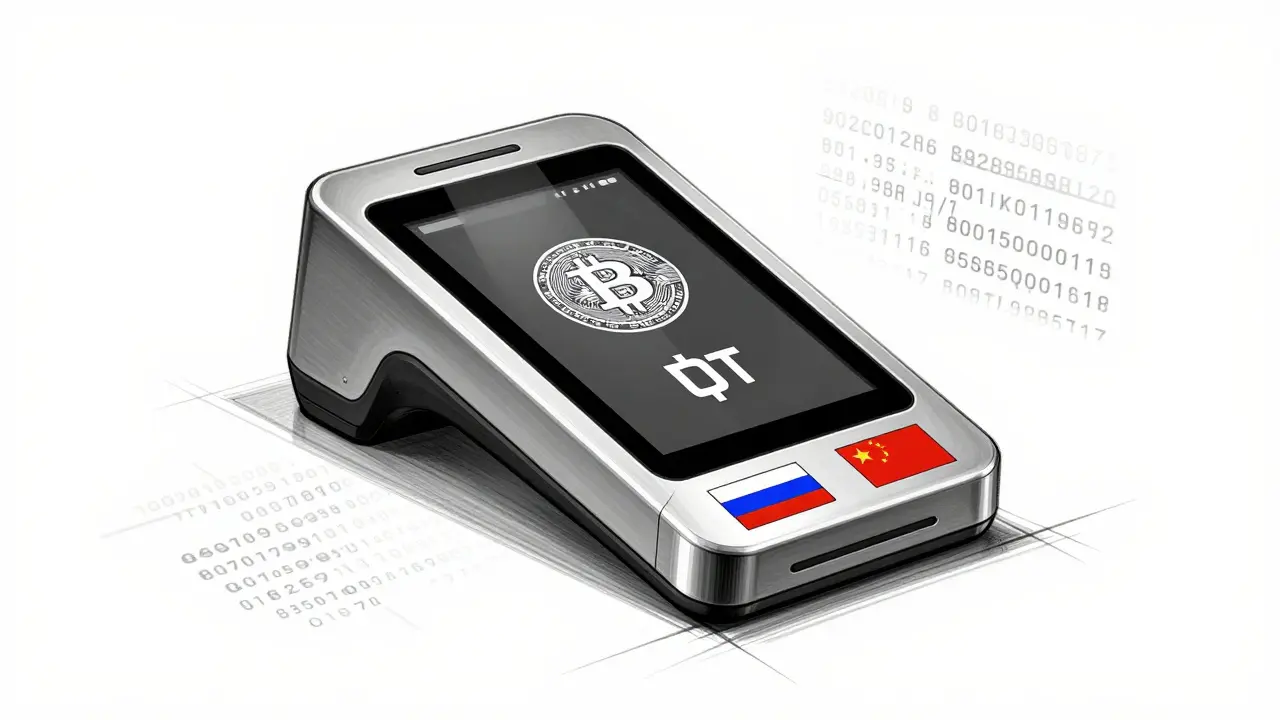
Since 2024, Russia has quietly rewritten the rules around Bitcoin and other cryptocurrencies-not to ban them, but to use them. While ordinary Russians still can’t legally pay for coffee with Bitcoin, the government now allows companies to send and receive crypto across borders. This isn’t a loophole. It’s official policy under Federal Law No 221-FZ, a three-year pilot program designed to bypass Western financial sanctions and keep trade flowing.
Why Russia Changed Its Mind on Crypto
In 2022, Russia banned cryptocurrency payments domestically. Banks couldn’t process crypto transactions. Exchanges were shut down. Even holding Bitcoin was risky. But as sanctions froze Russian banks out of SWIFT and cut off access to dollar reserves, something changed. Trade with China, India, Turkey, and others didn’t stop-it just found a new path. By late 2023, energy companies started using Tether (USDT) and Bitcoin to invoice oil and gas exports. No more waiting for delayed bank transfers. No more blocked payments. Just direct, peer-to-peer settlements. The government noticed. Instead of cracking down, they legalized it. The shift wasn’t about embracing decentralization. It was about survival. President Putin ordered the Finance Ministry and Central Bank to find a middle ground: allow crypto for international trade, but keep it locked away from everyday Russians. The result? A tightly controlled system where only approved companies can move crypto across borders-and only through certified platforms monitored by the Bank of Russia.Who Can Use Crypto for Cross-Border Payments?
Not everyone. Only legal entities-companies, not individuals-can participate. And even then, only if they’re part of the official pilot program. The Bank of Russia maintains a list of approved digital asset operators. These aren’t Binance or Kraken. They’re Russian-registered platforms with strict AML and KYC protocols baked in. The crypto allowed? Bitcoin (BTC), Ethereum (ETH), Tether (USDT), and a few other stablecoins tied to the ruble or dollar. No random altcoins. No anonymous wallets. Every transaction must be recorded, traced, and reported to tax and financial authorities. Companies using this system must prove where their funds came from. They must show they’re not laundering money or evading sanctions. The Bank of Russia has issued detailed guidelines on spotting suspicious peer-to-peer transfers. If a company’s crypto payments look odd-sudden spikes, unusual counterparties, mismatched invoice amounts-they’ll get flagged.Domestic Crypto? Still Illegal
Here’s the key detail: you still can’t use Bitcoin to pay your rent, buy groceries, or tip a delivery driver in Russia. Domestic crypto payments remain banned. The government wants crypto as a trade tool, not a currency. That’s why the Digital Ruble-a state-backed digital version of the ruble-is being rolled out separately. Starting September 1, 2026, large enterprises will be required to accept it. By 2028, even small shops will have to switch over. This split is intentional. The state wants control over money circulating inside Russia. Outside Russia? Let companies use crypto to dodge sanctions. Inside Russia? Keep everything tied to the Digital Ruble, where the government can track every ruble spent.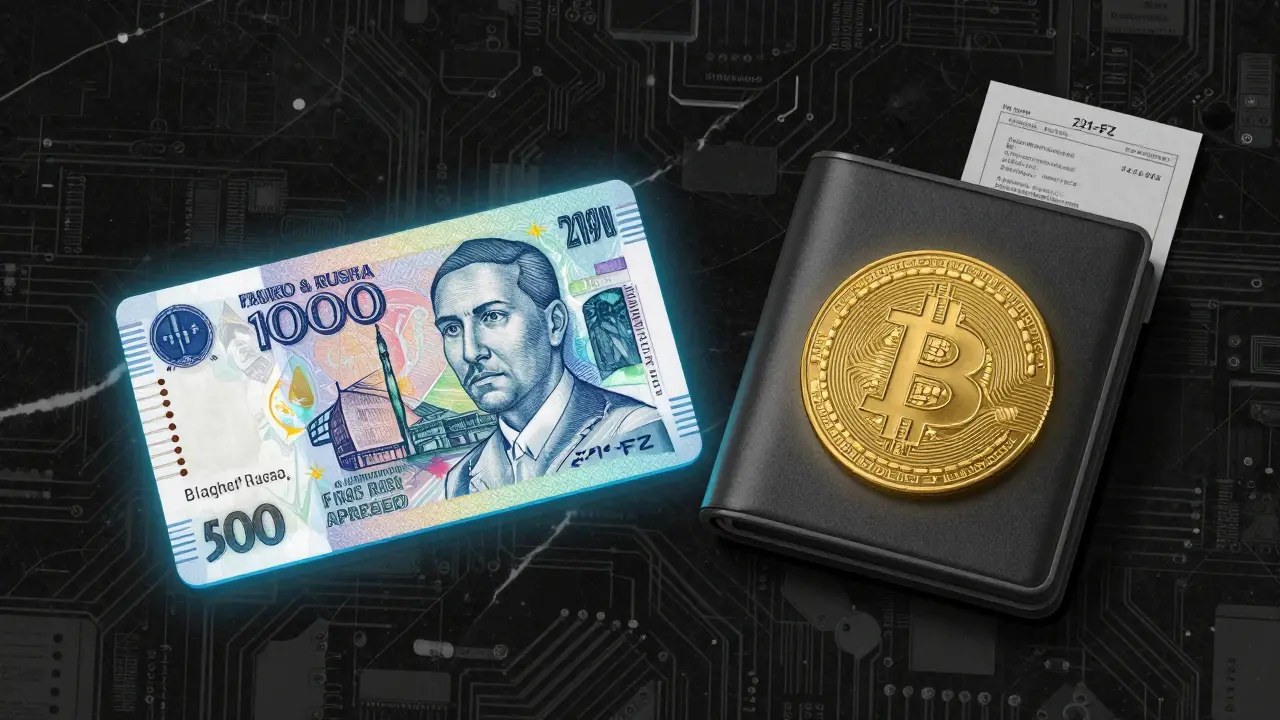
Who’s Getting Rich From This?
The biggest winners? Energy exporters. Russian oil and gas firms have become the leading users of cross-border crypto payments. In 2025, official data shows that crypto-facilitated trade hit 1 trillion rubles ($11 billion USD). Most of that came from sales to India and China, where buyers prefer stablecoins like USDT because they’re faster and more reliable than traditional banking. One company, the A7 Group, partially owned by a sanctioned Russian bank, has been using ruble-backed stablecoins to settle international contracts since early 2024. They don’t use Bitcoin directly-they use tokens pegged to the ruble to avoid price swings. That’s the trend: companies prefer stablecoins over volatile assets like Bitcoin for actual payments. But Bitcoin still matters. It’s used as a reserve asset. Some firms hold BTC as a hedge against ruble devaluation. Others use it to convert funds into a globally accepted digital asset before moving them into local currencies abroad.Investors Are Getting Limited Access
Regular people still can’t buy Bitcoin through Russian exchanges. But a small group can. The Bank of Russia defines a “highly qualified investor” as someone with over 100 million rubles ($1.1 million USD) in securities or deposits-or an annual income over 50 million rubles ($550,000 USD). That’s less than 0.1% of the population. Since May 2025, these investors can buy Bitcoin futures and other crypto derivatives. In the first month alone, Russian investors bought $16 million worth. The Central Bank plans to let investment funds buy crypto derivatives in 2026. But even then, only the ultra-rich get in. The Ministry of Finance is considering lowering the income threshold. But don’t expect mass access anytime soon. The goal isn’t financial inclusion. It’s financial control.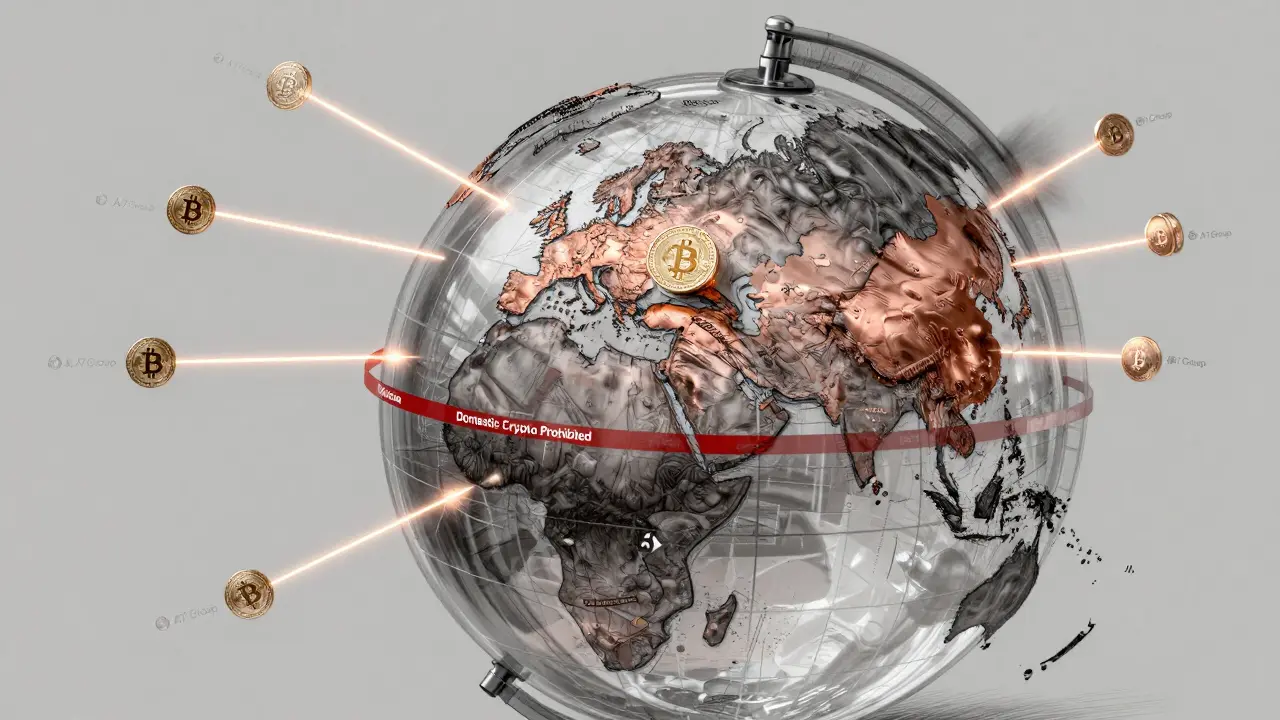
Challenges and Risks
The system works-but it’s fragile. Many Russians still hold over $25 billion in crypto, mostly on foreign exchanges like Binance or Bybit. They can’t legally buy crypto in Russia, but they can still trade it overseas. The government knows this. They’ve been pressuring foreign platforms to block Russian IPs and enforce KYC on Russian users. Enforcement is messy. P2P trading is hard to track. Someone in Moscow can use a VPN to buy Bitcoin from a seller in Turkey, then send it to a company in China. The Bank of Russia can’t stop that. So they focus on the big players: banks, energy firms, exporters. If you’re a small business trying to use crypto to pay suppliers, you’re on your own. There’s also the risk of over-reliance. If China or India suddenly restrict crypto payments, Russia’s trade lifeline could snap. That’s why the Digital Ruble rollout is so critical. It’s the long-term plan: replace crypto with a state-controlled digital currency that’s just as fast, but fully under Moscow’s thumb.What’s Next?
The pilot program runs until 2027. After that, the government will decide whether to make cross-border crypto payments permanent. If the system proves stable, clean, and effective, expect broader access-even for more asset types. The Central Bank is already working on rules for crypto-based derivatives. A draft law is expected in 2026. That could open the door to Bitcoin ETFs or tokenized bonds for qualified investors. Meanwhile, Russia’s position in the global crypto landscape is shifting. While the U.S. and EU treat crypto as a risk to be contained, Russia treats it as a weapon to be deployed. It’s not about freedom. It’s about power. And for now, that power is working.For businesses trading with Russia, the message is clear: if you want to get paid, you’ll need to accept crypto. If you’re an investor, access is still locked behind a very high wall. And for everyone else? Stick to cash. The digital future is here-but it’s not for you.
Steve Fennell
January 22, 2026 AT 21:49Worth noting: India and China are quietly becoming the new financial hubs for sanctioned economies. This isn't just about bypassing SWIFT-it's about building a parallel financial ecosystem.
Roshmi Chatterjee
January 24, 2026 AT 06:32Who needs SWIFT when you've got a QR code and a wallet?
Matthew Kelly
January 25, 2026 AT 05:00Still, if I had to pick a side, I’d say this is the most pragmatic thing Russia’s done since 2022. No idealism. Just survival.
Adam Fularz
January 26, 2026 AT 00:39the world is so dumb. this is why we need to ban crypto. its just a tool for crooks.
Linda Prehn
January 27, 2026 AT 11:56It’s not about Russia. It’s about the collapse of Western financial hegemony. And I’m here for it. The revolution is being paid in USDT
Adam Lewkovitz
January 28, 2026 AT 14:34Putin's not a crypto bro. He's a dictator who found a new way to steal. Don't be fooled.
Clark Dilworth
January 29, 2026 AT 00:54Brenda Platt
January 29, 2026 AT 14:52They're not anti-crypto. They're anti-exploitation. And honestly? That’s the most responsible way to handle this. 🙌
Barbara Rousseau-Osborn
January 31, 2026 AT 13:02And you call this innovation? It's fraud with a government stamp.
george haris
February 2, 2026 AT 10:46And honestly? I respect that. They didn’t panic. They adapted. That’s leadership.
Mark Estareja
February 2, 2026 AT 14:48And yet, nobody in the Fed or Treasury is talking about it. Why? Because they're still stuck in 2019.
Sara Delgado Rivero
February 3, 2026 AT 02:14Athena Mantle
February 3, 2026 AT 02:50This is the birth of a new digital civilization. One built on sovereignty, not subjugation. The West thinks they’re winning by sanctioning. But they’re just pushing the world away. 🌍✨
carol johnson
February 4, 2026 AT 18:41Same thing here. They’re lying. They just have more power to make it stick.
Paru Somashekar
February 6, 2026 AT 04:00Heather Crane
February 7, 2026 AT 19:30But here’s the thing: if we can fix that, if we can make access fair… this could be the future. Not for the elite. For everyone.
Catherine Hays
February 9, 2026 AT 05:33Wake up. This isn’t innovation. It’s collapse dressed up as progress.
Nathan Drake
February 9, 2026 AT 12:05Maybe the real question isn’t whether Russia’s policy works-but whether we’ve lost the meaning of decentralization entirely.
Melissa Contreras López
February 10, 2026 AT 18:49Respect the strategy. Even if you hate the player.
Taylor Mills
February 11, 2026 AT 20:09and now theyre using bitcoin to fund their war machine? wow. so much for the 'libertarian dream'. this is just fascism with a blockchain.
HARSHA NAVALKAR
February 12, 2026 AT 17:37Ryan Depew
February 14, 2026 AT 06:21Russia didn’t invent this. They just used it better than anyone else. The real scam? Thinking this is temporary.