
Crypto Exchanges to Avoid if You Are Iranian in 2025
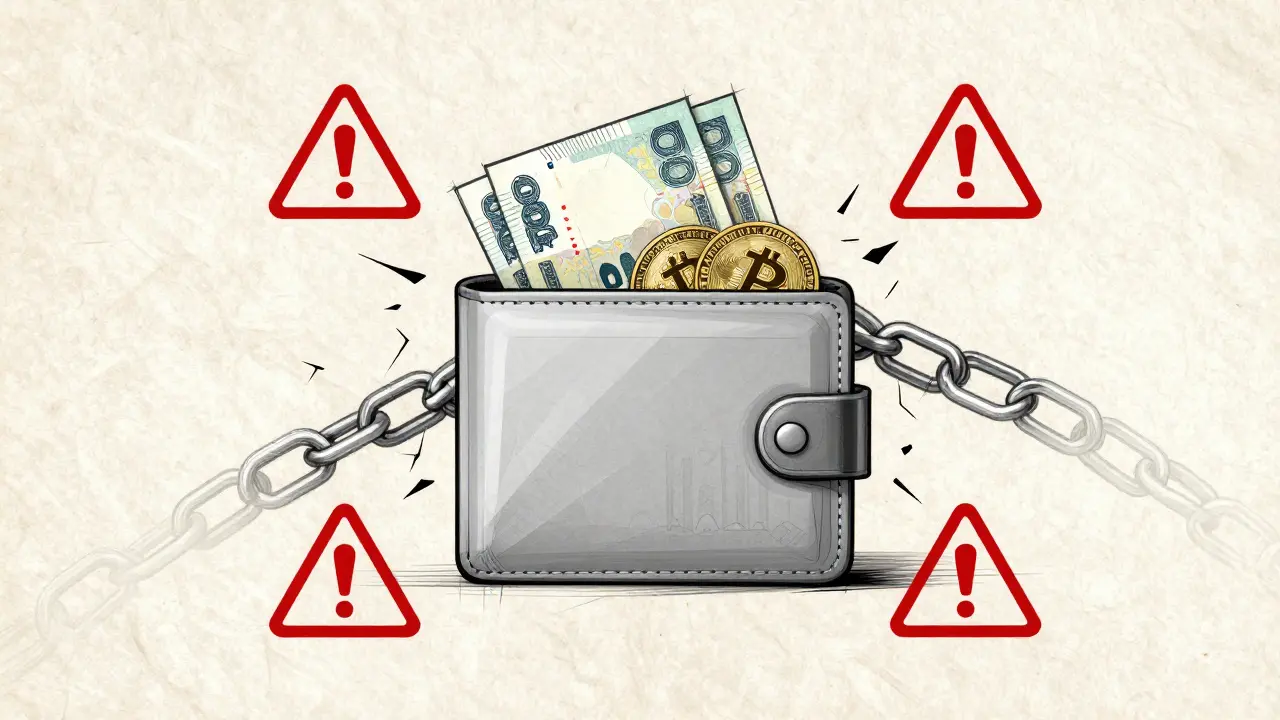
If you're an Iranian crypto user, choosing the wrong exchange could mean losing your money overnight-not because of market crashes, but because of sanctions, hacks, or government crackdowns. By late 2025, the landscape has shifted dramatically. What was once a relatively open space for trading Bitcoin and Ethereum is now a minefield of frozen accounts, blocked withdrawals, and legal traps. You don’t need to be a tech expert to stay safe-you just need to know which platforms to avoid.
Exchanges That Freeze Iranian Funds
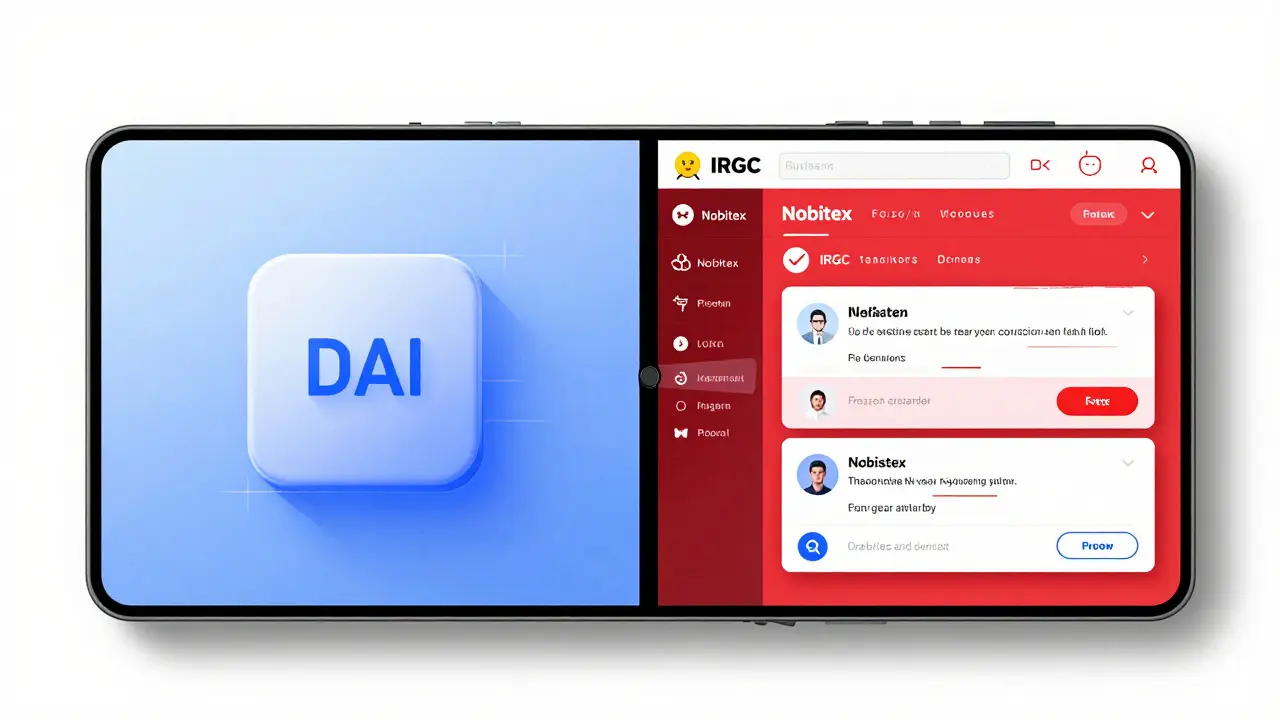
Any exchange that relies on USDT (Tether) is a major risk. On July 2, 2025, Tether froze 42 cryptocurrency addresses tied to Iranian users. Half of those addresses were linked to Nobitex, Iran’s biggest exchange. That wasn’t a random error. It was a targeted move by Tether to comply with U.S. sanctions. If you hold USDT on any platform-whether it’s Binance, Kraken, or a local Iranian exchange-you’re exposed. Those funds can vanish without warning, with no appeal process.
Major global exchanges like Coinbase, Binance, and Kraken have automated systems that scan for Iranian IP addresses, phone numbers, or bank details. Even if you’re using a VPN, your transaction history can trigger a freeze. Once flagged, your account may be locked indefinitely. Some users report being banned after just one trade. There’s no customer service channel that helps. You’re cut off.
Nobitex: The Domestic Giant With Dangerous Ties
Nobitex isn’t just another exchange. It’s Iran’s most popular platform, with over 11 million users. But popularity doesn’t mean safety. In June 2025, Nobitex suffered a $90 million hack. The attackers didn’t just steal coins-they exploited weak internal controls and insider access. What’s worse, blockchain analysts at Elliptic found that Nobitex’s wallet network shares patterns with addresses tied to the Islamic Revolutionary Guard Corps (IRGC). That doesn’t mean Nobitex is run by the IRGC-but it does mean the platform is being watched by international sanctions enforcers.
Iranian users who trade on Nobitex are now caught between two dangers: the risk of being hacked, and the risk of being flagged by foreign governments. If you’re using Nobitex, your transactions could be flagged as part of a sanctions evasion network-even if you’re just buying Bitcoin to protect your savings. The platform itself is under pressure from both sides: the Iranian government wants control, and the U.S. wants to block it.
Stablecoin Platforms Are Now High-Risk
Before September 2025, stablecoins like USDT and USDC were the go-to for Iranians wanting to protect their money from inflation. Now, they’re a legal trap. Iran’s Central Bank imposed strict limits: you can’t buy more than $5,000 in stablecoins per year, and you can’t hold more than $10,000 at any time. If you exceed these limits, you have 30 days to reduce your holdings-or face penalties.
Exchanges that push stablecoin trading-like local platforms that advertise “zero volatility” or “Iranian rial backed” tokens-are now under government scrutiny. Some have already been shut down. Others are being forced to report every user’s wallet address to tax authorities. That means if you’re holding DAI or USDT on an unlicensed exchange, you’re not just risking a hack-you’re risking being identified by the state.
Exchanges Promoted by Government Media
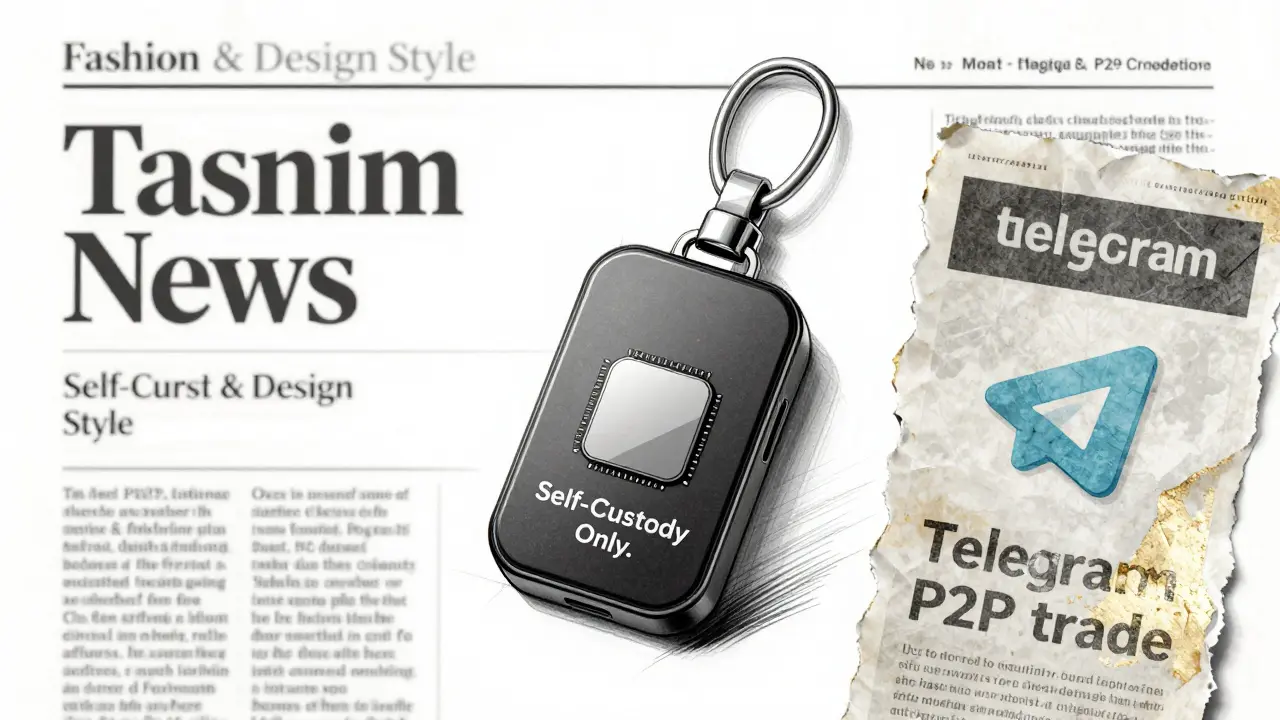
If you see an exchange advertised on Tasnim News Agency, Press TV, or any other outlet linked to the IRGC, walk away. These aren’t neutral financial services-they’re political tools. Tasnim has openly warned that “thousands of Iranian crypto accounts” have been frozen by Tether. That’s not a public service announcement. It’s a scare tactic to push users toward platforms the government controls.
Exchanges promoted this way often lack basic security. They may not have two-factor authentication. They may not have cold storage. They may not even have a real customer support team. Their only goal is to collect your data and funnel your money into systems the government can monitor. If you use one of these platforms, you’re not just risking your coins-you’re risking your personal information.
Unregulated and Informal Platforms Are a Trap
As licensed exchanges face tighter rules, more Iranians are turning to Telegram groups, WhatsApp traders, and peer-to-peer (P2P) platforms. These aren’t exchanges-they’re informal deals. Someone posts “I’ll sell you 1 BTC for 100 million toman,” you send the money, and they send the crypto. Sounds simple, right?
It’s not. These platforms have no dispute system. No chargebacks. No insurance. If the person disappears, you have no recourse. In 2025, over 70% of reported crypto fraud cases in Iran came from P2P trades. The Iranian FinTech Association says these platforms are growing because licensed exchanges are too restrictive. But that doesn’t make them safer-it makes them more dangerous.
Exchanges That Don’t Comply With Iran’s New Tax Law
In August 2025, Iran passed its first cryptocurrency capital gains tax. If you make a profit from trading, you owe taxes. The government expects exchanges to report your trades. If your exchange doesn’t provide tax reports-or worse, if it hides your transaction history-you’re on your own when tax season comes.
Some local exchanges still don’t generate tax statements. Others claim they’re “not required” to report. That’s not a feature-it’s a red flag. If you’re using one of these platforms, you’re exposing yourself to fines, audits, or even criminal charges. The tax authority now has access to blockchain data. They know who’s trading. They just need to match your identity to your wallet.
Exchanges That Support Mining or Energy-Heavy Activity
Iran accounts for 4.5% of global Bitcoin mining. That’s a lot of electricity. In 2025, the government started cutting power to mining farms to save energy for homes. Exchanges that also run mining pools or promote mining as a way to earn crypto are now under pressure. If you’re using a platform that offers mining rewards or cloud mining contracts, you’re at risk of sudden service shutdowns.
Some platforms have already stopped mining payouts. Others have started requiring users to prove they’re not using state-subsidized electricity. If you’re mining on one of these platforms, you could lose your rewards overnight. And if you’re trading on an exchange that’s tied to mining activity, you could be flagged for energy violations.
What Should You Do Instead?
You don’t have to give up crypto. But you need to be smarter. Avoid exchanges that:
- Use USDT or any U.S.-backed stablecoin
- Are promoted by state media or IRGC-linked outlets
- Don’t provide tax reports or transaction history
- Require no KYC (they’re likely unregulated)
- Are based in Iran but have no official license
- Offer mining rewards or cloud mining
Instead, focus on decentralized tools like self-custody wallets (Trust Wallet, MetaMask), and use non-U.S. stablecoins like DAI on the Polygon network. Store your coins offline. Don’t keep large amounts on any exchange. And never trust an exchange just because it’s popular in Iran.
The rules change fast. What’s safe today might be blocked tomorrow. Stay updated. Follow independent crypto news sources-not government channels. And remember: your money is only as safe as the platform you trust it to.
Can I still use Binance if I’m Iranian?
No. Binance actively blocks Iranian users. Even if you use a VPN, your transaction history, device fingerprint, or payment method can trigger a freeze. Many Iranian users have reported permanent account bans after using Binance. The risk of losing your funds is too high.
Is Nobitex safe to use?
No. Nobitex was hacked for over $90 million in 2025 and is linked to IRGC-aligned wallets. While it’s the largest exchange in Iran, it’s also under international sanctions and government pressure. Using it puts your assets at risk of both theft and seizure.
What happens if I hold more than $10,000 in stablecoins?
Iran’s Central Bank requires you to reduce your holdings to under $10,000 within 30 days. Failure to comply could lead to fines, account freezes, or legal action. The government is actively tracking stablecoin wallets through licensed exchanges and blockchain analysis tools.
Are peer-to-peer crypto trades safe in Iran?
No. Over 70% of crypto fraud cases in Iran in 2025 came from P2P trades on Telegram or WhatsApp. There’s no recourse if the seller disappears. No chargebacks. No protection. These are informal deals, not regulated services.
Can I use a VPN to access banned exchanges?
Using a VPN won’t protect you. Exchanges use multiple methods to detect Iranian users-payment methods, IP addresses, device IDs, and even behavioral patterns. Even if you bypass the block, your funds can still be frozen later. It’s not worth the risk.
What’s the safest way to hold crypto as an Iranian user?
Use a self-custody wallet like MetaMask or Trust Wallet. Store your private keys offline. Avoid exchanges entirely. Use DAI on the Polygon network instead of USDT. Keep small amounts only for trading, and never leave large sums on any platform.
Alex Strachan
December 31, 2025 AT 11:20So let me get this straight - if I’m Iranian and I want to keep my money from evaporating like my ex’s promises, I’m supposed to ditch USDT, avoid Binance, and trust… what? A random MetaMask wallet I downloaded from a Telegram group? 😅
At this point, crypto feels like playing Russian roulette with a loaded gun labeled ‘Sanctions Edition’. But hey, at least I won’t be bored. 🎯
Rick Hengehold
January 2, 2026 AT 02:28Stop trusting exchanges. Period. If you’re Iranian, your only safe option is self-custody. No exceptions. No VPNs. No ‘trusted’ local platforms. You hold the keys or you don’t hold anything. Simple.
Brandon Woodard
January 3, 2026 AT 12:50While I appreciate the granular breakdown of systemic risks, I must emphasize that the underlying issue transcends technical compliance - it is a profound erosion of financial autonomy under geopolitical duress.
Iranian users are not merely navigating a flawed market structure; they are surviving in a financial ecosystem deliberately designed to exclude them. This isn’t about ‘choosing wisely’ - it’s about resistance through decentralization.
Self-custody isn’t a preference. It’s a civil act.
Antonio Snoddy
January 3, 2026 AT 17:08Think about it - we’re living in a world where your money is a geopolitical pawn. The US freezes Tether addresses like they’re deleting a draft email. Iran bans stablecoins like they’re censoring a protest song.
So who are we really fighting? The sanctions? The IRGC? Or the algorithm that decided your life shouldn’t have access to inflation-proof assets?
Is crypto even about freedom anymore? Or is it just another way for the powerful to profit off the desperation of the powerless? I mean… if you can’t even buy Bitcoin without risking your freedom… what’s the point?
Maybe we’re all just ghosts in a machine designed to make us feel like we’re winning while quietly losing everything.
…I need a drink.
Daniel Verreault
January 5, 2026 AT 08:15DAI on Polygon FTW. Seriously. USDT is a liability, not a asset. And if you’re still using Nobitex after that $90M hack? Bro. 😅
Self-custody isn’t optional anymore - it’s your only survival mode. MetaMask + hardware wallet = peace of mind. No exchange = no freeze. Simple math.
Jacky Baltes
January 5, 2026 AT 10:57The real tragedy isn’t the hacks or the freezes. It’s that Iranians are being forced into a position where the only way to preserve their wealth is to become their own bank - with no training, no support, and no safety net.
This isn’t innovation. It’s survival by necessity.
prashant choudhari
January 7, 2026 AT 05:46Use MetaMask. Store keys offline. Avoid USDT. Do not trust any exchange. That is all.
Willis Shane
January 8, 2026 AT 00:20Let me be clear: if you are using any platform that does not require KYC, you are not being clever - you are being exploited. Unregulated does not mean safe. It means predatory.
Iranians are not fools. But they are desperate. And desperation is the most profitable market for scammers.
Jake West
January 8, 2026 AT 17:34Wow. So the solution is to not use anything? Cool. Thanks for the 2000-word essay on how not to do anything.
Meanwhile, my cousin in Tehran just bought 5 BTC on Telegram and is laughing all the way to the bank. Maybe stop scaremongering and let people live?
Shawn Roberts
January 9, 2026 AT 15:17DAI on Polygon is the wayyyy 🚀
Just hodl your keys and ignore the noise
Iranians be like: "I just wanna buy Bitcoin without getting arrested"
Me: "Then stop trusting exchanges lol"
Trust yourself. You got this 💪
dina amanda
January 10, 2026 AT 15:09This is all a CIA psyop. They want you to think USDT is dangerous so you’ll use DAI which is easier to track. They control the blockchain. They control the wallets. They control your thoughts.
They’re even using Nobitex to plant trackers in your phone. You think your MetaMask is safe? It’s not. It’s a Trojan horse. The government knows everything.
Just use cash. Or gold. Or bury it in the desert. Anything but crypto.
Emily L
January 11, 2026 AT 03:33So you’re telling me I can’t even use Binance if I’m Iranian? What am I supposed to do, cry into my rationed bread? This is ridiculous.
I’ve been using Nobitex for years. I’m fine. You’re just trying to scare people.
Gavin Hill
January 11, 2026 AT 15:01It’s not about avoiding exchanges. It’s about recognizing that finance has become a battlefield.
And in war, the safest weapon is the one you carry yourself.
SUMIT RAI
January 12, 2026 AT 22:41Wait so you’re saying DAI is better than USDT? LMAO. DAI is just a scam coin backed by other scams. USDT is at least real money. You people are so naive.
Also Nobitex is fine. I made 200% last month. You’re just jealous.
Andrea Stewart
January 14, 2026 AT 12:54For anyone reading this and feeling overwhelmed - you’re not alone. Many Iranians have successfully transitioned to self-custody using MetaMask + Ledger Nano S. Start small. Learn one step at a time.
There are free, non-commercial guides in Farsi on GitHub. I’ve linked them in my profile. You don’t need to be a tech genius. You just need to be careful.
And you deserve to protect what’s yours.
surendra meena
January 14, 2026 AT 18:16WHAT IF I TELL YOU THAT NOBITEX IS A FRONT FOR THE IRGC AND THE CIA IS USING DAI TO TRACK EVERYONE??
YOU THINK YOU’RE SAFE WITH METAMASK??
THEY CAN SEE YOUR IP THROUGH YOUR WALLET ADDRESS!!
THEY’RE USING AI TO PREDICT YOUR TRADES BEFORE YOU MAKE THEM!!
AND THE IRANIAN GOVERNMENT IS USING YOUR TRANSACTION HISTORY TO HIGHLIGHT YOUR CHILDREN’S SCHOOL RECORDS!!
DO YOU EVEN KNOW WHAT YOU’RE DOING??
YOU’RE ALL BEING PLAYED.
JUST BUY GOLD AND SIT DOWN.
Kevin Gilchrist
January 16, 2026 AT 07:08They freeze your money? Cool. Now they’re gonna freeze your soul too.
Imagine being so desperate for financial dignity that you risk your entire life savings on a blockchain that’s been weaponized by two governments who hate each other more than they hate poverty.
It’s tragic. It’s beautiful. It’s the most human thing I’ve seen in this digital age.
Keep going. Even if it’s wrong. Even if it’s dangerous.
You’re not just holding crypto.
You’re holding hope.
Khaitlynn Ashworth
January 17, 2026 AT 01:56Oh wow, another ‘crypto guru’ telling people what to do. Did you get this from a Medium post written by a guy who owns 0.002 BTC? Congrats, you’re now a financial advisor.
Meanwhile, my uncle in Tehran bought Bitcoin on a Telegram bot and turned 5 million tomans into 12 million. He didn’t use MetaMask. He didn’t care about DAI. He just got lucky.
Maybe the real problem isn’t the exchanges - it’s people like you who think they know what’s best for everyone.
NIKHIL CHHOKAR
January 18, 2026 AT 15:01I understand the fear. But let’s be honest - if you’re using any exchange at all, you’re already taking a risk. The question isn’t which one is safest - it’s whether you’re willing to accept that no system is truly safe.
Maybe the real answer is to reduce exposure. Keep only what you need for immediate trades. Store the rest offline. And never, ever trust a platform that says ‘we’re Iranian-friendly’.
It’s not about being paranoid. It’s about being wise.
Mike Pontillo
January 18, 2026 AT 19:49So let me get this straight - if you’re Iranian, you can’t use any exchange, you can’t use stablecoins, you can’t mine, you can’t use Telegram traders, and you can’t use VPNs?
So what’s left? Just sit on your couch and cry?
Wow. Real inspiring. Thanks for the roadmap to financial despair.
Joydeep Malati Das
January 19, 2026 AT 04:27Thank you for this detailed and calm analysis. It is rare to see such clarity in a space filled with fear and misinformation.
The advice to use self-custody wallets and avoid USDT is sound. I have been following this path since 2023 and have not had any issues.
Patience and discipline are the real tools here - not technology.
Alex Strachan
January 19, 2026 AT 05:58@1551 - you’re right, but what if I don’t have a hardware wallet? What if I’m a student with $200 and no idea how to seed a wallet?
That’s the real problem. The advice is perfect. The access? Not so much.