
Crypto Privacy vs Surveillance: The 2026 Arms Race Explained
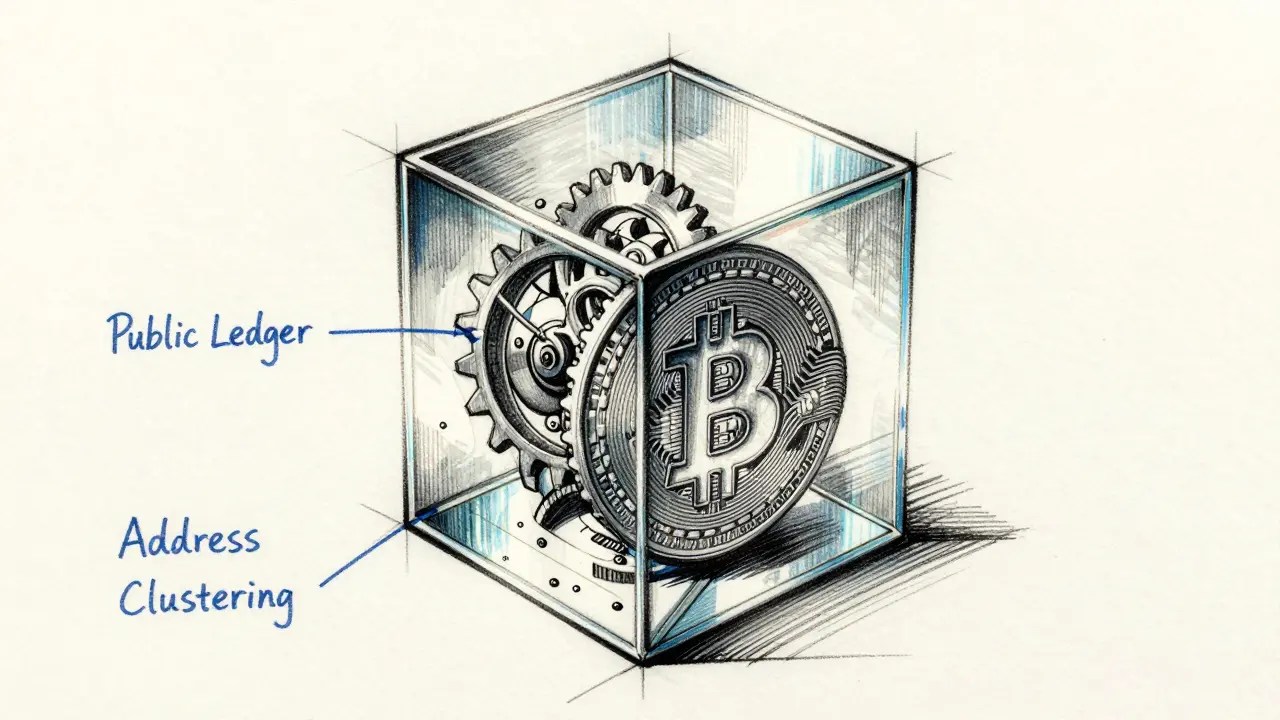
Imagine trying to whisper a secret in a crowded room where every word you speak is recorded, timestamped, and broadcast to everyone nearby. That was Bitcoin from day one. It promised freedom from banks, but it delivered a permanent public ledger. Now, in 2026, we are living through a high-stakes technological tug-of-war. On one side, developers are building increasingly complex shields to hide your financial footprints. On the other, governments and private firms are sharpening their lenses to see right through them. This isn't just a debate about code; it is a fundamental clash over who owns your financial history.
The stakes have never been higher. With regulatory pressure mounting globally, the tools you use to protect your assets today might be flagged as suspicious tomorrow. Understanding this arms race is no longer optional for anyone holding digital value. It is essential survival knowledge.
The Illusion of Anonymity in Transparent Ledgers
To understand why the arms race exists, you first have to look at the baseline. Bitcoin is the original cryptocurrency that operates on a fully transparent public ledger. When you send BTC, that transaction is visible to anyone. While your name isn't attached directly to the address, the pattern of your spending is laid bare. Over time, researchers and companies developed methods to link those addresses to real identities.
This process is called de-anonymization. It relies on three main techniques:
- Address Clustering: Algorithms group multiple addresses together if they likely belong to the same person or entity, often by analyzing inputs in a single transaction.
- Timing Correlation: If you withdraw cash from an ATM shortly after a specific blockchain transaction confirms, analysts can link that wallet to your physical location.
- KYC Data Points: Every time you buy crypto on a regulated exchange like Coinbase or Kraken, you provide ID. That identity is now permanently linked to any address you deposit into or withdraw from.
For years, users thought mixing services could solve this. But as we saw with the shutdown of various tumblers and the legal action against Samourai Wallet founders, these solutions are fragile. They create central points of failure that regulators love to target. The lesson here is clear: relying on "privacy by obscurity" in a transparent system is a losing strategy.
How Privacy Coins Fight Back
If transparency is the default, privacy coins are the rebellion. These cryptocurrencies were built from the ground up to obscure the sender, receiver, and amount of a transaction. They don't just add a layer of confusion; they change the mathematical rules of the game.
| Coin | Core Technology | Privacy Mechanism | Regulatory Status (2026) |
|---|---|---|---|
| Monero (XMR) | Ring Signatures, Stealth Addresses, RingCT | Hides sender, receiver, and amount by default for all transactions | Banned or delisted on many major exchanges; high scrutiny |
| Zcash (ZEC) | zk-SNARKs (Zero-Knowledge Proofs) | Offers optional private (z-addresses) and transparent (t-addresses) transactions | Restricted on some platforms; selective privacy complicates compliance |
| Dash (DASH) | PrivateSend (CoinJoin variant) | Optional mixing protocol to break transaction trails | Generally accessible but facing increased reporting requirements |
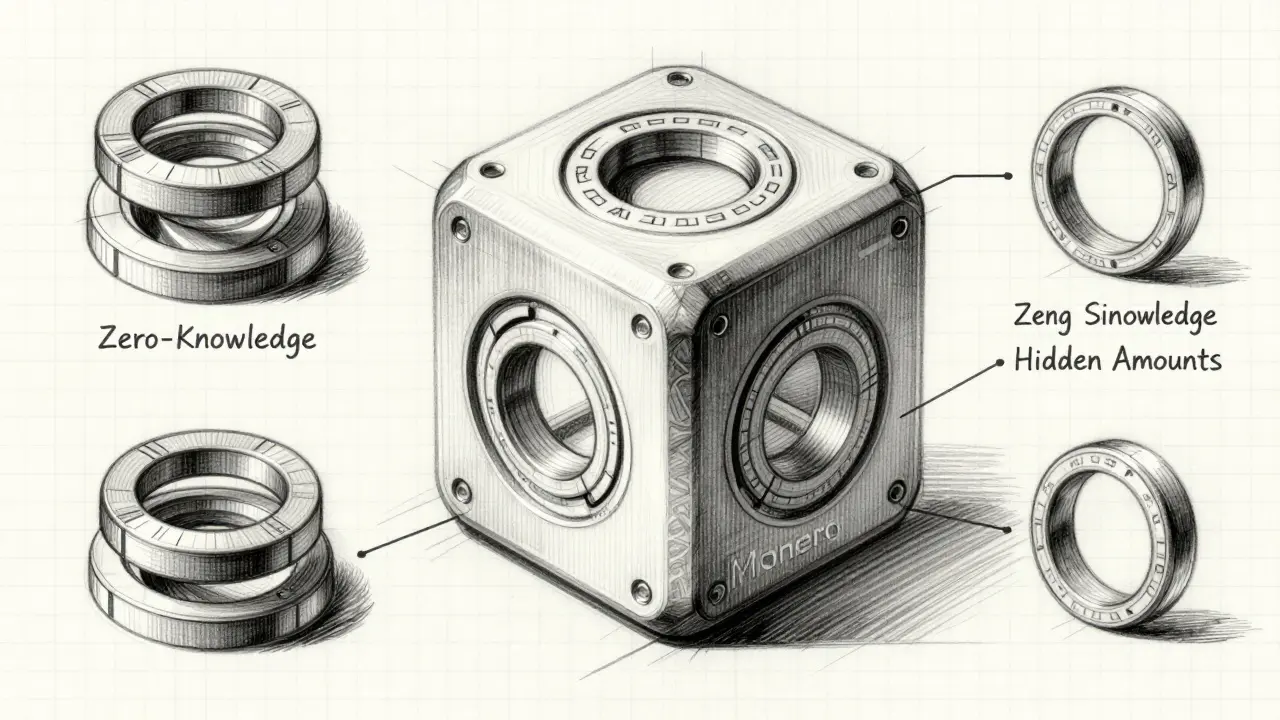
Let's break down how Monero works, as it is the gold standard for mandatory privacy. When you send XMR, your transaction is bundled with several others using ring signatures. To an observer, it looks like any one of the people in that ring could have sent the money. Meanwhile, stealth addresses ensure that the recipient's address is unique to that specific transaction, preventing anyone from scanning the blockchain to see if you received funds. Finally, Ring Confidential Transactions (RingCT) hide the amount being transferred. You cannot tell if someone sent $10 or $10 million.
Zcash takes a different approach using zero-knowledge proofs, specifically zk-SNARKs. This allows you to prove that a transaction is valid without revealing any details about it. Think of it like showing a bouncer you have a valid ID without letting them read your name or date of birth. However, because Zcash allows transparent transactions, regulators argue it creates a "dual-use" problem where criminals can easily move between private and public modes to launder funds.
The Surveillance Counter-Offensive
Privacy advocates aren't fighting alone. They are up against well-funded surveillance giants. Companies like Chainalysis, Elliptic, and CipherTrace have turned blockchain analysis into a multi-billion dollar industry. They sell their software to law enforcement, banks, and exchanges.
These tools don't just look at the blockchain; they correlate it with off-chain data. They scrape forums, monitor darknet markets, and integrate with KYC databases. Their machine learning models can identify behavioral patterns. For example, if a wallet interacts frequently with known gambling sites or mixers, the algorithm flags it as "high risk."
The impact is tangible. In recent years, we've seen the U.S. Department of Justice charge individuals not just for crimes, but for developing privacy tools themselves. The case against the founders of Samourai Wallet set a chilling precedent: creating software that enhances financial privacy can be prosecuted as conspiracy to commit money laundering. This shifts the battlefield from tracking criminals to punishing the engineers who build privacy.
Moreover, surveillance tech is evolving to tackle cross-chain movements. Previously, moving funds from Bitcoin to Ethereum via a bridge offered some opacity. Today, analytics firms track these bridges, linking your identity across different ecosystems. The net is tightening.
Regulatory Chokeholds and Delistings
The most effective weapon in the surveillance arsenal isn't code-it's regulation. Governments don't need to break encryption if they can simply ban the entry points. By forcing exchanges to delist privacy coins, regulators effectively cut off the liquidity needed for these assets to function for the average user.
In 2026, the landscape is stark. Countries like China, Qatar, and Saudi Arabia have banned cryptocurrencies entirely, citing privacy and capital flight concerns. In Europe, the Markets in Crypto-Assets (MiCA) regulation imposes strict transparency rules that make hosting privacy coins legally risky for businesses. In the United States, the Financial Crimes Enforcement Network (FinCEN) has issued guidance that treats privacy-enhancing features as red flags for Anti-Money Laundering (AML) compliance.
The result? A two-tier market. Mainstream users stick to Bitcoin and Ethereum because they are accepted everywhere. Those seeking true privacy must navigate a fragmented world of decentralized exchanges (DEXs), peer-to-peer networks, and atomic swaps. This friction reduces adoption but also protects the core users who truly need anonymity.

The Role of AI and Future Threats
Artificial intelligence is accelerating both sides of this conflict. Surveillance firms use AI to detect anomalies in real-time. If a wallet suddenly moves funds to a mixer, AI systems can flag it instantly, triggering automated freezes on connected accounts at compliant exchanges.
Conversely, privacy developers are using AI to optimize obfuscation techniques. They are designing algorithms that generate more realistic "noise" on the blockchain, making it harder for clustering algorithms to distinguish real transactions from decoys. We are also seeing the rise of Directed Acyclic Graph (DAG) architectures, like Obyte, which eliminate miners and validators. Without a linear chain of blocks, traditional forensic tracing becomes significantly more difficult.
Looking ahead, quantum computing poses a wildcard. Current cryptographic standards, including those protecting privacy coins, may become vulnerable to quantum attacks. Both privacy and surveillance sectors are racing to develop post-quantum cryptography. Whoever solves this first will hold the keys to the next decade of digital finance.
Navigating the Landscape Safely
So, what does this mean for you? If you value financial privacy, you need to accept that convenience and anonymity are mutually exclusive in 2026. Using a centralized exchange means surrendering your data. Using a privacy coin means dealing with limited liquidity and potential legal gray areas.
Here are practical steps to consider:
- Understand Your Jurisdiction: Know the laws in your country regarding privacy coins. Ignorance is not a defense when regulators are actively monitoring DEX usage.
- Avoid Mixing Services: Centralized mixers are honeypots for law enforcement. If you need to obscure transaction trails, use protocols that offer privacy by design, like Monero, rather than adding privacy as an afterthought.
- Use Decentralized Exchanges: Platforms that do not require KYC reduce the attack surface for identity linking. However, be aware that front-end websites can still be monitored.
- Secure Your Hardware: The weakest link is often your device. Malware can capture your screen or keystrokes, bypassing even the strongest blockchain privacy. Use air-gapped devices for significant holdings.
The arms race shows no signs of slowing down. As Edward Snowden famously argued, privacy should be the default, not the exception. Until society reaches a consensus on the balance between individual rights and collective security, this technological standoff will continue. For now, the power lies with those who understand the tools-and the risks-involved.
Is Monero illegal in 2026?
Monero itself is not illegal in most Western democracies, but its use is heavily scrutinized. Many countries have banned its trading on centralized exchanges due to AML concerns. Possessing or transacting in XMR may trigger enhanced due diligence or account closures at traditional financial institutions. Always check local regulations.
Can Chainalysis trace Monero transactions?
Currently, no. Monero's ring signatures and stealth addresses are designed to prevent blockchain analysis firms like Chainalysis from tracing transactions. However, if you convert Monero to a transparent coin like Bitcoin on a KYC exchange, that link can be traced. The vulnerability lies in the entry and exit points, not the network itself.
What happened to Samourai Wallet?
The founders of Samourai Wallet were arrested and charged by the U.S. Department of Justice with conspiracy to commit money laundering and operating an unlicensed money service business. This case signaled a shift in regulatory strategy, targeting the creators of privacy tools rather than just the end-users.
Are zero-knowledge proofs safe from quantum computers?
Not necessarily. Most current implementations of zk-SNARKs rely on elliptic curve cryptography, which is vulnerable to quantum attacks. Researchers are actively developing post-quantum zero-knowledge proofs, but widespread adoption is still in early stages. Quantum resistance remains a future priority.
Why are privacy coins delisted from exchanges?
Exchanges delist privacy coins to comply with Anti-Money Laundering (AML) and Know Your Customer (KYC) regulations. Regulators view the inability to trace transactions as a risk for illicit activities. To maintain their licenses, exchanges must avoid listing assets that hinder regulatory oversight.