
DragonSwap v1 Crypto Exchange Review: Speed, Fees, and Ecosystem Limits
DragonSwap v1 isn't just another decentralized exchange. It’s built from the ground up to be the fastest DEX on a blockchain designed for speed - Sei Network. If you’ve ever waited 15 seconds for a trade to confirm on Uniswap or paid $1.50 in gas fees just to swap two tokens, DragonSwap v1 feels like a revelation. But is it the right choice for you? Let’s break down what makes it different, where it shines, and where it falls short.
How DragonSwap v1 Works - No Fluff, Just Facts
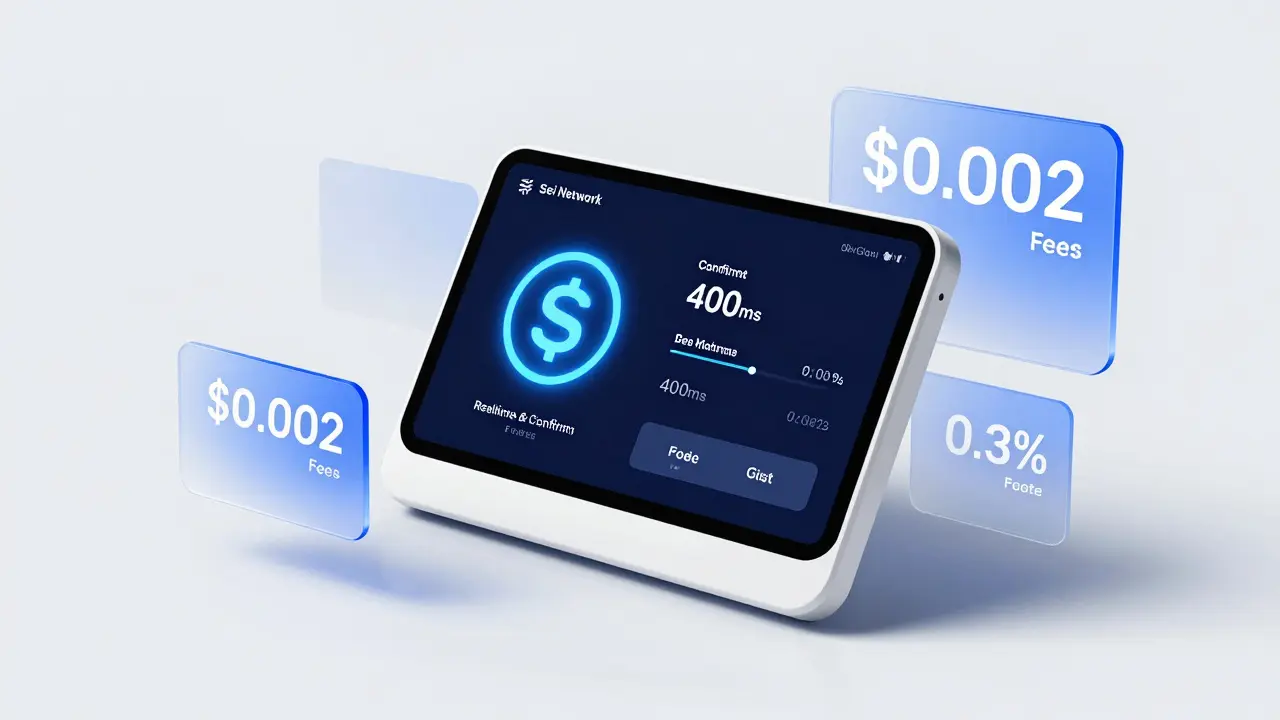
DragonSwap v1 runs entirely on Sei Network, a blockchain built to handle high-frequency trading. Unlike Ethereum-based DEXs that process transactions one after another, Sei uses parallelized EVM architecture. This means hundreds of trades can happen at the same time instead of lining up in a queue. The result? Trades confirm in 400-600 milliseconds. That’s over 20 times faster than Uniswap V3 on Ethereum, which takes an average of 13 seconds. Transaction fees? They’re almost nothing. On average, you’ll pay $0.002 per swap. Compare that to Ethereum’s $1.27 average or even BNB Chain’s $0.0042. DragonSwap’s fee structure is simple: 0.3% total. Of that, 0.25% goes to liquidity providers, and 0.05% goes to the protocol treasury. No hidden charges. No surprise gas spikes. It uses a concentrated liquidity model - the same one Uniswap V3 pioneered - but optimized for Sei’s speed. Instead of spreading your tokens across every price range, you pick a narrow band where you think the price will trade. This lets you use less capital to provide the same level of liquidity. According to ICOholder’s analysis, this boosts capital efficiency by up to 400% compared to older AMM designs.Performance That Actually Matters
Speed isn’t just a marketing claim. Data from Nansen and Alpha Sei confirms it. During peak usage, DragonSwap handles 14,000 transactions per hour. In stress tests, it processed 120 simultaneous swaps without slippage exceeding 0.15%. SushiSwap on Ethereum starts showing over 1% slippage at just 15 trades. That’s not a small difference - it’s the difference between profitable arbitrage and losing money on slippage. One user on Twitter tracked 47 arbitrage trades executed in 28 seconds on DragonSwap. On Uniswap v3 during the same event? Only 9 trades went through. For traders who rely on timing - whether you’re scalping, arbitraging, or hedging - this isn’t a luxury. It’s essential.What You Can’t Do on DragonSwap v1
Here’s the trade-off: DragonSwap v1 only works on Sei Network. No cross-chain swaps. No connecting from Ethereum, Solana, or Polygon. If you want to trade tokens from other chains, you’ll need to bridge them to Sei first. That adds steps, time, and potential risk. Liquidity is another issue. Of the $87.3 million total value locked (TVL) in DragonSwap, 78% is in SEI-USD stablecoin pairs. That’s great for trading the native token, but if you’re trying to swap obscure altcoins, you might find thin order books. Slippage can spike, and some tokens simply don’t have enough depth to trade without moving the price. Compared to Uniswap (1.7 million weekly users) or PancakeSwap (millions more), DragonSwap serves about 42,000 weekly active users - all on Sei. It’s a niche platform. It doesn’t compete with giants. It dominates its own lane.
Wallets, Onboarding, and Usability
You can’t use MetaMask or Trust Wallet out of the box. DragonSwap requires wallets built for Sei: Keplr, Leap, or Front. If you’re new to DeFi, this can be confusing. The setup process takes 8-12 minutes for experienced users. First-time users often struggle with wallet connection - Reddit users report 63% had trouble getting connected. The interface is clean, minimal, and fast. But documentation on concentrated liquidity, impermanent loss, and slippage settings is thin. About 41% of negative reviews mention not understanding how to set up liquidity positions properly. There’s no built-in tutorial. You’re expected to know what you’re doing. A common bug reported by users: slippage tolerance settings don’t save between sessions. If you set it to 1%, close the tab, and come back, it resets to 0.5%. This affects about 12% of new users. It’s a small glitch, but it’s annoying enough that it’s still open on GitHub as of October 2024.Security and Audits
CertiK audited DragonSwap v1 in March 2024 and found three medium-severity vulnerabilities - mostly around price oracle validation under edge cases. The team patched them all in the V1.1 update. No exploits have occurred since. That’s a good sign. The smart contracts are simple by design. DragonSwap uses a “brutalist” approach: minimal code, fewer moving parts, less attack surface. Each token pair has its own smart contract. No complex aggregation layers. That reduces bugs but also means adding new tokens takes more time.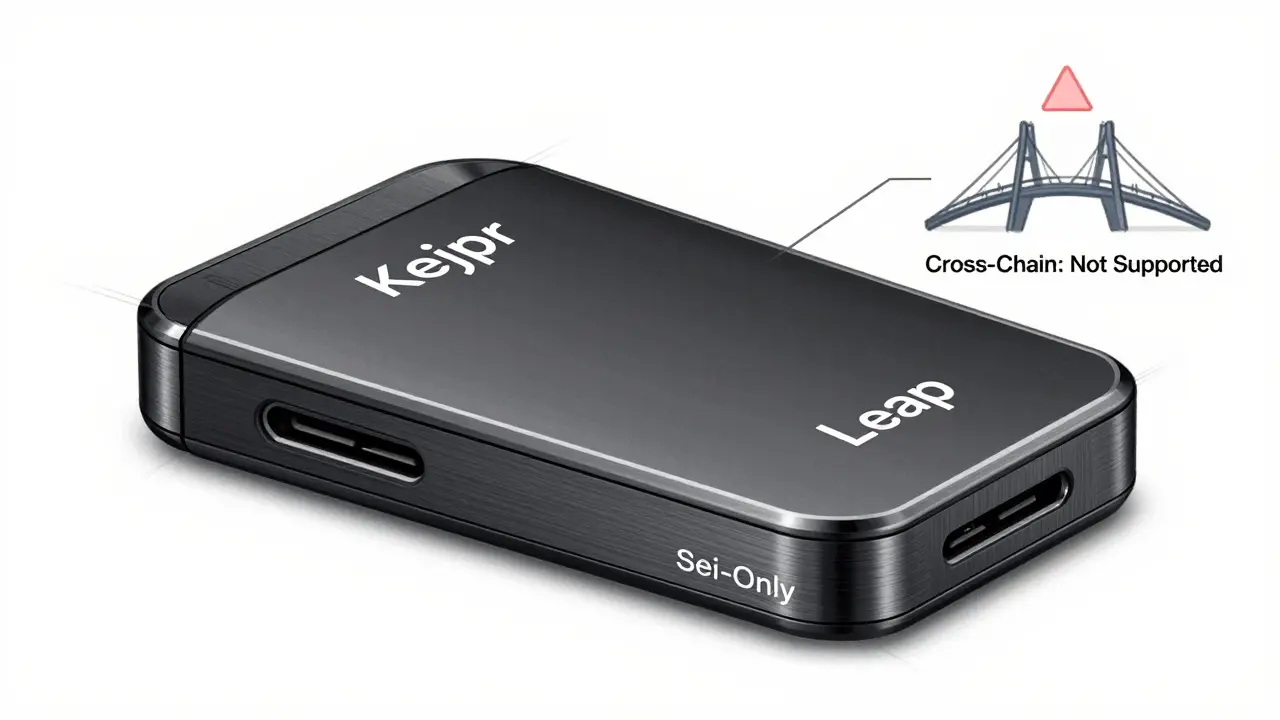
Who Is DragonSwap v1 For?
If you’re:- A trader who needs speed above all else
- Someone who does high-frequency swaps or arbitrage
- A liquidity provider who wants to maximize capital efficiency
- Already using Sei Network and wants the best DEX on it
- Looking for cross-chain swaps
- Trading obscure tokens with low liquidity
- Just starting out in DeFi and need hand-holding
- Worried about long-term platform stability
The Bigger Picture: Is DragonSwap Here to Stay?
DragonSwap’s future is tied to Sei Network. If Sei becomes a top-tier L1, DragonSwap becomes the go-to DEX. If Sei fades, DragonSwap’s relevance fades too. It’s a single-chain bet. The team is already working on DragonSwap v2, scheduled for Q1 2025. It’ll add cross-chain support through Sei’s interchain accounts. That’s a huge step. But until then, v1 is a powerful, focused tool - not a universal solution. The Kaia Foundation invested $2.5 million into DragonSwap’s ecosystem, and it’s now the dominant DEX on Sei, holding 43.7% of the network’s total DeFi liquidity. That’s not luck. It’s execution.Final Verdict
DragonSwap v1 isn’t trying to be everything. It’s trying to be the fastest, cheapest, most efficient DEX on Sei Network - and it succeeds. For traders who value speed and low fees above all else, it’s unmatched in its category. But it’s not a replacement for Uniswap, PancakeSwap, or any multi-chain platform. It’s a specialized instrument - like a race car instead of an SUV. Use it if you’re on Sei. Avoid it if you need cross-chain flexibility or hand-holding. And keep an eye on v2 - that’s where the real expansion might happen.Is DragonSwap v1 safe to use?
Yes, DragonSwap v1 has been audited by CertiK and patched all identified vulnerabilities in the V1.1 update. No exploits have occurred since. The smart contracts are intentionally minimal to reduce risk. However, like all DeFi platforms, you’re responsible for your own security - use trusted wallets, never share your seed phrase, and double-check token addresses before trading.
Can I use MetaMask with DragonSwap v1?
No, not directly. DragonSwap v1 only works with wallets built for Sei Network: Keplr, Leap, and Front. You can connect MetaMask to Sei Network manually by adding the Sei RPC, but this is not officially supported and may cause connection issues. For reliability, use one of the three recommended wallets.
What’s the difference between DragonSwap v1 and v2?
DragonSwap v1 is a single-chain DEX limited to Sei Network. v2, scheduled for Q1 2025, will add cross-chain functionality using Sei’s interchain accounts, allowing users to swap tokens from other blockchains without bridging. v2 will also improve liquidity aggregation and user onboarding. v1 will remain supported through at least Q4 2026, but v2 is where the long-term roadmap is headed.
How do I become a liquidity provider on DragonSwap v1?
To provide liquidity, go to the ‘Liquidity’ tab, select a token pair (like SEI/USDC), and choose a price range. You’ll need to deposit equal values of both tokens. The platform will show you how much you’re contributing and the potential fees you’ll earn. Concentrated liquidity means you earn more per dollar staked - but only if the price stays in your range. If it moves outside, you won’t earn fees until it returns.
Why are fees so low on DragonSwap?
Because Sei Network uses parallelized EVM architecture, transaction costs are dramatically lower than Ethereum. DragonSwap passes these savings directly to users. The 0.3% fee is standard for DEXs, but the gas cost to execute it is only $0.002 - thanks to Sei’s high-throughput design. This isn’t a discount - it’s the natural result of a faster, more efficient blockchain.
DragonSwap v1 isn’t a cure-all. But for users who need speed, low fees, and deep integration with Sei Network, it’s one of the most efficient tools available today. It’s not about replacing Uniswap. It’s about doing something better - in its own lane.
Sherry Kirkham
March 8, 2026 AT 22:58Sharon Tuck
March 10, 2026 AT 12:14Jennifer Pilot
March 11, 2026 AT 22:58Bonnie Jenkins-Hodges
March 13, 2026 AT 04:30Melissa Ritz
March 14, 2026 AT 22:26Cerissa Kimball
March 15, 2026 AT 21:55Emily Pegg
March 16, 2026 AT 02:44Christina Young
March 17, 2026 AT 03:54Steven Lefebvre
March 18, 2026 AT 11:44Leah Dallaire
March 18, 2026 AT 11:46prasanna tripathy
March 18, 2026 AT 19:47James Burke
March 20, 2026 AT 15:26Bill Pommier
March 22, 2026 AT 06:39Issack Vaid
March 23, 2026 AT 13:08Austin King
March 23, 2026 AT 13:15Bryanna Barnett
March 24, 2026 AT 16:12Josh Moorcroft-Jones
March 25, 2026 AT 04:29Rachel Rowland
March 27, 2026 AT 02:11Jane Darrah
March 28, 2026 AT 17:55Denise Folituu
March 30, 2026 AT 04:34jack carr
April 1, 2026 AT 01:02Eva Gupta
April 2, 2026 AT 15:04Nancy Jewer
April 4, 2026 AT 13:45Ken Kemp
April 6, 2026 AT 04:33Julie Potter
April 7, 2026 AT 21:18nalini jeyapalan
April 8, 2026 AT 23:53Drago Fila
April 9, 2026 AT 16:07Jonathan Chretien
April 9, 2026 AT 19:36Olivia Parsons
April 11, 2026 AT 19:10Sherry Kirkham
April 13, 2026 AT 07:37Josh Moorcroft-Jones
April 14, 2026 AT 19:24