
Environmental Concerns Drive Swedish Crypto Restrictions
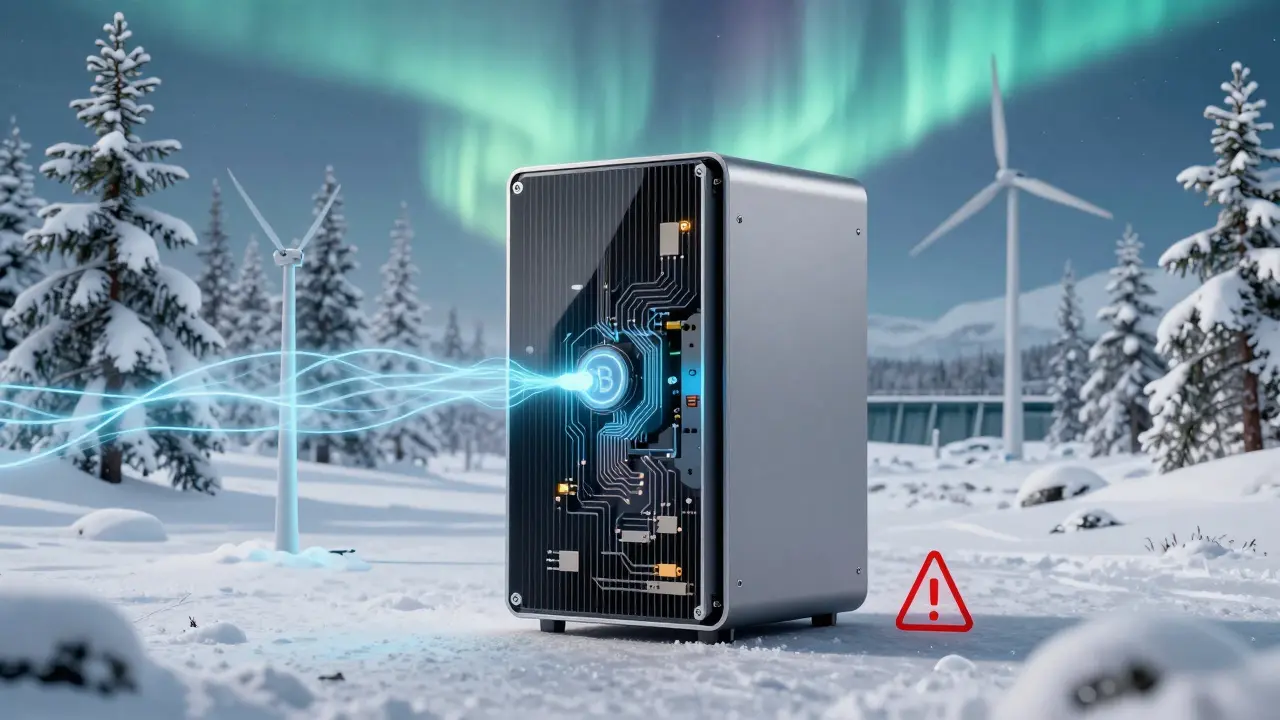
Sweden doesn't ban cryptocurrency. But it's making it harder than ever to mine Bitcoin there. And it's not about fraud, scams, or market manipulation. It's about electricity. Specifically, how much of it gets sucked up by machines doing nothing but solving math problems 24/7.
In 2022, Bitcoin mining in Sweden spiked by several hundred percent. Why? After China banned mining operations, miners packed up their rigs and moved north. Sweden, with its cheap, renewable power and cold winters, looked like the perfect place. But what seemed like an economic win turned into an environmental red flag. By August 2022, mining was using about 1 terawatt-hour (TWh) of electricity per year - enough to power 200,000 homes. That number has since stabilized, but the damage was done in the eyes of regulators.
The Swedish Financial Supervisory Authority (FI), led by Director General Erik Thedéen, didn't mince words. In a September 2023 speech, he called Bitcoin's proof-of-work system a direct threat to Sweden’s climate goals. He pointed out that one Bitcoin transaction uses 707 kWh of energy. For comparison, a single Visa transaction uses 0.0023 kWh. That’s over 300,000 times more energy. The math doesn’t lie. If every Swede made one Bitcoin transaction a year, it would use more electricity than the entire country’s public transport system.
Sweden’s energy mix is mostly clean - 54% hydro, 30% nuclear, 15% wind. But even clean energy isn’t infinite. Every kilowatt used for mining is a kilowatt not used for heating homes, running hospitals, or powering electric buses. The Swedish Energy Agency confirmed in 2023 that crypto mining was adding measurable strain to the grid. And while some miners argued they were using excess renewable power, Sweden’s regulators aren’t buying it. They don’t care if the power comes from wind or coal. If it’s being burned to mine Bitcoin, it’s a problem.
This stance sets Sweden apart from most of Europe. Germany and France register crypto firms but don’t touch mining. Norway and Iceland actively welcome miners because of their geothermal and hydro resources. Even the EU’s own MiCA regulation, adopted in 2024, only requires mining operations to disclose their environmental impact - not stop them. Sweden pushed for a full ban. When that failed, it created its own law: the Crypto-Asset Environmental Transparency Act, which took effect in January 2025.
Under this law, any mining facility over 0.5 megawatts must publish real-time data on its energy use and source. No hiding. No guessing. If you’re mining in Boden, Kiruna, or Umeå, the public can see exactly how much power you’re using, and whether it’s from the grid or a private hydro plant. Local governments added their own rules. Kiruna now requires 90% renewable energy for new mines. Boden caps new operations at 5 MW. These aren’t suggestions. They’re enforceable conditions.
The impact on businesses has been brutal. Reddit threads from r/Sweden in early 2025 are filled with miners describing how their banks cut off their accounts overnight. One operator in Norrbotten, who ran a 2-megawatt facility powered entirely by hydroelectricity, lost his banking services without explanation. Trustpilot ratings for Swedish crypto exchanges have crashed from 4.2 in 2022 to 2.8 in early 2025. Complaints? “KYC takes weeks.” “Withdrawal limits are arbitrary.” “No one answers emails.”
But not all hope is lost. Some companies adapted. EcoChain, a Stockholm startup, switched from proof-of-work to proof-of-stake in late 2023. Their energy use dropped by 99.95%. Profits? Still there. They now earn revenue from transaction fees, not brute-force computing. Their story isn’t unique. A 2024 survey of 47 Swedish mining firms showed 22% planned to switch consensus mechanisms. Another 68% are packing up and leaving - mostly for Norway, Germany, or the U.S.
Sweden’s crypto mining capacity has fallen by 40% since 2022. Meanwhile, Norway’s share of Nordic mining jumped from 22% to 34% in the same period. The European Blockchain Association’s 2025 report says Sweden’s market value in the region has dropped from 38% to 27%. The country’s regulatory ranking fell from 12th to 23rd globally. But here’s the twist: Sweden isn’t dying as a tech hub. Stockholm still hosts 37% of Nordic blockchain startups - just not the ones that burn electricity. Kista Science City alone supports 120 blockchain companies focused on enterprise software, supply chain tracking, and digital identity. The future isn’t mining. It’s smart contracts.
Sweden’s government is now betting on innovation, not restriction. In 2025, it allocated 200 million SEK ($18.4 million USD) to turn mining waste heat into district heating. A pilot in Luleå recovered 65% of the heat from mining rigs and used it to warm apartment buildings. That’s not just sustainable - it’s clever. Instead of fighting mining, they’re trying to make it useful.
The European Commission took notice. In December 2024, it adopted Sweden’s transparency model into MiCA’s new sustainability rules. Now, every crypto firm in the EU must report energy use. Sweden didn’t get its ban. But it got its voice heard. And now, the whole continent is watching.
By 2026, Sweden’s mining energy use is projected to drop below 0.8 TWh annually. That’s thanks to Ethereum’s switch to proof-of-stake in 2022, the rise of low-energy alternatives, and miners leaving or adapting. The country’s message is clear: we won’t stop technology. But we won’t let it burn our climate goals.
Why did Sweden target Bitcoin mining specifically and not other crypto activities?
Sweden doesn’t regulate other crypto activities like trading or holding. It targets mining because mining is the only part that consumes massive amounts of electricity. Trading Bitcoin on an app uses the same energy as streaming a video. Mining, however, requires thousands of machines running nonstop, using up to 707 kWh per transaction. The environmental impact isn’t theoretical - it’s measurable in gigawatts. That’s why regulators focused there.
Is Bitcoin mining illegal in Sweden?
No, it’s not illegal. But it’s heavily restricted. Mining operations above 0.5 MW must register with the Swedish Financial Supervisory Authority, submit quarterly energy reports, and disclose real-time consumption data. Local municipalities can impose additional limits on power capacity and require proof of renewable energy use. Many operators find these rules too costly or complex, so they leave.
How does Sweden’s approach compare to Norway’s?
Norway and Sweden have similar renewable energy sources - lots of hydro and wind. But Norway welcomes miners. It sees them as customers for excess power. Sweden sees them as competitors for limited grid capacity. Norway has no registration rules for mining. Sweden requires full transparency and environmental assessments. As a result, Norway hosts 1.5% of global Bitcoin mining, while Sweden’s share has dropped by 40% since 2022.
What happened to miners who used 100% renewable energy in Sweden?
Even miners using 100% hydro or wind power faced the same restrictions. Sweden’s policy doesn’t distinguish between energy sources - it only cares about total consumption. A miner in Norrbotten using clean power still lost their bank account because regulators viewed any mining as a strain on the grid. The argument wasn’t about sustainability; it was about scale. If every miner used renewables, Sweden’s grid would still be overloaded.
Is there any upside to Sweden’s strict rules?
Yes. Sweden’s pressure forced the EU to adopt transparency rules for crypto energy use. It also pushed Swedish companies to innovate. Firms like EcoChain switched to proof-of-stake and cut energy use by 99.95%. Others are turning waste heat into home heating. The country’s focus on outcomes - not bans - is reshaping how Europe thinks about tech and climate. It’s not perfect, but it’s forcing a necessary conversation.
What’s next for crypto in Sweden?
Sweden isn’t abandoning crypto. It’s abandoning energy-intensive mining. The focus is shifting to blockchain applications that don’t use proof-of-work: supply chain tracking, digital IDs, smart contracts. The government is funding waste heat projects and supporting startups using proof-of-stake. By 2027, regulators expect most mining to be gone - replaced by cleaner, smarter uses of blockchain. The goal isn’t to kill crypto. It’s to make sure it doesn’t cost the planet.
Steven Lefebvre
March 7, 2026 AT 02:03Sweden’s move is actually kind of brilliant. They’re not banning crypto-they’re forcing it to grow up. Mining sucks up power like a black hole, and if you’re using renewable energy, cool, but you’re still hogging infrastructure that could heat homes or run hospitals. This isn’t anti-tech. It’s pro-responsibility. If your business model relies on burning through grid capacity, you don’t get to cry when the rules change.
nalini jeyapalan
March 7, 2026 AT 11:56Let me just say this: if Bitcoin mining was as clean as they claim, why did 68% of Swedish miners just pack up and leave? Because the math doesn’t lie. You can’t tell me 707 kWh per transaction is sustainable. That’s not innovation-it’s a power-wasting circus. Sweden’s not being harsh. They’re being honest.
Christina Young
March 8, 2026 AT 13:24Sweden didn’t ban mining. They just stopped pretending it’s not a massive energy sink. Every ‘green miner’ using hydro is still competing with real people who need heat in winter. This isn’t ideology. It’s physics. And the fact that you’re still defending this? That’s the real problem.
Drago Fila
March 9, 2026 AT 02:28Hey, I get it. Mining’s got a bad rep. But look at EcoChain-they switched to proof-of-stake and cut energy use by 99.95%. That’s not a failure. That’s evolution. Sweden’s not killing crypto. It’s pushing it to become something better. If you’re still mining like it’s 2013, maybe it’s time to upgrade. You’ve got options.
Nash Tree Service
March 10, 2026 AT 22:16The notion that Sweden’s policy is draconian is a fallacy rooted in ideological ignorance. The energy consumption metrics are not merely concerning-they are statistically catastrophic when contextualized against national infrastructure demands. The regulatory framework is not punitive; it is a necessary corrective mechanism in a climate-constrained economy.
Jane Darrah
March 11, 2026 AT 17:30I mean… I get it. Sweden’s all about saving the planet, right? But let’s be real-Bitcoin’s not the only thing using power. Every TikTok video, every Netflix stream, every smart fridge that turns on for no reason-that’s all energy too. Why pick on mining? Why not tax TikTok for using 10x more energy than all crypto combined? It’s not about sustainability. It’s about control. And honestly? Kinda petty.
jack carr
March 12, 2026 AT 21:12Love how Sweden’s turning mining waste into heat for apartments. That’s genius. Not perfect, but… creative. You don’t just ban something-you repurpose it. I’ve seen solar panels on barns, wind turbines on farms… why not use Bitcoin rigs as space heaters? It’s weird, but it works. Kudos to Luleå.
Eva Gupta
March 12, 2026 AT 21:54As someone from India, where power cuts are still a daily reality, I find Sweden’s stance deeply thoughtful. We don’t have luxury to waste energy on math problems. Even if it’s renewable, if it’s not needed for people, it’s not justified. Maybe the future of crypto isn’t mining-it’s infrastructure, identity, transparency. That’s worth building.
Ken Kemp
March 14, 2026 AT 11:17so i heard this one guy in norrbotten had a 2mw mine runnin on hydro and still got his bank account cut?? that’s wild. like… if you’re using 100% clean power and not even touching the grid, why punish you? maybe the rules are too blunt. but still… 707kwh per tx?? no way. maybe they should’ve just taxed the power use instead of banning.
prasanna tripathy
March 14, 2026 AT 12:26Sweden’s approach is quiet, calm, and smart. They didn’t scream. They didn’t ban. They just said: ‘Here’s the data. You tell me if this is fair.’ And people had to look at the numbers. No emotion. Just facts. That’s leadership. Most countries just panic and overreact. Sweden? They let the numbers speak. And they’re right.
James Burke
March 16, 2026 AT 09:23Look, I get why people are mad. But mining isn’t a right. It’s a privilege. And if your privilege is draining power that could be used for hospitals or schools, then yeah, you’re gonna get regulated. Sweden’s not anti-Bitcoin. It’s pro-people. And honestly? That’s more important than any blockchain.
Jonathan Chretien
March 17, 2026 AT 05:31Oh wow, Sweden’s finally doing something ‘responsible’? Took them long enough. I mean, let’s be real-Bitcoin’s just a digital gold rush with more math and less mining. And now we’re supposed to feel bad because it uses power? What about all the data centers running AI? What about the energy wasted on NFTs of apes? This is just performative regulation. They picked the easiest target.
Issack Vaid
March 18, 2026 AT 13:00Sweden’s policy is not an outlier-it is a blueprint. The EU’s adoption of their transparency model proves this. Energy use must be visible. Not because we hate innovation, but because accountability is the foundation of sustainable progress. To oppose this is not to defend crypto-it is to defend opacity.
Shawn Warren
March 19, 2026 AT 22:08Bitcoin mining is a waste of resources and a threat to national energy security. The environmental cost is not theoretical. It is quantifiable. Sweden’s actions are not radical. They are rational. The world needs more countries to follow this example. Not less.
Jackson Dambz
March 20, 2026 AT 03:47They banned mining because they’re scared of decentralization. This isn’t about energy. It’s about control. Governments don’t like systems they can’t tax, regulate, or shut down. Sweden’s using climate as a cover. It’s a power grab disguised as environmentalism.
Megan Lutz
March 21, 2026 AT 07:15The fact that a single Bitcoin transaction uses 707 kWh while Visa uses 0.0023 is not a coincidence-it’s a design flaw. Proof-of-work was never meant to scale. Sweden isn’t attacking Bitcoin. They’re pointing out that its architecture is obsolete. And instead of doubling down on a dead model, they’re pushing the industry toward something that doesn’t require burning the planet.
Jesse VanDerPol
March 22, 2026 AT 14:15They didn’t ban it. They just made it visible. That’s all. No drama. No panic. Just transparency. If you’re not doing anything wrong, why hide?
jonathan swift
March 22, 2026 AT 22:55They didn't ban mining. They just made it impossible to operate. Banks cutting accounts? That’s not regulation. That’s economic terrorism.
Datta Yadav
March 23, 2026 AT 14:36Let me tell you something. Norway welcomes miners? That’s because they have more hydro than they know what to do with. Sweden? They’re a small country with a dense population. Every kilowatt matters. You think it’s unfair? Fine. But if you moved into my house and started running a 24/7 industrial generator in the living room because ‘it’s renewable,’ you’d be kicked out too. This isn’t about crypto. It’s about common sense. And Sweden’s got more of it than the rest of Europe combined.
Lydia Meier
March 24, 2026 AT 22:08It’s ironic. The same people who scream about ‘government overreach’ are now defending an industry that consumes more energy than entire nations. Sweden’s not the problem. The miners are. And the fact that they’re still here, whining about ‘freedom,’ proves how little they understand responsibility.
jay baravkar
March 26, 2026 AT 21:19Big respect to EcoChain. Switching to proof-of-stake? That’s courage. Most companies just double down and blame the government. But these guys? They adapted. And guess what? They’re still thriving. That’s the lesson here: innovation doesn’t mean clinging to old tech. It means evolving. Sweden didn’t kill crypto. They helped it grow up.
Ian Thomas
March 28, 2026 AT 17:10Sweden’s not anti-crypto. It’s anti-waste. And honestly? That’s the most mature stance I’ve seen from any government. You don’t ban something because it’s new. You fix it. You make it better. And if it can’t be fixed? Then you let it fade. That’s not tyranny. That’s wisdom.
Cerissa Kimball
March 28, 2026 AT 17:45the fact that banks just cut accounts without explanation is wild. like… if you’re using 100% hydro and following every rule, why punish you? this feels like overreach. maybe the law is good but the enforcement is broken. also… why no one is talking about how much energy tiktok uses? i mean… come on
Basil Bacor
March 29, 2026 AT 01:09sweden’s just jealous they can’t tax crypto properly. they’re not saving the planet-they’re just trying to control the money. and now they’re using ‘climate’ as an excuse? classic. next they’ll ban solar panels because they ‘use too much sun’
Emily Pegg
March 30, 2026 AT 04:48I just feel so bad for those miners. They were trying to do something good. Now they’re being punished because the government doesn’t understand tech. It’s not fair. I mean… imagine if you built a business and then they just took your bank account away. No warning. No reason. That’s not regulation. That’s cruelty.
Ethan Grace
March 30, 2026 AT 09:17It’s funny how we romanticize ‘freedom’ until it costs us something. Then suddenly, it’s ‘not worth it.’ Sweden didn’t ban Bitcoin. They just asked: ‘Is this the future we want?’ And the answer was no. Maybe the real tragedy isn’t the miners leaving. It’s that we ever thought this was sustainable to begin with.
Jamie Hoyle
March 30, 2026 AT 21:39Let’s be real-Sweden’s just scared. They’re a small country. They don’t have the infrastructure to handle this. So instead of adapting, they just shut it down. Meanwhile, Norway’s making bank off the same power. That’s not leadership. That’s cowardice. And now they’re pretending it’s about ‘climate’? Please. They’re just afraid of losing control.
Jeffrey Dean
March 31, 2026 AT 09:18They call it environmentalism. I call it authoritarianism. If you can’t control something, you regulate it out of existence. That’s not progress. That’s fear. And the fact that the EU adopted their model? That’s the scariest part. This isn’t about energy. It’s about power. And they just gave it to the state.
Steven Lefebvre
March 31, 2026 AT 17:20Reply to @2028: You think TikTok’s energy use is comparable? One stream uses maybe 0.5 kWh per hour. A Bitcoin transaction uses 707 kWh-per transaction. That’s not a video. That’s a power plant running for 30 hours. The scale isn’t even close. This isn’t about picking on fun stuff. It’s about one thing that’s 300,000x worse than everything else.
Jonathan Chretien
April 2, 2026 AT 14:23Reply to @2052: So now you’re just gonna sit there and pretend Bitcoin’s the only energy hog? What about AI training? Cloud servers? Data centers? They’re growing faster than mining ever did. Sweden picked the easiest target because it’s politically safe. They’re not solving the problem-they’re just making themselves look good.
Ian Thomas
April 3, 2026 AT 16:23Reply to @2000: AI training is a different beast. It’s not decentralized. It’s not irreversible. And it’s not being used to create a global financial system that consumes more energy than the Netherlands. Sweden didn’t pick Bitcoin because it was easy. They picked it because it’s the most glaring example of unsustainable tech pretending to be innovation.
jack carr
April 4, 2026 AT 14:01Reply to @2013: And yet… the heat recovery project? That’s the future. Not banning. Not fighting. Fixing. Maybe the real story isn’t Sweden shutting mining down. It’s them turning it into something useful. That’s not fear. That’s genius.