
FCA Crypto Authorization Requirements for Exchanges in the UK

If you're running a crypto exchange or planning to serve UK customers, you need to understand the FCA crypto authorization requirements. The rules aren't simple, and they’re changing fast. What worked last year might get you blocked today. The UK’s Financial Conduct Authority (FCA) doesn’t just want you to register - it wants you to prove you’re built to last, with real systems, real controls, and real accountability.
What You Must Do Right Now: MLR Registration
Before anything else, if you’re offering crypto exchange services or custodial wallet services in the UK, you must register with the FCA under the Money Laundering Regulations (MLRs). This isn’t optional. It’s the minimum legal entry point. Since January 2020, any firm handling crypto transactions for UK customers has needed this registration. Without it, you’re operating illegally.The FCA doesn’t just stamp your application. They dig. They check your anti-money laundering (AML) procedures, your staff training records, your customer due diligence processes, and how you handle politically exposed persons (PEPs). You need to show you’ve read and applied the Joint Money Laundering Steering Group (JMLSG) guidance - specifically Chapter 22, which lays out exactly how crypto firms should manage risk. Missing one detail? Your application gets rejected.
There are four outcomes: approved, rejected, withdrawn, or refused. Rejection means you can’t try again for six months. Withdrawn means you backed out - maybe because you realized you weren’t ready. Refused means the FCA saw something serious: weak controls, unclear ownership, or ties to high-risk jurisdictions. You don’t get a second chance after refusal.
The Big Shift: FSMA Authorization Is Coming
The MLR registration is just the start. By 2026, the Financial Services and Markets Act 2000 (FSMA) will replace it as the main legal framework. This isn’t an upgrade - it’s a complete overhaul. Under FSMA, crypto businesses will need full FCA authorization, just like banks or brokers. No more light-touch registration. You’ll need to prove you meet the same standards as traditional financial firms.Five core activities now require authorization:
- Operating a qualifying cryptoasset trading platform
- Dealing in qualifying cryptoassets as principal
- Dealing in qualifying cryptoassets as agent
- Arranging deals in qualifying cryptoassets
- Safeguarding qualifying cryptoassets and relevant specified investments
Plus two more: cryptoasset staking and issuing qualifying stablecoins. These aren’t afterthoughts - they’re central to the new rules. If you offer staking rewards or run a stablecoin, you’re in the crosshairs.
Overseas Exchanges: You Can’t Hide Behind Borders
A lot of crypto platforms think they’re safe if they’re based in Singapore, Malta, or Dubai. They’re wrong. If your platform is accessible to UK retail customers - even if you don’t advertise there - you need FCA authorization. The FCA’s territorial rules are broad. It doesn’t matter if your servers are in Iceland. If a UK person signs up, trades, or holds crypto through you, you’re subject to UK law.There’s one escape hatch: if you work through a UK-authorized intermediary. For example, if a UK-based firm with FCA permission acts as your agent, you don’t need your own authorization. But this isn’t a loophole - it’s a compliance pathway. The FCA will watch closely to make sure you’re not just outsourcing your responsibilities.
Here’s the catch: if you only serve UK institutional clients - hedge funds, family offices, corporate treasuries - you don’t need authorization for trading or arranging deals. The FCA assumes these clients know the risks. But if you’re safeguarding assets for them, or offering staking, you still need permission. The rules are layered, not black and white.
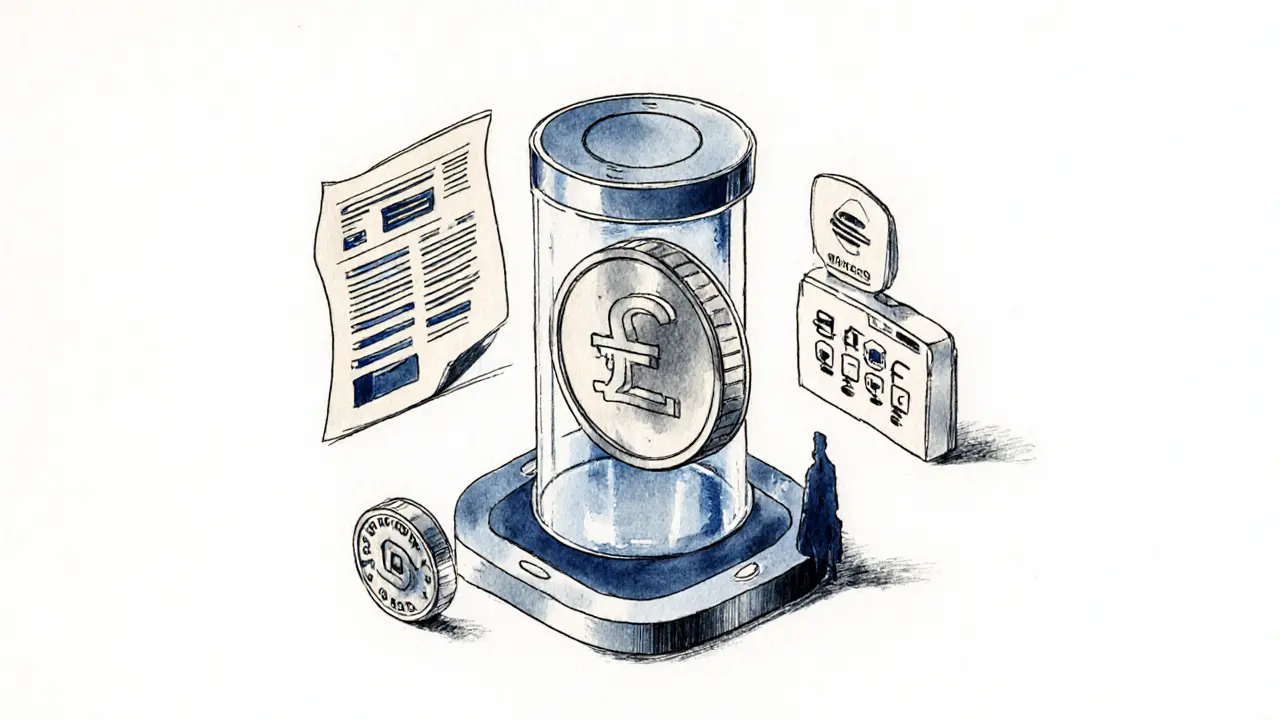
Stablecoins Have Their Own Rules
Stablecoin issuers face a different test. You only need FCA authorization if you’re issuing qualifying stablecoins from a physical office in the UK. That’s it. No consumer test. No jurisdictional reach. Just presence. So if you’re a US-based stablecoin issuer with no UK office, you’re not required to register - even if your coin is used by thousands of Brits.But if you open a London office, even a small one, you’re in. The FCA wants control over the source. They care about reserve audits, redemption guarantees, and transparency. If your stablecoin is pegged to the pound or euro, expect extra scrutiny. The goal is to prevent another TerraUSD-style collapse from hitting UK users.
What Happens After You Get Authorized?
Getting approved isn’t the finish line. It’s the starting line. Once authorized, you’re bound by the same Principles for Businesses (PRIN) as banks - except some are waived for crypto platforms. Principles 1 (Integrity), 2 (Skill, Care and Diligence), 6 (Customers’ Interests), and 9 (Relationships of Trust) don’t fully apply to trading platforms. Why? Because the FCA sees these as venues, not advisors. You’re not giving advice - you’re enabling trades.But you still need:
- CASS audits for client asset protection
- Regular reporting to the FCA
- Clear rules for how trades are executed
- Systems to detect market abuse
- Staff trained on financial crime risks
The FCA can send in a skilled person to audit your systems. They can demand you change your rules. They can cancel your permission if you slip up. One major breach - like a hack due to poor custody controls - and you’re out.

What’s New in October 2025: Retail Access to cETNs
In a major shift, the FCA lifted its ban on retail access to crypto exchange-traded notes (cETNs) on October 8, 2025. This reverses the 2021 prohibition on derivatives and ETNs tied to unregulated cryptoassets. Now, UK retail investors can buy cETNs - but only if they trade on FCA-approved UK investment exchanges. These aren’t普通的 crypto platforms. They’re recognized investment exchanges like the London Stock Exchange, with strict listing rules and oversight.This doesn’t mean you can now trade Bitcoin directly on Robinhood-style apps. It means you can buy a note that tracks Bitcoin’s price, backed by a regulated exchange. The FCA is testing a middle ground: letting retail investors get exposure without letting them hold risky, unregulated crypto directly.
How to Prepare
If you’re not ready, here’s what to do now:- If you haven’t registered under MLRs - do it immediately. The FCA is actively shutting down unregistered platforms.
- Review your business model against the five FSMA regulated activities. Are you doing any of them? If yes, start building your authorization application.
- Map your customer base. Are you serving UK retail? Then you need authorization. Only institutional? You may have some breathing room - but not forever.
- If you issue stablecoins, assess whether you have a UK presence. If yes, prepare for authorization.
- Start training your compliance team on JMLSG Chapter 22 and the FCA’s Financial Crime Guide.
- Consider a pre-application meeting with the FCA. They offer them. Use them.
There’s no shortcut. The FCA isn’t trying to kill crypto. They’re trying to stop fraud, protect consumers, and bring order to chaos. The firms that survive are the ones who treat compliance like part of their product - not a cost center.
What Happens If You Ignore This?
The FCA doesn’t warn twice. In 2024, they shut down over 120 unregistered crypto firms. Many were based overseas but still had UK customers. Their websites disappeared. Their bank accounts froze. Their founders were named in public enforcement notices. Some faced criminal investigations.Operating without authorization isn’t a gray area. It’s a red line. The FCA works with UK police, HMRC, and international regulators. If you’re breaking the rules, they’ll find you.
Do I need FCA authorization if my crypto exchange is based outside the UK?
Yes, if you serve UK retail customers directly or indirectly. The FCA’s rules apply based on who you’re serving, not where you’re based. If a UK person can sign up, trade, or hold crypto on your platform, you need authorization - unless you’re working through a UK-authorized intermediary.
What’s the difference between MLR registration and FSMA authorization?
MLR registration is a basic compliance step focused on anti-money laundering. FSMA authorization is a full financial services license. It covers more activities, requires stronger governance, and subjects you to the same rules as banks. MLR is temporary - FSMA is the future.
Can I still operate if my FCA application is pending?
No. You cannot offer crypto services to UK customers while your application is under review. Operating without approval - even if you’ve submitted paperwork - is illegal and risks rejection or enforcement action.
Are stablecoin issuers treated differently under FCA rules?
Yes. Stablecoin issuers only need FCA authorization if they operate from a physical establishment in the UK. Unlike other crypto services, there’s no consumer-based test. If you issue stablecoins from outside the UK, you don’t need permission - even if UK users hold them.
What’s a cETN, and why can retail investors now buy them?
A cETN is a crypto exchange-traded note - a financial product that tracks the price of a cryptoasset like Bitcoin, but is listed on a regulated UK exchange. The FCA lifted its ban in October 2025 because cETNs are issued by authorized institutions with strict oversight, reducing direct exposure to unregulated crypto markets.
What happens if I fail an FCA audit?
You’ll be given a chance to fix the issues. But if you don’t, the FCA can suspend your permissions, impose fines, or cancel your authorization entirely. In serious cases, they may refer you to law enforcement. Failing an audit is not a minor setback - it’s a major regulatory event.
Savan Prajapati
November 28, 2025 AT 19:21Just register already. No excuses.
imoleayo adebiyi
November 29, 2025 AT 17:58It's not just about compliance-it's about building trust. The FCA's framework, though strict, gives legitimacy to honest players. We in Nigeria see how chaos in crypto hurts ordinary people. This structure, however painful, is a step toward real protection.
Abby cant tell ya
November 30, 2025 AT 09:15Oh wow another government overreach. Crypto was supposed to be free. Now I gotta submit my soul to some British bureaucrat just to trade Bitcoin? 🙄
jeff aza
November 30, 2025 AT 20:14Let’s be clear: MLR registration is a band-aid. FSMA authorization is the actual surgery. Most firms don’t realize they’re not just applying for a license-they’re restructuring their entire org chart. CASS audits, PRIN compliance, transaction monitoring systems-this isn’t ‘doing compliance,’ it’s becoming a regulated financial institution. If you’re still thinking of this as a ‘tech startup,’ you’re already dead.
Ian Esche
December 1, 2025 AT 12:26Why should a US company care about UK rules? We don’t follow EU GDPR, why follow FCA? This is global regulation creep. The FCA thinks they’re the world’s financial police. Newsflash: they’re not.
Shelley Fischer
December 1, 2025 AT 13:44Regulation is not the enemy of innovation-it is the scaffold upon which sustainable innovation is built. The FCA’s approach, while rigorous, reflects a mature understanding of market dynamics. The alternative-unregulated chaos-is what led to the collapse of countless retail investors globally. This is not overreach; it is responsibility.
Puspendu Roy Karmakar
December 2, 2025 AT 11:11Bro, I run a small exchange in Pune. We only serve 300 Indian users. But if even one UK person signs up, we’re in trouble? That’s wild. How do you even track that? IP? VPN? This feels like trying to catch wind with your hands.
SHIVA SHANKAR PAMUNDALAR
December 3, 2025 AT 23:16They say ‘compliance is part of the product’-but what if your product is freedom? What if your product is decentralization? The FCA isn’t trying to stop fraud-they’re trying to stop disruption. And that’s not regulation. That’s control.
Tina Detelj
December 4, 2025 AT 11:14Think about it: cETNs are the crypto equivalent of a sugar-free soda. You get the taste of Bitcoin without the calories of actual ownership. The FCA’s playing chess while everyone else is playing checkers. They’re letting people feel like they’re in the game-without letting them touch the board. Clever. But is it really serving the people, or just making them feel safe while the system stays rigged?
Evelyn Gu
December 5, 2025 AT 16:51I’ve been through the MLR application process. It’s not just paperwork-it’s therapy. You have to document every single decision you’ve ever made, every employee you’ve hired, every third-party vendor you’ve used, every time you said ‘it’s fine’ when you knew it wasn’t. I cried after submitting. Not because I was rejected-because I realized how much I’d been winging it. And now I’m terrified of what happens if they come back with a ‘skilled person’ audit. I’ve got spreadsheets with spreadsheets. I’m not ready. But I’m trying.
Eddy Lust
December 6, 2025 AT 22:32They say ‘if you’re serving UK customers, you’re in’-but what does that even mean? If someone from London uses my site on vacation in Bali? If their cousin in Manchester clicks a link I posted on Twitter? If their VPN routes through London? The FCA’s rules are written like a novel with no chapters. You can’t build a business on ‘maybe.’ And yet… here we are.
George Kakosouris
December 7, 2025 AT 21:58Stablecoin issuers only need authorization if they have a UK office? That’s a joke. So I set up a mailbox in London, hire a guy to answer the phone once a week, and boom-I’m compliant? The FCA’s got more holes than Swiss cheese. This isn’t regulation-it’s theater.
Rachel Thomas
December 9, 2025 AT 01:09Wait, so I can’t trade Bitcoin directly, but I can buy a note that tracks it? That’s like saying you can’t eat pizza, but you can buy a photo of pizza and call it dinner. The FCA is gaslighting retail investors. They’re not protecting us-they’re infantilizing us.
Felicia Sue Lynn
December 10, 2025 AT 10:59There is a quiet dignity in building systems that endure. The FCA, for all its bureaucracy, is asking for maturity-from firms, from regulators, from users. We live in an age of speed, of shortcuts, of ‘move fast and break things.’ But finance is not a startup. It is a covenant. And covenants require structure. This is not about control. It is about stewardship.
Michael Labelle
December 12, 2025 AT 02:52I’ve seen too many crypto firms get shut down because they thought ‘we’re just a platform.’ But the FCA doesn’t care what you call yourself. If you hold keys, you’re a custodian. If you match trades, you’re a market maker. If you offer staking, you’re a financial intermediary. You can’t hide behind semantics. The rules are clear. The burden is on you.
Joel Christian
December 13, 2025 AT 00:35so i did the mlr thing and they rejected me because my aml policy had a typo in section 4.2.3. like… seriously? i spent 6 months on this. now i have to wait 6 more months? this is insane. i’m just a small guy trying to do right. why does the system hate me?
Komal Choudhary
December 13, 2025 AT 20:22Can someone explain to me why I need to prove I’m not laundering money if I’m only dealing with institutional clients? They’re hedge funds-they have lawyers. Why do I have to do all this paperwork for people who already know what they’re doing? It feels like I’m being punished for being honest.
SARE Homes
December 14, 2025 AT 22:50Oh please. You think the FCA cares about ‘consumer protection’? They care about control. They want to make sure only the right people-those who play nice with the system-get to profit. The real fraudsters? They’re in the banks. But they’re not getting audited. Why? Because they’re ‘too big to fail.’ This whole thing is a performance for the masses.
Casey Meehan
December 16, 2025 AT 11:53So if I’m a US-based stablecoin issuer and I open a tiny office in London with one guy who just answers emails… I’m suddenly regulated? 😳 That’s the dumbest loophole I’ve ever heard. The FCA is playing 4D chess while everyone else is stuck in tic-tac-toe. 🤡
Ben Costlee
December 17, 2025 AT 18:37I’ve worked with crypto firms in 12 countries. The FCA isn’t the strictest regulator-but they’re the most thoughtful. They don’t just want you to follow rules. They want you to understand why they exist. That’s rare. Most regulators just want checkboxes. The FCA wants culture. And that’s hard. But it’s the right kind of hard. If you’re building something that lasts, this isn’t a burden-it’s a gift.
Michael Fitzgibbon
December 19, 2025 AT 07:23People say ‘it’s too expensive’ or ‘it’s too slow.’ But ask yourself: what’s the cost of getting hacked because your custody system was built on a weekend? What’s the cost of your users losing life savings because you didn’t train your staff? Compliance isn’t a cost center. It’s insurance. And the cheapest insurance is the kind you buy before the fire starts.
Sierra Myers
December 20, 2025 AT 16:22So I can’t trade crypto directly but I can buy a note that tracks it? That’s like saying you can’t drive a car, but you can buy a model car and call it transportation. The FCA is just trying to keep retail investors from realizing they’re being played.
Vaibhav Jaiswal
December 22, 2025 AT 01:21They’re calling it ‘authorization’ but it’s really a loyalty test. You have to prove you’re not a threat to the system before you’re allowed to participate. And if you’re not from London or New York? You’re already on probation. This isn’t about safety. It’s about who gets to play.
Ben Costlee
December 23, 2025 AT 08:06That’s the thing nobody talks about. The FCA doesn’t want to kill crypto. They want to make it boring. And honestly? Maybe that’s what it needs. The wild west was fun for a while. But when people lose everything, the whole industry gets stained. I’d rather have a slow, regulated, trustworthy market than a fast, flashy, dead one.