
How Market Makers Use Order Books in Crypto Markets
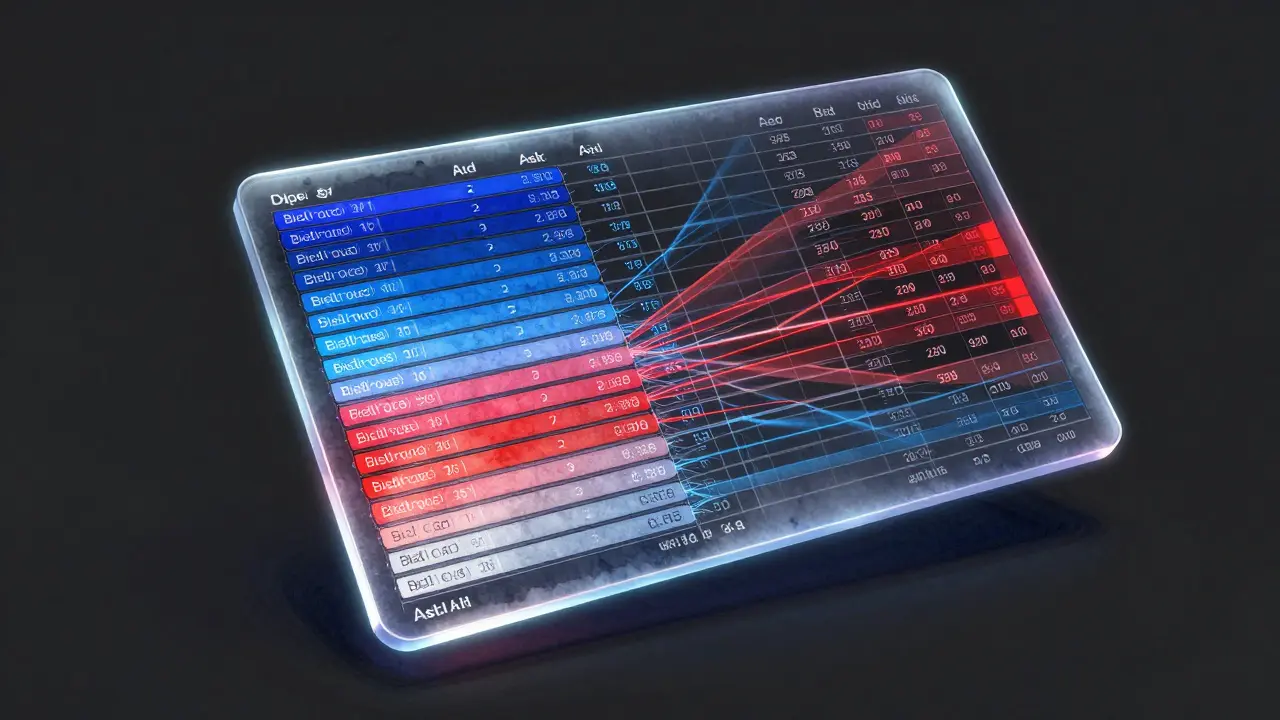
When you buy or sell Bitcoin on an exchange, you might think you're trading directly with another person. But more often than not, the other side of your trade is a market maker-a professional trader whose entire job is to keep the market flowing. And the tool they use to do this? The order book.
The order book isn't just a list of prices. It's a live, constantly updating record of every buy and sell order waiting to be filled. On any major crypto exchange, you'll see two sides: bids (buy orders) on the left, and asks (sell orders) on the right. Each level shows how much of an asset someone is willing to buy or sell at a specific price. Market makers don't just watch this-they actively shape it.
How the Order Book Works
Every order on the book follows a simple rule: price-time priority. The highest bid and lowest ask get filled first. If two buyers want the same price, the one who placed their order first gets matched first. This system keeps things fair, but it also creates opportunities.
Market makers place limit orders-orders to buy or sell at a set price-on both sides of the book. They might put a bid at $60,000 for Bitcoin and an ask at $60,010. That $10 difference is the bid-ask spread, and it's how they make money. They buy low, sell high, and repeat. But it's not that simple. If they only placed orders at $60,000 and $60,010, they'd get filled too fast and run out of inventory. So they spread their orders across multiple levels.
Level 2 data shows you more than just the top bid and ask. It shows depth: how many BTC are queued at $59,990, $59,980, $59,970, and so on. Market makers study this depth like a map. If they see a big wall of sell orders at $59,950, they know that if the price drops, it might take a while to get through it. That gives them time to adjust their own quotes.
Reading the Market Through the Book
Successful market makers don’t just place orders randomly. They watch for patterns. One key signal is order imbalance. If buy orders suddenly pile up at $60,050 but there’s almost nothing on the sell side, it’s a sign demand is building. A smart market maker might raise their ask price from $60,010 to $60,030 before the price even moves.
Another tactic is watching order flow. If a large sell order hits the book and gets absorbed quickly, it suggests there’s hidden buying pressure. Market makers use tools that track trade size, timing, and volume-weighted average price (VWAP) to detect this. Some systems update every few microseconds, giving them a split-second edge.
They also look at how fast orders get canceled. If a large bid at $60,000 disappears after 500 milliseconds, it might not be a real buyer-it could be a test order from another market maker or a trader trying to gauge liquidity. Recognizing these fake orders helps avoid getting trapped.
Managing Risk and Inventory
Market makers aren’t just trying to profit from spreads. They’re also managing risk. If they buy too much Bitcoin and the price drops, they lose money. If they sell too much and the price surges, they miss out.
To balance this, they use automated inventory rebalancing. If their net position in Bitcoin goes above +10 BTC, their system automatically starts placing more sell orders than buy orders. If it drops below -5 BTC, they shift back to buying. This keeps their exposure tight and predictable.
They also track exposure across multiple exchanges. A market maker might be active on Binance, Coinbase, and a decentralized exchange like Uniswap. If Bitcoin is trading at $60,020 on Binance but $60,050 on Coinbase, they’ll buy on Binance and sell on Coinbase-arbitrage, done in milliseconds. Their systems constantly scan for these tiny price gaps and exploit them before others can react.

Market Makers on Decentralized Exchanges
On centralized exchanges, order books are clear and consistent. On decentralized exchanges (DEXs), things get messy. DEXs like Uniswap don’t use traditional order books. Instead, they rely on automated market makers (AMMs) powered by smart contracts. These use formulas-like x*y=k-to set prices based on pool reserves, not matching orders.
But some DEXs, like Serum on Solana or dYdX on Ethereum, do use real order books. Market makers there face unique challenges. Liquidity is thinner. Slippage is higher. And because anyone can post an order, the book gets cluttered with fake or low-quality quotes.
On these platforms, market makers must be even more precise. They can’t rely on volume alone. They need to filter out noise. They track how often orders get canceled, how deep the real liquidity is, and how fast prices move after large trades. Some use machine learning models trained on past DEX order flow to predict where the next big move will happen.
The Tools They Use
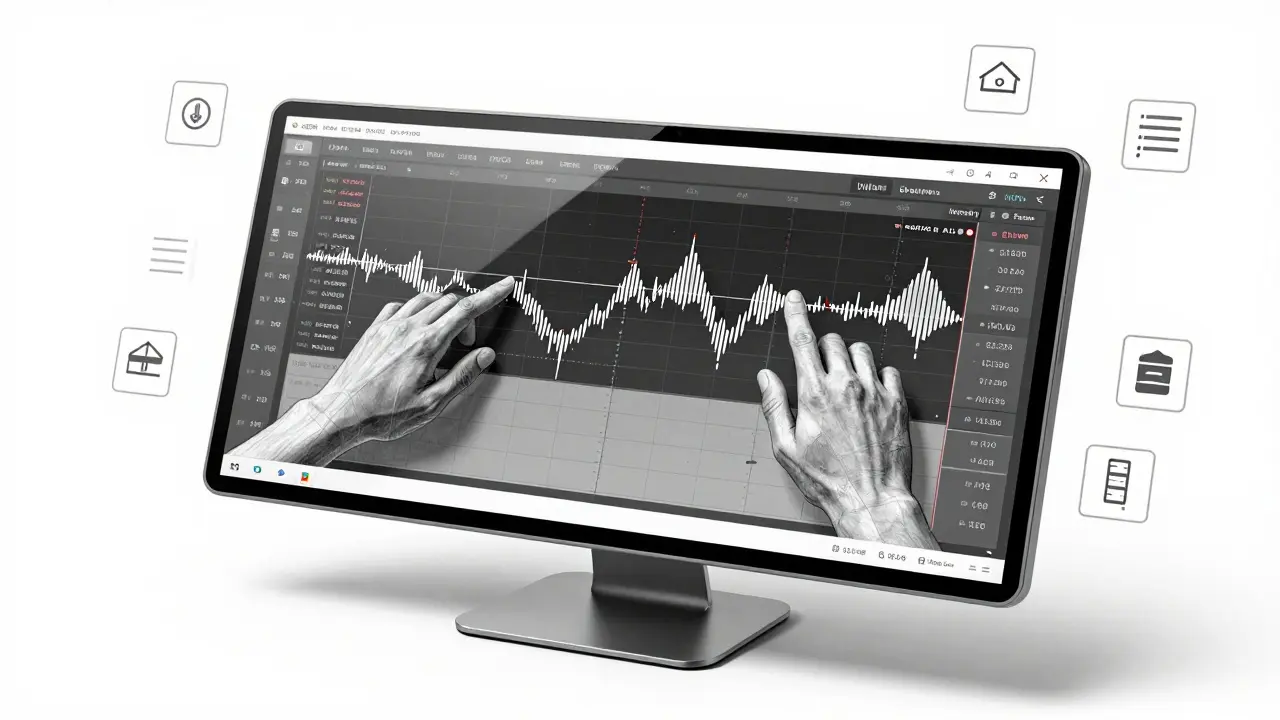
Market makers don’t trade with Excel sheets. They use professional platforms that give them:
- Real-time order book visualization-color-coded levels showing where liquidity is clustered
- Historical replay-the ability to rewind and test strategies on past market data
- Automated risk calculators-that flag if their exposure to any asset exceeds limits
- Smart order routing-that splits large trades across exchanges to avoid moving the market
- Time-and-sales trackers-that show every trade size and timestamp, down to the microsecond
These tools let them react faster than humans can. A human trader might take 2 seconds to decide whether to adjust a quote. A market maker’s system does it in 15 milliseconds.
Why Market Makers Matter
Without market makers, crypto markets would be choppy and slow. Imagine trying to sell 10 BTC and having to wait 10 minutes because no one’s buying. That’s what happens when liquidity dries up. Market makers fill that gap. They’re the reason you can buy Bitcoin in seconds, even during a price spike.
They also help with price discovery. When news breaks-say, a major exchange announces listing a new coin-market makers are the first to react. Their orders shift the book, and that movement signals to everyone else what the new fair price might be.
In crypto, where markets never sleep, market makers are always working. Weekends, holidays, black swan events-they’re still placing orders, adjusting spreads, and managing risk. Their job isn’t glamorous. But without them, trading crypto would be a nightmare.
What Happens When They Leave?
When market makers pull back-during extreme volatility, regulatory crackdowns, or exchange outages-the order book thins out. Bids vanish. Asks jump. Spreads widen from $10 to $500. Suddenly, your $100 trade costs you $20 in slippage.
This is why exchanges pay market makers to stay active. Some offer fee rebates. Others give them priority in order matching. It’s not charity-it’s survival. A healthy market needs constant liquidity. And only market makers can provide it at scale.
Do market makers manipulate prices?
Not in the way most people think. Market makers don’t fake trades or spread rumors. What they do is profit from the spread between buy and sell orders. If they see a surge in buy orders, they raise their ask price. That’s not manipulation-it’s market efficiency. If they didn’t adjust, the price would overshoot, causing bigger swings. Their role is to smooth out volatility, not create it.
Can I trade like a market maker?
Technically, yes-but it’s not practical for most people. Market makers use high-frequency systems, co-located servers, and real-time data feeds that cost tens of thousands of dollars a month. Even if you could afford it, you’d need algorithms to manage risk and inventory. Retail traders who try to mimic market makers often end up getting picked off by professionals who see their orders coming a mile away.
Why do bid-ask spreads widen during crashes?
During crashes, uncertainty spikes. Market makers don’t know if the price will keep falling or rebound. To protect themselves, they widen spreads. A $50 spread might seem crazy, but it’s their insurance. If they kept narrow spreads, they’d get stuck holding assets that keep losing value. Wider spreads are a signal: the market is risky, and liquidity is thinning.
How do market makers handle flash crashes?
They rely on circuit breakers and risk limits built into their systems. If an asset’s price drops more than 5% in 500 milliseconds, their algorithms automatically pause new orders. They also monitor order cancellation rates. If 80% of bids vanish in under a second, they assume it’s a flash crash and step back. This prevents them from getting wiped out by a cascade of stop-losses.
Do market makers trade on DEXs the same way as on CEXs?
No. On centralized exchanges (CEXs), they use traditional order books with price-time priority. On DEXs with order books (like dYdX), they face thinner liquidity, more fake orders, and slower execution. On AMM-based DEXs (like Uniswap), they don’t use order books at all-they provide liquidity in pools and earn fees from trades. The strategies are completely different.
Market makers are the invisible engine behind every crypto trade. They don’t get headlines. But without them, the market wouldn’t function. Their mastery of the order book isn’t magic-it’s math, tech, and discipline. And as crypto grows, their role only becomes more critical.

Mara Alves Mariano
March 9, 2026 AT 22:54Adam Ashworth
March 11, 2026 AT 14:31karan narware
March 11, 2026 AT 23:01Michael Suttle
March 13, 2026 AT 20:03Jenni James
March 14, 2026 AT 08:01Alex Thorn
March 15, 2026 AT 08:05Craig Gregory
March 16, 2026 AT 00:15vishnu mr
March 17, 2026 AT 03:41Grace van Gent-Korver
March 18, 2026 AT 15:06Zephora Zonum
March 18, 2026 AT 18:27Douglas Anderson
March 18, 2026 AT 19:42Tina Keller
March 20, 2026 AT 15:14vasantharaj Rajagopal
March 21, 2026 AT 09:14ann neumann
March 23, 2026 AT 07:11Allison Davis
March 23, 2026 AT 23:21