
How to Avoid Crypto Restrictions in Russia: A 2026 Survival Guide
You want to buy Bitcoin in Moscow. You open your banking app, transfer funds, and then-silence. Your account is frozen. The Central Bank of Russia (CBR) flagged your transaction as "suspicious." This isn't a glitch; it's policy. As of late 2025, navigating crypto restrictions in Russia is less about finding a platform and more about understanding who gets to play the game and who gets blocked.
The landscape has shifted dramatically. While the global market booms, Russian retail users face a near-total ban on domestic payments. But here’s the twist: trade hasn’t stopped. In fact, crypto-facilitated cross-border trade hit 1 trillion rubles in 2025. How? By bypassing the retail rules. If you’re an ordinary citizen, you’re operating in a legal gray zone. If you’re a company or a "qualified investor," you have specific lanes to drive through. This guide breaks down exactly how to stay liquid without losing your access to fiat currency.
Understanding the Dual-Track Regulatory Reality
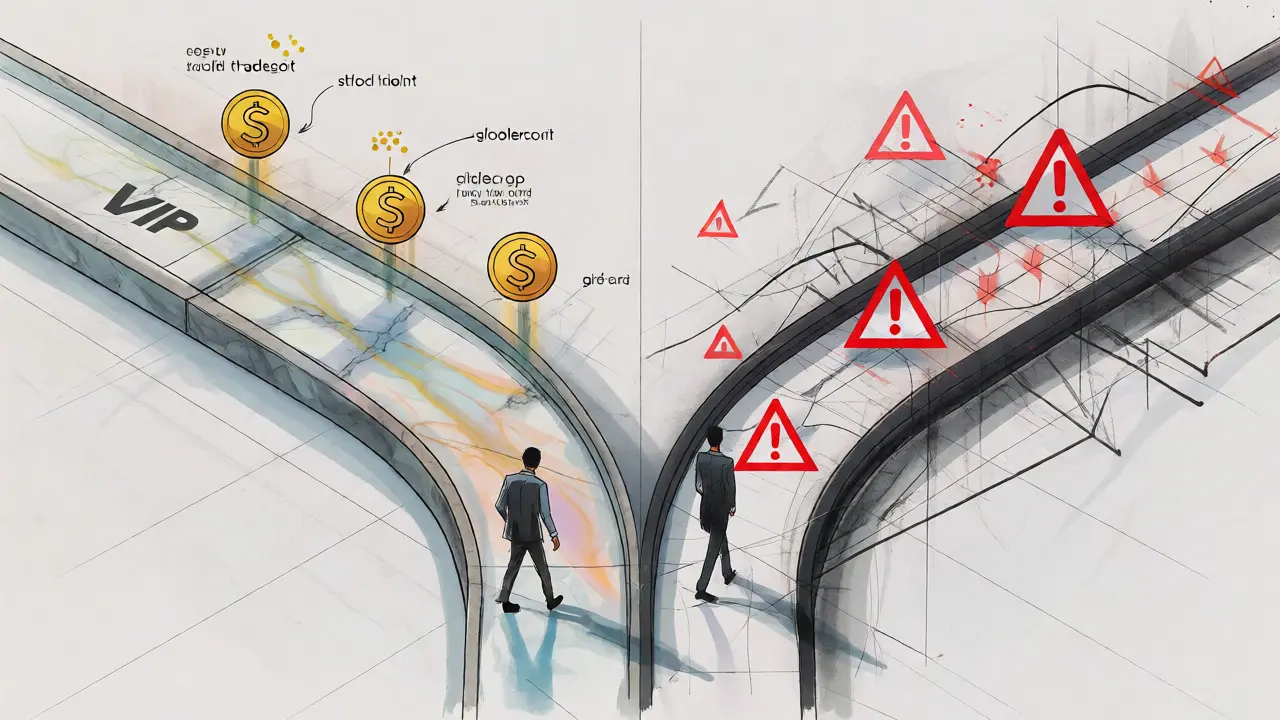
Russia doesn’t have one set of crypto rules; it has two. Think of it as a VIP section and a general admission line that’s actually closed. The first track is the Experimental Legal Regime (ELR). This is where sanctioned companies use cryptocurrencies for international settlements. It’s designed to help businesses bypass Western financial blocks. For them, using stablecoins like A7A5 (a ruble-backed asset) is not just allowed; it’s encouraged. In July 2025 alone, A7A5 saw $41.2 billion in volume. That’s massive liquidity flowing through channels most regular people can’t touch.
The second track is for everyone else. Under the 2020 Digital Financial Assets Law, paying for goods with Bitcoin inside Russia is illegal. Mining is regulated but taxed heavily, with fines up to 200,000 rubles for unlicensed operations. The CBR’s goal is clear: keep capital from fleeing and maintain control over the ruble. They don’t hate blockchain; they hate losing control of money supply. So, while your neighbor might be mining at home, he can’t legally buy his groceries with his earnings.
| User Type | Allowed Activities | Main Restrictions | Risk Level |
|---|---|---|---|
| Qualified Investor | Trade on licensed platforms, hold derivatives | Must meet high net-worth/income thresholds | Low |
| Corporate Entity | Cross-border settlements via ELR | Cannot pay domestic wages/suppliers in crypto | Medium |
| Retail Citizen | Hold assets, mine (if registered) | No payments, no local centralized exchanges | High |
| Miner | Produce coins, sell to licensed buyers | Fines for unregistered rigs, energy costs | Medium |
Navigating the Banking Minefield: P2P and Account Freezes
If you’re a regular user, you likely rely on Peer-to-Peer (P2P) trading because local centralized exchanges are largely unavailable or restricted. This is where the friction happens. Banks aren’t just watching; they’re actively hunting for patterns that look like crypto arbitrage. Since September 1, 2025, banks must monitor ATM withdrawals closely. If you withdraw cash at odd hours, use QR codes instead of cards, or make sudden large transfers, your account might get frozen for 48 hours.
Why does this happen? The CBR identifies "warning indicators" to spot unauthorized crypto flows. These include:
- Withdrawals shortly after loan approvals (cash-out schemes).
- Transfers over ₽200,000 via the Faster Payments System.
- Unusual activity spikes within six hours before withdrawal.
- Using ATMs rarely visited by your usual profile.
To avoid these freezes, you need to act like a normal consumer, not a trader. Keep your P2P transactions under the radar. Don’t move ₽500,000 in one go if your average monthly spend is ₽50,000. Use multiple smaller transactions if necessary, but beware of triggering the "structuring" alert. And remember: foreign bank cards are mostly useless in Russia now due to sanctions. You are stuck with domestic rails, which makes every transfer visible to the state.
Leveraging the Experimental Legal Regime (ELR)
If you run a business, you shouldn’t be worrying about P2P freezes. You should be looking at the ELR. This framework allows specific companies to use crypto for external settlements. It’s the government’s way of saying, "We’ll let you use digital dollars to buy imports, but don’t try to use them to pay rent in St. Petersburg."
Companies participating in the ELR work with approved operators. These operators handle the compliance heavy lifting. If you’re trying to import goods from Asia or Africa, settling in USDT or a sanctioned stablecoin like A7A5 can be faster than traditional SWIFT transfers, which remain slow and expensive due to secondary sanctions. However, accessing this regime requires corporate structure and approval. You can’t just sign up online. You need to demonstrate that your business benefits the national economy by facilitating trade that would otherwise stall.
The Impact of Sanctions and Exchange Shutdowns
You might remember Garantex. It was the go-to exchange for many Russians. Then, in March 2025, the U.S. Treasury sanctioned it. The Secret Service seized its domain and froze $26 million in assets. Executives were indicted, and some arrested. The successor, Grinex, tried to pick up the pieces, but the trust factor took a hit.
This enforcement action sent a chill through the market. Many Russians moved their funds offshore or into cold storage. The lesson? Don’t keep all your eggs in one basket, especially if that basket is labeled "Russian-friendly." International regulators are increasingly targeting no-KYC exchanges. If you’re holding significant amounts, consider splitting custody between a hardware wallet and a non-Russian jurisdiction. Remember, while the CBR wants to control flow, the U.S. Treasury wants to block exit. You’re caught in the middle.
Preparing for the Digital Ruble Launch
Here comes the big change: the digital ruble. Scheduled for widespread implementation in 2026, this isn’t just another cryptocurrency. It’s a central bank digital currency (CBDC). Unlike Bitcoin, which is decentralized, the digital ruble gives the state total visibility and control over every transaction.
What does this mean for you? It could further squeeze out private crypto alternatives. If the state offers a convenient, instant, low-cost digital payment method, why would anyone bother with volatile Bitcoin for daily use? The government hopes the digital ruble will reduce the demand for foreign stablecoins domestically. For investors, this means the "utility" argument for holding crypto in Russia weakens. Crypto becomes purely a store of value or a speculative asset, not a medium of exchange. Start thinking about your long-term strategy now. Are you holding for potential appreciation against the ruble, or are you hedging against inflation?

Practical Compliance Checklist for Russian Users
So, how do you actually survive this environment? Here is a practical approach based on current enforcement trends:
- Verify Your Status: Are you a qualified investor? If yes, use licensed platforms. If no, accept that you are in a gray area and prioritize privacy.
- Avoid Domestic Payments: Never pay for services directly with crypto if you can avoid it. Convert to rubles first.
- Monitor Bank Alerts: Set up notifications for every transaction. If your bank flags something, respond immediately to prevent a 48-hour freeze.
- Diversify Custody: Keep only what you need for trading on exchanges. Store the rest in hardware wallets.
- Stay Updated on ELR Rules: If you have a business, check if you qualify for experimental settlement regimes. This is your best legal shield.
The tension between the Finance Ministry (which wants more openness) and the Central Bank (which wants control) means rules can shift. Deputy Treasury head Ivan Chebeskov has pushed for a broader national strategy, suggesting things might loosen slightly. But don’t bet on it. Until comprehensive legislation passes, assume the strictest interpretation is active.
Frequently Asked Questions
Is it illegal to own Bitcoin in Russia?
No, owning Bitcoin is not illegal. The ban applies to using cryptocurrency as a means of payment for goods and services within Russia. You can hold, mine, and trade it, but you cannot legally buy coffee with it.
Why did my bank freeze my account during a P2P trade?
Banks monitor for suspicious patterns defined by the Central Bank, such as frequent large transfers, unusual timing, or rapid movement of funds. If your activity looks like commercial arbitrage rather than personal spending, they may freeze the account for 48 hours to investigate.
Can I use foreign bank cards to buy crypto in Russia?
Generally, no. Due to sanctions, Visa and Mastercard issued abroad often do not function in Russia. You typically need a domestic Russian bank account to fund P2P trades or local exchanges.
What is the Experimental Legal Regime (ELR)?
The ELR is a special regulatory framework allowing selected companies to use cryptocurrencies for cross-border settlements. It helps businesses bypass Western financial restrictions while keeping domestic crypto usage limited.
Will the digital ruble replace Bitcoin in Russia?
It aims to replace crypto for daily payments and settlements. However, it is unlikely to replace Bitcoin as a store of value or hedge against inflation. The digital ruble is centralized, whereas Bitcoin remains decentralized.