
How to Get VASP Registration in the UK: A Guide for Crypto Businesses
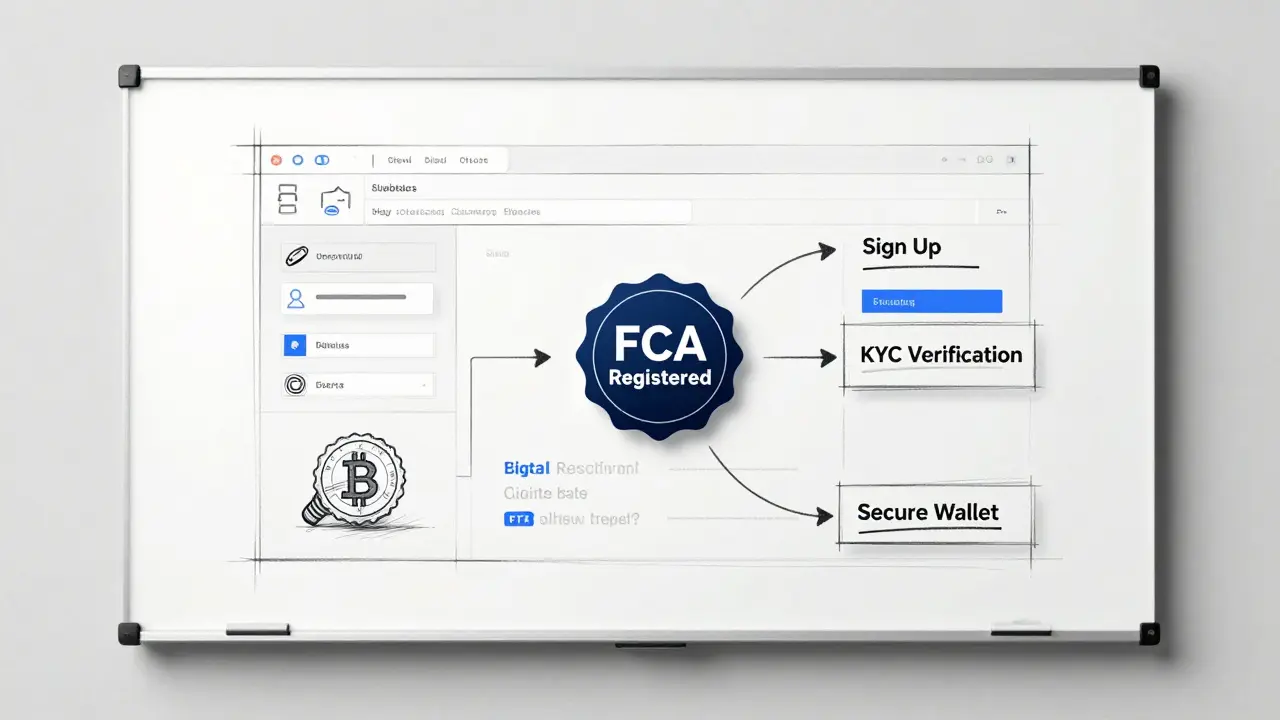
Imagine launching a sleek new crypto exchange or wallet service, only to have your operations frozen because you missed one regulatory checkbox. In the United Kingdom, that isn’t just a hypothetical nightmare-it’s the reality for unregistered Virtual Asset Service Providers (VASPs). Since September 1, 2023, the Financial Conduct Authority (FCA) has enforced strict rules requiring all crypto businesses to register before operating. If you are planning to enter the UK market, understanding this process is not optional; it is the foundation of your business survival.
The landscape has shifted dramatically. The UK no longer treats crypto as a wild west frontier. Instead, it aligns with global standards set by the Financial Action Task Force (FATF), specifically Recommendation 15 and 16. This means if you handle virtual assets, you must follow the same anti-money laundering (AML) and counter-terrorist financing (CTF) rules as traditional banks. For founders and compliance officers, the question is no longer "should we register?" but "how do we navigate the FCA's rigorous application process efficiently?"
Who Needs VASP Registration in the UK?
Not every entity touching blockchain technology needs an FCA registration. However, the definition of a VASP is broad. You likely need to register if you provide services such as exchanging crypto for fiat money, exchanging one type of crypto for another, transferring crypto assets, issuing or managing crypto wallets, or participating in token sales.
The critical factor is whether you are acting "by way of business." The FCA looks at several indicators:
- Frequency and Scale: Do you conduct these activities regularly or on a significant scale?
- Profit Motive: Do you receive direct or indirect benefits from these services?
- Marketing: Are you advertising your services to UK consumers? Even if your servers are overseas, marketing to UK residents triggers the requirement.
- Physical Presence: Do you have a registered office or day-to-day management located in the UK?
A common misconception is that having no UK office exempts you. This is false if you are actively marketing to UK customers. The FCA explicitly states that registration is mandatory if you wish to make financial promotions regarding crypto assets to UK consumers. Conversely, if you serve UK clients incidentally without active marketing or physical presence, you might fall outside the scope, but this is a risky gray area best clarified by legal counsel.
The Core Pillars of Compliance: AML, KYC, and Financial Strength
Getting registered isn't just about filling out a form. It is about proving your operational integrity. The FCA assesses three main pillars during the application review.
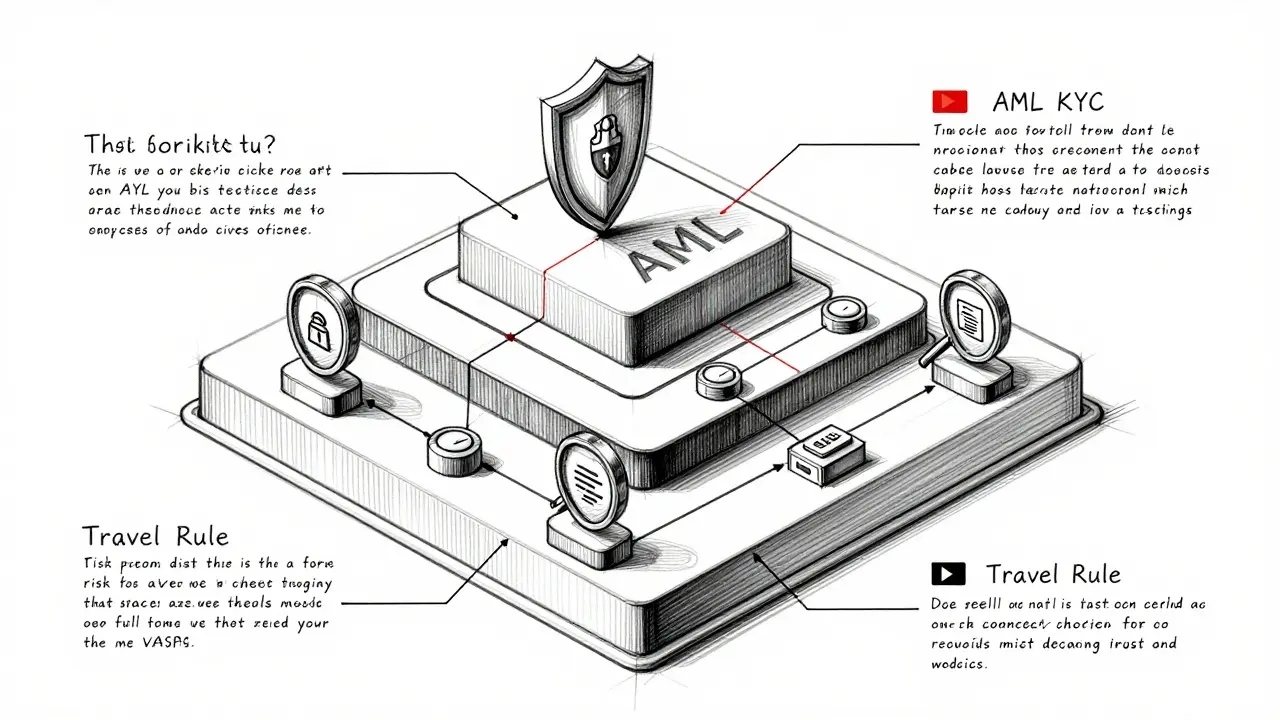
First, Anti-Money Laundering (AML) and Know Your Customer (KYC) policies are non-negotiable. You must demonstrate robust systems for verifying customer identities. This goes beyond simple ID checks. You need ongoing transaction monitoring to spot suspicious patterns. For example, if a user suddenly moves large amounts of stablecoins through multiple wallets in quick succession, your system should flag this for review. The FCA expects you to report any suspicious activity to the National Crime Agency immediately.
Second, financial strength matters. Unlike some jurisdictions that focus solely on security, the UK wants to ensure you can cover potential losses. You must submit audited financial statements showing sufficient capital and liquid assets. This proves you aren't a fly-by-night operation that will vanish when markets crash. Think of it as a safety net for your users' funds.
Third, risk management and cybersecurity protocols protect both your data and your reputation. You need documented procedures for handling cyber threats, preventing fraud, and segregating client assets from company funds. Mixing client crypto with operational funds is a major red flag for regulators. Clear segregation ensures that even if your business faces insolvency, customer assets remain protected.
Navigating the Travel Rule Requirement
One of the most complex aspects of VASP registration is complying with the Travel Rule. Effective since September 2023, this rule mandates that VASPs collect and transmit specific information about the originator and beneficiary of a transfer.
When User A sends crypto to User B via your platform, you must share basic identifying information-such as name, account number, and address-with the receiving VASP. This applies to transfers above certain thresholds, though the UK implementation requires high transparency regardless of amount to combat illicit finance. If you deal with unhosted wallets (private keys held by individuals), you must still perform enhanced due diligence.
Implementing this technically is challenging. Many legacy banking systems weren't built for this level of data sharing in real-time. You may need to integrate specialized compliance software that automates the collection and transmission of this data securely. Failure to comply with the Travel Rule can lead to severe penalties, including fines and loss of registration.
| Requirement | Traditional Bank | VASP (Crypto Business) |
|---|---|---|
| Regulatory Body | FCA / PRA | FCA |
| Primary Focus | Financial Stability & Deposit Protection | AML/CFT & Consumer Protection |
| Transaction Monitoring | Real-time SWIFT messages | Blockchain analysis + Travel Rule data |
| Custody Model | Centralized ledger | Hot/Cold wallets with key management |
| Record Keeping | 5 years minimum | 5-8 years depending on jurisdiction specifics |
The Application Process: Step-by-Step
Submitting your application to the FCA is a meticulous process. Here is how to approach it strategically.
- Gather Corporate Documentation: Prepare articles of association, proof of registered office, and details of all directors and shareholders. Every individual with significant control must undergo a "Fit and Proper" test.
- Develop Operational Plans: Draft detailed manuals covering your business model, target market, and technical infrastructure. Explain how you will handle disputes and manage risks.
- Create Compliance Frameworks: Document your AML/KYC policies, risk assessment methodologies, and internal audit procedures. Show, don't just tell, how you will detect money laundering.
- Submit via Connect System: The FCA uses its online portal for applications. Ensure all referenced documents are uploaded and accessible. Incomplete submissions are rejected instantly.
- Prepare for Interviews: Senior management may be interviewed to assess their competence and integrity. Be ready to explain complex technical concepts in plain English.
Processing times vary. While some straightforward applications might take three months, complex cases can stretch over a year. Delays often occur due to insufficient documentation or unclear explanations of risk controls. Engaging early with the FCA through pre-application meetings can help clarify expectations.

Common Pitfalls and How to Avoid Them
Many applications fail not because the business idea is bad, but because the compliance setup is weak. One frequent issue is inadequate banking relationships. Traditional banks are hesitant to work with crypto firms due to perceived risks. Without a reliable payment processor, you cannot prove financial stability. Start building these relationships early. Consider fintech-friendly banks or specialized crypto payment providers that understand the sector.
Another pitfall is underestimating the cost of compliance. Hiring qualified Money Laundering Reporting Officers (MLROs) and investing in robust monitoring software is expensive but essential. Cutting corners here leads to rejection. Additionally, ensure your cybersecurity measures meet industry standards like ISO 27001. A breach in customer data can destroy trust and trigger regulatory scrutiny.
Finally, avoid generic responses. The FCA reads thousands of applications. Tailor your submission to your specific business model. If you run a DeFi protocol, explain how you mitigate smart contract risks. If you operate a centralized exchange, detail your liquidity management strategies. Specificity demonstrates expertise and preparedness.
Future Outlook: What Lies Ahead?
Regulation in the UK crypto space is evolving. The FCA continues to refine its guidance, with upcoming information sessions planned for late 2025 to address emerging issues. Expect tighter oversight on consumer protection and clearer definitions for decentralized finance (DeFi) services. As the EU implements its Markets in Crypto-Assets (MiCA) regulation, the UK may adjust its stance to maintain competitiveness while ensuring safety.
For businesses, this means staying agile. Regularly update your compliance programs to reflect new guidelines. Monitor FATF recommendations closely, as they often precede local regulatory changes. Building a culture of compliance from day one positions you not just as a regulated entity, but as a trusted partner in the digital asset ecosystem.
How long does VASP registration take in the UK?
Processing times vary significantly based on application complexity. Simple applications may take around three months, while complex cases involving novel business models can take over a year. Delays often result from incomplete documentation or requests for additional information during the review phase.
Do I need VASP registration if I have no UK office?
Yes, if you are marketing your services to UK consumers. The FCA considers active marketing towards UK residents as conducting business in the UK, regardless of physical presence. However, if you only serve UK clients incidentally without targeted marketing, you might not need registration, but this requires careful legal assessment.
What happens if I operate without VASP registration?
Operating without registration is illegal. The FCA can issue enforcement notices, impose heavy fines, and ban individuals from working in the financial sector. Unregistered entities also face difficulties opening bank accounts and partnering with legitimate payment processors.
Is the Travel Rule mandatory for all transactions?
The Travel Rule applies to transfers between VASPs and involves sharing originator and beneficiary information. While thresholds exist in some jurisdictions, the UK emphasizes high transparency. VASPs must implement systems to collect and transmit this data securely to comply with FATF standards.
Can I apply for VASP registration if I am a foreign company?
Yes, foreign companies can apply, but they must establish a registered office or branch in the UK. The FCA requires local accountability, meaning someone in the UK must be responsible for daily operations and compliance. You will also need to meet all UK-specific AML and financial strength requirements.

Terry Hyland
June 18, 2026 AT 19:02the whole point of crypto was to get away from this government control and now they are forcing us to register like bad bank robbers it is sick how they want to track every single penny you move i dont trust the fca or any government agency with my data they just want to steal it and watch me
Monica Pathammavong
June 20, 2026 AT 01:46you people are so naive thinking this helps anyone its just a way for the elites to squeeze more money out of small businesses i have read the full fatf report and let me tell you it is full of holes and bias against decentralization why do we need to know who owns the wallet its none of their business stop letting them invade your privacy
Tim Lefebvre
June 20, 2026 AT 06:58look i know it sounds harsh but if you are running a real business in the uk you gotta do it otherwise you will get shut down fast i helped a few startups navigate this and the key is having your aml policies rock solid before you even apply dont wait till the last minute because the fca will tear your application apart if its messy
Annemarie Fitzgerald
June 20, 2026 AT 19:30it feels like we are losing our freedom bit by bit under the guise of safety what does it mean to be a free citizen when every transaction is monitored by some faceless bureaucrat in london i wonder if this is truly about security or if it is about control and power dynamics that we cannot see clearly anymore
Abby Sivertsen
June 21, 2026 AT 19:19i am from the us and seeing the uk tighten up makes me nervous because regulations tend to spread globally pretty quickly if you are planning to expand internationally you better start documenting everything now especially your travel rule compliance because that is where most companies fail initially
Benjamin Eisen
June 23, 2026 AT 04:28does anyone else feel like the cost of compliance is just too high for small teams i mean hiring an mlro and getting iso 27001 certified costs a fortune and then you still might get rejected it seems like the barrier to entry is designed to keep only the big players in the game which kind of defeats the purpose of open finance
Skm Shubham
June 24, 2026 AT 02:56the article misses the point that decentralized protocols should not be treated as centralized entities if there is no central authority then who exactly is registering this is a fundamental misunderstanding of blockchain technology by regulators who are trying to fit square pegs into round holes and it will only stifle innovation
Rob Aronson
June 25, 2026 AT 04:45from a technical standpoint the integration of travel rule apis is actually quite manageable if you use modern middleware solutions 🚀 many legacy systems struggle but new architectures built with microservices can handle the data transmission requirements easily without compromising user experience or speed ⚡️
Kwon Bill
June 25, 2026 AT 10:50in asia we are seeing similar trends with miCA in europe and strict rules in japan and south korea the global standard is converging towards heavy regulation so if you are building a cross border platform you need a multi jurisdictional compliance strategy right from day one or you will be left behind
Danna Charris
June 27, 2026 AT 08:18only the sophisticated firms survive this gauntlet. the rest fold. it is natural selection.
Fede Faith
June 28, 2026 AT 20:41i think people underestimate the importance of the pre-application meeting with the fca it really helps to clarify what they are looking for before you spend months writing documentation i recommend booking that call early and being very specific about your risk model because generic answers will get you nowhere
Josh Dodson
June 29, 2026 AT 17:03hey guys just wanted to say dont give up on this process it is tough but totally doable i saw a team get approved in 4 months by focusing heavily on their cybersecurity proofs and making sure their banking partners were onboarded first good luck to everyone trying to launch in the uk
Suman Patil
July 1, 2026 AT 01:04let us break this down simply for everyone here the main thing is you need to show you are not a risk to the financial system this means proving you have enough money to cover losses and that you have strong tech to prevent hacks if you can do those two things you are already ahead of most applicants
Kumaran sowkarpet
July 1, 2026 AT 15:54very informative post :) i found that having a local registered office is crucial even if you are a foreign entity because the fca wants someone accountable in the country it is not just a formality it is about legal jurisdiction and enforcement capabilities so make sure you sort that out early
Mauricio Contreras Loredo
July 2, 2026 AT 15:47sure because nothing says freedom like filling out paperwork for a government agency that hates crypto anyway lol but hey at least we can sleep well knowing our funds are safe from ourselves thanks for the detailed guide on how to become a corporate drone
sreeja boora
July 2, 2026 AT 19:52the regulatory framework in india is also evolving rapidly and we see similar challenges with aml compliance however the approach must be tailored to local laws and cultural contexts while adhering to international standards such as fatf recommendations to ensure seamless cross-border operations
Grace Newman
July 2, 2026 AT 21:16i cannot help but wonder who is really benefiting from these stringent regulations is it truly for consumer protection or is it a mechanism for state surveillance and capital control the implications for individual sovereignty are profound and often overlooked by those blindly following compliance checklists
Akeem Whittaker
July 4, 2026 AT 04:53if you are serious about entering the uk market you need to treat compliance as a core product feature not an afterthought integrate it into your development cycle from the start otherwise you will end up rebuilding your entire stack later which is far more expensive and time consuming
Manish Prajapat
July 5, 2026 AT 00:46there is a philosophical question here about trust in digital systems versus trust in institutions perhaps the future lies in a hybrid model where smart contracts enforce basic rules while human oversight handles complex edge cases balancing efficiency with accountability
John Doe
July 6, 2026 AT 10:38i have seen so many founders burn out during this process because they try to do it all alone please hire experts for the legal and compliance parts your time is better spent on product development and user acquisition do not reinvent the wheel when it comes to regulatory frameworks
Mekz Wheoki
July 6, 2026 AT 16:55another day another set of rules designed to crush the little guy while the big banks laugh all the way to the bank enjoy your regulated cage folks
Kenneth Riley
July 8, 2026 AT 06:52you are all missing the forest for the trees the real issue is that the fca has no idea how blockchain works they are applying banking rules to technology that operates completely differently this mismatch will lead to absurd outcomes and likely catastrophic failures for compliant firms who cant compete with offshore unregulated rivals
ravi mahla
July 9, 2026 AT 10:03haha yeah welcome to the club of boring compliance officers but seriously if you want to scale you have to play by the rules eventually so might as well get it done right now instead of dealing with fines later which is much worse
Mark Brunschwiler
July 10, 2026 AT 07:47this whole situation makes me feel so drained like we are constantly fighting against a system that wants to control us it is exhausting to think about all the steps required just to operate legally i wish there was a simpler way but i guess we just have to keep pushing through the bureaucracy
Sonya O'Brien
July 11, 2026 AT 13:27i have been working in fintech for over a decade and i can tell you that the landscape is changing faster than ever before with new regulations popping up in different jurisdictions it is essential to stay agile and adaptable because what works today might not work tomorrow so build flexible systems
Filbert Reeves
July 12, 2026 AT 18:55everyone thinks registration makes you safe but it actually makes you a target for hackers and lawsuits because you are holding more data and facing more scrutiny it is a trap designed to make you vulnerable while giving the illusion of security through compliance theater that nobody really understands
Nick Rice
July 13, 2026 AT 04:00focus on the fundamentals of your business model and ensure it aligns with regulatory expectations from the start this proactive approach saves time and resources in the long run while building trust with stakeholders and regulators alike
Amit Thakur
July 14, 2026 AT 19:51the technical implementation of travel rule requires deep integration with blockchain analytics tools which can be costly but necessary for effective monitoring and reporting of suspicious activities ensuring robust infrastructure is key to maintaining compliance and avoiding penalties
Eric Scheinberg
July 15, 2026 AT 09:46precision in documentation is paramount. ambiguity leads to rejection.
pankaj chawla
July 15, 2026 AT 11:34we should collaborate more as a community to share best practices and lessons learned from the registration process this collective knowledge base would benefit everyone and reduce the trial and error period for new entrants