
How to Identify Bull Market Signals in Cryptocurrency
When the price of Bitcoin or Ethereum starts climbing, it’s easy to get excited. But not every uptick is a bull market. Many traders get burned chasing fake rallies-only to watch prices crash again. So how do you tell the difference between a real bull market and a temporary bounce? The answer isn’t guesswork. It’s about recognizing clear, repeatable patterns backed by data, volume, and market behavior.
Start with the 200-Day Moving Average
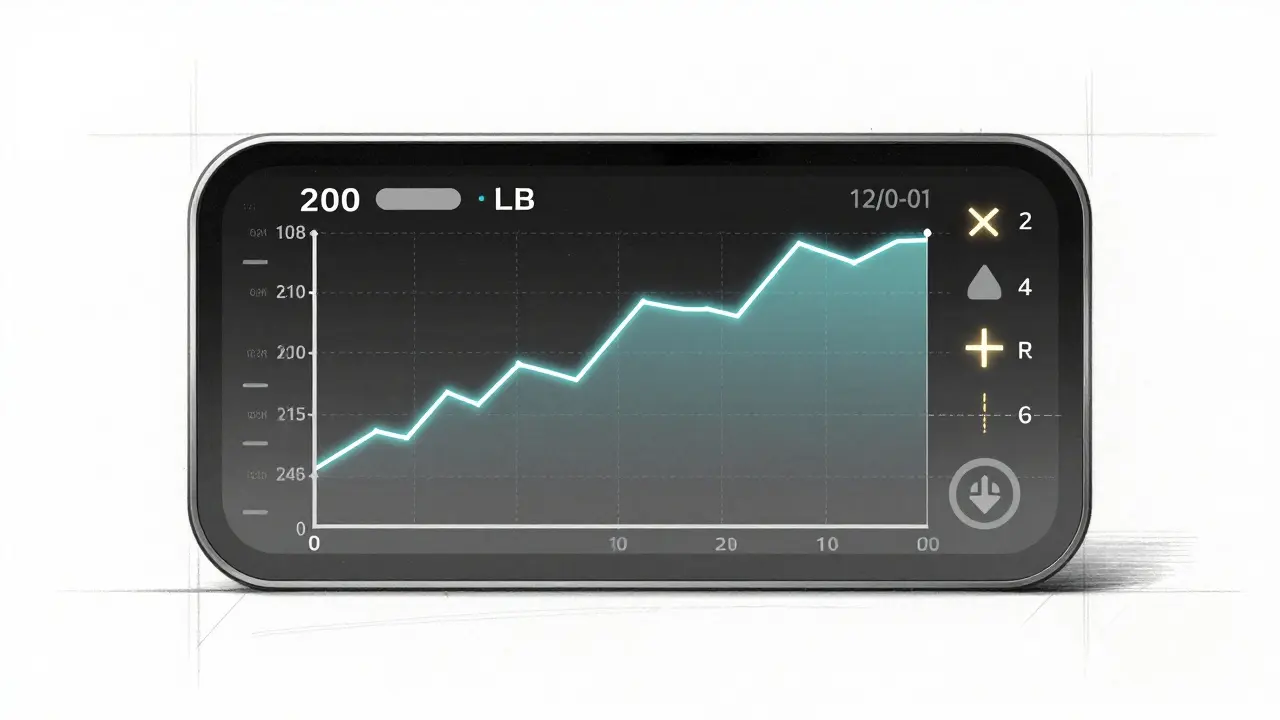
The 200-day moving average (200 SMA) is the most watched line in crypto trading. It smooths out price action over the last 200 days, showing the long-term trend. When the price consistently stays above this line, it’s a strong sign buyers are in control. But the real signal comes when the price breaks above the 200 SMA after a long downturn-and stays there.Here’s the rule that’s worked for years: if the S&P 500 (or Bitcoin) closes above its 200 SMA for 18 straight sessions, it’s a high-probability bull market signal. Backtested data shows this pattern leads to an average 21.84% gain over the next year. Why 18 days? Because it filters out false breakouts. A one-day spike followed by a drop? That’s noise. Eighteen days of sustained above-average prices? That’s conviction.
Look for the Golden Cross
The golden cross is when the 50-day moving average crosses above the 200-day moving average. It’s a classic signal that short-term momentum is overtaking long-term trends. In crypto, this doesn’t happen often-maybe once every 2-3 years. When it does, it’s worth paying attention.But here’s the catch: the golden cross alone isn’t enough. If it happens during low volume, it’s probably a trap. You need volume to confirm. Look for trading volume to spike 30-50% above the 30-day average when the crossover happens. That means real money is moving in, not just bots or hype.
Volume Is Your Best Friend
Price can lie. Volume doesn’t. A bull market isn’t just about higher prices-it’s about more people buying. If the price rises on low volume, it’s likely a pump orchestrated by a few big wallets. Real bull markets show rising prices with rising volume. Every new high should come with more trades than the last.Check the volume profile on your charting tool. If you see a breakout above a major resistance level (like $70,000 for Bitcoin) with volume 2x higher than the previous 30 days, that’s a green flag. If the breakout happens on flat or declining volume, walk away. That’s a bull trap.
Pattern Recognition: The Cup and Handle
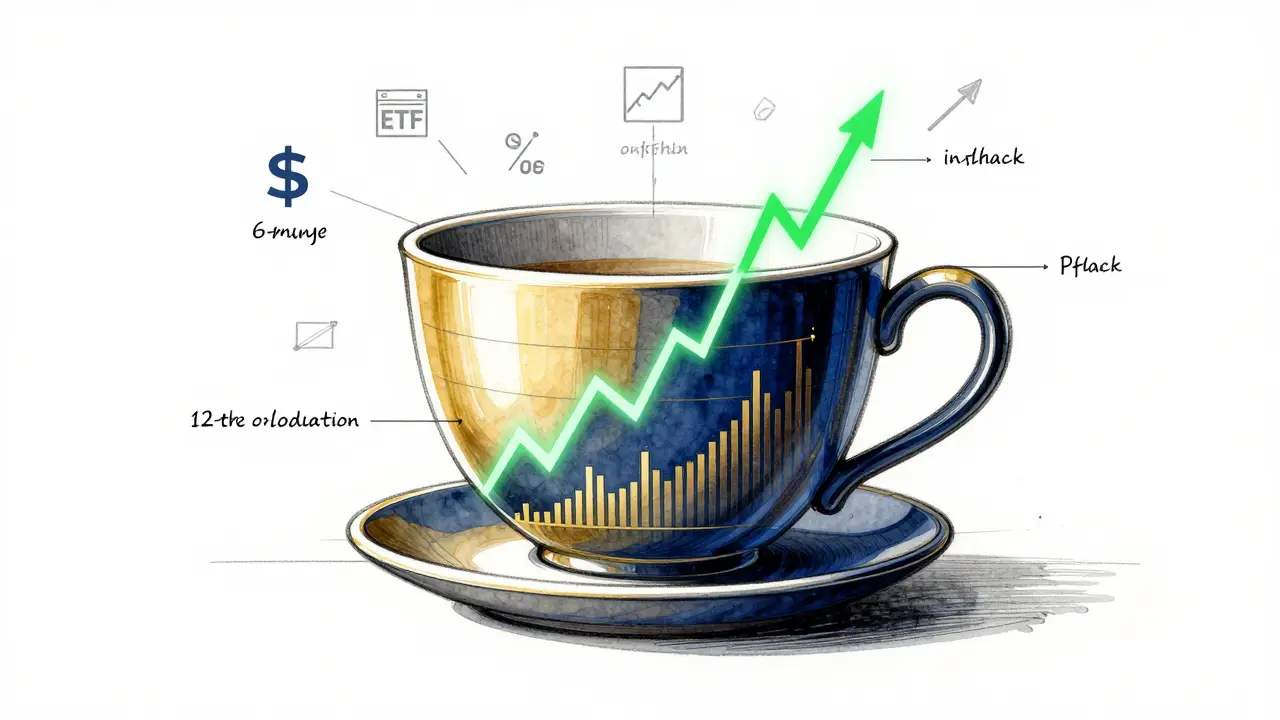
The cup and handle pattern is one of the most reliable chart formations for spotting bull markets. It looks like a teacup: a rounded bottom (the cup) followed by a small pullback (the handle). The cup should be at least 30% deep from peak to trough. The handle should form over 5-10 days, not hours. Then, when price breaks above the handle’s high-with volume surging-it’s a strong buy signal.This pattern worked in Bitcoin’s 2020-2021 bull run. After the March 2020 crash, Bitcoin formed a deep cup over 6 months, then a 12-day handle. When it broke above $11,000 with massive volume, the rally to $65,000 followed. The same pattern appeared again in 2023 before the next leg up.
Fundamentals Matter Too
Crypto isn’t just charts. Real bull markets are fueled by real-world adoption. Look for these signs:- Major institutions (like BlackRock or Fidelity) launching Bitcoin ETFs
- Regulatory clarity-countries legalizing crypto or setting clear tax rules
- Network activity rising: more daily active addresses, higher transaction volume on Ethereum or Solana
- Miner revenue or staking yields increasing, showing network health
If these fundamentals align with technical signals, you’re not just riding a pump-you’re in a structural bull market.
Use RSI and MACD, But Don’t Trust Them Alone
The Relative Strength Index (RSI) tells you if an asset is overbought. In a bull market, RSI can stay above 70 for weeks. That doesn’t mean it’s time to sell-it means the trend is strong. The danger is when RSI spikes above 80 and then drops fast. That’s often a sign of exhaustion.MACD (Moving Average Convergence Divergence) shows momentum. Look for the MACD line to cross above the signal line and for the histogram bars to grow larger over time. That means buying pressure is accelerating. If the histogram shrinks while price still rises, the momentum is fading. That’s a warning.
Watch for Bull Traps and Blow-Off Tops
Not every rally is real. Two dangerous patterns fool traders:- Bull traps: Price spikes above resistance, volume is low, then crashes. It looks like a breakout, but it’s a trap.
- Blow-off tops: Everyone’s talking about crypto. New investors flood in. Prices double in weeks. Media calls it the "next big thing." Then-boom-it crashes. This is the final stage of a bull market, not the start.
How to avoid them? Ask: Is volume rising? Are institutions buying? Is the trend supported by fundamentals? If the answer is no, don’t chase it.
Tools and Data You Need
You don’t need fancy software. But you do need reliable data:- Use TradingView or CoinGecko for charting
- Check on-chain data from Glassnode or CryptoQuant (like miner outflows or exchange reserves)
- Track institutional activity via ETF flows (BlackRock, Fidelity Bitcoin ETFs)
- Follow sentiment on CryptoPanic or LunarCrush-look for sustained optimism, not spikes
Combine these. One signal alone isn’t enough. Three confirming signals? That’s a high-confidence setup.
Wait for Confirmation-Don’t Jump Early
The biggest mistake traders make? Acting too soon. You don’t need to catch the bottom. You don’t need to be first. You just need to be early enough to ride the majority of the move.Wait for:
- Price above 200 SMA for 18+ days
- Volume surge on breakout
- Golden cross confirmed
- RSI above 50 but not above 80
- On-chain metrics show net inflows (not outflows)
If you see 3 or more, you’re in a real bull market. If you only have 1 or 2, wait. Patience pays.
What Comes Next?
Once you’ve confirmed a bull market, your job isn’t over. You need to manage it. Use Fibonacci retracement levels to find pullback entry points. Set trailing stops to lock in gains. Don’t let greed turn a 3x gain into a 20% loss.Bull markets don’t last forever. But if you identify them correctly, you can make the most of them-and avoid the crashes that follow.
What’s the most reliable bull market signal in crypto?
The most reliable signal is 18 consecutive daily closes above the 200-day moving average after a bear market. This pattern has been tested over decades and produces fewer false signals than other indicators. When combined with rising volume and a golden cross, it’s one of the strongest setups for entering a bull market.
Can I use just one indicator to identify a bull market?
No. Relying on a single indicator like RSI or a moving average alone leads to false signals. The best traders combine technical signals (like moving averages and volume), on-chain data (like wallet activity), and macro trends (like ETF approvals). Three confirming signals reduce risk and increase accuracy.
How long does a crypto bull market usually last?
Historically, crypto bull markets last between 12 to 36 months. Bitcoin’s 2020-2021 bull run lasted about 18 months. The 2017-2018 run lasted around 14 months. The length depends on adoption, regulation, and macroeconomic factors like interest rates. Don’t assume it’ll be short-prepare for a multi-year cycle.
What’s the difference between a bull market and a pump?
A pump is a short-term, hype-driven price spike, often fueled by social media or influencers. It lasts days or weeks and has no support from volume or fundamentals. A bull market is a sustained upward trend driven by real demand, institutional interest, and improving network metrics. It lasts months or years and shows consistent volume growth and higher highs over time.
Should I buy Bitcoin right after a 20% price jump?
Not unless you have confirmation. A 20% jump could be a bull trap. Wait for the price to hold above the 200-day moving average for at least 18 days, with volume above average. If it pulls back after the jump and retests the 200 SMA as support, that’s a better entry. Don’t chase momentum-wait for structure.
Taylor Holloman.
March 17, 2026 AT 04:54Bryan Roth
March 19, 2026 AT 04:03sai nikhil
March 20, 2026 AT 20:46Sahithi Reddy
March 21, 2026 AT 22:01George Hutchings
March 22, 2026 AT 01:34Henrique Lyma
March 22, 2026 AT 23:00Steph Andrews
March 24, 2026 AT 10:46Kira Dreamland
March 24, 2026 AT 11:28Brenda White
March 24, 2026 AT 18:39Tobias Wriedt
March 25, 2026 AT 18:58Manali Sovani
March 26, 2026 AT 14:11Konakuze Christopher
March 28, 2026 AT 03:24S F
March 28, 2026 AT 20:34Angelica Stovall
March 29, 2026 AT 03:49Prakash Patel
March 31, 2026 AT 00:38Zachary N
March 31, 2026 AT 01:50Elizabeth Kurtz
March 31, 2026 AT 07:46john peter
April 1, 2026 AT 08:29Marc Morgan
April 3, 2026 AT 05:53Anastasia Thyroff
April 3, 2026 AT 11:47Shreya Baid
April 4, 2026 AT 05:44Christopher Hoar
April 4, 2026 AT 06:05Robert Kunze
April 5, 2026 AT 17:00Heather James
April 7, 2026 AT 15:54Sarah Hammon
April 7, 2026 AT 16:16