
Kazakhstan Crypto Mining Restrictions After Energy Crisis: Rules, Taxes & 2026 Status
Imagine a country that went from being the world’s top Bitcoin mining hub to shutting down massive illegal farms overnight. That is exactly what happened in Kazakhstan. If you are looking to mine there today, or if you are just curious about why the rules changed so drastically, you need to understand one thing: the energy grid broke.
In 2021, Kazakhstan was the king of hash power. Miners flocked there for cheap electricity. But they consumed so much power that hospitals and homes started losing lights. The government had no choice but to step in. Now, in 2026, mining is still legal, but it is strictly controlled. You cannot just plug in ASICs anymore. You need licenses, you must pay taxes, and you have to sell your coins on specific platforms. Let’s break down how this works now, what the penalties are, and whether it is still worth your time.
The Turning Point: Why the Grid Collapsed
To understand the current restrictions, you have to look at the chaos of 2021 and 2022. When China banned crypto mining, thousands of miners moved to Kazakhstan. They brought their hardware and plugged into the national grid. The problem? The grid wasn’t built for this load.
We are talking about a strain that affected the entire nation. In some regions, power outages lasted for days. Residents faced blackouts during winter. Strategic industries struggled to operate. The government realized that unregulated mining was threatening national security and public welfare. It wasn’t just about money; it was about keeping the lights on for citizens.
This crisis forced a complete regulatory overhaul. The state stopped treating mining as a wild west activity and started treating it like a utility consumer. This shift led to the creation of strict licensing frameworks and the involvement of major governmental bodies like the National Bank of Kazakhstan (NBK) and the Ministry of Digital Development, Innovation and Aerospace Industry (MDDIAI).
Current Legal Framework: How to Mine Legally in 2026
As of 2026, cryptocurrency mining is legal in Kazakhstan, but only if you follow the rules. The days of setting up a farm in a warehouse without telling anyone are over. Here is what you need to know to operate legally:
- Licensing is Mandatory: You must register with the relevant authorities. As of recent data, the government has issued hundreds of licenses to legitimate operators. Without a license, your equipment will be confiscated, and you face criminal charges.
- AIFC Trading Requirement: This is a big one. You cannot just sell your mined Bitcoin on any exchange you want. Miners are required to sell a significant portion of their assets through the Astana International Financial Centre (AIFC). In 2025, this requirement increased to 75% of mined assets. This ensures transparency and helps the government track flows.
- Taxation: There is a 15% tax rate on mining operations. This is applied to your revenue. Make sure you account for this in your profitability calculations. It is not optional.
- Electricity Purchases: You cannot buy power directly from local utilities like a regular business. Mining farms must purchase electricity through a state-run platform operated by the Ministry of Energy. There are also limits on transaction sizes, often capped at one megawatt-hour per transaction to prevent hoarding.
The goal here is clear: bring the industry into the formal economy. By forcing trades through AIFC and collecting taxes, the government ensures that mining contributes to the state budget rather than draining resources.

The War on Illegal Mining: Real Cases and Penalties
If you think you can fly under the radar, think again. The Kazakhstani government has been aggressive in cracking down on illegal operations. They use coordinated raids involving the Financial Monitoring Agency (FMA) and the National Security Committee (KNB).
Consider the case in East Kazakhstan Oblast in August 2025. Authorities dismantled a massive illegal mining operation. This wasn’t a small garage setup. It consumed over 50 megawatt-hours of electricity. To put that in perspective, that is enough power to supply a city of 50,000 to 70,000 people. The estimated value of the stolen electricity was around $16 million (9 billion tenge).
How did they do it? Corruption. Utility company employees diverted power meant for residents and social facilities. The consequences were severe. Prosecutors seized high-end apartments in the capital and luxury vehicles bought with illicit profits. This sends a strong message: the state will trace your money back to its source.
By 2024, authorities had already closed 36 unregulated exchanges and confiscated 4,000 mining devices. The enforcement is systematic. They are not just breaking machines; they are dismantling the financial networks behind them.
| Feature | Legal Mining | Illegal Mining |
|---|---|---|
| Electricity Source | State-run platform (Ministry of Energy) | Diverted from residential/social grids |
| Tax Rate | 15% on operations | None (but risk of seizure) |
| Sales Platform | Mandatory AIFC (75% of volume) | Unregulated offshore exchanges |
| Risk Level | Low (compliance costs) | Extremely High (criminal prosecution) |
| Asset Security | Protected by law | Subject to immediate confiscation |
Energy Solutions: Renewables and Grid Stability
The government knows that banning mining entirely would hurt the economy. So, they are trying to balance the grid. One approach is limiting electricity supply to mining farms during peak consumption periods. If everyone is using power at night, miners might get cut off temporarily to protect households.
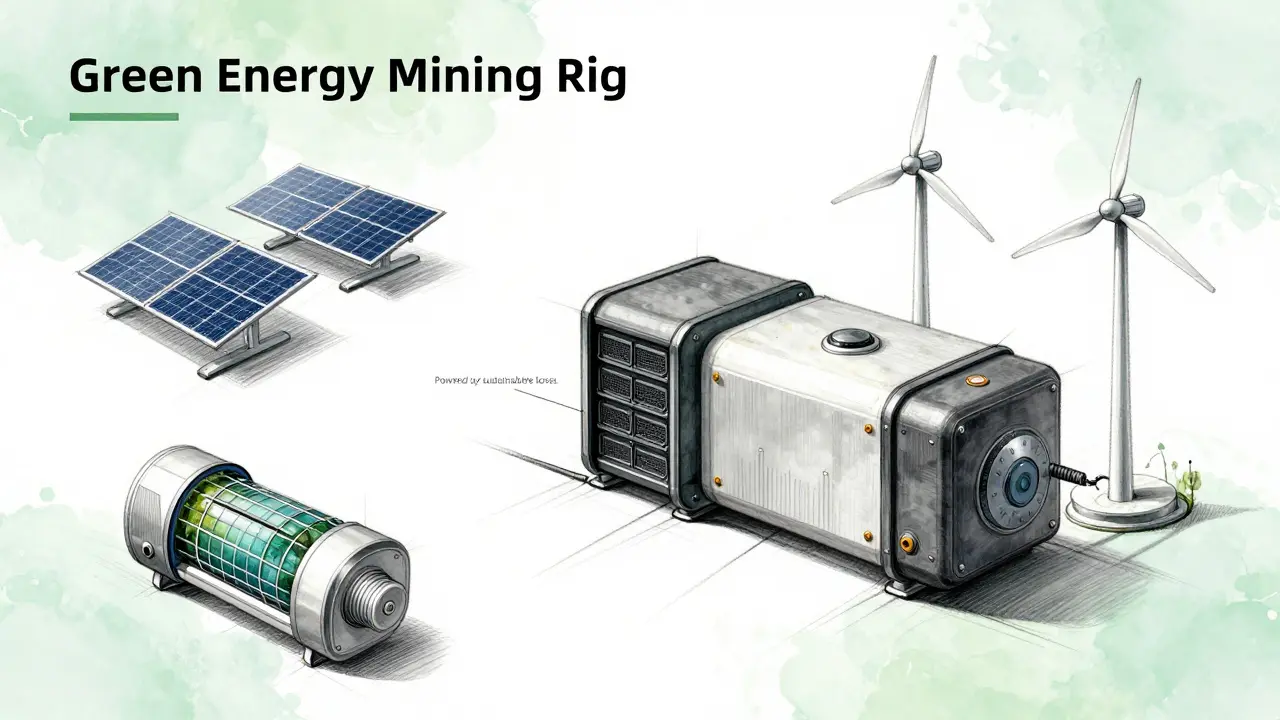
Another strategy involves renewable energy. The government is pushing for solar and wind projects to support mining needs. The idea is to use surplus green energy that wouldn’t otherwise be used. This reduces the environmental impact and takes pressure off the thermal power plants that serve cities.
There is also talk of a “70/30” energy program proposed by energy officials. Under this model, foreign investors would fund upgrades to thermal power stations. In return, 70% of the generated capacity goes to the national grid, and 30% is allocated to crypto miners. This could be a game-changer if implemented, as it ties mining growth to infrastructure improvement.
Who Regulates What? Key Authorities Explained
Navigating the bureaucracy can be confusing. Here is a quick guide to the main players:
- National Bank of Kazakhstan (NBK): Sets the overall policy for digital assets and financial stability. They ensure mining doesn’t destabilize the currency or banking system.
- Astana Financial Services Authority (AFSA): Operates within the AIFC. They handle the licensing of exchanges and the compliance of trading activities. This is where your mined coins must go.
- Ministry of Energy: Controls the electricity supply. They run the platform where miners buy power and enforce usage limits.
- Financial Monitoring Agency (FMA): Focuses on anti-money laundering (AML). They track suspicious transactions and work with police to seize illicit assets.
- National Association of Blockchain and Data Center Industry: A newer body designed to increase transparency among operators. They help monitor energy consumption and environmental impact.
You will likely interact with all of these entities if you run a large-scale operation. Compliance is not a one-time checkbox; it is an ongoing process.
Is Kazakhstan Still Worth It for Miners?
Despite the restrictions, Kazakhstan remains a viable destination for serious miners. Why? Because the rules are clear. Once you are licensed, you have protection. Your equipment won’t be seized randomly. You can plan for long-term operations.
However, the margins are tighter. Between the 15% tax, the cost of buying electricity through the state platform, and the compliance overhead, you need scale to make it profitable. Small hobbyists will find it difficult. Large industrial operations, especially those investing in renewable energy integration, stand a better chance.
Also, consider the global context. Other countries are tightening rules too. Russia is launching registries for mining equipment. France is exploring nuclear power for mining. Kazakhstan’s approach is stricter than before, but it offers more certainty than the wild west of 2021. If you can navigate the AIFC requirements and secure stable power contracts, the opportunity still exists.
Is crypto mining legal in Kazakhstan in 2026?
Yes, crypto mining is legal in Kazakhstan in 2026, but only for licensed operators. You must register with the government, pay a 15% tax, and sell 75% of your mined assets through the Astana International Financial Centre (AIFC). Unlicensed mining is illegal and subject to severe penalties.
What happens if I mine illegally in Kazakhstan?
If you mine illegally, your equipment will be confiscated. You may face criminal prosecution for stealing electricity and evading taxes. Authorities have seized luxury assets like cars and apartments bought with illicit mining profits. Recent cases show fines equivalent to millions of dollars for large-scale diversion of power.
Why does Kazakhstan require selling crypto on AIFC?
The AIFC requirement ensures transparency and prevents money laundering. By forcing miners to sell 75% of their assets on regulated platforms, the government can track financial flows, collect taxes efficiently, and integrate the crypto sector into the formal economy. This helps stabilize the national grid and protects against illicit activities.
How much electricity can a mining farm buy?
Mining farms must purchase electricity through a state-run platform. Transactions are typically limited to one megawatt-hour per purchase to prevent hoarding and ensure fair distribution. During peak demand periods, the government may impose temporary restrictions on power supply to mining facilities to prioritize residential and strategic users.
Are there incentives for using renewable energy for mining?
While specific tax breaks for renewables are still evolving, the government encourages solar and wind projects to support mining. The proposed 70/30 energy program suggests that investors who upgrade power infrastructure can secure dedicated capacity for mining. Using green energy aligns with national environmental goals and reduces the risk of supply cuts during grid stress.