
Kwenta Crypto Exchange Review: Is This DeFi Derivatives Platform Right for You?

If you're tired of handing over your private keys to a centralized exchange just to trade with leverage, you've likely stumbled upon Kwenta is a decentralized derivatives trading platform that allows users to trade synthetic assets with leverage without a middleman. Unlike traditional platforms, it doesn't hold your funds in a corporate account; instead, it leverages the infrastructure of the Synthetix protocol to execute trades directly on the blockchain. But does it actually hold up against the giants of the industry, or is it too complex for the average trader?
The Core Concept: How Kwenta Actually Works
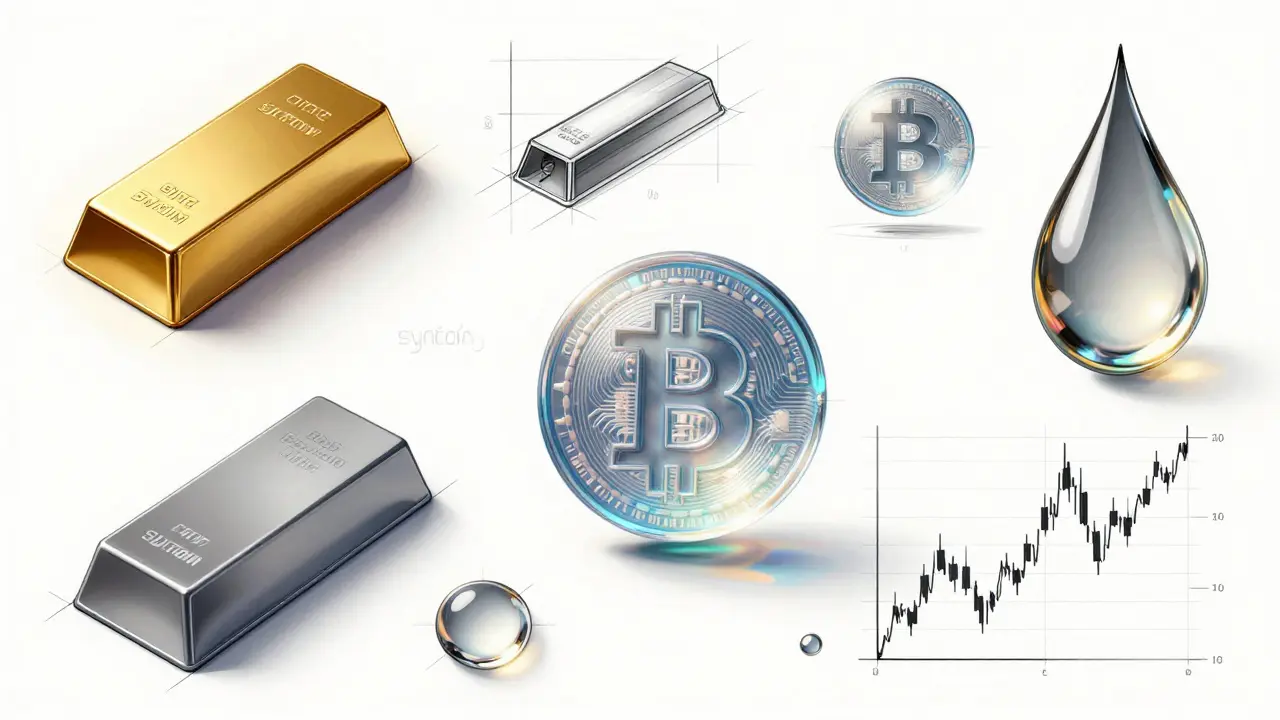
Most people are used to Centralized Exchanges (CEXs) where the platform matches buyers and sellers in a private database. Kwenta flips this. It's a non-custodial solution, meaning you keep control of your assets in your own wallet. The magic happens through the Synthetix ecosystem, which provides the liquidity needed for these trades. Instead of trading a physical coin, you're trading "synths"-synthetic versions of assets that track the real-world price of cryptocurrencies, gold, or even stocks.
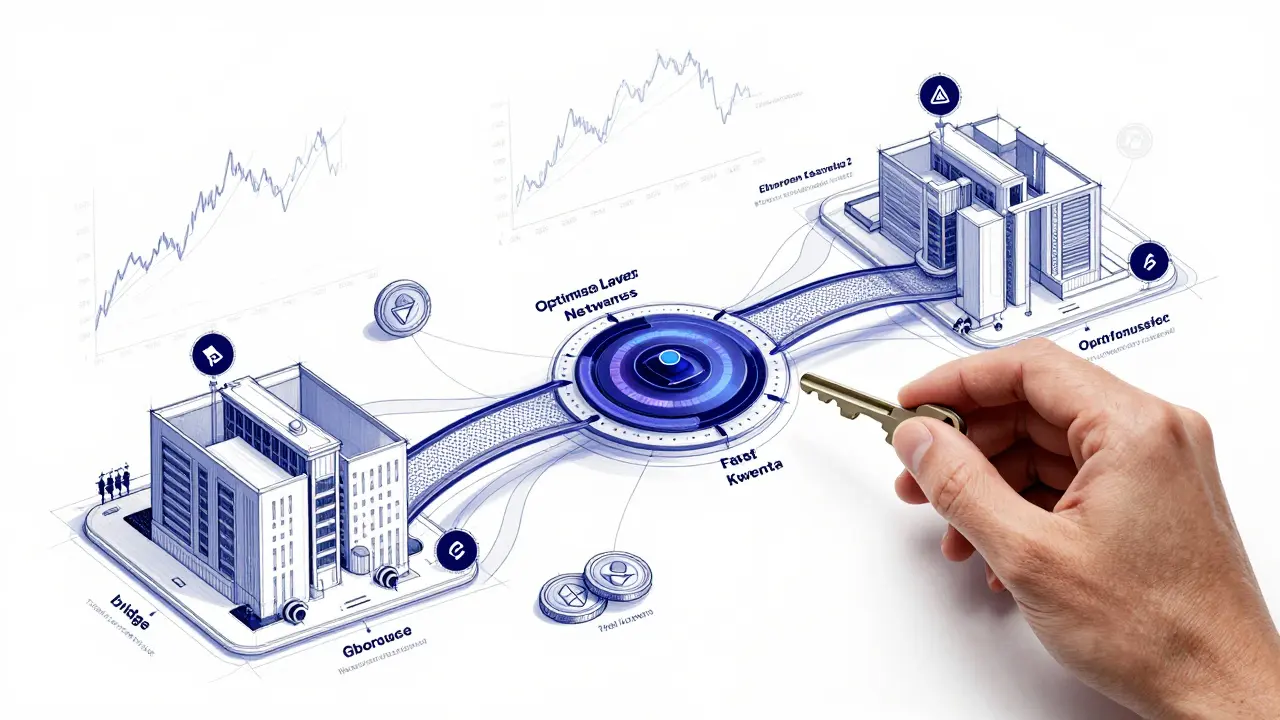
To keep things fast and cheap, Kwenta operates primarily on Optimism, which is a Layer 2 scaling solution for Ethereum. If you've ever tried to trade on Ethereum Layer 1 during a market spike, you know that gas fees can eat your entire profit. By using Optimism, Kwenta delivers near-instant execution and fees that won't break the bank, making it actually viable for day trading.
Trading Assets and Leverage Options
One of the biggest draws here is the variety. You aren't limited to just Bitcoin and Ethereum. Kwenta opens the door to several different asset classes, allowing you to hedge your portfolio or speculate on movements in traditional markets. You can go long or short on:
- Synthetic Cryptocurrencies: The usual suspects like BTC and ETH.
- Commodities: Assets like gold or oil.
- Forex: Foreign exchange pairs for those who like currency swings.
- Equities: Synthetic representations of stock market indices or companies.
When it comes to leverage, Kwenta is designed for perpetual futures. This means you can bet on the future price of an asset without an expiration date. While they don't always shout their specific leverage ratios from the rooftops like some aggressive platforms, the ability to multiply your position size is built into the core experience. However, remember that leverage is a double-edged sword; while it boosts gains, it can wipe out your collateral just as fast if the market moves against you.
| Feature | Kwenta (DEX) | Centralized Exchange |
|---|---|---|
| Fund Control | Non-custodial (Your keys) | Custodial (Exchange keys) |
| Account Setup | Wallet connection (No KYC) | Email/ID verification (KYC) |
| Infrastructure | Synthetix & Optimism | Private Corporate Servers |
| Asset Types | Synthetic Assets | Spot & Futures Contracts |
The Learning Curve and User Experience
Let's be real: if you've only ever used Coinbase or Binance, Kwenta might feel like a leap into the deep end. Since it's a Kwenta crypto exchange review, I have to mention that the onboarding process is strictly "Web3." You can't just sign up with an email. You need a compatible wallet, like MetaMask, and you need to understand how to bridge your funds from Ethereum to the Optimism network.
Once you're in, the interface is professional and focused on the charts. It's built for traders who care about price action and order books rather than flashy marketing banners. However, the lack of a "training wheels" mode means beginners might struggle with concepts like funding rates or collateralization. If you aren't comfortable managing your own seed phrase or switching networks in your wallet, you'll spend your first hour just trying to get your funds onto the platform.
Governance and the KWENTA Token
Kwenta isn't run by a CEO in a corporate office; it uses a community-driven governance model. This is where the KWENTA token comes in. Holding the token isn't just about hoping the price goes up; it's about having a say in how the platform evolves. Token holders can vote on proposals that affect the platform's future, such as fee structures or the addition of new synthetic assets.
If you're looking to acquire the token, you won't find a simple "Buy" button on the main trading dashboard. Most of the active trading for the token happens on Velodrome Finance, a prominent decentralized exchange on Optimism. This adds another layer of complexity for the novice, as you'll need to navigate a separate DEX just to get the governance token for the derivatives platform.
Price Outlook: What the Analysts Say
The financial outlook for the KWENTA token is a bit of a rollercoaster, with analysts deeply divided. On one hand, AI-driven tools like 3Commas and forecasts from TradingBeasts project a relatively stable range for 2025, with prices hovering around $11.72 to $13.06. These predictions suggest a steady adoption of the platform as more traders move toward decentralized leverage.
On the other hand, some analysts are far more bearish. Reports from PricePrediction.net have suggested a drop toward $19.7 (depending on the specific model used), and some long-term 2030 forecasts are even more grim, predicting a slide toward zero. Conversely, a few outliers like WalletInvestor have previously teased possibilities as high as $118 in certain hyper-growth scenarios. The takeaway? Don't treat the KWENTA token as a guaranteed win; it's a high-risk asset tied directly to the success of the Synthetix ecosystem.
The Verdict: Should You Use Kwenta?
Kwenta is a powerhouse for a specific type of person. If you are a DeFi native who values privacy and hates the idea of a centralized entity freezing your account, this is a top-tier choice. The integration with Optimism solves the biggest problem with on-chain trading: the cost. Being able to trade synthetic gold or equities without leaving your wallet is a genuine utility that most platforms can't offer.
However, if you are someone who wants a "Forgot Password" button or a customer support chat to help you find your missing funds, stay away. In the world of non-custodial trading, you are the bank. If you lose your keys or send funds to the wrong network, there is no manager to call. Kwenta provides the tools for professional-grade decentralized trading, but it expects you to bring the technical knowledge to use them safely.
Is Kwenta a safe exchange?
Kwenta is non-custodial, meaning it doesn't store your private keys or funds. This eliminates the risk of a central exchange "exit scam." However, the security depends on the smart contracts of the Synthetix protocol and your own ability to secure your wallet. If your private keys are stolen, your funds are gone.
What is the difference between Kwenta and a regular CEX?
A regular CEX (like Binance) requires KYC, holds your money in their own accounts, and matches trades internally. Kwenta is a DEX; it requires no personal identity verification, you hold your own funds, and trades are executed on-chain via the Synthetix protocol.
Can I trade traditional stocks on Kwenta?
You can't buy actual shares of a company, but you can trade "synthetic" versions of equities. These are assets that track the price of the real stock, allowing you to speculate on the price movements of traditional markets using crypto.
Why is it on Optimism instead of just Ethereum?
Ethereum Layer 1 gas fees are often too expensive for frequent trading. Optimism is a Layer 2 solution that processes transactions more efficiently, allowing Kwenta users to enjoy low fees and much faster trade execution.
How do I buy the KWENTA token?
The KWENTA token is primarily traded on decentralized exchanges on the Optimism network, with Velodrome Finance being one of the most active markets for the asset.
Next Steps and Troubleshooting
For Beginners: Before jumping into Kwenta, set up a MetaMask wallet and practice sending small amounts of ETH to the Optimism network. If you can't switch networks in your wallet, you won't be able to interact with the platform.
For Experienced Traders: Check the current funding rates on the synthetic assets you're targeting. Because these are perpetuals, the cost of holding a position over time can either be a profit or a drain on your margin.
Troubleshooting Connection Issues: If the site isn't detecting your balance, ensure your wallet is set to the Optimism network. A common mistake is staying on the Ethereum Mainnet while trying to use a Layer 2 application.

Iestyn Lloyd
April 26, 2026 AT 08:06The Optimism L2 integration is the real winner here. Trying to do perpetuals on L1 is just a donation to the miners at this point. It's worth noting for anyone new that bridging assets can sometimes take a bit of time depending on the bridge you use, so don't panic if your funds don't show up in MetaMask instantly.
Michael Repak
April 26, 2026 AT 14:27Totally agree with the points on non-custodial wallets!!! It's so much safer when you hold your own keys... just be careful with those seed phrases!!!
Livvy Cooper
April 27, 2026 AT 17:08This all sounds like a bunch of nonsense. Why would I want a fake coin that tracks a real coin when I could just buy the real thing? It's just more ways for people to lose money.
debra hoskins
April 29, 2026 AT 07:53The whole concept of 'synthetic assets' is just a fancy word for financial alchemy. It's a dizzying maze of mirrors and smoke designed to make gambling look like sophisticated investing.
Pramendra Singh
April 30, 2026 AT 08:56It is quite a brave step for those wanting to enter DeFi. I believe with a bit of patience, many will find the transition from CEX to DEX very rewarding.
Rain Richardsson
May 1, 2026 AT 22:32Does the synthetic gold actually track the spot price or the futures price?
April D Thompson
May 3, 2026 AT 17:16Omg can we just talk about the existential shift here?! We are literally moving the concept of 'value' into a mathematical abstraction! It's absolutely wild that we can bet on the price of a company without ever owning a single shred of that company's actual existence! This is the peak of human capitalism turning into a simulation!
Honestly, the friction of bridging funds is just a rite of passage for the digital age. If you can't handle a little MetaMask confusion, you aren't ready for the revolution!
Kara Spadone
May 4, 2026 AT 14:19Most of you are just chasing green candles without understanding the underlying philosophy of liquidity pools :)
Arun Prabhu
May 6, 2026 AT 03:05The audacity to suggest that a novice could navigate Velodrome without a guide is simply laughable. This entire ecosystem is a fragmented mess of convoluted interfaces that only a masochist would enjoy. Truly an abysmal user experience for anyone with a shred of dignity.
Jehan ZA
May 6, 2026 AT 06:59I find the move toward non-custodial derivatives to be a prudent evolution of the financial markets. It reduces systemic risk significantly.
Amanda Macy
May 7, 2026 AT 09:25The paradox of decentralized finance is that we seek freedom from institutions, yet we end up trusting a set of smart contracts that are essentially invisible institutions themselves.
Chloe Fletcher
May 8, 2026 AT 01:35You guys can totally do this! 🌟 Just take it one step at a time with the bridge. You've got this! 💪✨
Mitali Rajvanshi
May 8, 2026 AT 19:49It's a decent option for those who already know their way around L2s.
Ralph Espinosa
May 10, 2026 AT 01:12I've used the platform for a few months now... the execution is surprisingly snappy!!! Just make sure your gas settings are correct or the tx will hang!!!
Lex Harley
May 11, 2026 AT 21:46The slippge on some of these synth pairs is kinda wild when liquidity drops. Also’ve been seeing some weird lag in the oracles occasionally, maybe just a network hiccup tho.
Tony Phan
May 13, 2026 AT 05:00I lost everything on a 50x long because the liquidation engine is ruthless! I can't even sleep! This platform is a meat grinder for retail traders! Absolute carnage!
Veronica Bago
May 13, 2026 AT 07:00Looks cool, might give it a try with some small funds.
Arti Jain
May 14, 2026 AT 07:04Typical Western over-hype of a simple tool. We have better solutions in India.
Harvey Alford
May 16, 2026 AT 01:58Give me your seed phrase and I'll fix your wallet.
VIVEK SINGH
May 16, 2026 AT 22:51Oh look, another 'revolutionary' platform that's just a different way to lose money. I'm sure the 'community governance' is just a fancy term for a few whales deciding everything while you hold the bag.
Lloyd I
May 16, 2026 AT 23:47Keep pushing forward everyone! The learning curve is steep but the reward of financial sovereignty is worth every single mistake we make along the way!
Robert Smith
May 18, 2026 AT 22:25Low fees are king 🚀
Felix Eduardo Velasquez
May 20, 2026 AT 14:24The reliance on the Synthetix debt pool is the critical point of failure here. If the underlying collateral of the system becomes under-collateralized, the synthetic pegs could deviate, leading to a cascading liquidation event. It is a classic example of systemic leverage where the stability is predicated on continuous growth.
Emily A
May 22, 2026 AT 11:23It is remarkably naive to assume that a simple wallet connection equates to security. Users must realize that interacting with any smart contract carries an inherent risk of exploit, regardless of the platform's claims of being non-custodial.
Gabby Puche
May 23, 2026 AT 05:17Just keep practicing! 🌈 You'll be a pro in no time! 📈
Lynne Teperman
May 25, 2026 AT 01:11wild to think we can trade gold from a phone in a coffee shop without any paperwork just purely through math and code
Bevon Findley
May 25, 2026 AT 12:59Actually quite intuitive for those of us who understand basic DeFi :)
Kristi Swartz
May 26, 2026 AT 20:34you must follow the rules of the blockchain or you will lose money it is very simple