
Midnight (NIGHT) Airdrop by Cardano: Complete Details on the Glacier Drop, Eligibility, and Claim Process
Midnight (NIGHT) Airdrop by Cardano: Complete Details on the Glacier Drop, Eligibility, and Claim Process
Ben Bevan 22 December 2025 15 Comments

The Midnight (NIGHT) airdrop was one of the most ambitious token distributions in 2025-not because it gave away millions of dollars in free crypto, but because it redefined what an airdrop could be. Instead of just handing out tokens to attract hype, Midnight Network, a privacy-focused sidechain built on Cardano, designed a three-phase system to build real, lasting community participation. This wasn’t a quick cash grab. It was a long-term infrastructure project disguised as a giveaway.

What Was the Glacier Drop?

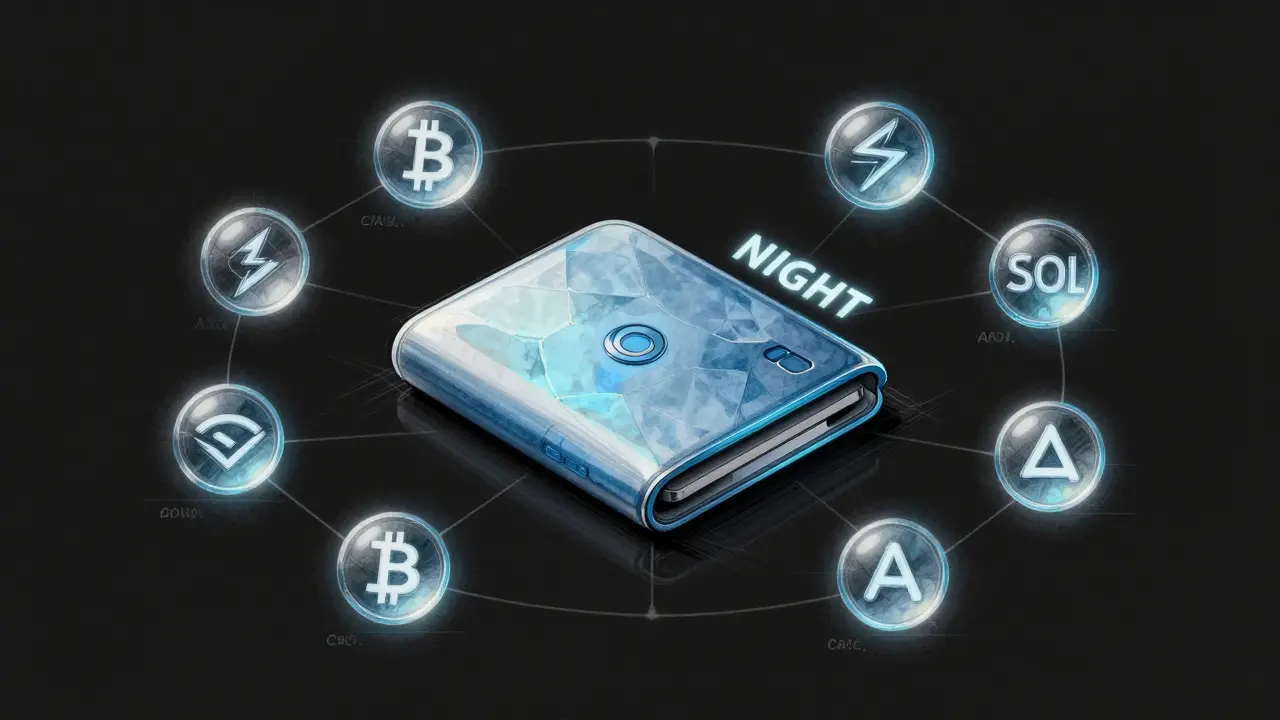
The Glacier Drop was the first phase of Midnight’s 24 billion NIGHT token distribution. It launched on August 6, 2025, and ran for 60 days, closing on October 4, 2025. The goal? To give tokens to real people who already held crypto across eight major blockchains-not just Cardano holders, but Bitcoin, Ethereum, Solana, BNB Chain, Avalanche, XRP, Brave BAT, and Cardano ADA users too.

The snapshot that determined eligibility happened on June 11, 2025. If your wallet held at least $100 worth of any native asset on those chains at that exact moment, you qualified. That’s it. No social media posts. No surveys. No asking you to follow a Twitter account. Just pure, on-chain ownership.

The distribution wasn’t even. Cardano holders got 50% of all NIGHT tokens-12 billion-because Midnight is a Cardano sidechain. Bitcoin holders got 20%, or 4.8 billion. The other 30% was split among Ethereum, Solana, XRP, Avalanche, BNB Chain, and BAT holders based on how much they held at snapshot time.

Who Could Claim?

You didn’t need to be a crypto expert, but you did need self-custody. If your crypto was sitting on Binance, Coinbase, or Kraken, you were out of luck-unless your exchange decided to claim for you. And none of the big exchanges did. That’s because claiming requires signing cryptographic messages with your private keys. Exchanges don’t give users access to those.

So only people who held their own crypto in wallets like Eternl, Lace, Yoroi, MetaMask, or Trust Wallet were eligible. That meant real users-people who cared enough to manage their own keys-not just speculators buying on apps.

The $100 minimum threshold wasn’t arbitrary. It kept out bot accounts and dust wallets. If you held $100 in Bitcoin, you needed about 0.002 BTC. If you held ADA, you needed around 40 ADA at June 11’s price. The system didn’t care which chain you were on-it cared how much value you held.

How Did You Claim?

Claiming wasn’t a one-click process. You had to do two things:

  1. Sign a message proving you owned your wallet without moving any funds.
  2. Provide a brand-new, unused Cardano wallet address to receive your NIGHT tokens.
Why a new Cardano address? Because Midnight is built on Cardano. Even if you held Bitcoin, your tokens had to land on a Cardano wallet. That meant if you didn’t already have a Cardano wallet, you had to set one up. For many, that was the biggest hurdle.

The claim portal was at midnight.gd or midnight.network. You could connect your Bitcoin, Ethereum, or Solana wallet to verify eligibility, but the tokens always went to your Cardano wallet. The system checked your wallet’s state on June 11, confirmed you controlled it, then locked your NIGHT tokens in a Cardano smart contract.

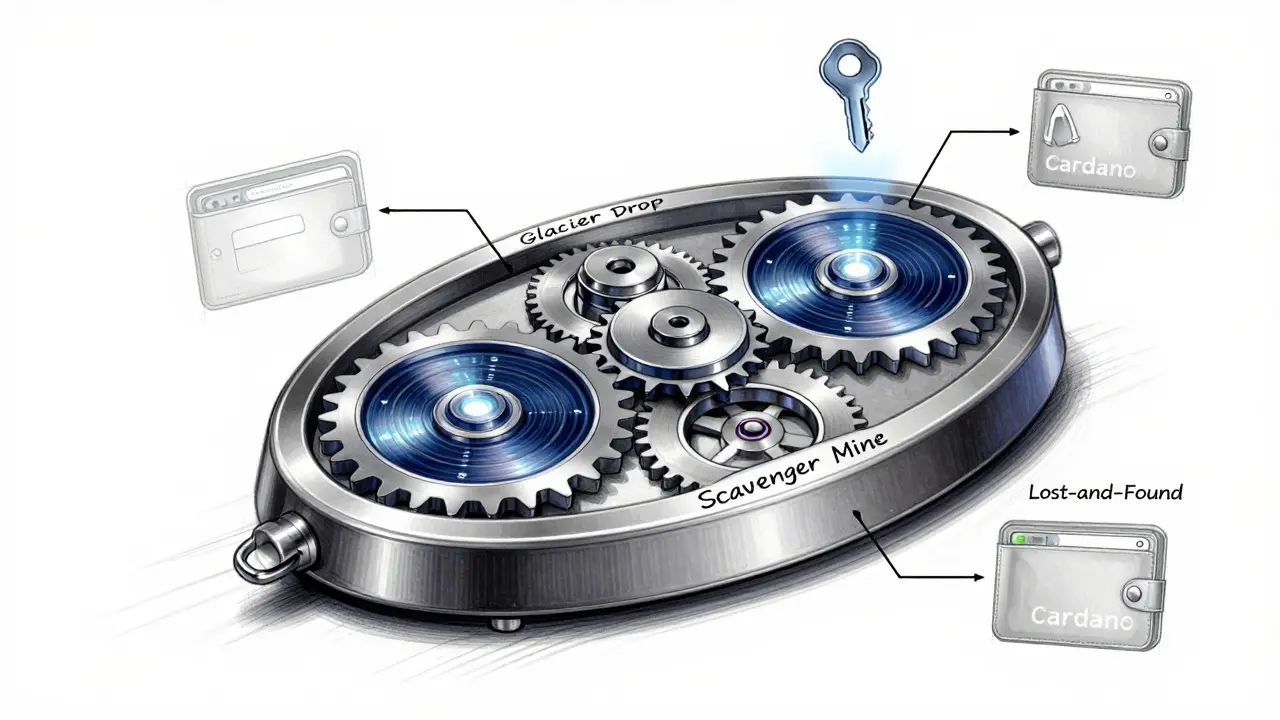
Mechanical clockwork device showing three phases of NIGHT token distribution with randomized unlocking gears.

The Vesting Schedule: No Immediate Cash-Out

Here’s where Midnight broke the mold. Most airdrops dump tokens on you the moment you claim. You sell half right away. The price crashes. The project dies.

Midnight didn’t do that. All claimed NIGHT tokens were locked in a smart contract. They unlocked in four equal parts over 360 days. That’s 25% every 90 days. But here’s the twist: the unlock dates were randomized. You didn’t know exactly when your next 25% would release. It could be day 87, day 93, or day 99. That stopped people from coordinating mass sells.

This was called “gradual thawing.” The idea? If you’re going to hold NIGHT, you’re not just holding a speculative asset-you’re helping build a privacy network. The longer you hold, the more you’re invested in its success.

What Happened to Unclaimed Tokens?

About 34 million addresses were eligible. But not everyone claimed. Some didn’t know. Some couldn’t figure out the wallet setup. Some missed the deadline.

Those unclaimed tokens didn’t vanish. They didn’t go to the team. They didn’t get sold off. They rolled into Phase Two: the Scavenger Mine.

The Scavenger Mine lets people earn leftover NIGHT tokens by solving public computational puzzles. These aren’t just games-they’re useful work that helps test and strengthen Midnight’s privacy protocols. It’s like mining, but instead of using electricity, you use brainpower and time to contribute to the network.

If any tokens remain after that, they go to Phase Three: Lost-and-Found. That’s a final chance after mainnet launch for anyone who missed the first two phases.

This three-phase system ensures that every single one of the 24 billion NIGHT tokens eventually reaches someone who actively participates-not just someone who happened to hold crypto on a random day.
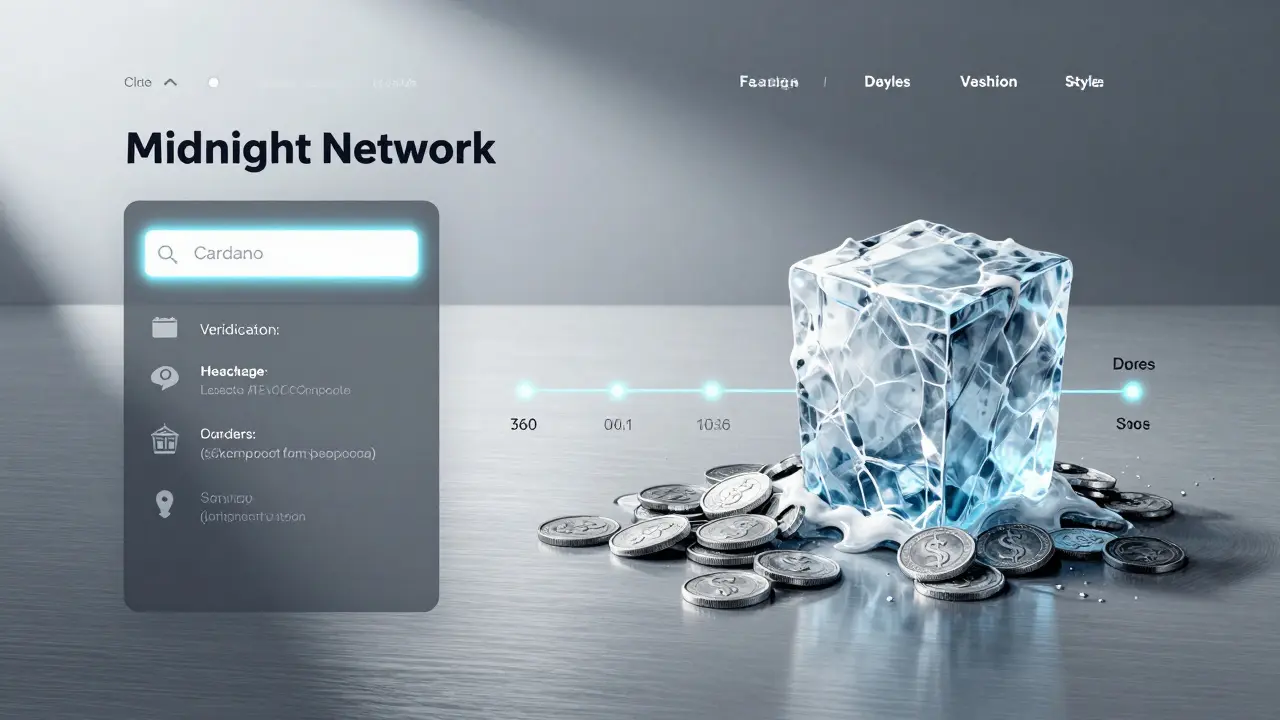
Futuristic claim interface with Cardano wallet input and melting ice sculpture visualizing 360-day token vesting.

Why This Airdrop Was Different

Most airdrops are marketing tools. Midnight’s was a technical experiment.

- It targeted eight blockchains at once, which is almost unheard of.

- It used dollar-value thresholds instead of arbitrary point systems.

- It excluded centralized exchanges to enforce decentralization.

- It locked tokens for a year to prevent dumping.

- It turned leftover tokens into community-driven infrastructure work.

It also didn’t ignore regulation. Every address was checked against the OFAC sanctions list. If you were blocked, you got nothing. No appeals. No loopholes. That’s rare in crypto.

What’s Next for Midnight?

The mainnet hasn’t launched yet. That’s the next big milestone. The 360-day vesting clock doesn’t start until mainnet goes live. So even if you claimed your tokens before October 4, you still can’t trade them.

The testnet is live and running. Developers are building apps on it. The project’s whitepaper talks about DUST-the network’s transaction fee token-and how it works alongside NIGHT. NIGHT is for governance and utility. DUST pays for privacy transactions.

The real test won’t be how many people claimed. It’ll be how many stick around after the tokens unlock. Will they run nodes? Will they vote on upgrades? Will they build apps that use privacy without sacrificing usability?

If they do, Midnight could become the first blockchain to prove that privacy and compliance can coexist-not as opposites, but as design choices.

Can You Still Get NIGHT Tokens?

The Glacier Drop is over. The 60-day claim window closed on October 4, 2025. If you didn’t claim by then, you missed your chance to get tokens through the initial airdrop.

But you’re not out of options.

You can still join the Scavenger Mine. The project is actively inviting participants to solve puzzles and earn leftover NIGHT tokens. No wallet? You’ll need a Cardano wallet. No experience? There are guides on the Midnight website and YouTube tutorials from early participants.

The Lost-and-Found phase will come after mainnet launch. That’s your last shot if you’re not ready yet.

The bottom line? Midnight didn’t just give away tokens. It gave away opportunity-and it’s still giving it out, just in a different way.

15 Comments

  • Image placeholder

    vaibhav pushilkar

    December 22, 2025 AT 13:54
    This is how airdrops should be done. No fluff, no Twitter bots, just real holders getting rewarded. The vesting schedule alone shows they’re thinking long-term.
  • Image placeholder

    Sybille Wernheim

    December 24, 2025 AT 07:11
    OMG I LOVED THIS! 🙌 Finally someone gets it - no more pump-and-dump garbage. The glacier drop felt like a real gift, not a scam. I cried when I claimed mine 😭
  • Image placeholder

    Cathy Bounchareune

    December 24, 2025 AT 13:54
    The way Midnight turned leftover tokens into a scavenger hunt for brainpower instead of just burning them? That’s poetry in blockchain form. It’s like crypto met art and had a baby that actually does something useful.
  • Image placeholder

    Kevin Karpiak

    December 25, 2025 AT 18:18
    This is just another woke crypto fantasy. Real men mine Bitcoin, not play games with Cardano sidechains. All this privacy nonsense is just regulatory evasion dressed up as innovation.
  • Image placeholder

    Amit Kumar

    December 26, 2025 AT 04:14
    Bro I had 42 ADA in my wallet on June 11 and I didn’t even know I qualified until my cousin told me. Took me 3 days to figure out how to make a Yoroi wallet. But I did it. Now I got 120k NIGHT locked up and I ain’t selling. This ain’t gambling - this is legacy building.
  • Image placeholder

    Naman Modi

    December 27, 2025 AT 03:58
    LMAO they excluded exchanges? So what, I just lost $20k in free tokens because I used Binance? Classic crypto elitism. You guys think you’re special because you hold your own keys? Newsflash: most people aren’t tech bros.
  • Image placeholder

    Craig Fraser

    December 27, 2025 AT 04:43
    The notion that locking tokens for 360 days somehow constitutes "community building" is a stretch. This is merely a disguised lock-up period to artificially inflate perceived demand. A superficial solution to a superficial problem.
  • Image placeholder

    Jacob Lawrenson

    December 28, 2025 AT 16:50
    I DID THE SCAVENGER MINE AND GOT 50K NIGHT!! 🎉 I spent 2 weeks solving those puzzles while watching Netflix. Felt like a hacker in a movie. The community Discord is wild too - people helping each other with wallet setups. This is the good stuff.
  • Image placeholder

    Zavier McGuire

    December 29, 2025 AT 23:19
    The whole thing feels like a trap. They make you set up a new wallet then lock your tokens and say oh by the way we checked OFAC so if you’re from Iran you’re screwed. No transparency no appeal just cold exclusion
  • Image placeholder

    Jordan Renaud

    December 30, 2025 AT 04:08
    There’s something quietly beautiful about this design. It doesn’t scream for attention. It doesn’t promise riches. It just says: if you care enough to hold, we’ll give you a stake in something that might actually last. That’s rare in this space.
  • Image placeholder

    Ellen Sales

    December 31, 2025 AT 12:50
    so like... they made us get a cardano wallet just to get tokens from bitcoin? that’s like forcing someone to learn french to collect their inheritance. i get the point but still... kinda annoying lol
  • Image placeholder

    Janet Combs

    December 31, 2025 AT 16:44
    i had no clue what a sidechain was but i clicked the link and it worked. i got my tokens. now i just hope they dont crash when they unlock. fingers crossed 🤞
  • Image placeholder

    Radha Reddy

    January 1, 2026 AT 11:15
    The structure reflects deep consideration for both decentralization and sustainability. It’s commendable that the project prioritized long-term network health over short-term market manipulation. A model worth emulating.
  • Image placeholder

    Sarah Glaser

    January 2, 2026 AT 02:22
    The Scavenger Mine is genius. It transforms passive holders into active contributors. This isn’t just token distribution - it’s a mechanism for cultivating a culture of participation. The philosophical underpinnings are remarkably mature.
  • Image placeholder

    roxanne nott

    January 3, 2026 AT 07:17
    You missed the point. The $100 threshold is arbitrary and excludes low-income participants. The OFAC check is censorship disguised as compliance. And the randomized unlock? That’s just obfuscation to prevent coordinated selling - which means they’re afraid of the market. This isn’t innovation. It’s control.

Write a comment

© 2026. All rights reserved.