
Multi-Jurisdictional Compliance in Blockchain: A Practical Guide for 2026
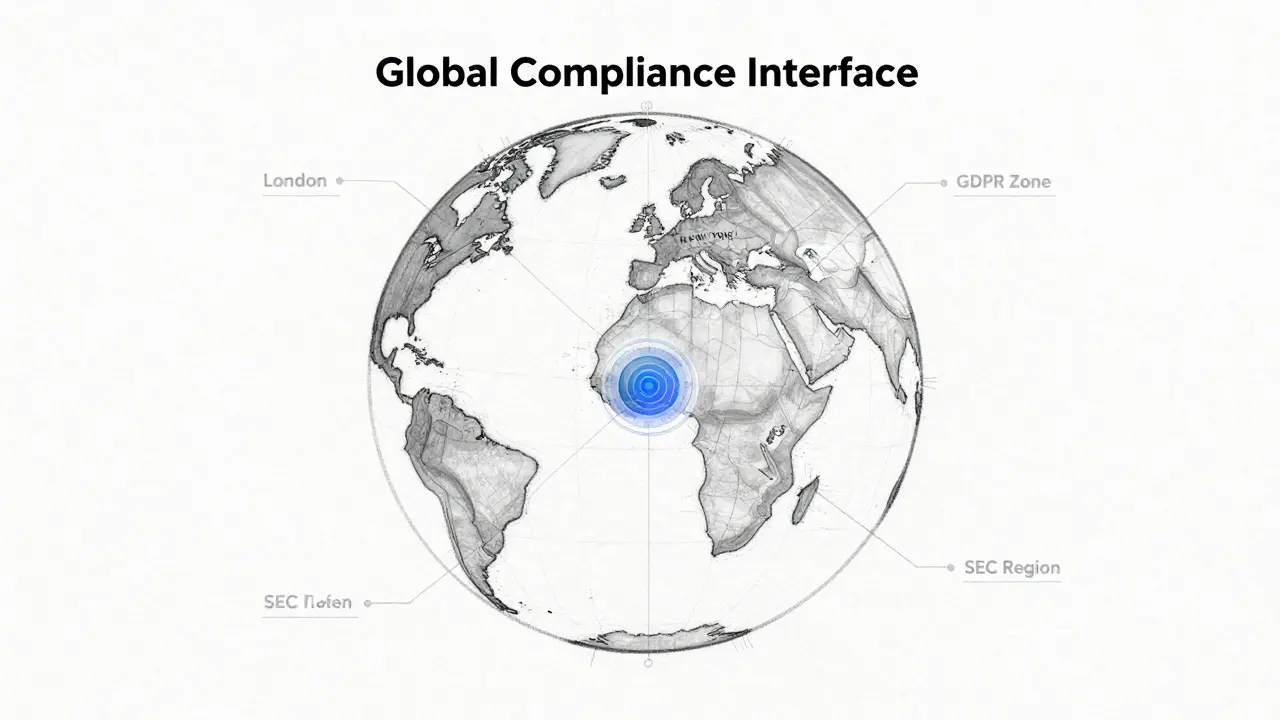
Imagine you launch a decentralized finance (DeFi) platform today. You code it in Solidity is a programming language designed for writing smart contracts on the Ethereum blockchain, deploy it to a public testnet, and go live. Your users are in London, Tokyo, New York, and Wellington. Within weeks, your inbox fills with legal notices. Why? Because while your code doesn’t care about borders, your users-and the regulators watching them-do. This is the reality of Multi-Jurisdictional Compliance is the process of adhering to legal and regulatory requirements across multiple geographical territories simultaneously. In the blockchain world, this isn’t just a legal headache; it’s an existential threat.
The stakes have never been higher. With over 700,000 regulatory change events recorded in the United States alone in 2023, keeping up manually is impossible. For blockchain projects, which often operate globally by default, navigating these shifting sands requires more than just good intentions. It demands a structured approach to understanding where you stand legally, what rules apply to whom, and how to build systems that respect those boundaries without breaking the promise of decentralization.
Why Blockchain Makes Compliance Harder
Traditional businesses can usually point to a headquarters and say, "We follow the laws of this country." Blockchain projects rarely have such clear lines. When you issue a token or run a node, you might be processing data from citizens protected by the General Data Protection Regulation (GDPR) is a comprehensive data privacy law enacted by the European Union in 2018, handling transactions subject to anti-money laundering (AML) rules in Asia, and offering services to investors regulated by the Securities and Exchange Commission (SEC) is the U.S. federal agency responsible for protecting investors and maintaining fair markets in America. All at once.
The core problem is extraterritorial jurisdiction. The GDPR, for example, applies not just to companies based in Europe, but to any organization anywhere in the world that processes the personal data of EU citizens. If your blockchain wallet service stores IP addresses or email confirmations for users in Berlin, you fall under GDPR scrutiny. Violate it, and you face fines up to 4% of your global annual turnover. That’s a number that can bankrupt a startup overnight.
Then there’s the issue of anonymity versus identification. Blockchain was built on pseudonymity, but most modern regulations demand Know Your Customer (KYC) protocols. How do you reconcile a system designed to hide identity with laws requiring you to know exactly who is sending money? This tension creates a complex web of obligations that varies wildly depending on whether you’re operating in Switzerland, Singapore, or Wyoming.
Mapping Your Regulatory Landscape
Before you write another line of code, you need to map out where your project actually operates. It’s tempting to think, "It’s on the internet, so it’s everywhere." But legally, presence is defined by interaction. Do you market to specific regions? Do you accept fiat currency from banks in certain countries? Do you have team members working remotely in different states?
Consider this scenario: A user in Nevada accesses your platform via a server hosted in Wisconsin, while your development team is in California. You now potentially face data privacy laws from all three locations. In Europe, it gets even trickier. Operating in Spain, Italy, and Germany means navigating not just national laws, but regional subdivisions like the Cantabrian Autonomous Community or Hesse Lander. Each may have slight variations in enforcement or additional local requirements.
To manage this, start by building a centralized legal register. Track regulations at every level:
- Global Standards: FATF (Financial Action Task Force) guidelines on virtual assets.
- Regional Frameworks: GDPR in Europe, MiCA (Markets in Crypto-Assets) regulation.
- National Laws: SEC rules in the US, ASIC regulations in Australia.
- Local Ordinances: State-level privacy laws like CCPA in California or NYDFS BitLicense in New York.
This register shouldn’t be a static document. Regulations change constantly. As David Smith, a regulatory analyst, noted, organizations can face tens of thousands of requirements to map, with new ones introduced monthly. Your register needs to be living, updated regularly, and accessible to both legal and technical teams.
Common Pitfalls to Avoid
Many blockchain startups fail because they assume one-size-fits-all compliance works. They draft a single terms of service agreement, a single privacy policy, and hope it covers everyone. It doesn’t. Here are the biggest traps:
| Mistake | Consequence | Better Approach |
|---|---|---|
| Assuming uniformity | Fines, blocked services | Tailor policies per region |
| Ignoring foreign entity registration | Inability to enforce contracts | Register as foreign entity where active |
| Misclassifying workers | Labor lawsuits, back taxes | Use strict tests like CA ABC test |
| Overlooking state privacy laws | Data breach penalties | Implement geo-specific data handling |
For instance, worker classification is a major risk. If you hire developers in California, you must adhere to its strict ABC test for independent contractors. Fail this, and you owe back wages and benefits. Similarly, ignoring state-specific privacy laws can lead to severe penalties. While US data breach notification laws are similar, comparing them across domains like finance and healthcare reveals vastly different risk frameworks. What works for a social media app might get a crypto exchange shut down.
Building a Centralized Compliance Framework
You can’t solve this problem with spreadsheets and manual checks. You need a centralized compliance framework. This doesn’t mean a rigid, top-down rulebook that stifles innovation. It means a flexible structure that adapts to local nuances while maintaining core standards.
Maria Chen, a compliance expert, recommends starting with a baseline of highest common denominator rules. For example, if GDPR has the strictest data deletion requirements, make that your standard globally. Then, layer on local exceptions where necessary. This reduces complexity and ensures you’re always meeting the toughest bar.
Key components of this framework include:
- Automated Monitoring: Use AI-powered tools to track regulatory changes. Tools like Regology can alert you when a new law affects your operations.
- Geo-Fencing and Access Controls: Restrict access to services in jurisdictions where you aren’t compliant. This is easier said than done in decentralized networks, but essential for centralized interfaces.
- Regular Audits: Conduct multi-state or multi-country compliance audits annually. Check registration status, employment practices, and data policies against current laws.
- Clear Documentation: Maintain records of all compliance decisions. If challenged, you need to show you acted in good faith with a reasonable basis.
Remember, the goal isn’t perfection-it’s defensible diligence. Regulators understand that global operations are complex. They penalize negligence, not honest mistakes made despite robust efforts.
The Role of Technology in Compliance
Human effort alone can’t keep pace with 700,000+ regulatory changes a year. That’s why the global regulatory technology (RegTech) market is exploding, projected to reach nearly $39 billion by 2030. For blockchain projects, tech isn’t optional; it’s survival.
AI-driven compliance software can scan legal texts, identify relevant clauses, and flag conflicts in your existing policies. Smart contracts themselves can embed compliance logic. Imagine a token sale that automatically rejects participants from sanctioned countries or limits purchases to accredited investors based on verified credentials. This is programmable compliance, turning legal rules into code.
However, technology has limits. It can’t interpret intent or navigate gray areas. A hybrid approach works best: use AI for monitoring and initial filtering, but rely on human experts for judgment calls. Especially in areas like securities law, where the distinction between a utility token and a security can hinge on subtle marketing language.
Preparing for Future Challenges
The landscape will only get more complex. Expect tighter scrutiny on sustainability reporting, transfer pricing, and cross-border data flows. The EU’s Markets in Crypto-Assets (MiCA) regulation sets a precedent for harmonized rules within a bloc, but outside Europe, fragmentation continues.
Look ahead. Build flexibility into your architecture. Design systems that can easily add or remove features based on jurisdiction. Train your team not just in coding, but in regulatory awareness. And above all, don’t wait until you’re served with a subpoena to take compliance seriously. Start now, stay agile, and treat legal risk as a core part of your product design-not an afterthought.
What is multi-jurisdictional compliance in blockchain?
It is the practice of following legal and regulatory rules from multiple countries or regions simultaneously. Since blockchain networks are global, projects must comply with laws like GDPR in Europe, SEC rules in the US, and local tax codes wherever their users or team members are located.
How does GDPR affect non-European blockchain companies?
GDPR applies to any company worldwide that processes personal data of EU citizens. If your blockchain service collects emails, IP addresses, or other identifiable info from users in Europe, you must follow GDPR rules, including data protection, consent, and the right to be forgotten. Fines can reach 4% of global revenue.
Can I use the same privacy policy for all countries?
Generally, no. Different regions have different requirements. For example, California’s CCPA gives consumers rights to opt-out of data sales, while China’s PIPL has strict data localization rules. Using a single generic policy risks violating specific local laws. Tailor your policies or create layered versions for each key market.
What tools help manage multi-jurisdictional compliance?
RegTech platforms like Regology, AI-powered legal scanning tools, and automated KYC/AML solutions help track changes and enforce rules. These tools monitor thousands of regulatory updates daily, alerting you to new obligations in real-time, reducing manual workload and error risk.
Is decentralization a defense against regulation?
Not really. Regulators focus on points of centralization: websites, apps, founding teams, exchanges, or marketing channels. Even if the protocol is decentralized, if you control the front-end interface or promote the project, you can be held liable. True decentralization is hard to prove and rarely accepted as a total shield.