NUUM Token Airdrop Guide: Bit.Country and MNet Distribution Details
Finding a genuine airdrop in the sea of crypto noise is tough, especially when the project uses a complex multi-network setup. If you've been following NUUM token airdrop is the central focus here, acting as the utility engine for the MNet ecosystem, you probably noticed it isn't a simple "click and claim" event. Instead, it's tied to a sophisticated Metaverse-as-a-Service (MaaS) infrastructure developed by Bit.Country, a team aiming to make 3D virtual world creation as fast as sending a text message.
What exactly is NUUM and the MNet Ecosystem?
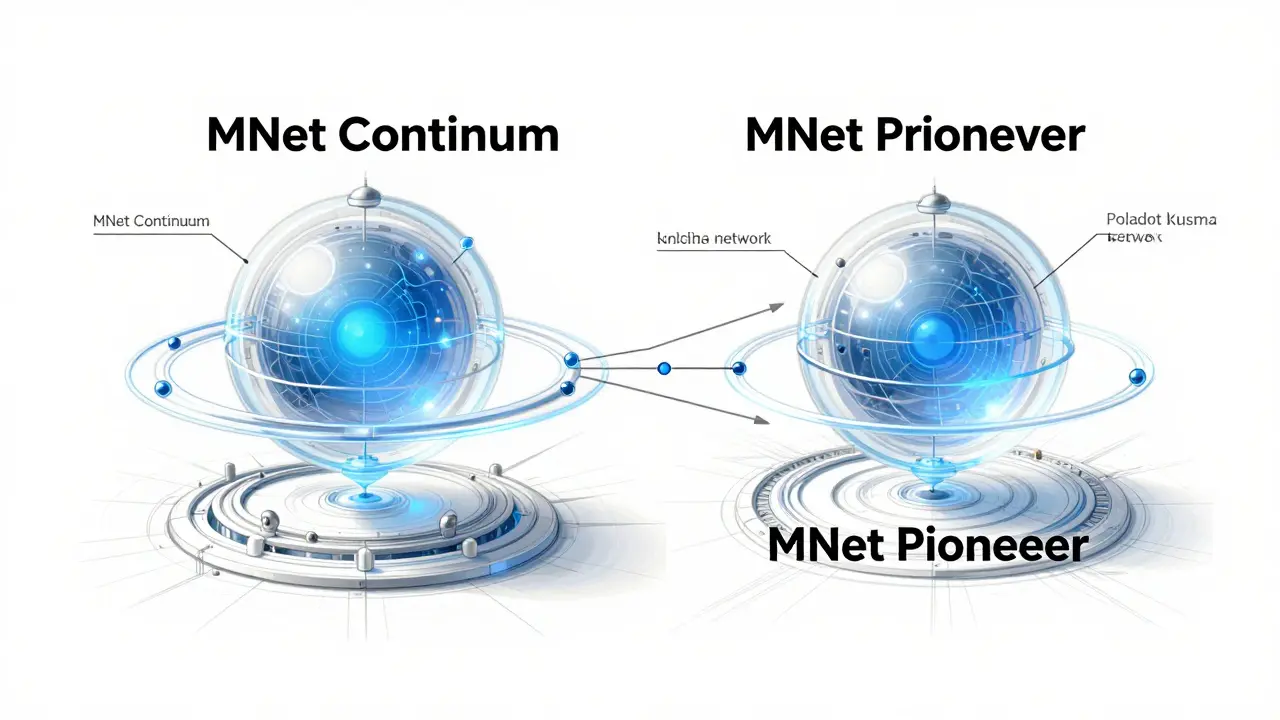
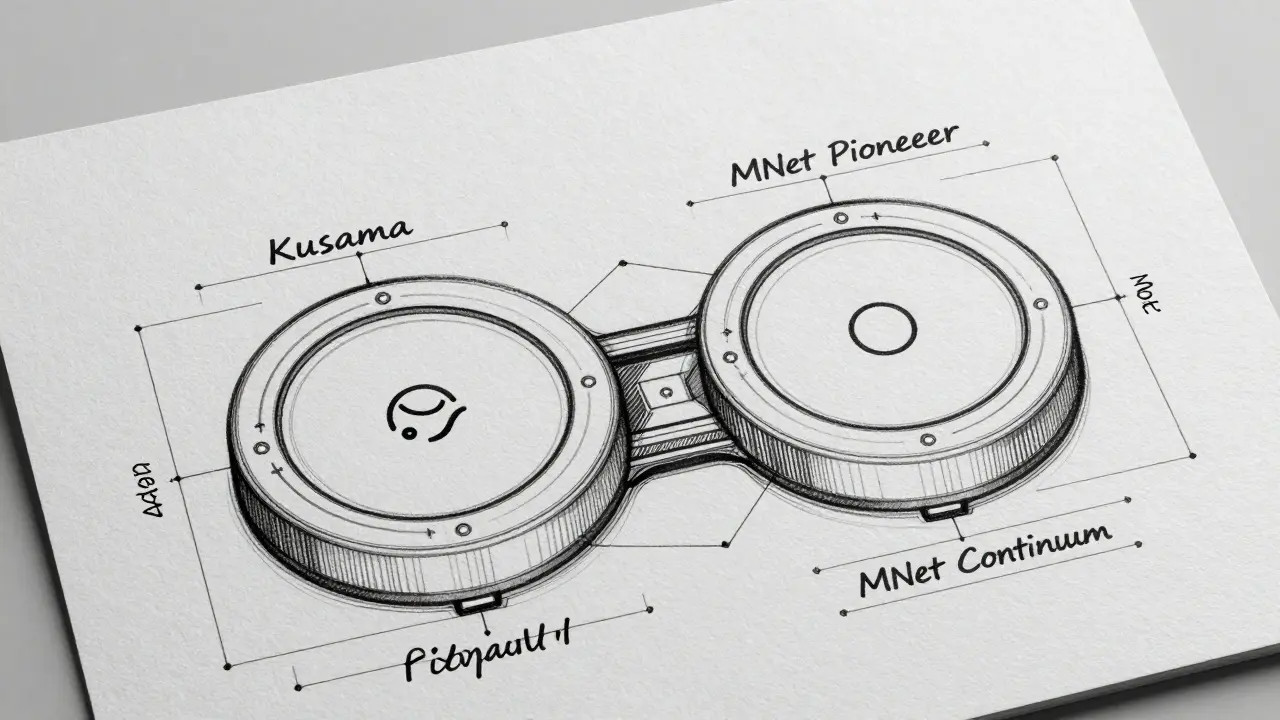
To understand the airdrop, you first need to understand where the tokens live. MNet (Metaverse.Network) isn't just one blockchain; it's a dual-network strategy. They use the MNet Continuum on the Polkadot network for production-ready stability, and the MNet Pioneer on Kusama as a "canary network" to test new features before they go live. Think of Kusama as the beta test and Polkadot as the final release.
The NUUM token is the primary utility asset for the Continuum network. It's designed to power a system where anyone can launch a personalized metaverse in about 12 seconds. Whether you're a brand wanting a virtual storefront or a community leader moving a Telegram group into a 3D space, NUUM facilitates those tokenized economies, NFT transactions, and play-to-earn mechanics.
Breaking Down the Airdrop and Distribution Mechanics
The distribution of tokens in this ecosystem didn't happen in a single burst. Much of the initial reward activity focused on the NEER token on the Pioneer network. This was specifically designed to reward those who participated in the Kusama crowdloan (Auction 13). If you contributed KSM to help MNet secure its slot on Kusama, you were eligible for these rewards.
The math for those participants was quite specific: for every 1 KSM contributed, users received 72+ NEER tokens. However, the team didn't dump all the tokens at once to avoid crashing the price. They used a linear release schedule: 30% was handed out immediately during the Token Generation Event (TGE), and the remaining 70% was dripped out over a full 12-month period. This is a common tactic to ensure a steady supply rather than a massive sell-off.
| Feature | NUUM Token | NEER Token |
|---|---|---|
| Network | MNet Continuum (Polkadot) | MNet Pioneer (Kusama) |
| Primary Role | Main Utility & Governance | Canary Network Testing/Rewards |
| Max Supply | 1 Billion | Distributed via Crowdloan |
| Trading Venue | Various Exchanges | Primarily Gate.io |
The Technical Shift: Contract Migration
One thing that often confuses airdrop hunters is the "missing token" phenomenon. For NUUM, this happened because of a critical contract migration. The project moved from an older contract to a new implementation to improve security and functionality. If you held tokens in the original contract, they didn't just vanish, but you had to update your token addresses to see them in your wallet.
This migration is a reminder that in the world of Polkadot parachains, things move fast. MNet Continuum currently holds Leased Core ID 34, and while the system is active, these technical updates are necessary to maintain the "batteries-included" philosophy the Bit.Country team promotes.

Market Reality: Price Volatility and Liquidity
Let's be honest about the numbers. The market for NUUM has been a rollercoaster. It hit an all-time high of $0.6046 in March 2024, but it eventually dipped as low as $0.0009996 in April 2025. While it has recovered slightly to hover around $0.0019, the liquidity is relatively thin. With a daily trading volume of around $8.84K, large trades can cause significant price swings.
For those holding NEER, the situation is even more niche. Almost all trading happens on Gate.io. If you're looking to liquidate airdropped tokens, you'll likely find yourself using the NEER/USDT pair on that specific exchange, as there aren't many other options.
How to Actually Use the Bit.Country Super App
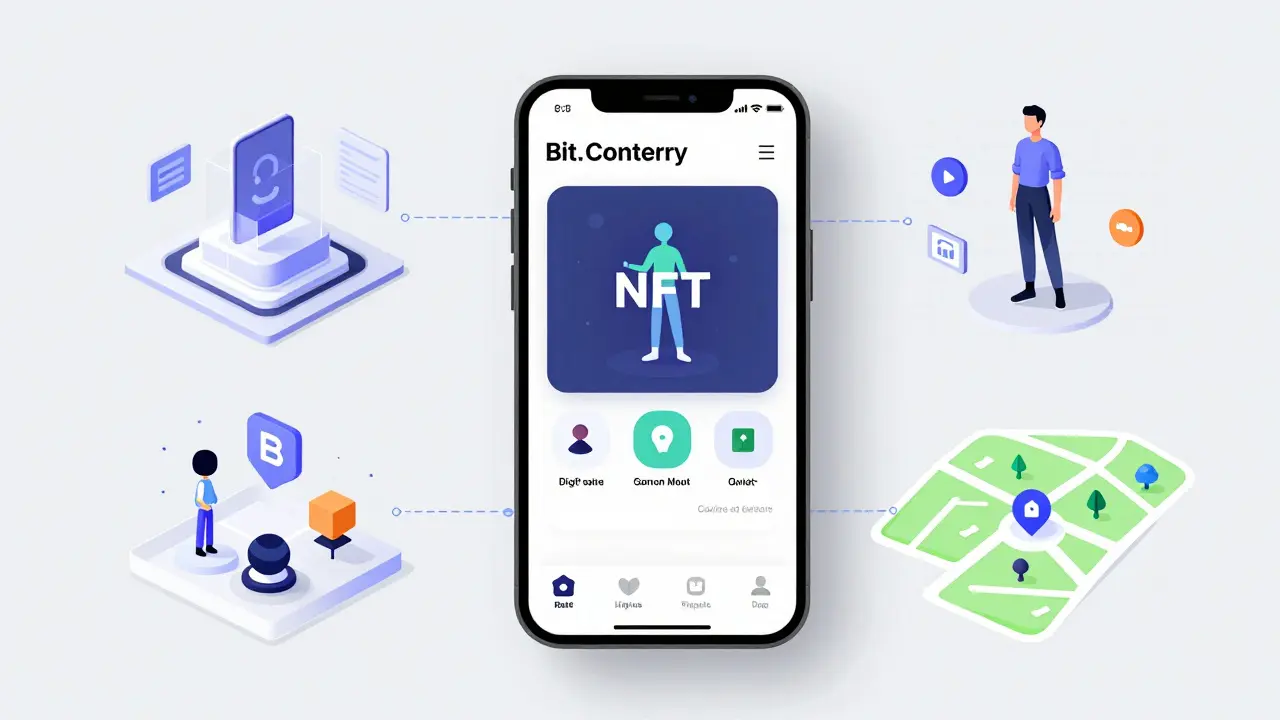
Beyond just holding the token, the real value of the NUUM ecosystem lies in the super app. It's not just a wallet; it's a gateway to a 2.5D and 3D digital environment. Here is how the integration works for a regular user:
- Metaverse Creation: You can set up a virtual space for your social media followers (from Twitter or Facebook) and turn it into a "Bit Country" with its own rules.
- Monetization: Through the integrated NFT marketplace, creators can sell digital assets or land within their specific metaverse.
- Interoperability: The system supports both WASM and Ethereum-compatible smart contracts, meaning developers can port existing tools over without starting from scratch.
- Engagement: The app uses a gamification protocol to keep users coming back, rewarding them for participating in community events.
The Funding Backdrop and Future Outlook
It's worth noting that MNet isn't a "ghost project." They've raised over $40 million across five funding rounds. That level of capital is significant for a Metaverse-as-a-Service provider. However, the gap between the funding and the current market cap ($259.35K) shows a disconnect between investor valuation and open-market sentiment.
The project's success now depends on whether they can migrate enough users from traditional social media into their 3D spaces. The technical foundation-using the Polkadot ecosystem for scalability-is solid, but the user experience needs to remain simple for non-crypto natives to adopt it.
Where can I claim my NUUM or NEER tokens?
Claims are typically handled through the official MNet portal or the Bit.Country super app. If you participated in the Kusama crowdloan, rewards were distributed based on your contribution of KSM, with a portion released at TGE and the rest linearly over 12 months.
Why can't I see my NUUM tokens in my wallet?
You likely need to add the new contract address. NUUM underwent a contract migration; the old tokens were replaced by a new implementation. Check the official MNet announcements for the current contract address and manually import it into your wallet (like MetaMask or Polkadot.js).
What is the difference between MNet Continuum and MNet Pioneer?
Continuum is the main production network running on Polkadot using NUUM tokens. Pioneer is the experimental "canary" network on Kusama using NEER tokens, where the team tests new features before deploying them to the main network.
Is the NUUM airdrop still active?
The primary airdrop events tied to the Kusama crowdloan and the Token Generation Event (TGE) have already concluded. Most distributions followed a specific vesting schedule that has either finished or is in its final stages.
Which exchange is best for trading NEER?
Currently, Gate.io is the primary exchange for NEER tokens, specifically the NEER/USDT pair, as it holds nearly 100% of the trading volume for that specific asset.
Next Steps and Troubleshooting
If you're a new user trying to enter the ecosystem, start by downloading the Bit.Country super app. This is the easiest way to interact with the metaverse without needing to be a blockchain expert. If you're a developer, look into their WASM support to see how your existing dApps might fit into the MNet infrastructure.
For those who feel their airdrop was incorrect, verify your crowdloan contribution ID (such as 2096-39 for the Kusama event). If the numbers don't match, the official MNet community channels are the only reliable place to resolve ledger discrepancies. Avoid any "support" accounts that DM you first, as airdrop-related scams are incredibly common in the Polkadot ecosystem.
Joshua Aldrich
April 7, 2026 AT 03:26man the contract migration really triped a lot of people up. its always a pain when u think your tokens just vanished into thin air but really u just need to manualy add the new address to metamask... happened to me too and i spent like an hour panicking lol
Diana Martín Prieto
April 8, 2026 AT 22:13For anyone struggling with the super app, just remember that the 2.5D interface is actually pretty intuitive once you get past the initial login. It's a great way to see how the MaaS model actually works in practice!
Hugo Lopez
April 8, 2026 AT 23:41This is a very detailed breakdown! Thanks for sharing 🌟 I think the dual-network approach with Kusama as a canary is a really smart way to handle stability 🚀
Earnest Mudzengi
April 9, 2026 AT 07:43Typical centralized facade. This whole "Metaverse-as-a-Service" is just another layer of obfuscation to hide the real liquidity drain. Look at the market cap vs funding gap. The whales are dumping on the retail peasants while they talk about "interoperability" and WASM support. It's a classic pump and dump architecture disguised as innovation. Don't trust the "official portals" without a hardware wallet and a VPN because they're likely tracking every single move you make in those 3D spaces. The Polkadot ecosystem is just a playground for the elites to play musical chairs with our money.
Deepak Prusty
April 10, 2026 AT 16:07The market cap discrepancy is obvious. It is a result of low organic demand and high initial inflation from the crowdloan distributions.
Sonya Bowen
April 12, 2026 AT 07:15Keep it simple: check the official MNet portal first.
Susan Wright
April 12, 2026 AT 19:49Yeah, Gate.io is basically the only place for NEER. If you're trying to swap on a DEX, you're mostly just going to see slippage that'll kill your profit.
Lauren Gilbert
April 14, 2026 AT 00:06It is quite fascinating to consider how we are transitioning our social identities into these digital 3D architectures, though I wonder if the rush to create a world in twelve seconds might strip away the organic essence of community building, which usually requires time, patience, and a certain amount of slow, mindful interaction that a "super app" might inadvertently replace with mere efficiency, yet perhaps that is simply the evolution of human connection in the digital age where we value accessibility over the long process of traditional bonding.
Carmelita Gonzales
April 15, 2026 AT 07:35be careful with the dms guys no one from support will message first
sekhar reddy
April 16, 2026 AT 10:15Omg the price drop from 0.60 to 0.001 is absolutely insane!! 😱 Like actually wild how these tokens just crash out of nowhere lolol
Trish Swanson
April 17, 2026 AT 05:29Liquidity is too low!!! Not a good sign...
Matthew Wright
April 17, 2026 AT 21:55Actually, the low liquidity is expected for a niche utility token... but yeah, the price swings are brutal!!!
Erica Mahmood
April 18, 2026 AT 20:00WASM support is the real play here. If they can actually bridge the gap between EVM and Polkadot’s substrate effectively, the developer onboarding will be way smoother regardless of the current price action
alex rodea
April 19, 2026 AT 17:19Just use the app and keep it easy.
Sharhonda Walker
April 19, 2026 AT 19:40i think i missed the tge window for the linear release... do i still get anythin if i didnt do the crowdloan?
Nicholas Whooley
April 21, 2026 AT 16:03It would be prudent to review the official documentation to see if there are any secondary reward pools available for new participants.
Emma Pease-Byron
April 22, 2026 AT 19:29Oh, wonderful. Another "metaverse" project claiming to revolutionize social interaction by making it "faster." Because if there's one thing the world needs, it's the ability to create a vacant 3D void in twelve seconds. Truly groundbreaking stuff.
Suzanne Robitaille
April 24, 2026 AT 09:34The tragedy of the digital void is so poignant! To think we are building these elaborate cathedrals of code just to feel a glimmer of connection in a cold, algorithmic world!
Arwyn Keast
April 25, 2026 AT 18:15Typical parachain rubbish. Over-engineered junk that produces nothing but volatility and useless tokens for the "brave" who bought into the hype. Complete waste of bandwidth.
Susan Payne
April 26, 2026 AT 22:50The level of desperation in these airdrop hunts is frankly embarrassing. One must possess a modicum of self-respect to avoid chasing such pennies.
Manisha Sharma
April 28, 2026 AT 05:55Indian devs are way bettr at this stuff than the west anyway... this project is basic compared to what we do here
Siddharth Bhandari
April 29, 2026 AT 20:15For those wondering about the WASM implementation, it's actually quite robust if you look at the core IDs.
akash temgire
April 30, 2026 AT 18:07Explain the specific linear release math.
Krystal Moore
May 1, 2026 AT 21:35I'm just so tired of these projects pretending everything is fine when the price is basically zero! It's just wrong to keep people hoping!
gladys christine
May 2, 2026 AT 13:42you guys just keep pushing forward omg believe in the vision!!!
Brooke Herold
May 4, 2026 AT 13:28I prefer the quiet observation of these cycles.
Evan Borisoff
May 4, 2026 AT 15:38The sheer audacity of the technical debt here is staggering, and the way they've structured the MNet Continuum on Polkadot just proves that the underlying architecture is far too complex for the average American investor to grasp without being fleeced by these globalist developers who use jargon-heavy roadmaps to hide the lack of real-world utility and actual scalable throughput.
Carol Prates
May 5, 2026 AT 11:23Love how "secure" it is until you actually have to find your tokens lol! So helpful! ❤️