
PSA Registration Requirements for Crypto in Japan: A Complete Guide
Trying to launch a cryptocurrency exchange in Japan without understanding the Payment Services Act (PSA) is like trying to drive a car without a license plate. You might get moving for a minute, but you will be stopped quickly, and the penalties are severe. Japan has built one of the strictest regulatory environments in the world for digital assets. It is not just about filling out a form; it is about proving you can protect user funds, maintain financial stability, and operate with total transparency.
If you are looking to enter the Japanese market, you need to know exactly what the Financial Services Agency (FSA) expects. This guide breaks down the real-world requirements for becoming a registered Cryptocurrency Exchange Service Provider (CAESP). We will look at the legal definitions, the capital you need, the corporate structure required, and the operational hurdles that trip up most applicants.
What Counts as a Crypto Asset Under the PSA?
Before you apply for anything, you must understand what you are regulating. The Payment Services Act defines a "crypto asset" specifically as a means of payment that is not denominated in any currency legally recognized by law (like the Yen or Dollar) and can be used to pay unidentified persons. This definition is crucial because it excludes things like prepaid e-money cards or bank-issued coins that have a fixed value against fiat currency. Those fall under different rules.
However, there is a catch. If your token looks more like an investment contract than a payment method, it falls under the Financial Instruments and Exchange Act (FIEA). The FIEA covers security tokens and derivatives. These require a completely different license with even higher barriers. For this guide, we focus on the PSA route, which applies to spot trading of standard cryptocurrencies like Bitcoin or Ethereum. You must clearly separate these activities in your business model, as mixing them can lead to immediate rejection by the regulator.
Who Can Apply? Corporate Structure Rules
You cannot simply register a sole proprietorship or a limited liability company (Godo Kaisha) for this purpose. The law is very specific. To become a CAESP, you must be a stock company (kabushiki-kaisha) under Japanese law. If you are a foreign entity, you face a harder path. You must establish either a subsidiary or a branch in Japan.
Here is the reality check: to date, the FSA has not approved any registrations for foreign branches. Every successful foreign applicant has established a Japanese subsidiary. This means you need to incorporate a new Japanese stock company. This subsidiary must have its own headquarters, directors, and representatives located within Japan. You also need to hold proper licensing or registration in your home country. The FSA wants to see that you are legitimate everywhere you operate, not just in Tokyo.
Financial Requirements: Capital and Assets
Money talks in Japanese regulation. The PSA sets a minimum capital requirement of JPY 10 million (approximately USD 65,000-70,000 depending on exchange rates). While this number might seem low compared to banking licenses, it is just the entry ticket. You must also demonstrate positive net assets throughout your operation. This ensures you have a buffer against losses and can cover operational costs without touching user funds.
The FSA scrutinizes your financial health closely. They want to see that your company is stable enough to handle market volatility. If your net assets drop below zero, you risk losing your registration. This is why many exchanges over-capitalize initially, raising significantly more than the minimum to show strength and commitment to the market.
| Requirement | Detail | Purpose |
|---|---|---|
| Minimum Capital | JPY 10 million | Ensures basic financial footing |
| Net Assets | Must remain positive | Prevents insolvency risks |
| Corporate Form | Stock Company (Kabushiki-Kaisha) | Standardizes governance structures |
| Foreign Entities | Must use Subsidiary (Branches rejected) | Ensures local legal accountability |
Operational Security: Cold Wallets and Segregation
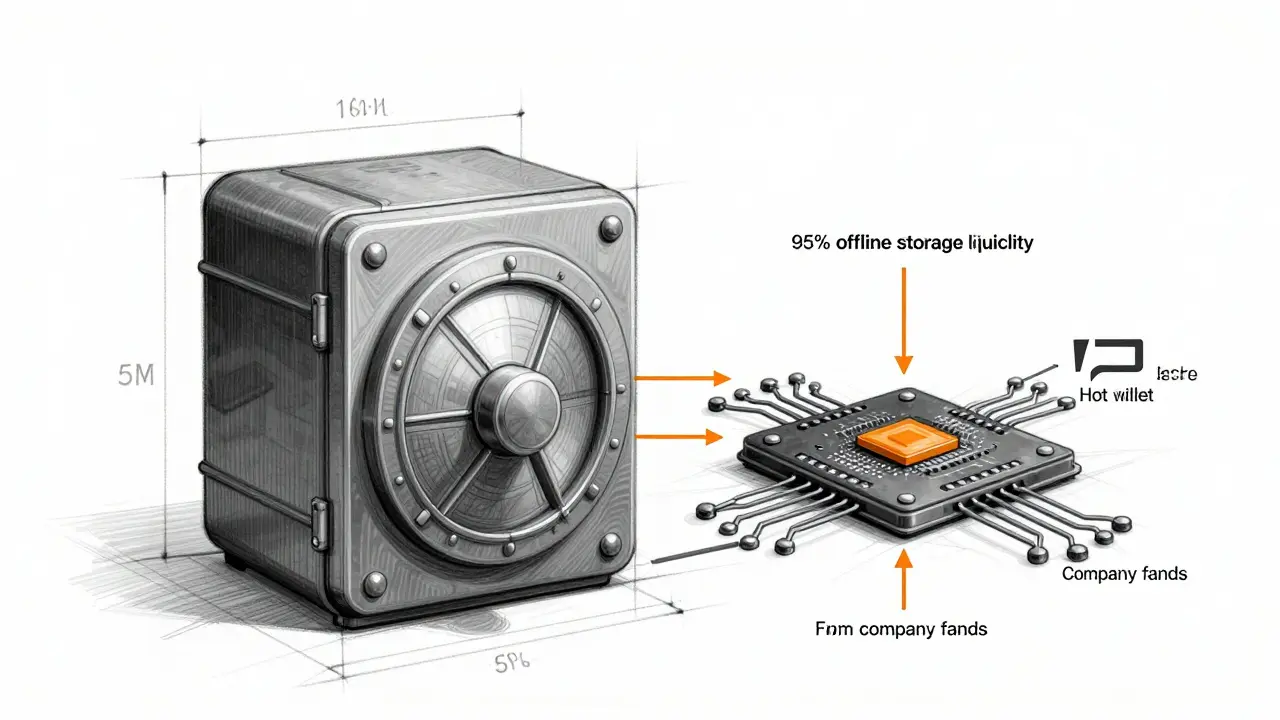
This is where most technical teams struggle. The PSA mandates strict segregation of user assets from company assets. You cannot mix customer coins with your operational wallet. In fact, the regulations require that at least 95% of user-held crypto assets be stored in offline cold wallets. This is non-negotiable.
Your application must detail exactly how you achieve this. You need to provide comprehensive methods for segregating user crypto assets from company assets. This includes describing your multi-signature setups, hardware security modules, and access controls. The FSA will audit these systems. If they find that hot wallets hold too much user balance, or if the separation between company and client funds is blurry, your application will be delayed or denied.
Furthermore, you need robust internal systems for compliance. This isn't just about security software; it's about people and processes. You need dedicated compliance officers, clear reporting lines, and documented procedures for handling suspicious transactions. The goal is to prevent money laundering and fraud, so your Anti-Money Laundering (AML) and Know Your Customer (KYC) protocols must be ironclad.
The Application Process: What to Expect
Applying for PSA registration is not a quick task. The review process alone can take up to six months. However, preparing the documentation often takes longer. You will need to submit extensive details including:
- Trade name and address of the headquarters
- Amount of capital and sources of funding
- Names and backgrounds of all directors and executives
- A list of specific crypto assets you intend to handle
- Detailed service provision methods (how trading works technically)
- Outsourcing arrangements (if you use third-party tech providers)
- Comprehensive plans for asset segregation and security
The FSA may ask for additional information during the review. Be prepared for multiple rounds of questions. They are looking for red flags in your organizational structure or internal systems. If your compliance framework looks weak, they will pause the process until you fix it. This is why hiring local legal counsel experienced in FSA interactions is critical. They can help you anticipate questions and format your documents correctly.
Penalties for Non-Compliance
Operating without registration is a criminal offense in Japan. Under Article 107, Item 5 of the Amended PSA, unlicensed operators face imprisonment of up to three years and/or fines up to JPY 3 million. Note that from June 1, 2025, imprisonment was replaced with "confinement punishment" (koukin-kei) under recent Penal Code amendments, but the severity remains high. This is not a slap on the wrist; it is a serious deterrent designed to keep bad actors out of the market.
Even licensed exchanges face ongoing scrutiny. The FSA conducts regular inspections and can order specific regulatory actions if you fail to meet standards. Recent amendments in 2025 have strengthened the FSA's ability to intervene directly in operations. This means compliance is not a one-time event; it is a daily operational requirement.
Marketing and Consumer Protection
How you talk to customers matters. The PSA heavily scrutinizes advertising and marketing. You cannot make glossy promises of quick profits. Vague claims, fuzzy facts, or exaggerated returns are prohibited. Your communication must be transparent and clear. The FSA wants to ensure that retail investors understand the risks involved in trading crypto.
This affects your website, social media, and promotional materials. You need to include clear risk disclosures. You cannot hide fees or terms in fine print. The goal is consumer protection, so every piece of marketing content should be reviewed for compliance before publication. This cultural shift towards transparency is a key part of Japan's regulatory philosophy.
Why Go Through the Trouble?
Given the strictness, why bother with Japan? Because it offers legal clarity. Cryptocurrencies are recognized as legal property in Japan. There are no bans on ownership or investment. By getting PSA registered, you gain access to a sophisticated market with high trust levels. Japanese users prefer regulated platforms, knowing their funds are protected by law. Plus, having a Japanese license enhances your global reputation, signaling that you adhere to high standards of security and compliance.
How long does PSA registration take?
The official review period by the FSA can take up to six months. However, the preparation phase, including setting up the corporate structure, developing compliance systems, and drafting documentation, often adds several more months. Plan for a total timeline of 8-12 months from start to finish.
Can a foreign company register as a branch?
No. While the law allows for branch applications, the FSA has not approved any foreign branches for CAESP status to date. All successful foreign applicants have established Japanese subsidiaries (stock companies).
What is the difference between PSA and FIEA?
The PSA covers crypto assets used as payment mechanisms (like Bitcoin for spot trading). The FIEA covers tokens that function as securities or investments (security tokens). If your project involves both, you may need to navigate both regulatory frameworks, but the PSA is the standard route for general exchanges.
Is 95% cold storage mandatory?
Yes. Regulations require that at least 95% of user-held crypto assets be stored in offline cold wallets to enhance security and protect against hacks. The remaining 5% can be in hot wallets for operational liquidity.
What happens if I operate without a license?
It is a criminal offense. Penalties include confinement punishment (replacing imprisonment as of 2025) and fines up to JPY 3 million. The FSA actively monitors for unlicensed operations and enforces these penalties strictly.