SEC Philippines Crypto Enforcement: What You Need to Know About CASP Rules
Imagine waking up to find your favorite crypto exchange blocked in the Philippines. No more trading on OKX or Bybit unless you jump through a few regulatory hoops. This isn't a hypothetical scenario; it's the reality for millions of Filipino crypto users as of late 2025. The Securities and Exchange Commission (SEC) of the Philippines has shifted from passive observation to aggressive enforcement against unregistered Crypto Asset Service Providers. If you trade digital assets here, ignoring these changes could mean losing access to your funds or facing fines.
The core issue is simple: the SEC wants to protect investors from another FTX-style collapse. To do this, they introduced the Crypto Asset Service Provider (CASP) framework. It’s not a ban on crypto, but it is a strict gatekeeping system. Only platforms that meet rigorous local standards can legally serve Filipinos. Let’s break down exactly what’s happening, who is affected, and how you can navigate this new landscape without getting caught off guard.
The New Reality: CASP Framework Explained
In May 2025, the SEC issued two critical memoranda: Circular No. 4 and Circular No. 5. These documents created the CASP framework, which mandates that any entity offering crypto services to Filipinos must be a registered domestic corporation. This means foreign giants like Binance, which previously operated with minimal local presence, now face a choice: incorporate locally and meet strict capital requirements, or exit the market entirely.
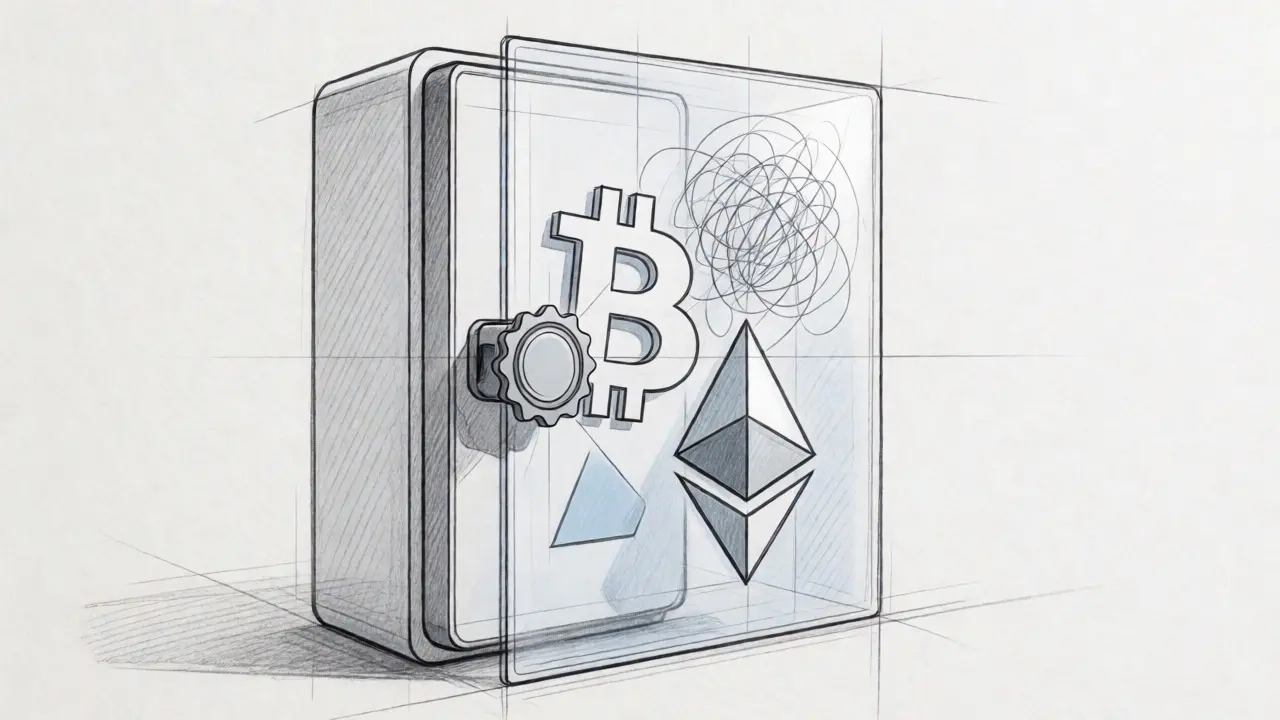
Why so strict? The SEC learned hard lessons from global exchange failures. They want to ensure that if an exchange goes bust, your money isn’t mixed with the company’s operational funds. Hence, the rule requires segregation of customer funds. Your Bitcoin stays in your account, separate from the exchange’s balance sheet. This is a massive shift from the "wild west" days where user funds were often commingled.
The requirements aren't just bureaucratic red tape. They are designed to filter out fly-by-night operators:
- Minimum Capital: 100 million PHP (approx. $1.8 million USD). This ensures the platform has skin in the game.
- Local Presence: A physical office in the Philippines is mandatory. No more operating solely from Singapore or Dubai.
- Reporting: Monthly financial reports go directly to the SEC’s PhiliFintech Innovation Office.
- Security: 95% of customer assets must be in cold storage, with regular third-party audits.
These rules apply to centralized exchanges primarily. Decentralized Finance (DeFi) protocols currently sit outside this specific registration requirement, though regulators have hinted that smart contract risks will be addressed by 2027.
Who Is Under Fire? The August 2025 Enforcement Wave
If you thought the Binance ban in 2024 was a one-off, think again. In August 2025, the SEC named ten major global exchanges in its public advisory for operating without proper authorization. The list includes heavyweights like OKX, Bybit, KuCoin, and Kraken.
The SEC isn't just sending letters. They are coordinating with the National Telecommunications Commission (NTC) to block website access and requesting app stores to remove non-compliant apps. This mirrors the strategy used against Binance, which resulted in a complete withdrawal after a 90-day exit period. The goal is clear: make it difficult for unlicensed platforms to acquire new customers and eventually force them to either comply or leave.
| Feature | Compliant CASP | Unlicensed Platform |
|---|---|---|
| Legal Status | Registered Domestic Corporation | Foreign Entity / Unregistered |
| Capital Requirement | ≥ 100 Million PHP | No Minimum Mandated |
| Fund Segregation | Mandatory & Audited | Variable / Often Commingled |
| User Protection | High (Insurance Fund Pending) | Low (Self-Regulated) |
| Accessibility | Full Access | Risk of Blocking/Removal |

Penalties and Risks for Non-Compliance
Don't underestimate the severity of these penalties. For platforms, the stakes are high. Initial fines range from 50,000 PHP to 10 million PHP per violation. If a platform continues to operate illegally, they face additional daily penalties of 10,000 PHP. Worse yet, executives can face criminal liability, including imprisonment for up to five years under the Securities Regulation Code.
But what about you, the investor? While users aren't fined for holding crypto on an unlicensed platform, you face practical risks:
- Withdrawal Issues: As seen with Binance, platforms may freeze deposits and restrict withdrawals to a 90-day window before exiting.
- Lack of Recourse: If an unlicensed exchange collapses, you have no protection from the Philippine legal system or the upcoming Investor Compensation Fund.
- Access Disruption: Internet Service Providers (ISPs) may throttle or block access to these sites, making trading frustrating or impossible during peak hours.
Atty. Paolo Ong from the SEC’s Enforcement Department stated that the new rules give their team "more teeth." They are actively monitoring peer-to-peer transactions and cross-border flows, using blockchain analytics tools to flag suspicious activity exceeding 50,000 PHP.
Impact on Retail Investors and Market Stability
You might wonder if this regulation kills the crypto vibe in the Philippines. Data suggests a short-term dip but long-term stability. Chainalysis data shows the Philippines has over 15 million active crypto users, ranking third in Southeast Asia. However, 85% of these users currently rely on international platforms now under scrutiny.
Analysts predict a 30-40% drop in retail participation initially. Why? Because many casual traders use apps like Bybit or KuCoin for convenience. If those apps disappear from the Play Store or get blocked, some users will simply stop trading rather than register with a local, potentially less feature-rich alternative.
However, there is a silver lining. The Philippine National Police reported a 67% decrease in crypto-related fraud cases following the Binance enforcement in 2024. This suggests that removing unregulated players reduces scams. For the majority of Filipino users-those using crypto for remittances (68% of usage)-stability matters more than speculative gains. Protecting the remittance flow is a key priority for the SEC, ensuring that families receiving funds abroad aren't hit by sudden platform failures.
How to Stay Compliant and Safe
If you’re still unsure what to do, here is a practical checklist. First, check if your current exchange is registered. The SEC maintains a list of approved CASPs. If your platform isn't on it, start planning an exit strategy. Move your assets to a compliant local exchange or a self-custody wallet.
Second, keep records. With stricter anti-money laundering (AML) checks, large transactions may trigger reviews. Ensure your KYC (Know Your Customer) documents are up to date on whichever platform you choose.
Third, look ahead. The SEC plans to launch a Crypto-Asset Investor Compensation Fund by Q1 2026. Funded by a 0.05% levy on CASP revenue, this fund aims to reimburse users if a registered exchange fails. Think of it like FDIC insurance for banks, but for crypto. Sticking with registered providers gives you access to this safety net.
Finally, don't panic-sell into a downturn caused by regulatory news. The market is adjusting to a new normal. Local platforms like PDAX and Coins.ph have been preparing for this, and they are likely to capture the market share left by exiting giants. Give them a try, but always verify their SEC registration status first.
Is cryptocurrency banned in the Philippines?
No, cryptocurrency is not banned. The SEC clarifies that the CASP rules regulate service providers, not the asset itself. You can still buy, sell, and hold Bitcoin, Ethereum, and other tokens. The restrictions apply to the platforms facilitating these trades.
What happens to my funds if my exchange gets blocked?
Typically, the SEC grants a 90-day exit period for users to withdraw their funds. During this time, you can usually only withdraw, not deposit. After the deadline, the platform may cease operations in the country, making access to remaining funds difficult or requiring complex legal claims.
Are DeFi platforms affected by the new SEC rules?
Currently, decentralized finance (DeFi) protocols are excluded from the CASP registration requirements. However, the SEC has indicated that future regulations, expected around 2027, will address smart contract risks and liquidity pools within DeFi.
Which exchanges are currently targeted for enforcement?
As of August 2025, the SEC has identified several major global exchanges, including OKX, Bybit, KuCoin, Kraken, LBank, and CoinW, as operating without proper authorization. Users should monitor official SEC advisories for updates on this list.
Can I use a VPN to bypass the blocks?
Yes, technically you can use a VPN to access blocked sites. However, this comes with risks. The platform may detect the IP change and freeze accounts for compliance reasons. Additionally, using a VPN doesn't grant you legal protection or access to the Investor Compensation Fund.