
CRS Crypto Taxation: What You Need to Know About Reporting and Compliance
When you hold or trade cryptocurrency, CRS crypto taxation, a global system where countries automatically share financial data to prevent tax evasion. Also known as Common Reporting Standard, it’s not just about banks anymore—it now includes crypto exchanges, wallet providers, and even DeFi platforms that report to tax authorities. If you’ve ever bought Bitcoin on Binance, staked Ethereum on a foreign platform, or sold tokens through a non-US exchange, CRS could apply to you—even if you live in a country that doesn’t tax crypto yet.
CRS isn’t a tax law itself—it’s a data-sharing agreement. Over 100 countries participate, including the UK, Australia, Canada, Japan, and most of Europe. When you use a crypto exchange registered in one of these countries, they’re required to collect your personal info, transaction history, and account balances, then send that data to your home country’s tax authority. This means crypto income tax, taxes owed on profits from selling, trading, or earning crypto can’t be hidden just because you used a foreign platform. Even if you didn’t receive a 1099 or similar form, your activity is still being tracked.
Many people think CRS only affects big investors, but that’s not true. If your crypto holdings crossed a certain value threshold in any CRS-participating jurisdiction, your data gets flagged. That includes staking rewards, airdrops, and even crypto-to-crypto trades. The CRS compliance, the process of ensuring your crypto activity is properly reported under international standards isn’t optional—it’s mandatory. Countries like South Korea and the UK already treat crypto gains as taxable income, and CRS makes it easier for them to catch those who don’t report.
What happens if you ignore it? Penalties vary by country, but they can include fines, back taxes with interest, or even criminal charges in extreme cases. Some users try to avoid CRS by using non-compliant exchanges or P2P platforms, but that’s risky. Many P2P platforms now require KYC, and blockchain analytics firms can trace transactions back to real identities. Plus, if you later move money into a bank account or buy property, your financial trail becomes visible.
You don’t need to be a tax expert to handle CRS. Start by tracking every crypto transaction—buys, sells, swaps, staking rewards. Use free tools to export your history from exchanges. Know your home country’s rules, even if they’re vague. And if you’ve used foreign platforms, assume your data has already been shared. The best move isn’t to hide—it’s to get ahead of the report.
Below, you’ll find real-world breakdowns of how CRS impacts traders, what exchanges report, and how to avoid costly mistakes. Whether you’re holding Bitcoin in Singapore, earning yield on a DeFi protocol in Switzerland, or just wondering if your 2023 trades need to be declared—there’s something here for you.
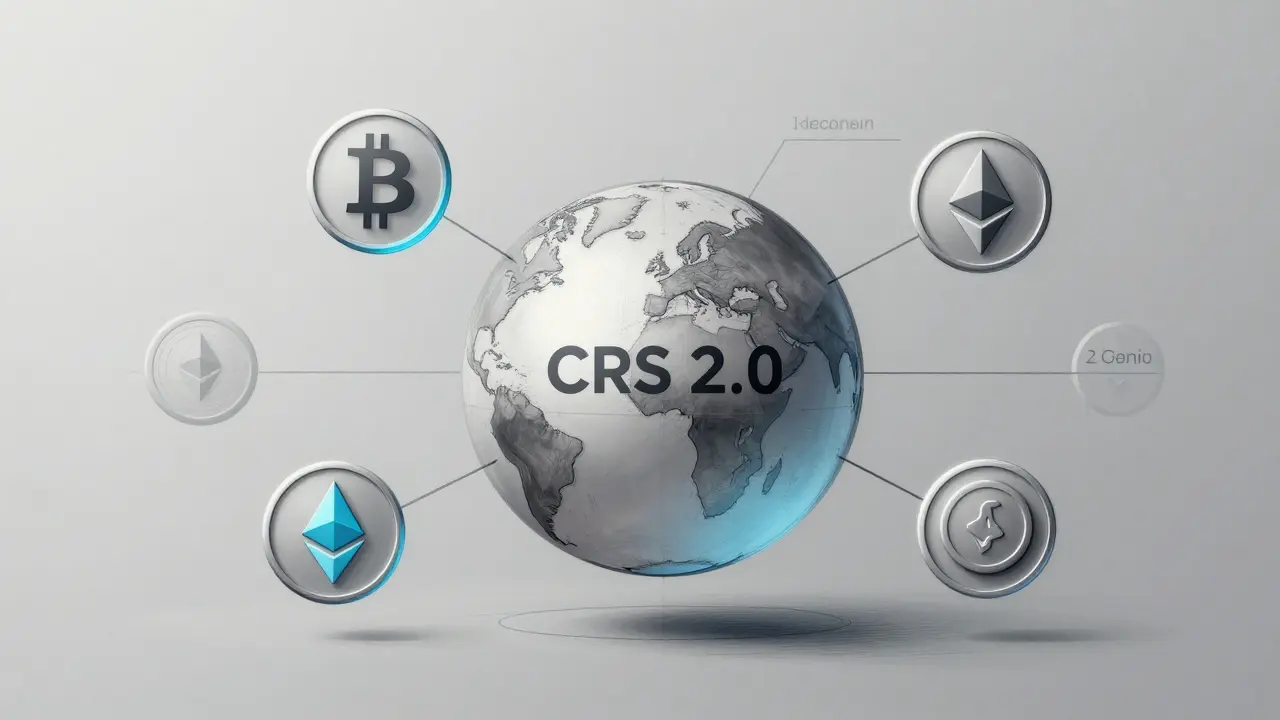
Common Reporting Standard and Crypto Taxation: What You Need to Know in 2026
Starting in 2026, the Common Reporting Standard (CRS) will require financial institutions to report crypto holdings and transactions to tax authorities worldwide. This guide explains how CRS and CARF work together to close the crypto tax gap-and what you need to do now.
VIEW MORE