
US Crypto Regulations by State: Complete Guide to Restrictions & Licenses
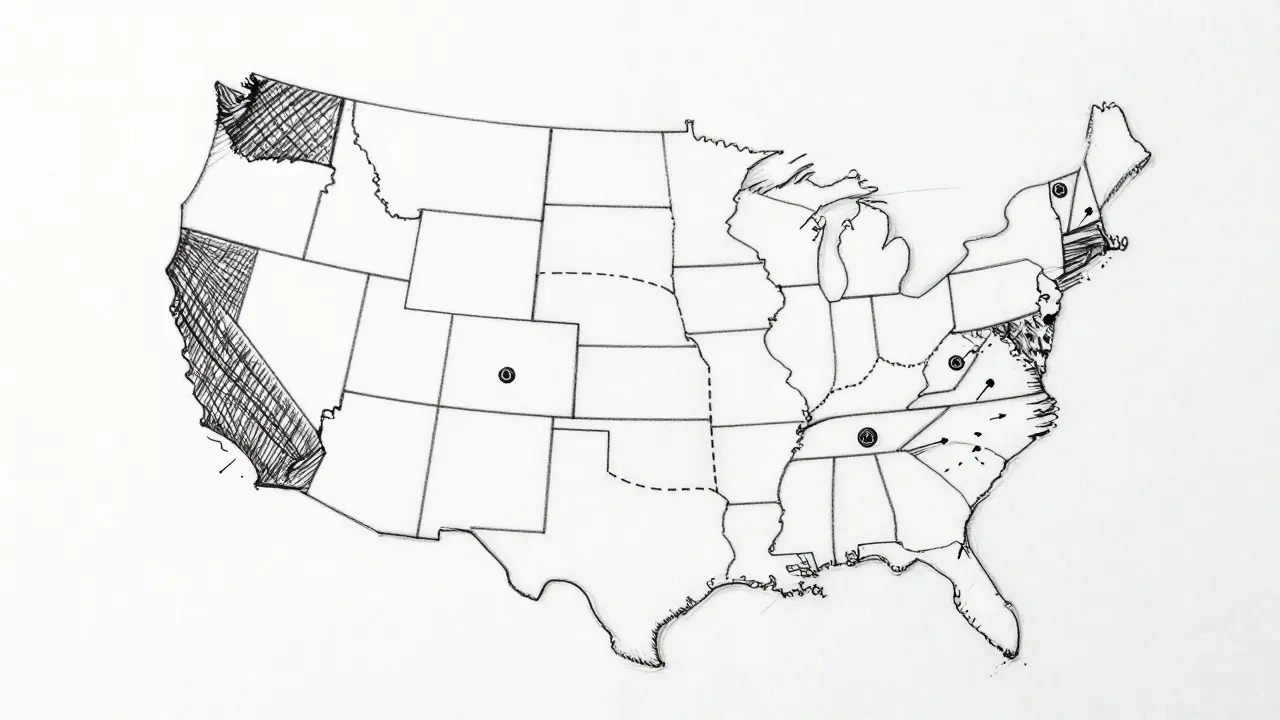
Trying to launch a crypto business in the US feels like navigating a maze where the walls keep moving. One state welcomes you with open arms and low fees; the next demands millions in capital and years of paperwork. This isn't just bureaucratic red tape-it's a strategic decision that can make or break your operation. As of 2026, the landscape is shifting rapidly due to new federal laws, but state-level rules still dictate the day-to-day reality for most operators.
You don't need to be a lawyer to understand the core tension here. States are filling the gap left by federal uncertainty, but they aren't doing it uniformly. Some act as innovation hubs, while others prioritize strict consumer protection at the cost of speed. Understanding these differences is critical if you want to avoid costly compliance mistakes or miss out on favorable jurisdictions.
The Federal Vacuum and the Rise of State Power
For years, the US lacked a single, comprehensive federal framework for digital assets. This void forced states to step in, creating what experts call a "patchwork" regulatory environment. The turning point came with the GENIUS Act, signed into law in September 2025. While this law established baseline standards for stablecoins, it explicitly preserved state authority over other aspects of crypto oversight. This means that even with federal guidelines, your location still matters immensely.
The result? A diverse ecosystem where 47 states have enacted some form of cryptocurrency regulation. These rules vary wildly in scope. Some states focus narrowly on money transmission, while others create entire banking frameworks specifically for crypto firms. For businesses, this creates a complex web of obligations. You might be compliant in one state but effectively illegal in another, simply because the definition of "virtual currency activity" differs by a few words.
Comparing Major Regulatory Frameworks
To understand the stakes, let's look at three distinct approaches: New York, California, and Wyoming. Each represents a different philosophy on how to handle crypto risk and innovation.
| Attribute | New York (BitLicense) | California (DFPI Registration) | Wyoming (SPDI Charter) |
|---|---|---|---|
| Primary Mechanism | Virtual Currency Authorization | Registration under California Financing Law | Special Purpose Depository Institution Charter |
| Minimum Capital | $2 Million Net Capital | Varies by transaction volume | $25 Million Minimum Capital |
| Application Fee | $5,000 | Lower tiered fees | Chartering fees + FDIC premiums |
| Processing Time | Average 14.3 months | 45-60 days | 6-8 months |
| Annual Compliance Cost | ~$350,000 | ~$85,000 | ~$42,000 (plus operational costs) |
| Key Restriction | Strict cold storage & biometric access | Transaction monitoring for high volume | Full bank-grade insurance requirements |
New York's BitLicense regime is the gold standard for rigor. Established in 2015, it requires entities to prove they have robust cybersecurity, including NYDFS-approved cold storage for 80% of assets. It’s thorough, but it’s slow. With only 37 active licenses issued despite over 100 applications, many startups have chosen to set up shop elsewhere to save time and money.
California takes a middle path. The Department of Financial Protection and Innovation (DFPI) requires registration rather than a full license for most activities. If you transact over $500,000 annually, you’re on the radar. The barrier to entry is lower, which has attracted over 140 registered businesses. However, enforcement is active, with 17 actions taken against unregistered entities recently.
Wyoming goes the other direction entirely. Instead of regulating crypto firms as mere service providers, it allows them to become chartered banks through the Special Purpose Depository Institution (SPDI) framework. This offers full deposit insurance and a clearer legal status. It’s expensive to enter-requiring $25 million in capital-but it provides immense credibility and stability for large players like Kraken Bank.

Compliance Costs and Operational Realities
The numbers tell a clear story about why jurisdiction matters. According to recent legal analyses, maintaining compliance in New York averages $350,000 per year. In California, that figure drops to around $85,000, and in Wyoming, base regulatory fees are closer to $42,000, excluding the heavy capital requirements.
These costs aren't just fees. They include:
- Legal and Audit Fees: Ongoing reporting and annual examinations.
- Technology Upgrades: Meeting specific cybersecurity standards, such as biometric controls in NY.
- Staffing: Dedicated compliance officers who understand local nuances.
For multi-state operators, the complexity multiplies. A company operating in five states might spend nearly $300,000 annually just on state regulatory fees. This drains resources that could otherwise go toward product development or security enhancements. Many smaller firms now choose to operate in a single friendly state to keep their overhead manageable.
The Impact on Business Location Strategy
Regulatory friction directly influences where companies decide to live. Since 2020, states with innovation-friendly frameworks like Wyoming, South Dakota, and Tennessee have captured the vast majority of new crypto banking jobs. Conversely, restrictive regimes have seen a net outmigration of talent and headquarters.
This isn't just about taxes; it's about predictability. In Wyoming, the rules are clear: meet the capital requirement, get your charter, and operate with bank-like protections. In contrast, in states with fragmented definitions of "money transmission," companies face constant legal ambiguity. This uncertainty is a major deterrent. Surveys show that nearly 70% of crypto businesses cite regulatory uncertainty as their top operational challenge.
If you're an individual investor or trader, the impact is less direct but still present. Exchanges often tailor their features based on their primary licensing hub. An exchange licensed in Wyoming may offer more flexible staking or lending products than one strictly adhering to New York's conservative guidelines. Always check which entity is serving you and where its primary license resides.
Future Outlook: Harmonization vs. Fragmentation
Where does this leave us in 2026? The situation is evolving. The GENIUS Act has provided a floor for stablecoin regulation, but questions remain about securities versus commodities classification. The SEC and CFTC are still working to define their overlapping jurisdictions, which keeps states in the loop.
Two paths are emerging. First, federal preemption, where national laws override state rules to create a uniform market. Second, formal partnerships, where states and federal agencies agree on shared standards. Currently, 22 states are challenging aspects of federal crypto laws in court, arguing that state sovereignty should prevail. This legal battle will likely shape the landscape for the next decade.
Until clarity arrives, the best strategy is flexibility. Monitor legislative sessions in key states. Keep your compliance infrastructure modular so you can adapt to new rules quickly. And remember: the cheapest state isn't always the safest, and the most regulated state isn't always the most protective. It depends on your business model and risk tolerance.
Frequently Asked Questions
Do I need a license to hold personal crypto in the US?
Generally, no. Most state regulations target businesses engaged in "virtual currency business activity," such as exchanges, custodians, and miners selling services. Individual holders trading for their own account usually fall outside these requirements, though tax reporting remains mandatory at the federal level.
What is the difference between a BitLicense and an SPDI charter?
A BitLicense (New York) regulates a specific financial activity, requiring you to prove safety and soundness for that activity. An SPDI charter (Wyoming) creates a new type of bank entity, allowing the firm to hold deposits and issue loans with full FDIC insurance. The SPDI is a broader corporate structure, while the BitLicense is an operational permit.
Which state is easiest for a small crypto startup to launch in?
States like Delaware, Tennessee, or Arizona are often cited as easier entry points. They have lower capital requirements, faster processing times, and fewer restrictive operational mandates compared to New York or Massachusetts. However, "easiest" should be balanced against long-term growth potential and client trust.
How does the GENIUS Act affect state regulations?
The GENIUS Act primarily focuses on stablecoins, requiring 100% reserve backing. It sets federal minimums but generally allows states to impose additional requirements for non-stablecoin assets. It doesn't replace state money transmitter laws but adds a layer of federal oversight for a specific asset class.
Can I operate a crypto exchange in multiple states without separate licenses?
Usually, no. Unless a state has adopted a mutual recognition agreement or you qualify for a specific exemption (like small volume), you typically need to register or obtain a license in each state where you have customers or physical presence. This is known as "compliance stacking" and significantly increases costs.