
Utility Tokens vs Security Tokens: A Clear Guide for Investors
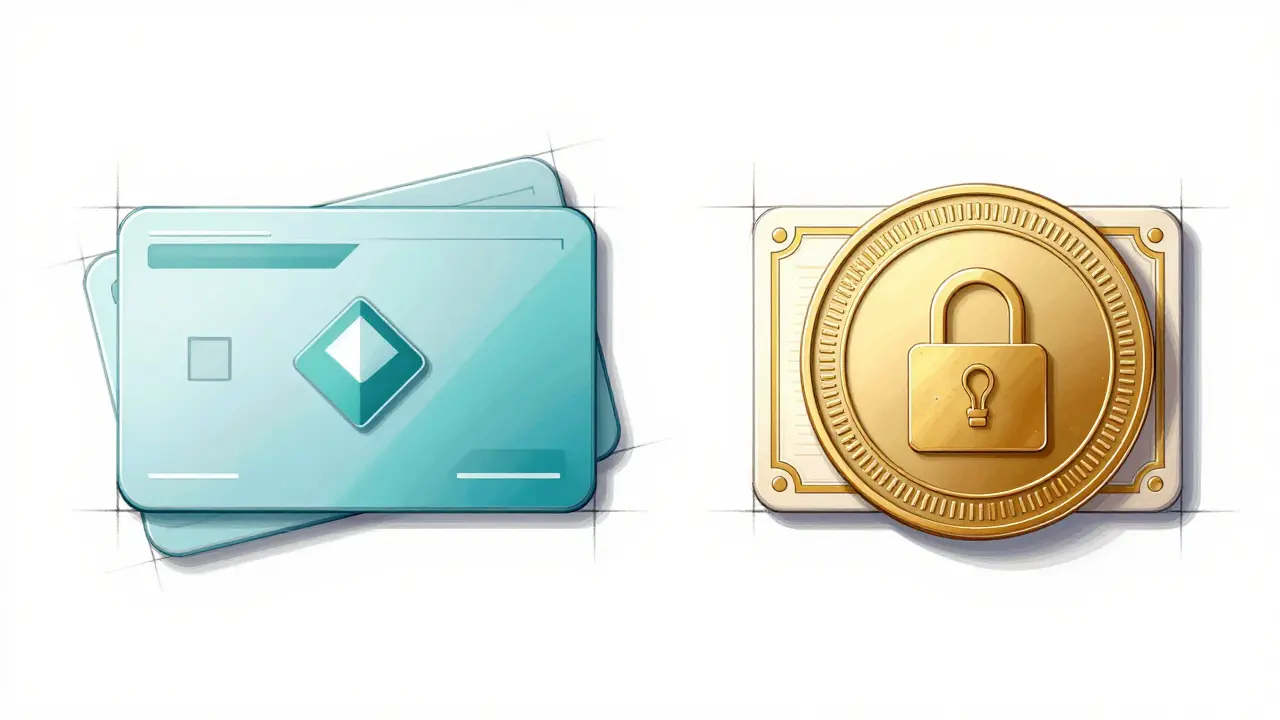
You open your browser to read about the latest cryptocurrency project. They claim their coin will revolutionize storage. Or maybe it promises dividends based on real estate profits. But how do you know if you're buying a digital pass or a piece of ownership? Mixing up Utility Tokens digital assets designed to provide access to products or services within a blockchain ecosystem and Security Tokens digital representations of financial instruments that represent ownership in real-world assets is the fastest way to lose money. In fact, back in 2023, regulators forced over 98% of misclassified tokens to face penalties worth billions.
The confusion isn't just about definitions; it's about your rights. If you hold a utility token, you get a ticket into a digital club. If you hold a security token, you own part of the club itself. Understanding this split is crucial, especially now in 2026, where regulations have finally settled enough to draw clear lines. Whether you are an investor checking your portfolio or a developer building a platform, knowing the difference determines your legal safety and potential returns.
The Basics: What Makes a Token a Token?
To sort this out, you have to look at the purpose behind the code. A utility token was born out of necessity during the initial coin offering boom around 2017. Developers needed a way to fund platforms before they existed. Think of it like pre-ordering a software product. You pay early, and later you use the service. For example, Filecoin's FIL token lets users rent storage space on a decentralized network. It doesn't mean you own a piece of Filecoin company. It just means you have credits to use the system.
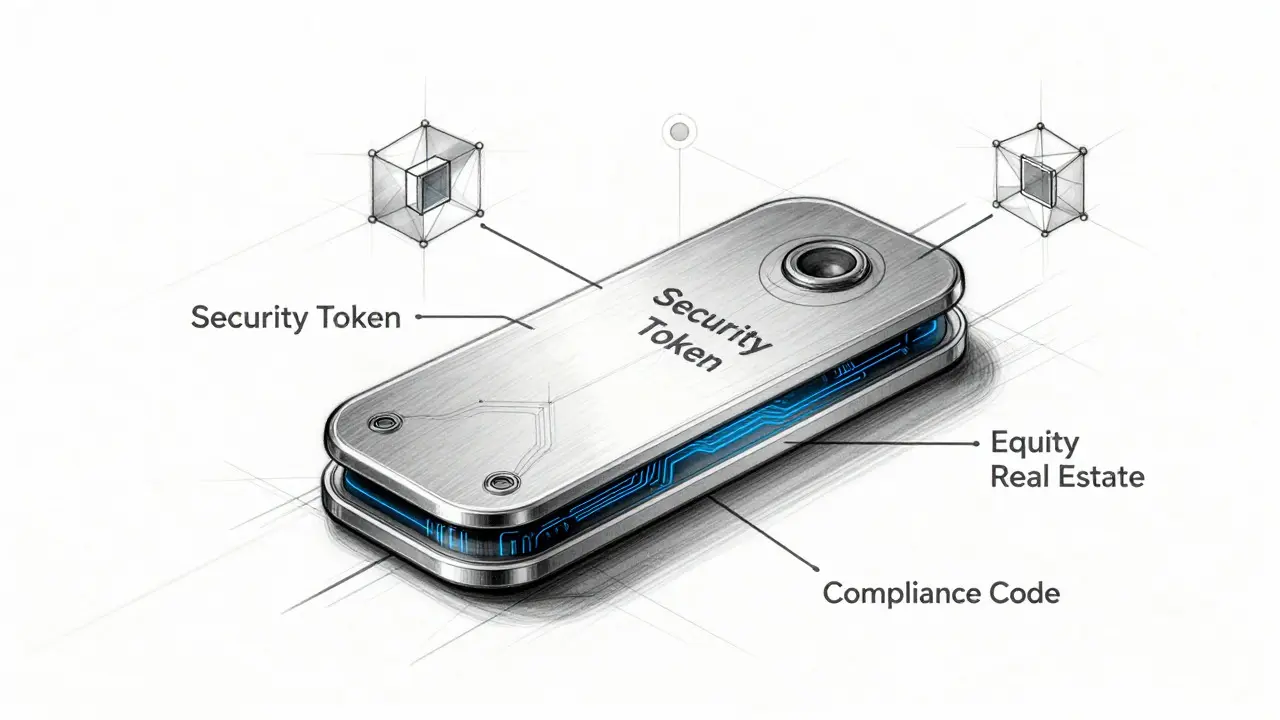
In contrast, security tokens are built differently. They mimic traditional stocks or bonds but run on blockchain technology. When you buy a security token, you expect financial profit from the efforts of others. Maybe it's a share in a physical apartment building or a bond backed by a company's debt. This expectation of profit is what triggers strict government oversight. In the U.S., the Securities and Exchange Commission applies the Howey Test to decide if a token counts as a security. If people put money in hoping for gains based on someone else's work, it's likely a security.
This distinction changes everything about how the asset behaves in the market. Data from late 2023 showed utility tokens making up roughly 78% of all offerings by volume because they are easier to launch. However, security tokens are growing much faster, hitting a $5.2 billion market cap by mid-2023. Why? Because institutions want stability, and securities offer backing in real assets rather than just speculative tech growth.
How Regulation Changes the Game
If you are thinking about holding these assets, the regulatory environment is the biggest risk factor. The SEC has been very clear: "the vast majority of tokens are securities." Gary Gensler, who leads the agency, has stressed applying the Howey Test rigorously since 2021. This means if you sell a token that looks like a stock but call it a "utility" token, you risk getting shut down.
Look at the Ripple case. While the court gave some leeway to XRP usage, many tokens marketed as utilities were reclassified as securities. The result? Issuers had to register or stop trading entirely. On the flip side, security tokens operate in a more defined sandbox. They require things like investor whitelisting. You can't just sell them to anyone; you have to verify they meet income requirements, like earning over $200,000 annually.
This barrier creates a cleaner market for security tokens. Platforms like InvestaX use compliance engines to stop transactions that break laws. They check your jurisdiction and accreditation status automatically. For utility tokens, there is often no such filter. Anyone with internet access can trade them. This accessibility drives higher liquidity-meaning it's easier to sell-but also introduces more volatility. Price swings for utility tokens can hit 12.7% daily compared to 3.9% for secure assets.

Technical Differences Under the Hood
Beyond the law, the code tells the story too. Most utility tokens run on standard protocols like ERC-20 on Ethereum. These are simple and interchangeable, much like Bitcoin. About 92% of utility tokens follow this standard. It makes them easy to build and integrate into wallets.
Security tokens need more complex architecture. They often use specialized standards like ST-20 or ERC-1400. Why? Because the smart contract needs to enforce rules. The code itself handles the compliance. If you try to transfer a security token to an unapproved address, the blockchain rejects the transaction. Some systems even automate dividend payments. A property-backed token could send rental income directly to your wallet every quarter without a bank intermediary.
This added complexity costs money. Setting up a standard utility token might take four weeks and cost around $50,000. Launching a security token offering takes months of legal prep and can exceed $1 million. But once live, the infrastructure is robust. You aren't relying on manual checks; the math ensures compliance.
Comparing Market Performance and Risks
| Feature | Utility Tokens | Security Tokens |
|---|---|---|
| Primary Purpose | Access to services/products | Ownership & Financial Return |
| Regulatory Status | Largely unregulated | Subject to Securities Laws |
| Volatility | High (Median 12.7% daily) | Low (Median 3.9% daily) |
| Investor Access | Public (Anyone) | Restricted (Accredited Only) |
| Liquidity | $18.7M avg daily volume | $4.2M avg daily volume |
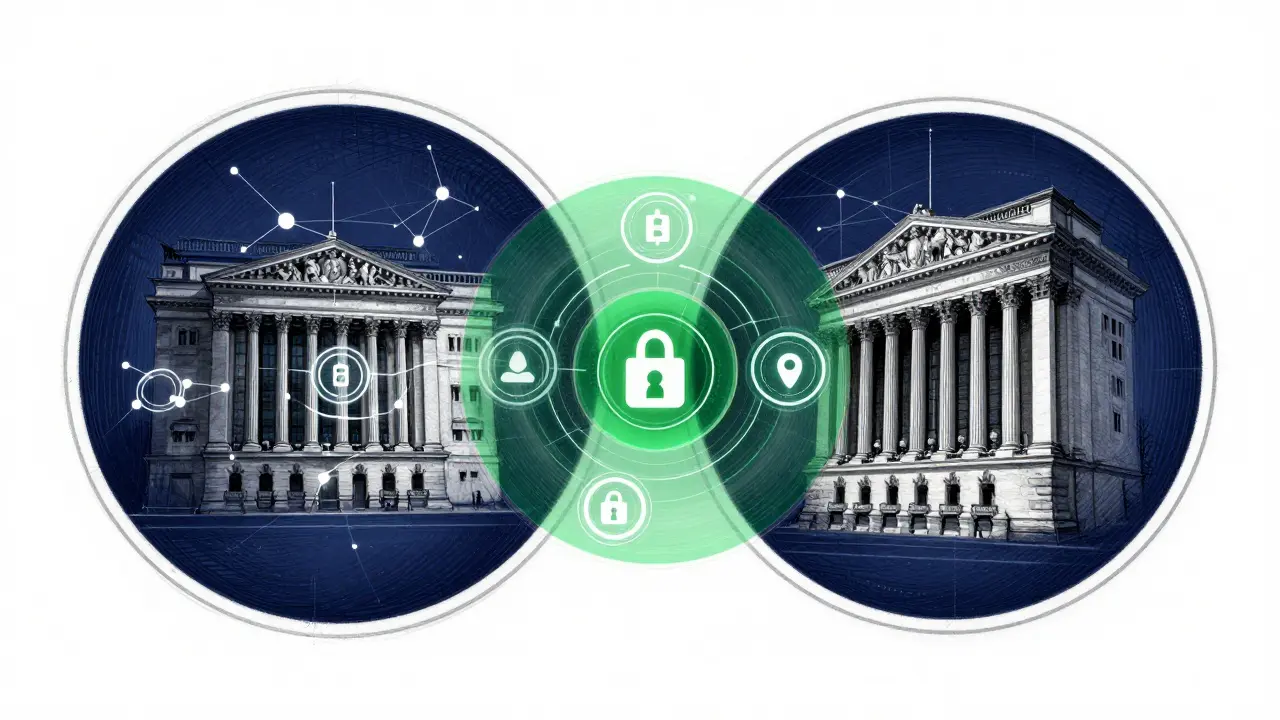
Notice the trade-off in the table above. Utility tokens move fast and trade easily, but they lack fundamental value anchors. Security tokens move slower and are harder to trade, but they are tied to real economic activity. If you look at user feedback from 2023 forums, utility holders love exclusive features but hate when the underlying platform fails. When Steem crashed, token holders lost 92% of value quickly because there was no asset backing.
Security token investors report higher satisfaction with transparency. They get auditable proof of what backs their investment. Trustpilot reviews show scores averaging 4.3 out of 5 for security platforms versus 3.1 for utility platforms. The certainty of compliance makes institutional giants comfortable. BlackRock and Franklin Templeton have launched funds specifically for tokenized real-world assets. They aren't chasing moonshot speculation; they want regulated exposure to blockchain efficiency.
What Happens Next in 2026?
We are seeing a convergence. The European Union's Markets in Crypto-Assets (MiCA) framework became fully effective recently, creating clearer rules across Europe. It formally separates utility assets from security assets, reducing the gray areas that confused investors for years. Meanwhile, hybrid models are emerging. Some tokens can function as utilities but unlock security features if you prove you are an accredited investor. This flexibility allows projects to scale without breaking compliance.
Expect more integration with traditional finance. Project Ion, backed by major clearinghouses, is processing trillions in daily settlement using blockchain compatible with security tokens. This bridges the gap between Wall Street and Web3. By 2027, predictions suggest nearly 10% of global GDP could be tokenized. That is a massive shift from niche crypto experiments to mainstream finance.
For you, the takeaway is simple: Know what you are buying. If you want high-risk, high-reward bets on tech adoption, utility tokens fit that bill. If you want steady growth backed by tangible assets and legal protection, look toward security tokens. Don't let marketing slogans confuse the underlying reality. The code knows the difference, and now so does the law.
Can I hold both types of tokens in my wallet?
Yes, but security tokens usually require supported wallets with verification capabilities. Standard wallets handle utility tokens, while security tokens often need KYC-compliant custodial solutions.
Are all ICOs utility tokens?
Not anymore. Regulators now review ICO structures closely. Many offerings previously labeled as utility are now classified as security tokens requiring registration.
How do I verify if a token is compliant?
Check for public legal opinions and whitepapers citing compliance standards like ERC-1400. Reputable issuers will publish investor accreditation procedures clearly on their site.
Why are security token volumes lower?
Strict investor eligibility rules limit the pool of buyers to accredited persons. This naturally reduces total trading volume compared to open markets.
Which token type is better for long-term holding?
Depends on goals. Security tokens suit long-term wealth preservation due to asset backing. Utility tokens suit those betting on platform adoption success.

Raymond K
March 30, 2026 AT 08:27This is such a greates guide honestly thank u for sharing. The difference between utility and security tokens was alway confusing for me too. Reading about the Howey test makes me think harder before clicking buy buttons now. I hope the regulations help small investors feel safer in the market. It feels like a wild west out there sometimes without clear rules. Keep posting this kind of content because we really need more education. My portfolio looks much better since I started reading whitepapers properly.
Lisa Walton
March 30, 2026 AT 11:40Of course everything changes every year yet people act like it matters forever.
Jamie Riddell
March 30, 2026 AT 18:59agree totally with the points raised about legal protection. its scary how fast things move but knowing the basics helps. security tokens seem safer even if less fun to trade on weekends. nice write up overall 👍
Shubham Maurya
April 1, 2026 AT 17:33I love seeing this breakdown finally 🙌 always struggled with the SEC rules. utility tokens give me goosebumps when they pump 🚀 but securities keep my sleep safe 😴. thanks for the heads up on ERC standards too!
Alex Kuzmenko
April 2, 2026 AT 08:30Gotta agrue that most projects dont follow the standards anyway. tokernomics are just marketing fluff in my opion. real money moves in stables or equities only. good luck figuring it all out though homie.
Tiffany Selchow
April 4, 2026 AT 00:02Why trust foreign crypto laws when US law is enough? Just stick to what you know and ignore the global nonsense pushing agendas. They want your tax dollars via these new digital schemes.
Callis MacEwan
April 5, 2026 AT 01:23You are fundamentally misunderstanding the cross-border liquidity implications here. The regulatory arbitrage creates significant alpha capture opportunities for sophisticated nodes. Institutional adoption relies heavily on ST-20 compliance rather than legacy ERC-20 structures.
Cara Boyer
April 6, 2026 AT 18:40The central bank is obviously planning to track every transaction eventually. MiCA framework is just a step toward total surveillance capitalism. We need privacy coins above all else regardless of classification. Freedom requires anonymity in financial systems.
Justin Garcia
April 7, 2026 AT 09:54Stop listening to mainstream narratives about compliance. It is all designed to suppress innovation from independent developers. Security tokens are just regulated ways to steal control. Wake up to the reality.
Ashley Stump
April 8, 2026 AT 15:08Its all a scam and nobody cares about investors anymore. Just sell when green and run. Dont expect returns with this garbage.
Wade Berlin
April 9, 2026 AT 02:42Relax guys the market will figure it out eventually. Regulations just slow things down a bit but nothing stops the tech. Good summary article otherwise though 🤷♂️
Colin Finch
April 10, 2026 AT 12:42The nuance here reminds me of velvet ropes versus open gates at a concert. Both offer entry but the experience inside is vastly different in terms of rights. Understanding the contract logic is like learning the song lyrics before joining the chorus.
Markus Church
April 10, 2026 AT 14:55While the article presents interesting data, one must consider the broader geopolitical impacts on asset tokenisation. International capital flows are significantly altered by differing regulatory frameworks between jurisdictions. It is imperative to maintain rigorous compliance standards. The distinction serves both parties in a legal context effectively. Therefore careful analysis is required prior to any investment decision. Thank you for bringing attention to this matter.
Chris R
April 10, 2026 AT 22:16We see similar discussions growing back home in Lagos. Digital assets are becoming common currency tools in many regions already. It is good to understand where value truly resides within the ledger system. Local laws matter more sometimes than US regulations for global holders.
Katrina Tate
April 12, 2026 AT 18:41Data suggests volatility remains a major concern for traditional finance integration. The metrics provided are accurate regarding historical performance trends observed in 2023 markets. Further research is required to validate long-term stability claims.
Disha Patil
April 13, 2026 AT 02:31Why do I feel like I missed the boat on this whole thing? Everyone talks about it like it is easy but I am scared to lose money. Can someone explain again simply please.
Michael Nadeau
April 13, 2026 AT 05:36When we consider the philosophical underpinnings of value representation we realize that ownership is a social construct reinforced by technology. The blockchain does not create truth but merely records consensus on agreed upon states. Legal frameworks provide the force required to enforce those recorded states outside of mathematics. Thus a security token represents a binding agreement enforced by sovereign authority while utility represents a functional key to a system. The danger lies in conflating access with equity when evaluating potential losses in a devaluation event. Understanding this separation protects the individual from assuming risks not inherent to the underlying promise. It is a subtle but vital distinction that separates speculation from investment in our modern economy.
Zackary Hogeboom
April 15, 2026 AT 00:21Haha yes that is super deep dude but basically you just lose cash if you buy the wrong type. The main point is dont get banned by regulators for trading illegally. Lets focus on staying liquid until next bull run hits hopefully soon.
Leah Lara
April 16, 2026 AT 18:42Boring stuff. I prefer memes over tokens. Anyone got a ticker symbol that pumps?
Samson Abraham
April 17, 2026 AT 01:41Regulation is inevitable. We must adapt or face penalties. Compliance engines save trouble later on. Invest wisely.
Ronald Siggy
April 19, 2026 AT 01:06You are on the right path learning about this early. Stay disciplined and never invest more than you can lose. Security tokens offer a foundation for wealth building unlike pure speculation. Keep asking questions to clarify doubts as you grow your knowledge.
Addy Stearns
April 19, 2026 AT 01:07The dichotomy presented here reflects a larger trend in digital ontology where the nature of value is constantly shifting form. We must ask ourselves what constitutes property in a decentralized network environment today. Ownership becomes fluid yet legally defined simultaneously through code execution. This tension creates opportunities for those who navigate the gray zones intelligently. However one must remain vigilant against predatory actors hiding behind technical complexity. Education is the only true hedge against regulatory uncertainty in this sector. It demands patience and study from every participant entering the space. The outcome depends largely on public perception of these emerging asset classes.
athalia georgina
April 19, 2026 AT 10:21i dont knwo what to thnk anymore tbh. the artical is confusng wth so manay words. wht shuld i d0 nect?
joshua kutcher
April 20, 2026 AT 01:41I understand that feeling completely and it is okay to take your time. Just start by checking official documentation from the project teams themselves. Do not rush into buying anything before verifying the legal opinion documents. Take care of your money and ask friends who know the space. You are doing great by seeking information before acting.
Ashley Stump
April 20, 2026 AT 08:51Romanticizing regulation is pointless when the system is rigged anyway. Just wait for the crash to come and profit from others panic selling.
Justin Smith
April 21, 2026 AT 02:38Precisely correct. Security tokens adhere to existing securities laws while utility tokens operate under a distinct regulatory regime. Liquidity premiums differ significantly based on investor accreditation status requirements. Market efficiency improves when classification boundaries are clearly defined by judicial precedent.
Jay Starr
April 22, 2026 AT 15:56Just another day in paradise where experts pretend they know everything. We will see who is laughing in five years when regulations kill the industry.
Beverly Menezes
April 24, 2026 AT 06:46It is important to respect everyone trying to learn about this. We all have our own opinions but sticking to facts is best. Peace and happy investing to everyone reading this thread. Let us stay calm and informed.
Addy Stearns
April 24, 2026 AT 13:23The convergence of tradition and technology creates complex hybrid structures requiring constant vigilance. Future frameworks will likely demand stricter adherence to identity verification protocols globally.