
VASP Licensing in Nigeria: Requirements and Process for Crypto Businesses
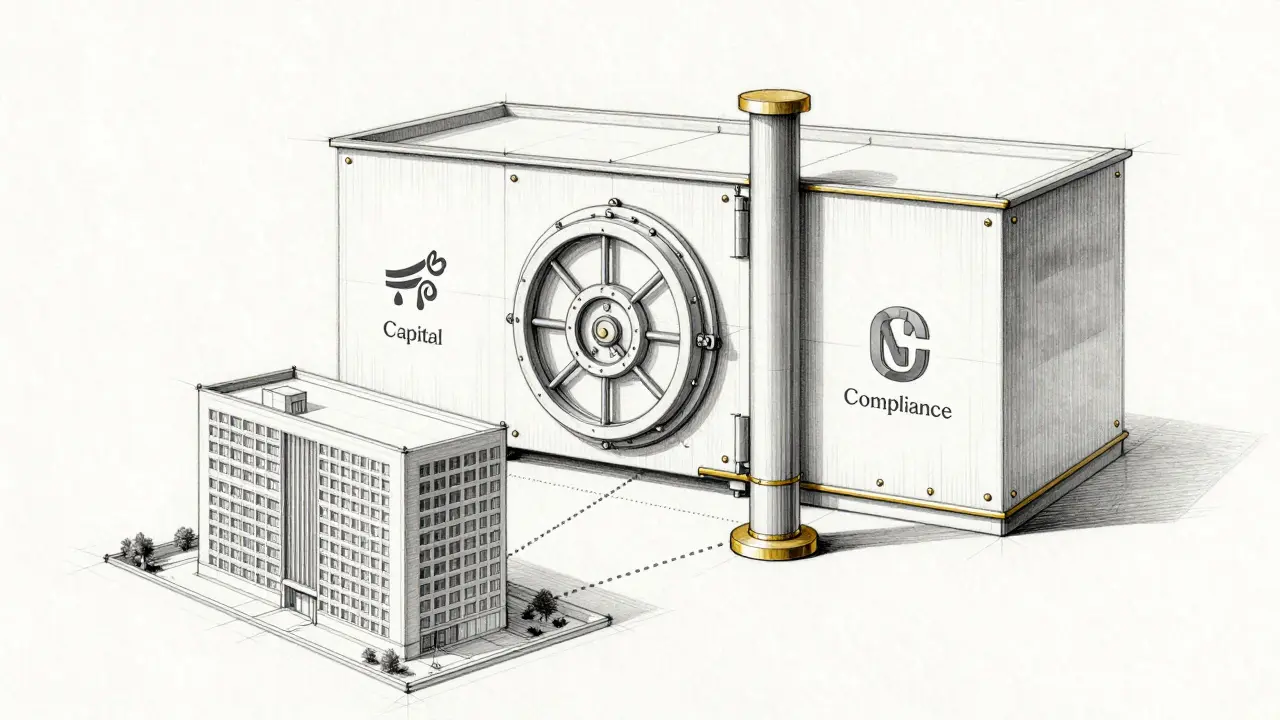
For years, running a crypto business in Nigeria felt like walking a tightrope. The Central Bank of Nigeria (CBN) restricted bank accounts for crypto firms, leaving businesses to operate in the shadows or rely on risky peer-to-peer workarounds. But that era ended with the passage of the Investments and Securities Act 2025, which formally recognized cryptocurrencies as securities under the jurisdiction of the Securities and Exchange Commission (SEC).
If you are looking to launch or scale a cryptocurrency exchange, wallet service, or mining operation in Africa’s largest economy, you can no longer fly under the radar. You need a Virtual Asset Service Provider (VASP) license. This isn't just paperwork; it is your ticket to legal banking access, regulatory certainty, and consumer trust. However, the bar is high. The SEC has designed a framework that demands financial muscle, operational rigor, and strict adherence to anti-money laundering standards.
What Exactly Is a VASP License?
A Virtual Asset Service Provider (VASP) license is a regulatory authorization issued by the Nigerian SEC that allows companies to legally offer services involving virtual assets. Under the new 2025 legislation, this covers almost every corner of the crypto ecosystem. If you facilitate the exchange of crypto for fiat, hold digital wallets for customers, issue tokens, run mining farms, provide staking services, or even process everyday payments using cryptocurrency, you fall under this definition.
The shift from an unregulated gray market to a structured compliance regime means the SEC now oversees these activities. This brings legitimacy but also scrutiny. The license ensures that operators have the financial stability to protect users and the technical infrastructure to prevent fraud and money laundering. Without it, your business is illegal, and you will be cut off from the traditional banking system entirely.
Financial and Corporate Requirements
The most immediate hurdle for any applicant is capital. The SEC requires a minimum paid-up capital of N500,000,000 (Five Hundred Million Naira). At current exchange rates, this translates to approximately $325,000 USD. This requirement is not arbitrary; it serves as a buffer to ensure that only financially stable entities enter the market, protecting investors from platforms that might collapse under minor volatility.
Beyond cash in the bank, your corporate structure must be solid. You must be legally incorporated as a company with the Corporate Affairs Commission (CAC). The SEC will request your Certificate of Incorporation, Memorandum and Articles of Association (MEMART), and a current Status Report. If you are a newly established entity, you cannot simply show empty accounts. You must provide audited statements of affairs prepared by certified public accountants. Existing businesses must submit their latest audited financial statements.
You also need a physical presence. Digital-only operations are not enough for licensing purposes. Your entity must maintain a physical office in Nigeria, managed by a director who is resident in the country. This local accountability measure ensures that regulators have someone on the ground to answer questions during audits or investigations.
| Requirement | Specification | Purpose |
|---|---|---|
| Minimum Paid-Up Capital | N500,000,000 (~$325k USD) | Ensure financial stability and investor protection |
| Corporate Registration | CAC Incorporated Company | Legal recognition and accountability |
| Physical Presence | Nigerian Office + Resident Director | Local oversight and regulatory contact |
| Financial Documentation | Audited Statements or Affairs | Verify financial health and transparency |
Operational Compliance: AML, KYC, and Security
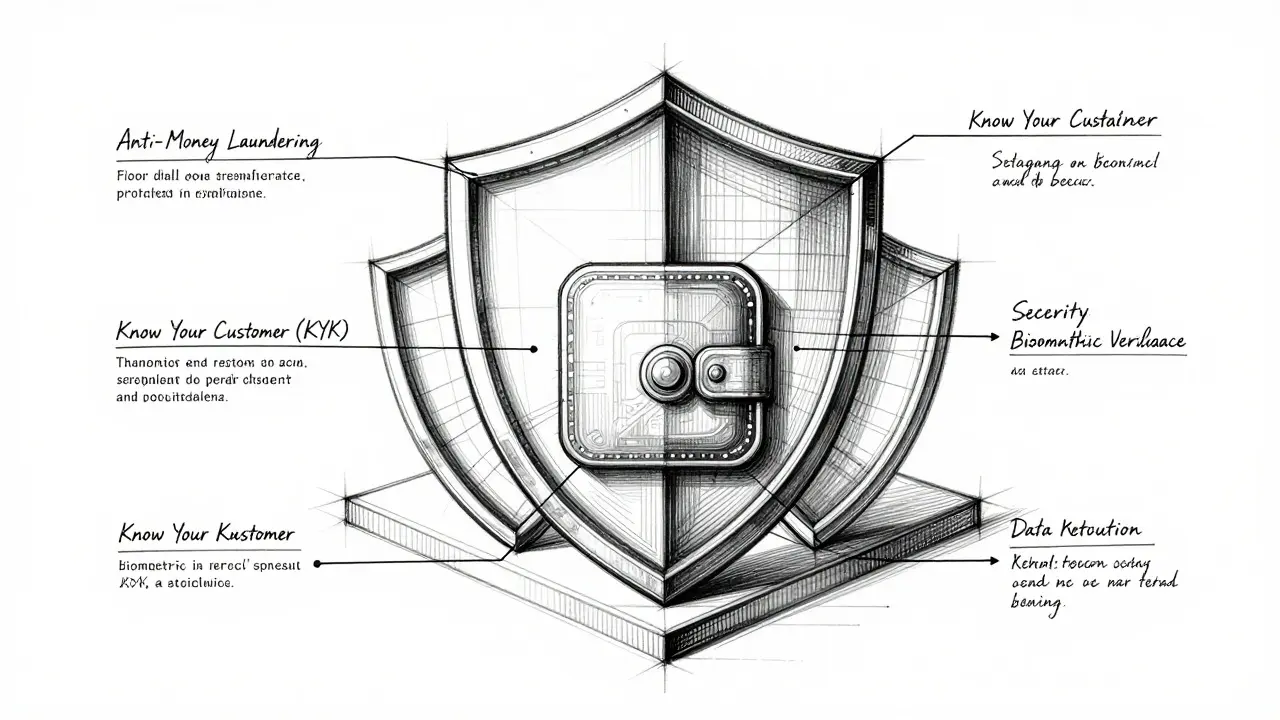
Having the money and the office is only half the battle. The SEC mandates robust operational protocols to align with global standards set by the Financial Action Task Force (FATF). Your primary focus must be on Anti-Money Laundering (AML) and Know Your Customer (KYC) procedures.
You cannot allow anonymous transactions. Your platform must implement rigorous customer identification and verification systems. This means collecting government-issued IDs, proof of address, and potentially biometric data depending on transaction volumes. Furthermore, you must have ongoing monitoring capabilities to detect suspicious activities, such as structuring deposits to avoid reporting thresholds or rapid movement of funds through multiple wallets.
Data retention is another critical area. Licensed VASPs must maintain comprehensive customer records for a minimum of seven years. This includes transaction histories, identity verification documents, and communication logs. These records must be readily accessible for SEC audits or requests from financial intelligence units.
Technological security is equally non-negotiable. The SEC’s Technology Risk Management requirements demand that you demonstrate sufficient cybersecurity protocols. This involves encryption standards, multi-factor authentication, cold storage solutions for assets, and system resilience planning to handle outages or attacks. You must prove that you have the human and technological resources to keep user funds safe.
The Two Pathways to Licensing
The SEC offers two distinct routes to obtain your license, depending on your readiness and risk appetite.
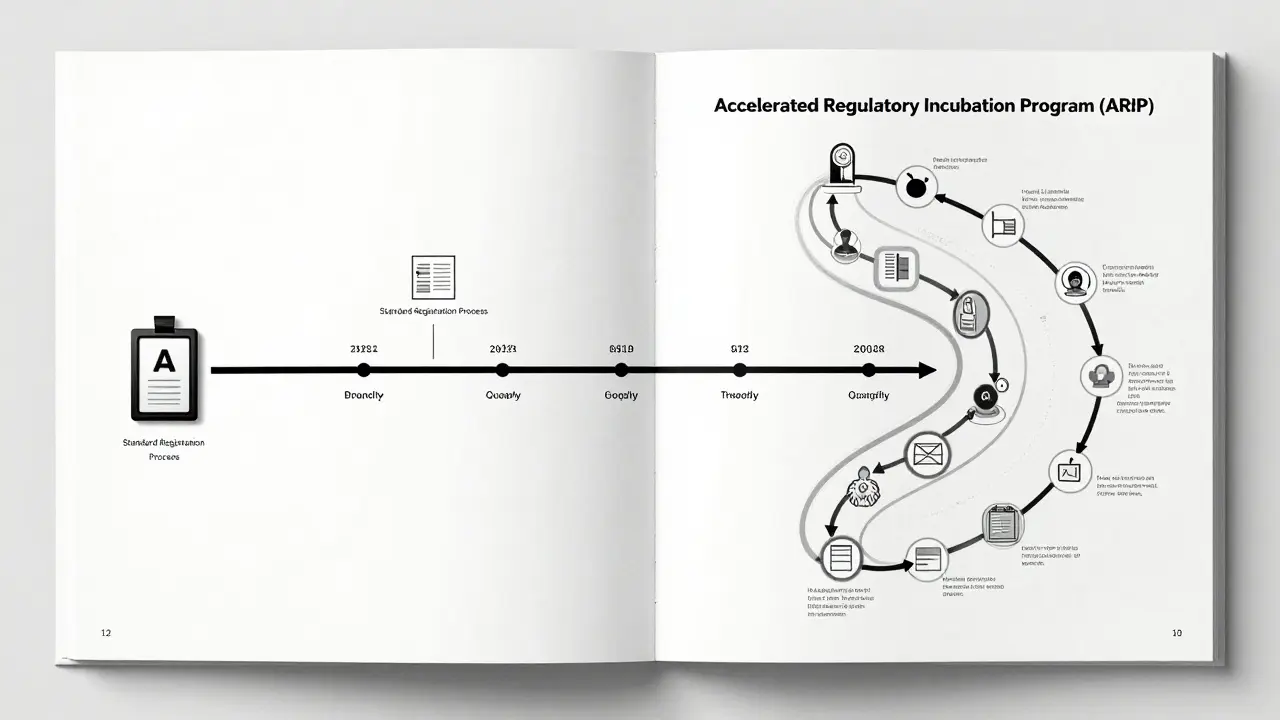
1. Standard Registration Process
This is the traditional route. You submit a complete application package including all corporate documents, business models, risk management protocols, and evidence of capital. The SEC reviews everything thoroughly before granting approval. This path is suitable for established companies with mature operations and clear documentation.
2. Accelerated Regulatory Incubation Program (ARIP)
For newer entrants or those needing time to finalize certain compliance aspects, the ARIP offers a pragmatic alternative. It allows participants to obtain preliminary approval in principle. This means you can commence limited operations under SEC oversight while working toward full registration. To qualify, you must:
- Be legally incorporated with a clear corporate structure.
- Maintain a Nigerian office with a resident CEO or Managing Director.
- Be actively engaged in securities and investment business.
- Have pending virtual asset-related applications with the SEC.
The ARIP process spans 12 months. You begin with an initial filing and commitment to program conditions. Throughout the year, you submit quarterly progress reports and receive regulatory guidance. At the 10-month mark, the SEC provides specific feedback. By month 12, you either exit the program with instructions for full registration or cease operations if you fail to meet the criteria. This sandbox approach reduces the upfront burden while ensuring continuous supervision.
Documentation and Internal Controls
Your application file must tell a compelling story about your business integrity. Beyond basic incorporation papers, you need to present a comprehensive business model that demonstrates a unique value proposition. Why should users choose your platform? How do you plan to compete?
You must also draft detailed internal rules covering:
- Investor Protection Mechanisms: How you safeguard user funds against insolvency or theft.
- Conflict of Interest Policies: Procedures to prevent employees or executives from profiting at the expense of clients.
- Customer Protection Procedures: Clear processes for handling complaints and disputes.
- Risk Management Protocols: Specific strategies for managing market, credit, and operational risks in the volatile crypto space.
A director or company secretary must provide a sworn undertaking to comply with all applicable SEC Rules and Regulations and the Investment and Securities Act. This legal commitment underscores the seriousness of the regulatory relationship.
Challenges and Strategic Considerations
Navigating this landscape is complex. You are dealing with multiple agencies: the SEC for securities, the CBN for banking interactions, the CAC for corporate status, and tax authorities for fiscal compliance. Coordination between these bodies can be slow, so patience and professional legal counsel are essential.
The requirement for a resident director may pose challenges for international crypto companies. They often need to hire local talent or form partnerships with Nigerian entities to meet this criterion. Additionally, the high capital threshold and extensive compliance costs will likely be passed on to users through higher fees. Industry observers note that this could make Nigerian crypto services more expensive compared to informal markets, potentially driving some users back to P2P channels despite the risks.
However, the benefits outweigh the costs for serious players. Legal clarity enables access to traditional banking services, which was previously a major bottleneck. It also builds consumer confidence. In a market skeptical of scams, a SEC license is a powerful trust signal. Moreover, the government’s push for taxation aims to grow revenue collection, suggesting that compliant businesses will operate in a more predictable fiscal environment.
Future Outlook
Nigeria’s regulatory framework is still evolving. The 2025 Act laid the foundation, but implementing regulations will continue to refine the details. Expect additional guidance on cross-border transactions, stablecoin usage, and decentralized finance (DeFi) integration. The SEC’s iterative approach via programs like ARIP suggests they are willing to adapt based on industry feedback. For other African nations watching closely, Nigeria’s model may become the regional standard, influencing how West Africa approaches virtual asset regulation in the coming years.
How long does it take to get a VASP license in Nigeria?
The timeline varies depending on the pathway chosen. The standard registration process can take several months due to thorough vetting. The Accelerated Regulatory Incubation Program (ARIP) takes exactly 12 months from start to finish, allowing for preliminary operations during the incubation period. Delays often occur if documentation is incomplete or if there are issues with corporate structure verification.
Can foreign-owned companies apply for a VASP license?
Yes, foreign-owned companies can apply, but they must incorporate locally with the Corporate Affairs Commission (CAC) and maintain a physical office in Nigeria. Crucially, they must have a director who is resident in Nigeria. This often requires hiring a local executive or establishing a joint venture with a Nigerian partner.
What happens if I operate without a VASP license?
Operating without a license is illegal under the Investments and Securities Act 2025. Consequences include severe fines, confiscation of assets, shutdown of business operations, and potential criminal charges for directors. Additionally, banks will freeze accounts associated with unlicensed crypto activities, effectively halting business continuity.
Is the N500 million capital requirement negotiable?
No, the N500 million paid-up capital is a strict statutory requirement set by the SEC. It is not negotiable for standard VASP licenses. The SEC reserves the right to impose additional requirements on a case-by-case basis, but the baseline capital threshold remains fixed to ensure market stability.
Does the VASP license cover NFTs and DeFi projects?
Currently, the VASP framework primarily targets exchanges, wallets, token issuance, mining, and staking. While NFTs and DeFi protocols involve virtual assets, their classification is still being clarified by the SEC. Projects that function as securities or involve significant custodial responsibilities will likely fall under VASP rules. Non-custodial DeFi protocols may face different regulatory treatments, but guidance is expected to evolve.