
Verifiable Credentials with DID: How Decentralized Identity Works Today
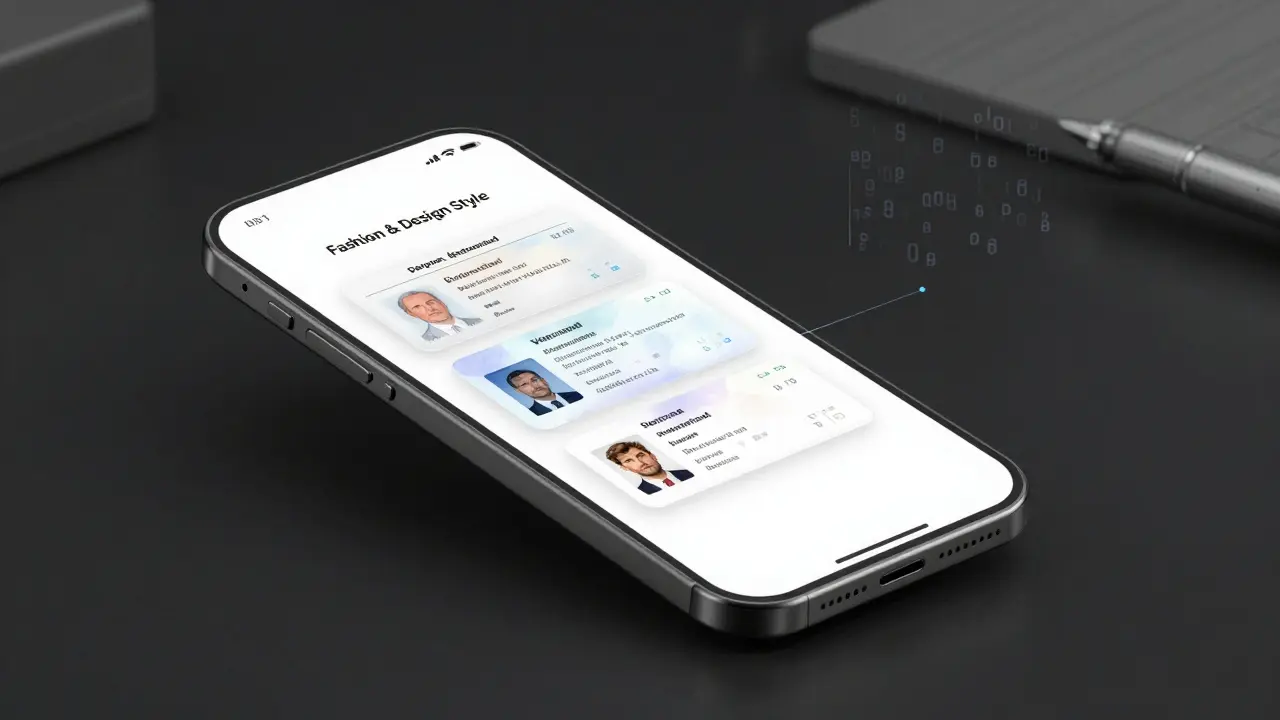
Imagine showing your driver’s license, university degree, or passport to a bank - without ever sending them the actual document. Not a scan. Not a photo. Not even a link to a portal. Just a quick digital proof that says, yes, this is true, and no one can fake it. That’s what verifiable credentials with DID make possible.
Right now, most digital identities are locked in silos. Your employer holds your work history. Your university keeps your diploma. The government stores your ID. If you want to prove something, you ask them for permission - and they send you a file, a link, or a login. It’s slow. It’s risky. And you don’t own it.
Verifiable Credentials (VCs) with Decentralized Identifiers (DIDs) change that. They give you full control. You hold your credentials. You decide who sees what. And anyone can check they’re real - without calling your school or contacting your government.
What Exactly Are Verifiable Credentials?
A verifiable credential is a digital version of a paper certificate - but with built-in proof it’s real. Think of it like a digital passport that can’t be forged, copied, or altered. It’s issued by someone you trust - a university, an employer, a city government - and it contains claims about you: your name, your age, your qualifications, your membership status.
But here’s the twist: it’s not stored in a database. It’s stored in your phone, your wallet app, or your browser. And it’s signed with cryptography. That means if someone tries to change even one letter in your birth date, the credential instantly becomes invalid. No one can tamper with it without breaking the digital signature.
The W3C - the same group that created HTML - built the official standard for this. Their Verifiable Credentials Data Model v2.0 defines exactly how these credentials should look, what they must include, and how they’re verified. This isn’t some startup idea. It’s a global technical standard, backed by governments, universities, and tech giants.
What Are DIDs, and Why Do They Matter?
DID stands for Decentralized Identifier. It’s a unique string - like a digital fingerprint - that belongs only to you or your organization. Unlike your email address or username, a DID doesn’t rely on a company to exist. You create it yourself. It’s not tied to Facebook, Google, or any central authority.
Each DID links to a public key - the cryptographic tool that proves you own the credential. When a university issues you a degree credential, they don’t send it to your email. They send it to your DID. That DID is stored on a decentralized network - sometimes a blockchain, sometimes not. The point is, no single entity controls it.
You can have multiple DIDs. One for your professional life. One for your community memberships. One for healthcare. You control them all. No one can take them away. No one can track them across your life unless you let them.
How the System Works: Issuer, Holder, Verifier
There are three players in every verifiable credential interaction:
- Issuer: The organization that creates the credential. A university, a government agency, a company.
- Holder: You. The person who receives and owns the credential.
- Verifier: The person or system that checks the credential. A recruiter, a landlord, a border agent.
Here’s how it flows:
- The university issues you a digital diploma. It’s signed with their private key and linked to their DID.
- You receive it in your digital wallet. It’s encrypted. Only you can open it.
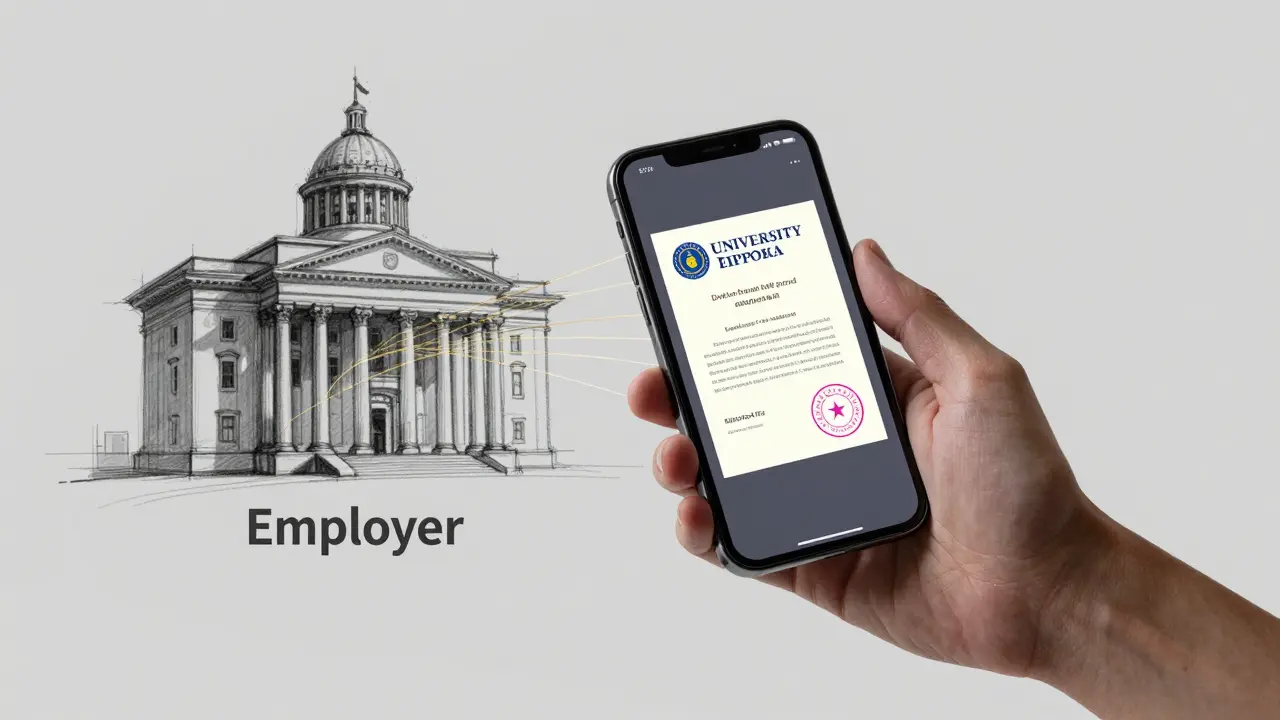
- When you apply for a job, you open your wallet and choose to share just the diploma - not your birth date, address, or phone number.
- The employer’s system checks the digital signature. It connects to the university’s public DID. It confirms: yes, this credential was issued by them. Yes, it hasn’t been changed. Yes, it hasn’t been revoked.
- You’re hired. No emails sent. No portal logins. No third-party database queried.
This is called selective disclosure. You don’t have to give everything to prove something. You can prove you’re over 21 without showing your birth certificate. You can prove you’re a student without revealing your student ID number.
Privacy by Design: Zero-Knowledge Proofs and Revocation
One of the biggest wins with VCs isn’t just control - it’s privacy. Traditional systems force you to hand over your entire identity to prove one small thing. VCs let you prove only what’s needed.
Zero-knowledge proofs (ZKPs) take this even further. Imagine proving you have a valid license without showing the license at all. The system mathematically confirms the claim is true - without revealing any details. This is still emerging, but companies and governments are testing it for voting, age verification, and medical records.
What if your credential expires or gets revoked? The system handles that too. Revocation lists - stored on secure, decentralized ledgers - tell verifiers if a credential is still valid. If your license is suspended, the issuer updates the revocation list. The next time someone checks your credential, they’ll see: not valid. No need to call the DMV.
VCs vs. NFTs: What’s the Difference?
People often confuse verifiable credentials with NFTs. They’re not the same.
NFTs are unique tokens on a blockchain. They’re often used for art, collectibles, or access passes. They’re public. Anyone can see them. They’re expensive to create and store.
VCs are cryptographically signed documents. They don’t need to be on a blockchain. They’re lightweight. They’re designed for identity, not ownership. You can store them offline. You can hide them. You can share them selectively.
Some systems combine them - for example, an NFT might contain a VC as metadata. But that’s an add-on. The core of VCs is about trust, not scarcity.
Real-World Uses Today
This isn’t science fiction. It’s already in use:
- University degrees: Universities in Canada, Sweden, and Japan issue digital diplomas as VCs. Employers verify them instantly - no more calling registrars.
- Health records: Patients in New Zealand and the EU can carry their vaccination history as a VC. Clinics verify it without accessing full medical files.
- Work permits and visas: Countries are testing VCs for border control. Travelers show proof of visa status directly from their phone - no paper forms, no queues.
- Online communities: DAOs and Web3 platforms use VCs to verify membership. You prove you’re part of the group without revealing your real name.
- KYC for crypto: Instead of uploading your ID to a centralized exchange, you use a VC issued by a government-approved provider. The exchange checks it - and never sees your ID again.
In Wellington, a local startup is piloting VC-based access to public libraries. Residents use their phone to prove they’re eligible for a library card - no in-person visit needed. The council doesn’t store their data. The resident does.
Why This Matters for Privacy
Today, your digital identity is scattered across hundreds of databases. Every time you sign up for a service, you hand over your name, email, phone, maybe your address. They store it. They sell it. They get hacked.
VCs flip the script. You become the database. You hold your own identity. You decide who gets access. You can even revoke access later.
This isn’t just about convenience. It’s about power. Right now, corporations and governments control your identity. With VCs and DIDs, you do.
Challenges Still Ahead
It’s not perfect yet.
First, adoption is uneven. If your university doesn’t issue VCs, you can’t get one. If the bank you’re applying to doesn’t accept them, they’re useless.
Second, wallets are still clunky. Most people don’t know how to use them. The interface needs to be as simple as unlocking your phone.
Third, legal recognition varies. Not every country accepts VCs as legally binding documents. That’s changing - but slowly.
Finally, if you lose your private key? You lose your credentials. There’s no “forgot password” button. Recovery systems are being built, but they’re still experimental.
What’s Next?
The next five years will see VCs become standard in education, healthcare, finance, and government services. The EU’s Digital Identity Wallet is rolling out in 2026. The U.S. is testing it for federal benefits. Australia and New Zealand are ahead in pilot programs.
More importantly, the technology is becoming invisible. You won’t need to understand DIDs or cryptography. You’ll just open your wallet, tap “Share Credential,” and be done.
Verifiable Credentials with DID aren’t about blockchain. They’re about trust. They’re about ownership. They’re about giving people back control over their own identity - one verified claim at a time.
Gavin Francis
January 27, 2026 AT 05:25Robert Mills
January 27, 2026 AT 19:48Gary Gately
January 28, 2026 AT 19:02Moray Wallace
January 29, 2026 AT 00:11Sunil Srivastva
January 30, 2026 AT 18:40Kevin Thomas
January 31, 2026 AT 06:15Elizabeth Jones
February 2, 2026 AT 05:26Mark Ganim
February 2, 2026 AT 19:07Andrea Demontis
February 3, 2026 AT 19:12Rob Duber
February 5, 2026 AT 11:25Katie Teresi
February 6, 2026 AT 13:59Rachel Stone
February 6, 2026 AT 19:09Joseph Pietrasik
February 8, 2026 AT 07:44Raju Bhagat
February 8, 2026 AT 11:41Pamela Mainama
February 10, 2026 AT 02:10laurence watson
February 11, 2026 AT 01:55Nickole Fennell
February 11, 2026 AT 04:42Tressie Trezza
February 12, 2026 AT 05:14Calvin Tucker
February 13, 2026 AT 06:06Joshua Clark
February 13, 2026 AT 10:03Jerry Ogah
February 15, 2026 AT 10:00Ramona Langthaler
February 15, 2026 AT 22:33Tom Sheppard
February 16, 2026 AT 10:55Edward Drawde
February 17, 2026 AT 10:48Gustavo Gonzalez
February 17, 2026 AT 16:25