
What is Auki (AUKI) Crypto? Posemesh Protocol & Spatial AI Guide
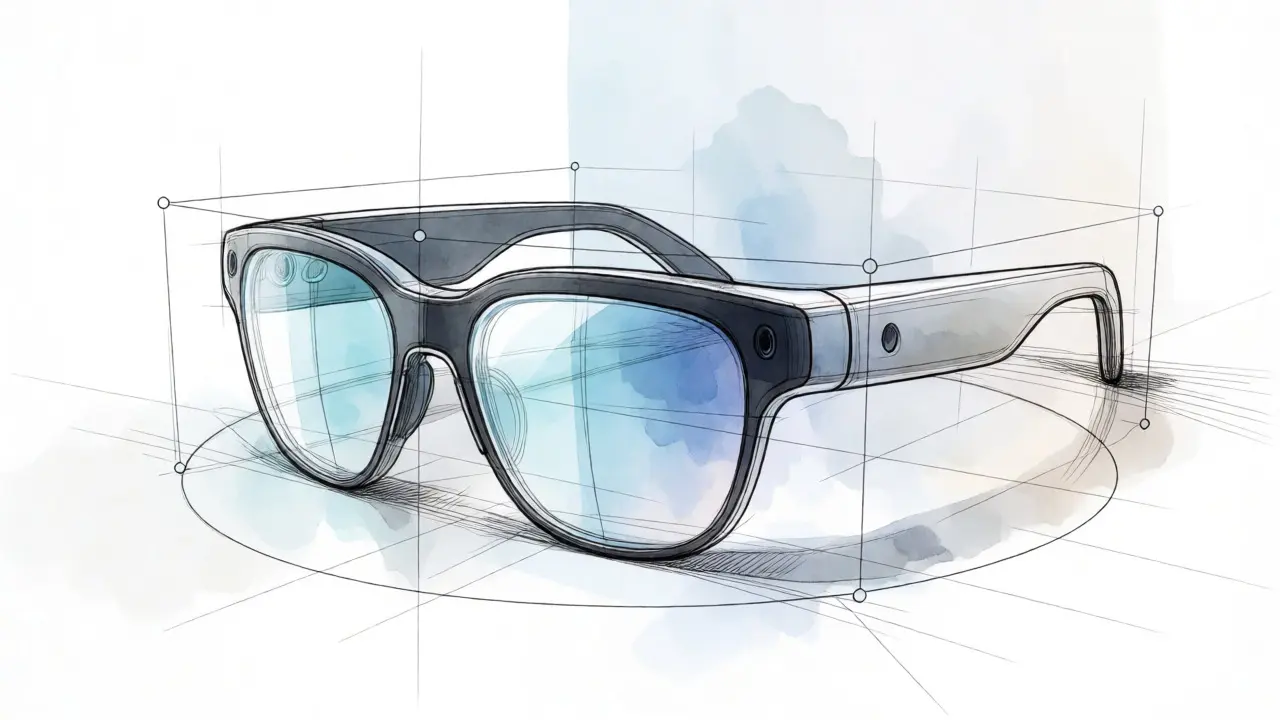
Imagine your smart glasses or a delivery robot navigating a city not by guessing where buildings are, but by accessing a shared, real-time map of physical space. That’s the core promise behind Auki, a cryptocurrency and ecosystem built on the Posemesh protocol, a decentralized machine perception network designed to make the physical world accessible to artificial intelligence. Launched in 2024, Auki isn’t just another meme coin; it’s infrastructure for the "real-world web," aiming to serve the next 100 billion devices and AI agents. If you’ve ever wondered how robots will know where to go without a human telling them, or how AR apps will share data across users, Auki aims to be the answer.
The Core Problem: Why AI Needs Physical Context
Most AI today lives in the digital realm-servers, clouds, and screens. But here’s a striking fact: roughly 70% of the global economy is still tied to physical locations and labor. From logistics to retail, value happens in the real world. The problem? AI struggles to understand this context. It doesn’t inherently "know" that a chair is three feet away or that a specific street corner has changed layout since yesterday. Auki Labs, the team behind the project, argues that making the physical world readable for machines unlocks a massive market opportunity-potentially tripling the total addressable market (TAM) for AI. They aren’t trying to build better chatbots; they’re building the sensory nervous system for robotics and extended reality (XR). This is where the Posemesh comes in. Think of it as a collaborative, decentralized layer that allows devices to share their understanding of space.
Understanding the Posemesh Protocol
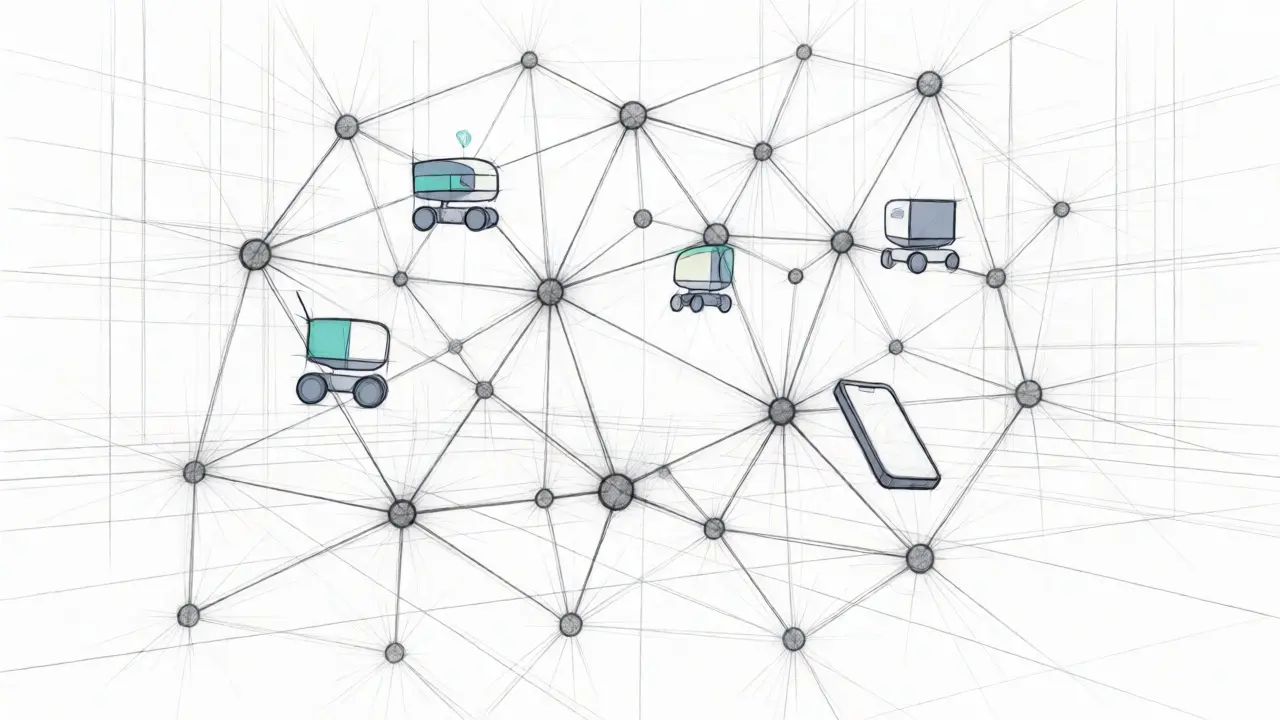
To grasp what Auki does, you have to understand its engine: the Posemesh protocol. Unlike traditional centralized maps owned by single corporations, the Posemesh is a decentralized machine perception network. It enables robots, smart glasses, and phones to contribute to and access a shared augmented reality (AR) space. Here’s how it works in practice:
- Collaborative Perception: Instead of one device mapping a room alone, multiple devices share sensor data. If my phone sees a table, and your headset sees the same table, the network combines these inputs to create a more accurate, shared model of the space.
- Spatial Reasoning: The protocol handles the complex math of aligning different perspectives. It ensures that when two people look at the same virtual object overlaid on a real wall, they see it in the exact same spot.
- Decentralized Trust: Because it runs on blockchain technology (specifically the Base network, backed by Coinbase), the integrity of this spatial data is maintained without a central authority controlling the truth.
The Role of the AUKI Token
Crypto tokens often feel like abstract numbers, but in the Auki ecosystem, the AUKI token serves functional purposes beyond speculation. It acts as the fuel for the Posemesh network's economic activity. The token facilitates several key interactions:
- Transactions: Users pay in AUKI to access premium features or purchase virtual assets within posemesh domains.
- Data Exchange: In a DePIN (Decentralized Physical Infrastructure Network) model, participants who contribute valuable spatial data or compute resources are rewarded. Conversely, those consuming high-quality data pay for it.
- Governance: Token holders participate in decisions regarding the platform’s development and resource allocation.
Technical Architecture and Market Position
Auki operates within the Base Ecosystem, an Ethereum Layer-2 solution known for low fees and high throughput. This choice is strategic; spatial computing requires frequent, small transactions for data updates, which would be prohibitively expensive on mainnet Ethereum. The project sits at the intersection of several high-growth tech sectors: * **DePIN:** Decentralized Physical Infrastructure Networks, which use crypto incentives to build hardware networks. * **AI Applications:** Providing the sensory input layer for autonomous systems. * **Robotics:** Enabling navigation and interaction for physical bots. * **XR (Extended Reality):** Powering shared AR experiences.
| Metric | Details |
|---|---|
| Blockchain | Base (Ethereum L2) |
| Max Supply | 10 Billion AUKI |
| Core Technology | Posemesh Protocol (Spatial Computing) |
| Primary Use Case | Machine Perception & Shared AR Data |
| Launch Year | 2024 |
Real-World Applications and Early Traction
You might ask, "Is this just vaporware?" Not entirely. Auki Labs has already demonstrated practical applications. One notable example is an app that allows users to decorate physical spaces with NFTs in shared augmented reality. Imagine walking into a friend’s living room wearing smart glasses and seeing their digital art collection hanging on the walls, visible only to those with the right access rights. This isn’t just a filter; it’s anchored to the physical coordinates of the room via the Posemesh. These early tests validate the core concept: that spatial data can be tokenized, traded, and accessed securely. As hardware like Apple Vision Pro and Meta Quest matures, the demand for a standardized, decentralized way to share spatial context will likely grow. Auki positions itself as the underlying standard for this exchange.

Price Volatility and Investment Considerations
If you’re looking at AUKI from an investor’s perspective, expect volatility. Since its launch, the token has seen significant price swings. Reports indicate an all-time high of around $0.0605, while recent prices have hovered between $0.006 and $0.011 depending on the tracking source and market conditions. This variation is typical for new, low-cap altcoins with limited liquidity. Market cap estimates also vary widely across platforms, ranging from $42 million to over $77 million. This discrepancy often stems from differing calculations of circulating supply versus total supply. Always check multiple sources like CoinGecko or TradingView for real-time data. Analysts suggest modest growth potential, with some forecasts projecting average values around $0.010-$0.011 through 2027. However, these predictions depend heavily on the adoption rate of AR hardware and the successful expansion of the Posemesh network. If major robotics companies or AR platforms integrate Auki’s protocol, the utility-driven demand could spike. If adoption lags, the token may struggle against broader market downturns.
Risks and Challenges
No project is without hurdles. For Auki, the primary risks include:
- Hardware Adoption: The network needs enough devices contributing data to be useful. If AR glasses remain niche, the network effect weakens.
- Competition: Centralized giants like Google and Apple have their own spatial computing stacks. Convincing developers to use a decentralized alternative requires clear benefits in cost, privacy, or openness.
- Complexity: Spatial computing is technically difficult. Bugs or latency issues in the Posemesh protocol could hinder user experience.
What is the Posemesh protocol?
The Posemesh is a decentralized machine perception network developed by Auki Labs. It allows devices like robots and AR headsets to share and agree upon spatial data, creating a shared understanding of physical space. It functions as a collaborative layer for spatial computing, using blockchain to ensure data integrity and enable economic transactions for data access.
Which blockchain does Auki run on?
Auki operates on the Base network, which is an Ethereum Layer-2 scaling solution backed by Coinbase. This choice provides lower transaction fees and faster speeds compared to Ethereum Mainnet, which is crucial for the frequent micro-transactions required by spatial data updates.
What is the max supply of AUKI tokens?
The maximum supply of AUKI tokens is capped at 10 billion coins. The circulating supply varies as tokens are released according to the vesting schedule, with initial reports indicating around 1.1 to 3 billion tokens in circulation shortly after launch, though figures fluctuate based on staking and unlocking events.
How do I buy AUKI crypto?
You can purchase AUKI on decentralized exchanges like Uniswap, as well as some centralized exchanges such as MEXC. Since it is an ERC-20 token on the Base network, you will need a compatible wallet like MetaMask configured for the Base chain to manage your holdings.
Is Auki related to Artificial Intelligence?
Yes, Auki is deeply integrated with AI concepts. Its goal is to provide AI systems with a reliable, decentralized understanding of the physical world. By offering "spatial reasoning" capabilities, it helps AI agents navigate and interact with real-world environments, effectively bridging the gap between digital algorithms and physical reality.