
What is Burn (BURN) Crypto: Hyper-Deflationary Token Explained
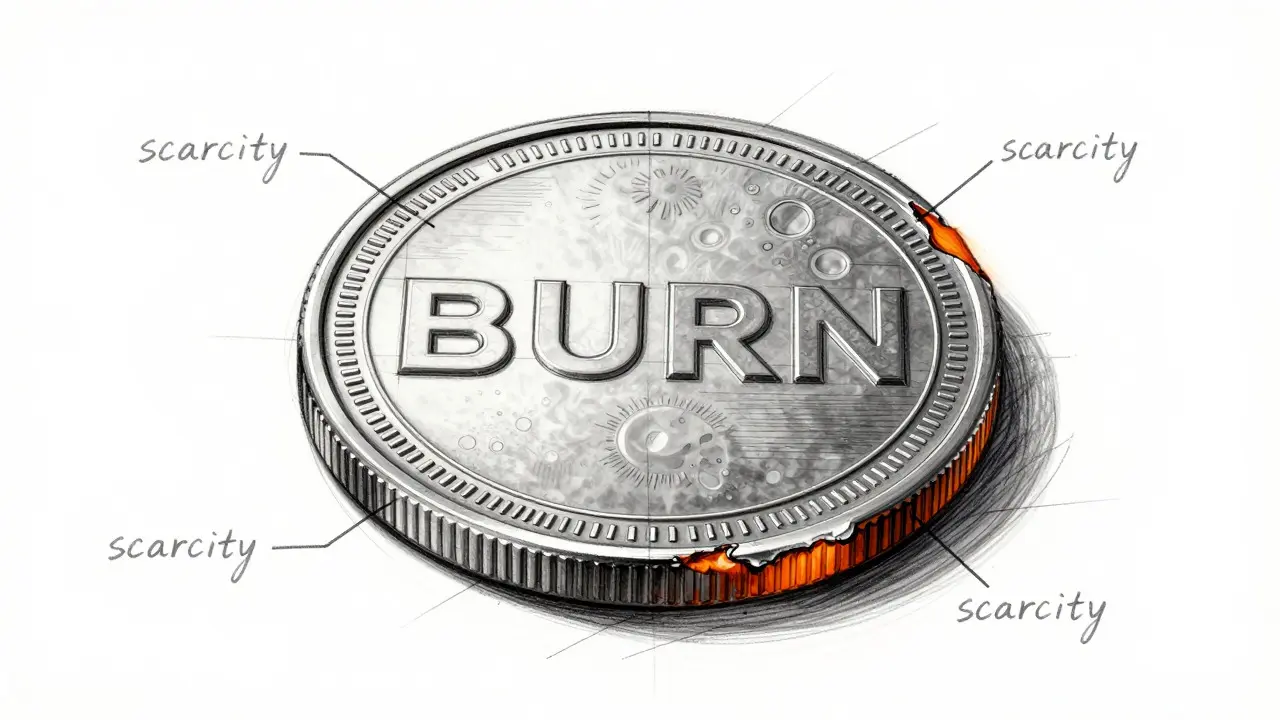
Imagine holding a digital asset that gets slightly more valuable every time you use it. That is the core promise of Burn (BURN), a hyper-deflationary cryptocurrency designed to reduce its total supply with every single transaction. Unlike most coins that stay static or increase in number, BURN aims to shrink its circulating supply automatically as people trade and transfer tokens. This mechanism relies on the principle of scarcity: if fewer tokens exist while demand remains steady, the value of each remaining token theoretically rises.
The Core Concept: Hyper-Deflationary Mechanics
To understand why BURN stands out, we need to look at how standard cryptocurrencies handle supply. Many major networks, like Bitcoin, have a fixed maximum supply but do not actively remove coins from circulation unless they are lost. Others, like Ethereum, have introduced burning mechanisms but often apply them to gas fees rather than every user interaction. BURN takes a different approach by embedding the burn directly into the transaction logic.
Every time a BURN token moves from one wallet to another, a small percentage is permanently removed from the system. This is not a periodic event managed by a central authority; it happens instantly and automatically for every transfer. The result is a continuous, gradual reduction in the total number of available tokens. Over time, this creates an asset that becomes increasingly rare simply through normal network activity.
How Token Burning Works Technically
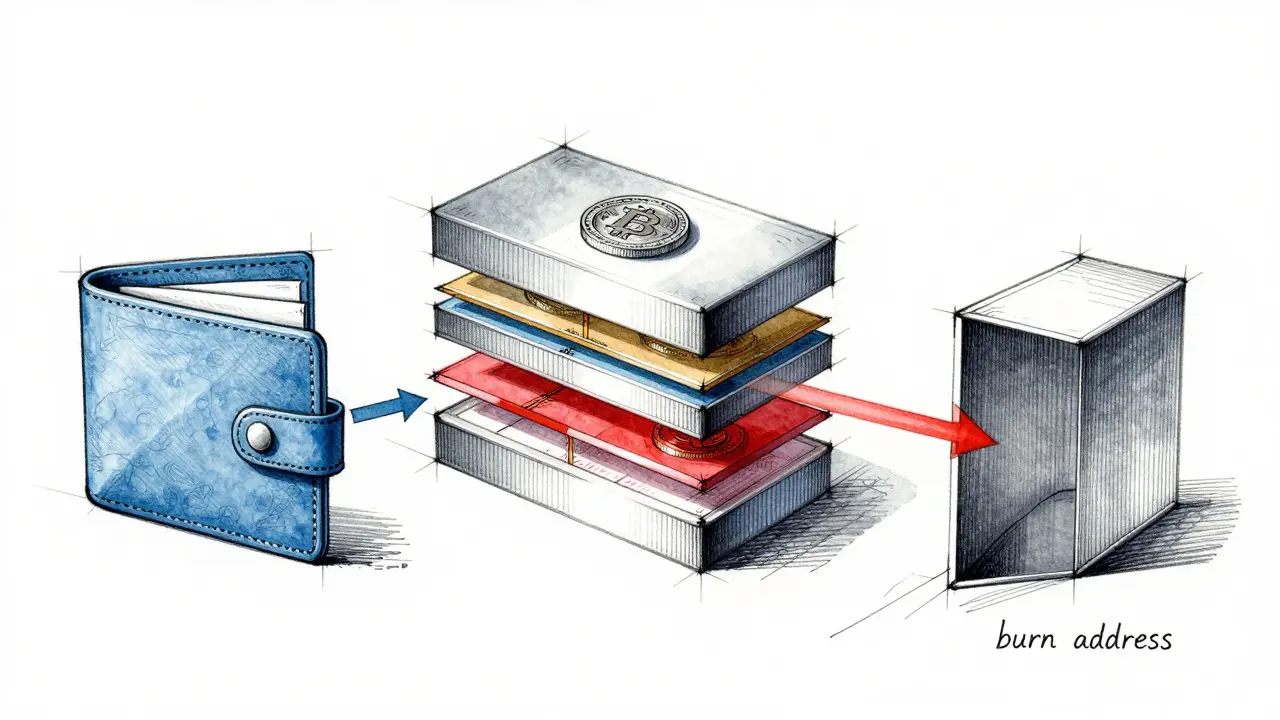
Behind the scenes, "burning" a token involves sending it to a specific address known as a burn address. A burn address is a public key without a corresponding private key. In blockchain terms, the private key is the password needed to spend funds. Since no one holds the private key for a burn address, any tokens sent there are mathematically impossible to retrieve. They are effectively destroyed forever.
This process is irreversible. You cannot un-burn a token, just as you cannot un-ring a bell. For BURN, this technical feature ensures that the deflationary effect is permanent and transparent. Anyone can verify the total supply on the blockchain explorer, watching the numbers tick down with each block. This transparency is crucial because it removes the need to trust a company’s word about their economic model; the code enforces the rules.
BURN vs. Other Deflationary Models
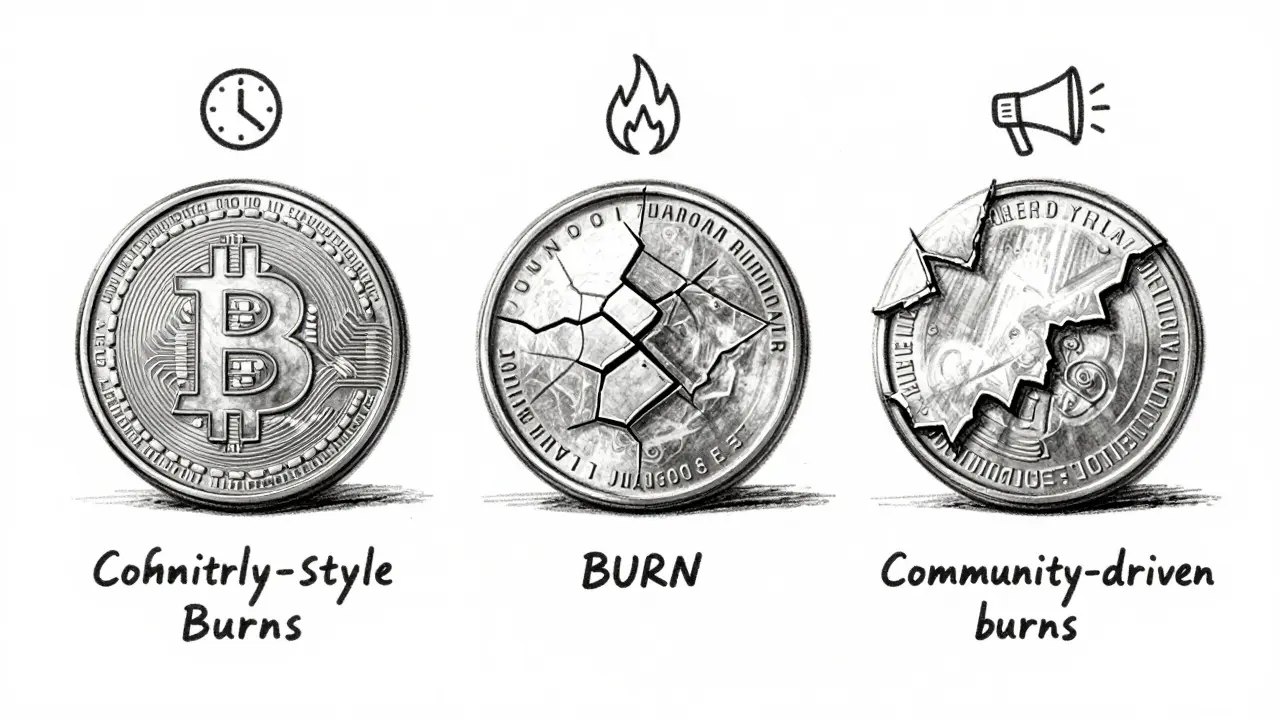
You might be familiar with other projects that use burning, such as Binance Coin (BNB) or Shiba Inu (SHIB). While they share the goal of reducing supply, the methods differ significantly. BNB uses a quarterly auto-burn mechanism where the amount burned is calculated based on trading volume and price over a three-month period. It also burns a portion of gas fees in real-time. SHIB, on the other hand, burns tokens primarily through community initiatives and developer actions, often tied to marketing events or ecosystem growth.
BURN distinguishes itself by making the burn a constant, per-transaction feature. There is no waiting for a quarter to end, and no reliance on external decisions. If you send 100 BURN tokens to a friend, the network handles the rest. This consistency creates a predictable deflationary curve, assuming steady usage. However, this also means that if network activity drops, the rate of supply reduction slows down proportionally. The token’s fate is tightly linked to its actual utility and adoption.
| Token | Burning Trigger | Frequency | Primary Goal |
|---|---|---|---|
| BURN | Every individual transaction | Continuous / Real-time | Hyper-deflation via usage |
| BNB | Quarterly calculation + Gas fees | Quarterly + Continuous | Ecosystem incentive & Scarcity |
| SHIB | Developer/Community actions | Irregular / Event-based | Meme culture & Ecosystem growth |
| ETH | Gas fee base component | Continuous | Network efficiency & Sustainability |
The Economics of Scarcity
The fundamental economic argument behind BURN is straightforward: supply and demand. If the supply of an asset decreases while demand stays the same or increases, the price should rise. This is the same logic that drives the value of gold or limited-edition collectibles. By automating supply reduction, BURN attempts to create a built-in value accrual mechanism for holders.
However, scarcity alone does not guarantee price appreciation. The token still needs to be useful or desirable enough for people to hold onto it. If investors sell off their BURN tokens faster than the network burns them, the price will drop despite the shrinking supply. Therefore, the success of the hyper-deflationary model depends heavily on market sentiment and the broader crypto environment. It is a powerful tool, but not a magic bullet.
Risks and Considerations for Investors
While the concept is appealing, potential investors should weigh several risks. First, BURN is a niche asset with a specific focus. It may lack the extensive ecosystem of dApps, NFTs, or gaming integrations found in larger networks. Second, liquidity can be a concern for smaller-cap tokens. If you buy a large amount of BURN, selling it all at once might move the price against you due to lower trading volume compared to giants like Bitcoin or Ethereum.
Additionally, the "hyper-deflationary" label is a marketing term. The actual percentage burned per transaction determines the speed of scarcity. If the burn rate is very low, it might take decades for the supply to decrease meaningfully. Always check the current burn rate and total supply metrics before making a decision. Understanding these nuances helps separate hype from reality.
Where Does BURN Fit in the Crypto Landscape?
In the vast world of cryptocurrency, BURN occupies a specialized niche. It appeals to those who believe in the power of mathematical scarcity and automated economics. It serves as a counterpoint to inflationary models where new tokens are constantly minted to pay validators or fund development. For purists who view token issuance as dilutive, BURN offers a clean, code-enforced alternative.
As the crypto market matures, we see more projects experimenting with complex tokenomics. BURN represents one end of the spectrum: pure deflation. Whether this approach gains wider traction remains to be seen, but it certainly adds diversity to the options available for digital asset allocation. It challenges us to think about what value really means in a digital economy where creation and destruction are both possible through simple code.
Is the BURN token supply infinite or finite?
The BURN token has a finite initial supply that continuously decreases. It is not infinite because the total number of tokens only goes down as transactions occur. Eventually, the supply will stabilize at a very low number, though it likely will never reach zero due to the fractional nature of the burn.
Who controls the burning process of BURN?
No single entity controls the burning process. It is executed automatically by the smart contract logic on the blockchain. Every time a transaction is validated, the protocol deducts the designated percentage and sends it to the burn address. This decentralized enforcement ensures transparency and removes the risk of arbitrary changes by a team.
Does holding BURN generate passive income?
Holding BURN does not typically generate staking rewards or dividends in the traditional sense. The primary benefit for holders is the appreciation of value due to decreasing supply. You earn by the asset becoming more scarce, not by receiving new tokens. Any additional yield would depend on third-party DeFi protocols that support BURN, which should be verified independently.
How is BURN different from Bitcoin?
Bitcoin has a fixed maximum supply of 21 million coins, but the circulating supply generally increases until that cap is reached. BURN starts with a set supply and decreases it with every transaction. Bitcoin is deflationary in the long run due to halving events, but BURN is hyper-deflationary by design, reducing supply immediately upon use rather than waiting for scheduled network upgrades.
Can I recover my BURN tokens if I send them to the wrong address?
If you accidentally send BURN tokens to the official burn address, they are gone forever. If you send them to a random wrong address that has a private key, you might be able to recover them if you know the owner. However, if you send them to an address with no owner (an empty address), they are effectively lost, similar to being burned. Always double-check addresses before transacting.