
What is Happy Cat (HAPPY) Crypto Coin? A 2026 Reality Check
Ever scrolled through TikTok and saw that cheerful tabby cat basking in the sunshine? You probably know the "Happy Happy Happy Cat" meme. But did you know there’s a cryptocurrency attached to it? That’s Happy Cat, or HAPPY. It launched on November 7, 2024, riding the wave of internet humor onto the Solana blockchain.
If you’re looking for the next big thing, I need to be straight with you. As of early 2026, HAPPY isn’t just struggling; it’s barely holding on. This isn’t your typical guide promising moonshots. Instead, we’re going to look at what HAPPY actually is, why its price crashed hard, and whether there’s any real value left-or if it’s just a digital ghost town.
The Origin Story: From Meme to Token
Let’s start with where this came from. The Happy Cat cryptocurrency was born out of pure internet culture. The project didn’t launch with a complex whitepaper or a revolutionary tech solution. It leaned entirely on the viral fame of Felix, the cat from the meme. In late 2024, memecoins were everywhere. According to data from CoinGecko, these joke coins made up nearly 13% of all new crypto launches in Q4 2024 alone.
The team behind it calls itself the "Felix Collective." Sounds fancy, right? But here’s the catch: nobody knows who they are. They remain anonymous. In the world of serious finance, anonymity is a red flag. In the world of memecoins, it’s standard practice. They prioritized community hype over transparent leadership. Unfortunately, as the hype faded, so did the community engagement.
Technical Specs: Running on Solana
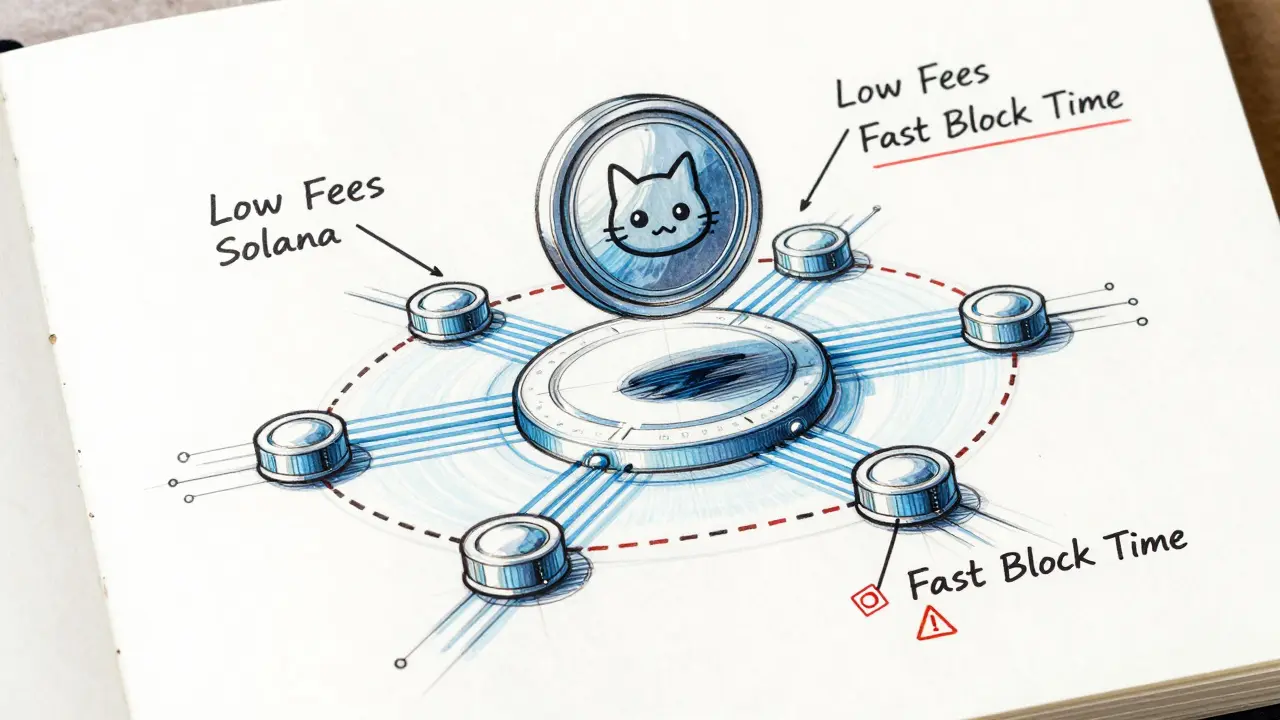
Technically speaking, HAPPY operates on the Solana network. This matters because Solana is known for speed and low fees. When you transfer HAPPY tokens, you’re benefiting from Solana’s average block time of 400 milliseconds and transaction costs around $0.00025. That’s cheap and fast.
However, there’s a weird technical glitch here. HAPPY is supposed to be an SPL token (Solana Program Library), but reports suggest it implements functionality similar to ERC-20 standards used on Ethereum. This creates compatibility headaches. Some wallets don’t recognize it properly, making it harder for average users to store their tokens safely. If you’re trying to buy this, you need to use specific tools like Phantom wallet and connect to decentralized exchanges like Raydium. It’s not plug-and-play.
The Price Crash: What Happened?
This is the part that hurts most investors. Let’s look at the numbers.
- Launch Date: November 7, 2024
- All-Time High (ATH): $0.001287 (November 18, 2024)
- Current Price (Jan 2026): ~$0.00039 USD
- Total Supply: 3.33 Billion tokens
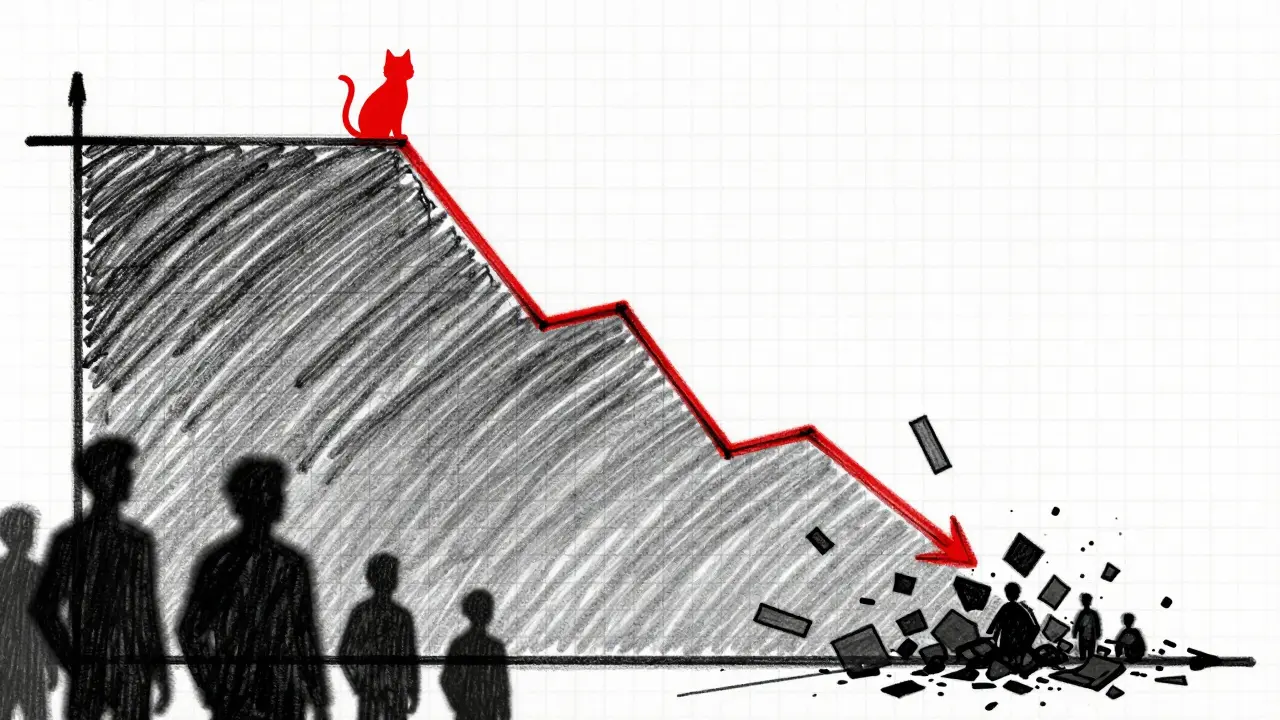
Notice something? The price hit its peak just 11 days after launch. Then it fell. Hard. By December 1, 2024, it had dropped 83% from its high. Fast forward to January 2026, and it has lost over 92% of its maximum value. Compare that to giants like Dogecoin or Shiba Inu, which have billions in market cap and still hold significant value relative to their peaks. HAPPY doesn’t.
Why did it crash? Simple supply and demand. Early buyers sold their tokens for profit once the initial hype died down. With no new buyers coming in to replace them, the price plummeted. There was no underlying utility-no app, no game, no service-to keep people holding the token long-term.
Is Happy Cat Safe? Security Risks Exposed
When you deal with anonymous teams, security becomes a major concern. In late 2024, technical reviews by platforms like MXC flagged serious issues. The presale contract had reentrancy vulnerabilities-a type of bug that can allow hackers to drain funds. The team claimed they patched this on December 1, 2024, calling it "Whisker-Proof Security." But here’s the problem: no independent audit firm ever verified this claim.
In crypto, trust but verify. Without a public audit report from a reputable firm like CertiK or OpenZeppelin, you’re taking a blind leap of faith. Furthermore, the GitHub repository for HAPPY hasn’t seen meaningful updates since December 2024. It contains only basic deployment scripts. No external developers have contributed code. This suggests the project is effectively abandoned.
| Feature | Happy Cat (HAPPY) | Dogecoin (DOGE) | Dogwifhat (WIF) |
|---|---|---|---|
| Blockchain | Solana | Ethereum (PoS) | Solana |
| Market Cap (Approx) | $19.6K | $14.2B+ | $2.3B+ |
| Team Identity | Anonymous | Public/Open Source | Community-driven |
| Utility | None (Speculative) | Tips/Micropayments | Community/NFTs |
| Liquidity | Extremely Low | Very High | High |
The Community Void: Where Are the Users?
A crypto project lives or dies by its community. For HAPPY, the silence is deafening. If you check their Telegram channel, the last admin message was posted in mid-December 2024. Their Twitter/X account stopped posting in early January 2026. The Medium blog has seven posts and hasn’t been updated in months.
User sentiment online is overwhelmingly negative. On Reddit, discussions about HAPPY often cite extreme slippage (meaning you lose a huge chunk of value just by trying to sell) and artificial volume inflation. Trustpilot reviews for related services average a dismal 1.3 out of 5 stars. People feel misled. They bought in hoping for a quick flip, got stuck when the price dropped, and now have nowhere to turn for support.
There are only about 1,842 unique wallet addresses holding HAPPY. Even worse, 63% of the total supply is concentrated in just the top 10 wallets. This is extreme centralization. It means a few individuals control the majority of the tokens. If one of them decides to sell, the price could go to zero instantly. This level of concentration is considered "extreme risk" by industry standards.
Expert Opinions: Is There Any Hope?
I’ve looked at what analysts are saying, and the consensus is bleak. Michael van de Poppe, a well-known crypto analyst, called HAPPY a "textbook pump-and-dump" with no sustainable foundation. CoinDesk gave it a sustainability rating of 2.1 out of 10, noting the lack of any development roadmap.
Standard Chartered Bank, in their 2026 memecoin sustainability report, projected an 87% probability that HAPPY would become completely valueless within 12 months. That’s a stark warning.
On the flip side, a small minority of speculative traders argue that if the original cat meme goes viral again on TikTok, there might be a short-term price spike. They predict potential gains of 200-300% based purely on social media trends. But this is gambling, not investing. It relies on a random cultural resurgence rather than any fundamental improvement in the project.
Should You Buy HAPPY in 2026?
If you’re asking this question, my advice is simple: proceed with extreme caution, or better yet, avoid it entirely. Here’s why:
- No Utility: HAPPY does nothing. It doesn’t offer staking rewards, governance rights, or access to exclusive content.
- Abandoned Development: The team is silent, and the codebase is frozen.
- Poor Liquidity: With such low trading volume, selling your tokens could be difficult without crashing the price further.
- Centralization Risk: A few whales control most of the supply, creating a high risk of manipulation.
If you absolutely must participate, treat it like buying a lottery ticket. Only spend money you are 100% prepared to lose. Do not invest savings, rent money, or borrowed funds. Use a secure hardware wallet if possible, though even that doesn’t protect you from a worthless asset.
For those interested in memecoins, there are healthier options. Projects with active communities, transparent teams, and integrated ecosystems (like some newer Solana-based games or NFT platforms) offer more sustainable engagement. HAPPY remains a cautionary tale of how quickly internet fame fades in the crypto market.
Where can I buy Happy Cat (HAPPY) tokens?
You can find HAPPY tokens on a few centralized exchanges like KuCoin, but liquidity is very low. Most trading happens on decentralized exchanges (DEXs) on the Solana network, such as Raydium. To trade there, you’ll need a Solana-compatible wallet like Phantom and SOL to pay for gas fees. Be aware that slippage can be extremely high due to low volume.
Is Happy Cat a scam?
While not legally classified as a scam in the traditional sense, HAPPY exhibits many characteristics of a failed project. The anonymous team, lack of utility, abandoned social channels, and extreme centralization of tokens make it highly risky. It behaves like a "pump-and-dump" scheme where early insiders likely profited while later buyers lost money. Exercise extreme caution.
What is the maximum supply of HAPPY?
The maximum supply of Happy Cat tokens is fixed at 3.33 billion. All of these tokens are currently in circulation. There are no future minting events or vesting schedules releasing new tokens, meaning the supply is static.
Why did the HAPPY token price drop so much?
The price dropped because the initial hype surrounding the meme faded quickly. Without any real-world utility, product development, or continuous marketing, investors sold their holdings. Additionally, the high concentration of tokens in a few wallets allowed large holders to dump their assets, causing panic among smaller investors.
Does Happy Cat have a roadmap?
The project originally listed vague phases like "Whisker-Proof Security" and "Nine Lives of Innovation," but these were never substantiated with concrete milestones. As of early 2026, there is no active development roadmap, and the team has ceased communicating progress updates.
Can I recover my lost investment in HAPPY?
Unfortunately, no. Cryptocurrency transactions are irreversible. If you bought HAPPY at a higher price and it has since dropped, you cannot force a refund. Your only option is to hold the tokens in hopes of a future price increase, which is highly speculative given the current state of the project.