What is Invest Club Global (ICG)? A Deep Dive into the Token's Reality
Have you ever stumbled upon a cryptocurrency with a grandiose name like Invest Club Global and wondered what the hype was about? Or perhaps you found it sitting in your wallet from an old trade and are now trying to figure out if it’s worth anything. The short answer might surprise you: despite its ambitious branding, Invest Club Global (ICG) is a low-cap ERC-20 token on the Ethereum blockchain with virtually no market activity or utility. As of mid-2026, this token exists more as a digital ghost than a functional financial asset.
If you are looking for the next big investment opportunity, ICG is likely not it. But if you want to understand why some crypto projects fade into obscurity while others thrive, ICG serves as a perfect case study. Let’s break down exactly what this token is, where it came from, and why it has all but disappeared from the active trading scene.
The Basics: What Is the ICG Token?
To understand Invest Club Global, we first need to look at its technical foundation. ICG is not a standalone blockchain; it does not have its own miners or validators. Instead, it operates as an ERC-20 token built on the Ethereum network. This means it relies on Ethereum’s security and infrastructure to exist. You can hold it in any standard Ethereum-compatible wallet, like MetaMask or Trust Wallet, provided you have enough ETH to pay for gas fees when transferring it.
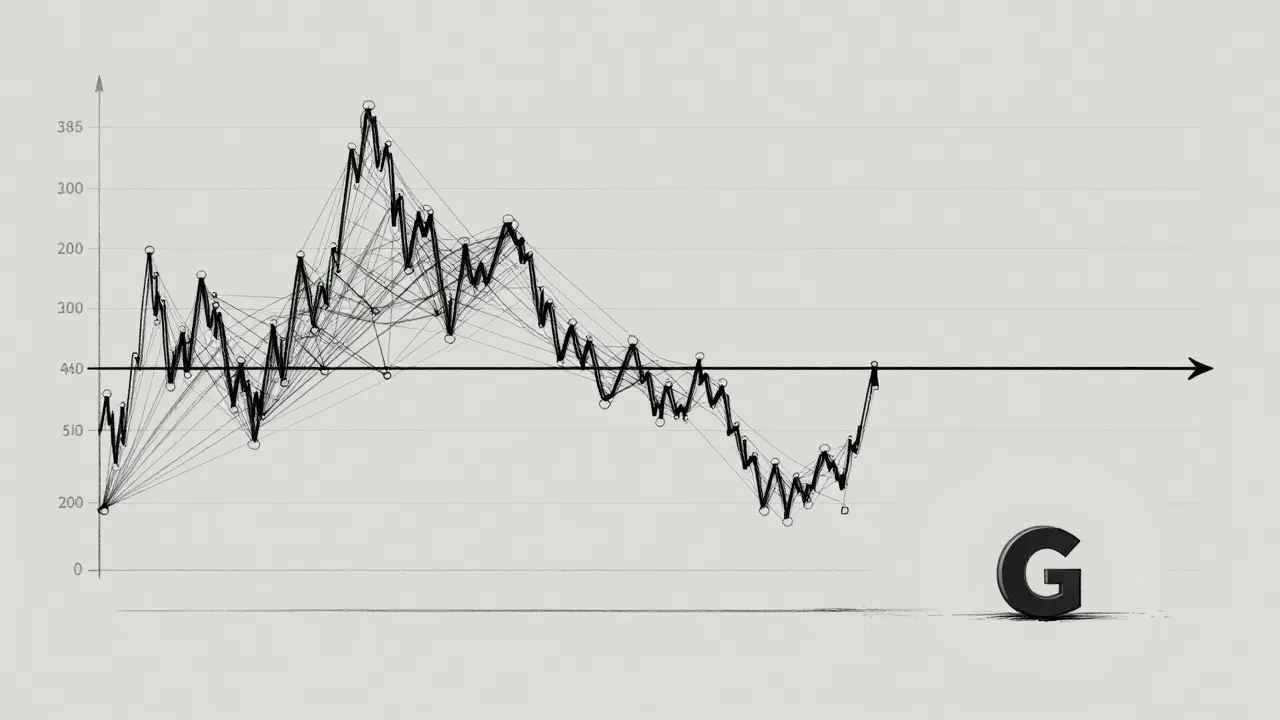
Launched in December 2023, the project started with a massive maximum supply of 900 billion tokens. By late 2025, approximately 882 billion were in circulation. That sounds like a lot, but in the world of crypto, high supply numbers often correlate with very low individual token prices. At its peak in July 2024, one ICG token traded for roughly $0.000055. Today, that price has plummeted by over 98%, hovering around fractions of a cent. To put that in perspective, you could buy millions of these tokens for the price of a cup of coffee, yet selling them would be nearly impossible due to a lack of buyers.
| Attribute | Value |
|---|---|
| Blockchain | Ethereum (ERC-20) |
| Launch Date | December 2023 |
| Max Supply | 900,000,000,000 (900 Billion) |
| Circulating Supply | ~882 Billion |
| Contract Address | 0x9F9643209dCCe8D7399D7BF932354768069Ebc64 |
| Market Cap (Late 2025) | ~$881,000 |
The Market Reality: Zero Volume and Low Liquidity
Here is the part that matters most if you are thinking about buying or selling: there is effectively no market for ICG. When you check major data aggregators like CoinMarketCap or CoinGecko, you will see a price listed, but the 24-hour trading volume is consistently zero. This is a critical red flag.
Liquidity is the lifeblood of any cryptocurrency. Without liquidity, you cannot convert your tokens back into cash or stablecoins without crashing the price further. For ICG, the absence of volume suggests that exchanges have delisted it or never properly listed it in the first place. While Coinbase may display the token’s information for users who already hold it, they do not offer a trading pair. This means you cannot simply click "sell" and get paid. You are stuck holding a digital asset with no easy exit strategy.
This situation is common among what analysts call "zombie coins"-tokens that were launched with fanfare but failed to gain traction. Unlike established assets like Bitcoin or Ethereum, which have deep order books allowing large trades without significant price slippage, ICG exists in a vacuum. If someone tried to sell a large amount, the price would drop to near-instantaneous zero because there are no buyers waiting on the other side.
Why Did It Fail? Lack of Utility and Community
A successful cryptocurrency usually needs two things: a clear use case and an active community. ICG lacks both. The name "Invest Club Global" implies a platform for collective investing or perhaps a decentralized finance (DeFi) protocol. However, there is no evidence of such functionality. There is no staking mechanism, no governance voting system, and no integration with popular DeFi platforms like Uniswap or Aave.
Furthermore, the community presence is non-existent. In the crypto world, social proof is everything. Projects typically maintain active Telegram groups, Discord servers, and Twitter accounts where developers update users on progress. For ICG, these channels are either inactive, filled with bots, or completely absent. A search through Reddit’s major crypto subreddits yields zero discussion threads. No user reviews exist on consumer protection sites. This silence is deafening. It suggests that the development team has moved on to other projects, leaving ICG behind.
Without a roadmap or regular updates, investors have no reason to believe the project will improve. The token contract itself is verified on Etherscan, meaning the code is public, but there are no signs of smart contract audits by reputable firms. This adds another layer of risk, as unaudited contracts can contain hidden vulnerabilities or malicious functions.
Risks Associated with Micro-Cap Tokens
Investing in tokens like ICG falls into the highest risk category of cryptocurrency trading. These micro-cap assets often exhibit characteristics associated with "rug pulls" or abandoned projects. A rug pull occurs when developers withdraw all liquidity from a token pool, causing the value to collapse instantly. While we cannot definitively say ICG was a rug pull, the symptoms are similar: zero volume, no development, and a vanishing team.
The U.S. Securities and Exchange Commission (SEC) has issued warnings about micro-cap cryptocurrencies with market caps below $1 million and no trading volume, labeling them as high-risk and potentially fraudulent. With a market cap under $1 million and zero daily volume, ICG fits this description perfectly. Regulatory bodies view such tokens with extreme skepticism because they offer no real economic value and serve primarily as vehicles for speculation or fraud.
Additionally, the psychological trap of "sunk cost fallacy" often affects holders of dead tokens. Investors may refuse to cut their losses, hoping for a miraculous recovery that never comes. They continue to monitor the price daily, waiting for a pump that requires new capital inflow-which isn't happening. Recognizing when a project is dead is a crucial skill for any crypto participant.
How to Verify Token Legitimacy Yourself
You don’t have to take my word for it. You can investigate ICG yourself using free tools. Here is a simple checklist to determine if a token is still alive:
- Check Trading Volume: Go to CoinMarketCap or CoinGecko. If the 24-hour volume is $0, the token is illiquid. You cannot trade it easily.
- Inspect Social Media: Look for official Twitter, Telegram, or Discord links. Are posts recent? Are there real people commenting, or just bots? Silence indicates abandonment.
- Review the Contract: Use Etherscan to look at the token contract. Check if it is verified. Look for holder distribution. If a few wallets hold the majority of tokens, the risk of manipulation is high.
- Search for News: Do a quick web search. If the last news article is from over a year ago, the project is likely dormant.
- Look for Audits: Reputable projects publish audit reports from firms like CertiK or Hacken. If you can’t find an audit, assume the code is unverified.
Applying this checklist to ICG reveals a project that fails almost every test. The volume is zero, social media is silent, and there is no recent news or audit documentation. This pattern is consistent with thousands of other failed tokens launched during the 2023-2024 bull run cycle.

Comparison: ICG vs. Healthy Micro-Caps
Not all small-cap tokens are dead. Some legitimate projects start small and grow. How do you tell the difference? Let’s compare ICG to a hypothetical healthy micro-cap project.
| Feature | Invest Club Global (ICG) | Healthy Micro-Cap Project |
|---|---|---|
| Trading Volume | $0 (No activity) | Consistent daily volume, even if small |
| Development Activity | None visible | Regular GitHub commits and updates |
| Community Engagement | No active channels | Active Discord/Telegram with real users |
| Utility | Unclear/Non-existent | Clear use case (e.g., gaming, DeFi) |
| Transparency | No whitepaper or team info | Detailed whitepaper and known founders |
The contrast is stark. Healthy projects may have lower market caps, but they show signs of life. They have teams working on features, communities discussing ideas, and exchanges willing to list them. ICG shows none of these signs. It is a static object on the blockchain, not a dynamic financial instrument.
What Should You Do If You Hold ICG?
If you currently hold ICG tokens, your options are limited. Since there is no active market, you cannot sell them on centralized exchanges. Your only theoretical option is to try swapping them on a decentralized exchange (DEX) like Uniswap. However, given the lack of liquidity, you would likely incur massive slippage fees, meaning you would receive almost nothing in return for your tokens. In many cases, the gas fee to attempt the swap would exceed the value of the tokens themselves.
Practically speaking, these tokens are worthless. The best course of action is to accept the loss as a learning experience. Many experienced crypto investors have held bags of dead tokens. It happens. The key takeaway is to diversify your portfolio and stick to projects with verifiable utility, active development, and liquid markets. Avoid chasing names that sound impressive but lack substance.
For future investments, prioritize transparency. Look for projects that publish regular updates, undergo security audits, and have a clear path to profitability or utility. The crypto market is full of opportunities, but they are rarely found in tokens with zero volume and no community.
Is Invest Club Global (ICG) a scam?
While we cannot legally label it a scam without definitive proof of intent, ICG exhibits many characteristics of abandoned or fraudulent projects. These include zero trading volume, no active development, no community engagement, and a lack of transparent team information. The SEC warns against such micro-cap tokens as high-risk offerings.
Can I buy ICG on Coinbase or Binance?
No. Major exchanges like Coinbase and Binance do not list ICG for trading. Coinbase may display the token if you already hold it, but you cannot buy or sell it there. There are no active trading pairs on any reputable exchange.
What happened to the ICG price?
The ICG price peaked at $0.000055 in July 2024 and has since dropped by over 98%. The decline reflects a complete loss of investor interest and liquidity. With zero trading volume, the price is essentially nominal and holds no practical value.
Is it safe to keep ICG in my wallet?
It is generally safe to keep the tokens in a secure wallet like MetaMask, as long as you do not interact with suspicious websites claiming to help you "claim" or "upgrade" your ICG. Never share your private keys. However, be aware that the tokens are likely worthless and may remain so indefinitely.
Why does ICG have such a high supply?
ICG has a maximum supply of 900 billion tokens. High supplies are common in meme coins or low-value utility tokens to create the illusion of affordability. However, without demand, a high supply leads to extremely low per-token prices and dilutes value for early holders.