What is Liquidity in Crypto? How It Affects Your Trades and Prices
Imagine trying to sell a rare vintage car at a gas station. You might get an offer, but it will likely be far below market value because there are no serious buyers present. Now imagine selling that same car at a major auto auction with hundreds of bidders. The price you get reflects true market value because demand is high and accessible.
This difference isn't just about the asset; it's about liquidity. In cryptocurrency markets, liquidity determines how easily you can buy or sell an asset without moving its price. If you've ever executed a trade only to see your entry price slip away instantly, you've experienced low liquidity firsthand. Understanding this concept is the difference between trading like a novice who gets eaten by fees and slippage, and trading like a pro who protects their capital.
The Core Definition: Ease of Conversion
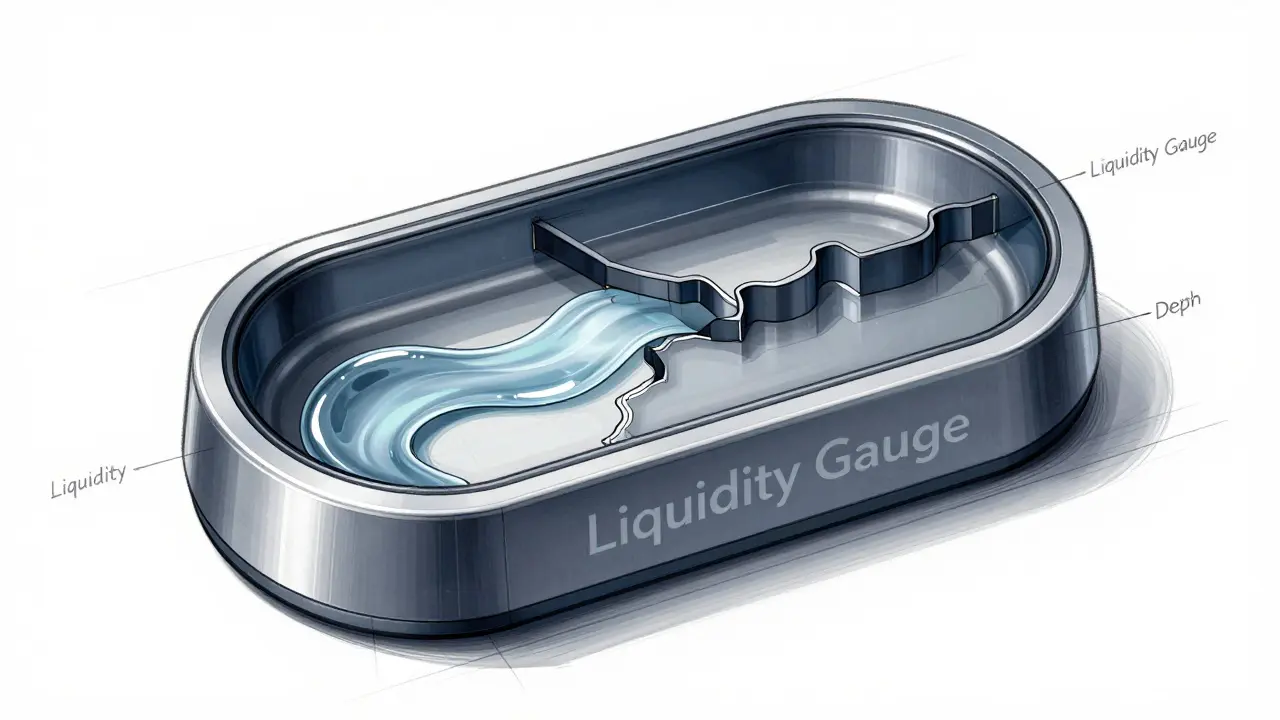
Liquidity is the ease with which a digital currency or token can be converted to another digital asset or cash without impacting the price. It is not a single number but a measure of market health driven by supply and demand dynamics. When a market is liquid, large orders can be filled quickly at stable prices. When it is illiquid, even small orders can cause wild price swings.
In traditional finance, liquidity is centralized through institutions like market makers on the NYSE. In crypto, it is fragmented across over 500 global exchanges and decentralized finance (DeFi) platforms. This fragmentation means liquidity for Bitcoin on Binance might look very different from Bitcoin on a smaller regional exchange. For traders, this means "liquidity" is not a universal constant; it is specific to the venue where you trade.
Key Metrics: How to Measure Liquidity
You cannot feel liquidity, but you can measure it. Three primary metrics define the liquidity landscape: bid-ask spreads, order book depth, and trading volume. Knowing these numbers helps you assess risk before clicking "buy" or "sell."
| Metric | High-Liquidity Asset (e.g., BTC on Binance) | Low-Liquidity Asset (e.g., Micro-cap Altcoin) |
|---|---|---|
| Bid-Ask Spread | 0.05% - 0.1% | 1% - 5% |
| Order Book Depth | $500M+ within 1% of current price | $10k - $100k within 1% of current price |
| Daily Trading Volume | $25B - $30B (across all exchanges) | < $10M |
| Slippage on $100k Order | ~0.07% | 8% - 12% |
Bid-Ask Spreads
The bid-ask spread is the gap between the highest price a buyer is willing to pay (bid) and the lowest price a seller is willing to accept (ask). On highly liquid pairs like BTC/USDT on major exchanges, this spread is often razor-thin, around 0.05%. On illiquid altcoins, the spread can widen to 5% or more. Every time you trade, you effectively pay half this spread as a hidden cost. Wide spreads eat into profits immediately.
Order Book Depth
Depth refers to the cumulative value of buy and sell orders at various price levels. Think of it as the cushion protecting the price from impact. Bitcoin maintains order book depth exceeding $500 million on major exchanges during normal conditions. This means a whale can dump $10 million worth of Bitcoin, and the price barely moves. In contrast, a micro-cap token might have only $10,000 in pending orders near the current price. A $5,000 sell order could crash the chart by 10% because there are simply no buyers left at higher prices.
Trading Volume
Volume is the most visible metric. Bitcoin averages $25-30 billion in daily trading volume. While volume indicates activity, it does not guarantee depth. Wash trading (fake volume generated by bots) can inflate volume numbers on shady exchanges. Always cross-reference volume with order book depth to verify genuine liquidity.

Centralized vs. Decentralized Liquidity
Liquidity behaves differently depending on where you trade. Centralized Exchanges (CEXs) and Decentralized Exchanges (DEXs) operate on fundamentally different mechanics.
Centralized Exchanges (CEXs)
On platforms like Binance or Coinbase, liquidity is provided by market makers-specialized firms like Wintermute or Jump Crypto that use algorithms to place continuous buy and sell orders. They profit from the spread and rebates. This creates deep, predictable order books. However, this liquidity is siloed. Bitcoin liquidity on Binance does not help you if you are trading on Kraken.
Decentralized Exchanges (DEXs)
On DEXs like Uniswap, there are no order books. Instead, liquidity comes from Liquidity Pools, which are smart contract-held reserves of paired tokens that facilitate automated trading via an Automated Market Maker (AMM) algorithm. Users deposit assets into these pools and earn trading fees. The price is determined mathematically based on the ratio of assets in the pool.
This model democratizes liquidity provision but introduces unique risks. For example, Uniswap v3 introduced concentrated liquidity, allowing providers to allocate capital to specific price ranges. This increases efficiency by up to 4,000% compared to older models, but it also increases complexity. Misconfigured positions can lead to significant impermanent loss during volatility. Furthermore, DEX liquidity is fragmented per pair. The ETH/USDC pool might have $150 million, but a niche meme coin pair might have only $50,000, making large trades impossible without massive slippage.
The Cost of Illiquidity: Slippage and Manipulation
Why does liquidity matter to you personally? Because illiquidity costs money and invites danger.
Slippage
Slippage is the difference between the expected price of a trade and the executed price. In a liquid market, slippage is negligible. In an illiquid market, it is devastating. A study found that executing a $100,000 market order on Bitcoin results in average slippage of 0.07%. The same order on a low-liquidity token could incur 8-12% slippage. That means you lose $8,000 to $12,000 instantly, not due to market direction, but due to lack of buyers.
Price Manipulation
Illiquid markets are easy to manipulate. With shallow order books, a bad actor can spend a relatively small amount to pump or dump a price. Research indicates that illiquid markets experienced 37% more price manipulation incidents during the 2022 market crash. Pump-and-dump schemes thrive in low-liquidity environments because the manipulator can exit their position before regular traders react. High liquidity acts as a stabilizer; it takes millions of dollars to move Bitcoin 1%, making manipulation economically unfeasible for most actors.
Practical Strategies for Traders
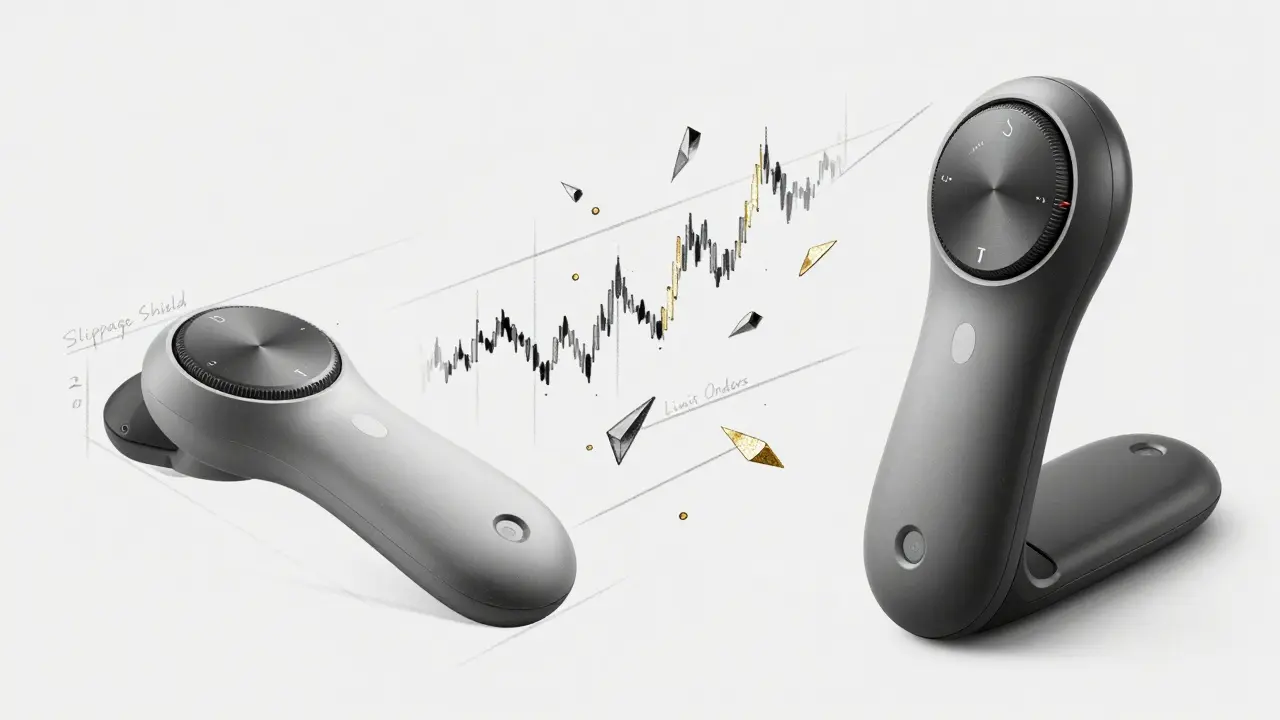
You cannot create liquidity, but you can navigate it intelligently. Here is how to protect yourself:
- Use Limit Orders: Market orders accept the best available price, which can be terrible in illiquid conditions. Limit orders allow you to set your price, ensuring you do not suffer unexpected slippage. Professional traders use limit orders in 68% of institutional trades.
- Check the Order Book: Before buying an altcoin, look at the depth. Are there substantial buy walls below the current price? If the book looks thin, avoid large market orders.
- Avoid Off-Peak Hours for Altcoins: Liquidity dries up when major markets sleep. Executing altcoin orders between 2:00-5:00 UTC can increase slippage by 220% compared to peak hours when US and Asian markets overlap.
- Stick to Major Venues: For large trades, use top-tier exchanges with proven depth. Binance, Coinbase, and Kraken aggregate the most institutional liquidity. Smaller exchanges may offer better UI, but they often lack the depth to handle volatile moves.
- Understand DEX Pool Sizes: If trading on Uniswap or PancakeSwap, check the total value locked (TVL) in the relevant pool. As a rule of thumb, ensure the pool size is at least 10x your trade size to minimize impact.
The Future of Crypto Liquidity
Liquidity is maturing. The approval of spot Bitcoin ETFs in early 2024 added approximately $15 billion in daily liquidity capacity, bridging traditional finance with crypto. Regulatory frameworks like the EU's MiCA regulation aim to consolidate fragmented liquidity onto compliant exchanges, potentially increasing average depth by 300%.
Technological innovations continue to improve efficiency. Liquidity aggregation protocols like 1inch Network route trades across multiple venues to find the best price, mitigating fragmentation. By 2027, analysts predict the top cryptocurrencies will achieve trading volumes comparable to major forex pairs. However, challenges remain. Regulatory divergence across 87 countries creates friction, and technological vulnerabilities in DeFi protocols still pose risks to pooled capital.
For now, liquidity remains the oxygen of the market. Without it, price discovery fails, and retail traders get crushed. Treat liquidity not as an abstract concept, but as a tangible risk factor in every trade you execute.
What is the difference between liquidity and volume?
Volume measures how much of an asset was traded over a period, while liquidity measures how easily you can trade without affecting the price. An asset can have high volume due to wash trading (fake activity) but still have low liquidity if there are no real buyers or sellers waiting in the order book.
How does slippage affect my trades?
Slippage is the difference between the price you expect and the price you actually get. In low-liquidity markets, slippage can be significant, meaning you receive fewer coins than calculated or pay a higher price. For example, a 5% slippage on a $1,000 trade means you effectively lose $50 instantly.
Is it safer to trade on CEXs or DEXs regarding liquidity?
CEXs generally offer deeper and more stable liquidity for major pairs due to professional market makers. DEXs offer transparency and accessibility but can suffer from fragmented liquidity and higher slippage for less popular tokens. For large trades, CEXs are usually safer; for niche tokens, DEXs may be the only option, requiring careful pool analysis.
What causes liquidity to dry up during crashes?
During panic selling, market makers widen spreads to protect themselves from risk, and many buyers pull their limit orders to avoid catching falling knives. This removes the "cushion" in the order book, causing prices to drop rapidly with little resistance. This phenomenon was evident during the TerraUSD collapse in 2022.
Can I provide liquidity to earn fees?
Yes, you can become a liquidity provider (LP) on DeFi platforms like Uniswap by depositing token pairs into pools. You earn a share of trading fees. However, this carries risks like impermanent loss, where the value of your deposited assets decreases compared to holding them, especially during high volatility.
Barclay Chantel
May 28, 2026 AT 17:41It is truly amusing to watch the uninitiated scramble for basic financial literacy, mistaking a rudimentary explanation of market mechanics for profound insight. The average participant in this digital casino lacks the intellectual fortitude to grasp that liquidity is merely a symptom of institutional control, not a feature of democratic empowerment. One must possess a certain pedigree to understand why the 'retail' trader is perpetually the liquidity provider for the whales who orchestrate these markets with surgical precision. It is not about 'protecting capital'; it is about accepting one's place at the bottom of the food chain while pretending to be an investor.
Rosie Morris
May 30, 2026 AT 13:16omg this is so helpful i always get confused by all the jargon like slippage and order books but this explains it in a way that makes sense thank u so much for breaking it down
Eric Grosso
May 31, 2026 AT 22:20i mean yeah its true but people still buy shitcoins anyway lol. why do they keep doing it? is it just greed or are they actually stupid?
Diana Morris
June 2, 2026 AT 00:55stop making excuses for bad trading habits you need to take responsibility for your own losses if you cant handle the volatility then stay out of the game its simple as that dont let anyone tell you otherwise
Dianne Wright
June 2, 2026 AT 04:47you really think thats all it is honestly most people here are just looking for validation because they lost money on some meme coin and now they want to blame the system instead of their own lack of discipline it is pathetic to watch
Miss Masquer
June 2, 2026 AT 19:04I find it incredibly fascinating how the concept of liquidity transcends mere numbers and becomes a reflection of our collective psychological state within the digital marketplace, where the absence of depth often mirrors the fragility of our trust in decentralized systems. When we consider the historical context of traditional finance, we see that liquidity has always been a privilege reserved for those with access to institutional networks, yet in crypto, we are promised democratization, which leads to a paradoxical situation where the very tools meant to empower the individual often expose them to greater risks due to fragmented pools and algorithmic inefficiencies. It is essential to recognize that the metrics provided, such as bid-ask spreads and order book depth, are not just static indicators but dynamic narratives that shift with every tick of the clock, influenced by global events, regulatory whispers, and the sheer force of market sentiment. Furthermore, the distinction between centralized and decentralized exchanges highlights a deeper philosophical divide regarding who should control the flow of value, whether it be specialized firms like Wintermute or a distributed network of liquidity providers who may never meet face-to-face. This fragmentation creates a unique ecosystem where knowledge is power, and those who take the time to understand the nuances of AMM algorithms and impermanent loss are better equipped to navigate the treacherous waters of volatile assets. Ultimately, the journey toward mastering liquidity is not just about technical proficiency but also about cultivating patience and resilience, qualities that are often undervalued in a culture obsessed with instant gratification and quick gains.
Joshua Alcover
June 3, 2026 AT 13:12The epistemological framework underpinning the notion of 'liquidity' in cryptocurrency markets necessitates a rigorous deconstruction of the ontological status of digital assets as tradable commodities within a pseudo-market structure that lacks the foundational stability of fiat-backed instruments. One must interrogate the hegemonic discourse propagated by centralized exchange operators who obfuscate the inherent vulnerabilities of fragmented liquidity pools through superficial metrics such as daily volume, which fails to capture the true depth of market resilience against predatory arbitrageurs and manipulative actors. The phenomenological experience of slippage is not merely a technical inconvenience but a manifestation of the systemic alienation of the retail trader from the mechanisms of price discovery, thereby reinforcing a neo-colonial hierarchy where capital flows are dictated by opaque algorithmic protocols rather than transparent human interaction. It is imperative to critique the neoliberal assumption that market efficiency naturally emerges from decentralization, ignoring the reality that illiquidity serves as a barrier to entry that disproportionately affects marginalized participants who lack the computational resources to engage in high-frequency trading strategies. Thus, the pursuit of liquidity optimization must be viewed through a critical lens that exposes the power dynamics embedded within smart contract architectures and the commodification of attention in speculative asset classes.
Debbie Lewis
June 4, 2026 AT 13:30good read. i usually just stick to btc and eth because the altcoin stuff looks too messy to me.
Sam Dashti
June 5, 2026 AT 12:20it’s like trying to drink water from a firehose when you’re new to this, isn’t it? the sheer volume of noise can drown out the signal unless you know where to look. i’ve found that treating the order book like a living organism helps; you can feel its pulse if you pay attention to the walls and voids.
Joe Clements
June 6, 2026 AT 22:11Hey there! I totally agree with sticking to the majors for now. It’s a lot less stressful when you don’t have to worry about getting stuck with tokens that nobody wants to buy. Take your time and learn the ropes before diving into the deep end!
Christina Pearce
June 7, 2026 AT 19:21This article was incredibly well-written and easy to follow. I appreciate how you broke down the difference between CEX and DEX liquidity, as that was a point of confusion for me previously. Thank you for sharing such valuable insights!
trisya hazriyana
June 8, 2026 AT 06:18oh wow another day another lesson on how to lose money faster thanks for the tips im sure everyone here will just ignore the part about limit orders and continue to market buy the top like usual
lorna erni
June 8, 2026 AT 08:21Let's stop beating around the bush and admit that half of these 'strategies' are useless if you're trading on a shady exchange with fake volume. You need to verify the source of your liquidity or you're just feeding the beast. Wake up people!
Edith Mair
June 10, 2026 AT 01:11So if I'm understanding this correctly, the main takeaway is to avoid small caps unless you want to get wrecked by slippage. Is that right? Because I've seen some huge pumps on low float coins recently.
stalin brian
June 11, 2026 AT 14:20hey guys just wanted to say that learning about impermanent loss was a real eye opener for me i never thought about how my lp position could actually lose value compared to just holding the tokens. thanks for the clear explanation it really helped me understand why i should be careful with concentrated liquidity