
What is Mind AI (MA)? Token Analysis, Price Drop & Risks in 2026

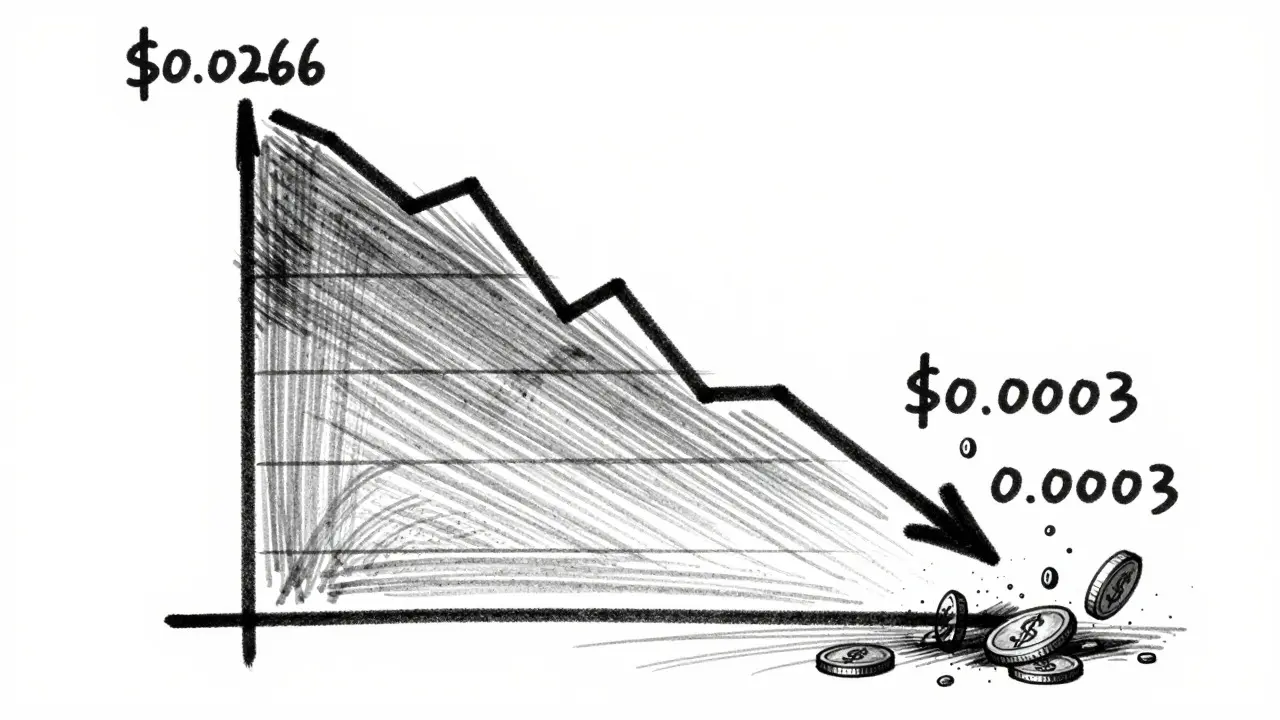
You see a new token promising to use artificial intelligence to read social media and tell you what to buy. It sounds like the holy grail of trading. But when you check the price of Mind AI (MA) today, it’s sitting at roughly $0.0003, down over 98% from its peak. So, what actually is this project, and why did it crash so hard?
Mind AI (MA) is an ERC-20 cryptocurrency token that powers a platform designed to analyze social media signals for crypto trading insights. Launched in February 2025 via an Initial DEX Offering (IDO), it aimed to help investors cut through the noise on X (formerly Twitter), Telegram, and Reddit. The idea was simple: use AI agents to track influencers and community sentiment, then give you actionable data instead of just raw likes or shares.
How Mind AI Works: The "Return on Advice" Model
The core selling point of Mind AI wasn’t just another charting tool. It introduced a concept called Return on Advice (RoA). Most social metrics are vanity metrics. An influencer can have a million followers but terrible investment advice. RoA attempts to measure the actual financial impact of an influencer’s recommendations.
Here is how the platform’s tools break down:
- Signalboard: Tracks tokens that are trending based on rising social scores and new holder activity.
- KOL Dashboard: Analyzes Key Opinion Leaders to see if their past calls actually made money for their followers.
- KYI (Know Your Influencer): A verification tool to check the credibility of specific influencers before you follow their trade ideas.
- SmartSwap: Allows users to trade tokens directly within the platform interface without leaving the app.
- Telegram Bot: Sends real-time alerts when a token’s social sentiment spikes, aiming to catch early momentum.
The logic is sound. If you can identify which influencers consistently predict price pumps, you can front-run the crowd. However, execution is everything. While the concept differentiates Mind AI from giants like LunarCrush or Santiment, the market has spoken loudly about its performance since launch.
The Price Reality: From IDO Hype to Micro-Cap Status
Let’s look at the numbers, because they tell a stark story. Mind AI launched with an IDO price of $0.01 per token. By February 20, 2025, shortly after listing on Gate.io, it hit an All-Time High (ATH) of around $0.0266. That looked promising on paper.
Fast forward to August 2026. The price hovers near $0.000315. That represents a decline of approximately 98.8% from its peak. For anyone who bought at the IDO price, the return is negative 96.8%. This isn’t just a dip; it’s a collapse in value.
| Metric | Value | Context |
|---|---|---|
| Current Price | ~$0.000315 | Down ~98% from ATH |
| Market Cap | $78k - $126k | Extremely low liquidity |
| 24h Volume | ~$23,000 | Low trading activity |
| Total Supply | 500 Million | Fixed supply model |
| Circulating Supply | ~390 Million | Discrepancies exist across trackers |
| Ranking | #2979+ on CoinMarketCap | Outside top 2,000 coins |
The market capitalization is under $130,000. To put that in perspective, established analytics firms like Glassnode or Messari operate in multi-million dollar valuations. Mind AI is currently classified as a micro-cap asset, which carries extreme volatility and illiquidity risks.
Tokenomics and Distribution Concerns
Understanding the token structure helps explain some of the pressure on the price. Mind AI has a fixed total supply of 500 million MA tokens. The distribution was split among market liquidity, community incentives, development teams, and platform operations.
However, there is confusion regarding circulating supply figures. Different data aggregators report different numbers:
- Cryptorank.io: Reports ~245 million in circulation.
- Binance Info Page: Lists ~376 million (75% of total).
- CoinMarketCap: Shows ~390 million circulating.
Competition: Why Didn't It Stick?
Mind AI entered a crowded field. The crypto analytics market is projected to grow rapidly, but it is dominated by well-funded players. Here is how Mind AI compares to its rivals:
- LunarCrush: Focuses on social volume and "AltRank." It has hundreds of thousands of users and deep integrations with major exchanges.
- TheTIE: Targets institutional clients with enterprise-grade sentiment analysis.
- CoinGecko: Provides broad market data and trends, processing billions in daily volume tracking.
Mind AI’s niche-specifically measuring the ROI of influencer advice-is clever. But without massive adoption, the data set remains small. If only 3,000 people are using the tool, the "consensus" signals it generates are weak. Furthermore, the platform lacks integration with major institutional infrastructure. You can’t easily plug Mind AI into a professional trading desk’s workflow, unlike competitors who offer robust APIs.
Risks for Investors in 2026
If you are considering buying MA now, or holding bags from 2025, you need to understand the specific risks associated with this type of asset.
- Liquidity Trap: With a daily volume of only ~$23,000, selling a large position could crash the price further. There aren’t enough buyers waiting in the order book to absorb significant sell pressure.
- Project Stagnation: Since the initial launch and Gate.io listing, there have been no major exchange listings (like Binance or Coinbase) and limited public updates on new features. In crypto, silence often equals death.
- Micro-Cap Probability: Industry reports suggest that tokens with market caps under $200,000 and low volume have a high probability (>90%) of becoming completely illiquid within 18 months.
- No Fundamental Anchor: Unlike a utility token that grants access to a paid service with recurring revenue, MA’s value is purely speculative. If users stop paying attention to the platform, the token has no intrinsic floor.
Is There Any Use Case Left?
Despite the bleak financial metrics, the technology itself isn’t useless. For retail traders who want to experiment with social sentiment trading, the Signalboard and KYI tools still function. You can use them to spot hype cycles on Telegram before they hit mainstream news.
However, the cost of entry (buying the token) versus the benefit (access to free or cheaper alternatives) is questionable. Many basic sentiment tools are available for free on platforms like LunarCrush. Unless Mind AI releases a breakthrough feature that proves its RoA model works better than existing solutions, it remains a high-risk experimental asset rather than a serious investment vehicle.
Final Verdict
Mind AI (MA) started with a strong premise: use AI to quantify the quality of crypto influencers. Unfortunately, the execution failed to capture market share. The token has lost nearly all its value, liquidity is dangerously low, and competition is fierce. As of mid-2026, it serves as a cautionary tale about the difference between a good idea and a sustainable business in the crypto space. Proceed with extreme caution if you interact with this token.
What is the current price of Mind AI (MA)?
As of August 2026, Mind AI trades at approximately $0.000315 USD. This represents a significant drop from its all-time high of $0.0266 in February 2025.
Is Mind AI listed on Binance?
No, Mind AI is not currently listed on Binance for trading. It was initially traded on Gate.io following its IDO in February 2025, but has not expanded to other major centralized exchanges.
What does "Return on Advice" (RoA) mean?
RoA is Mind AI's proprietary metric that evaluates influencers based on the actual financial performance of their trading recommendations, rather than just social engagement metrics like likes or followers.
Why did Mind AI's price drop so much?
The price dropped due to a combination of factors: lack of major exchange listings, low user adoption compared to competitors, limited liquidity, and general market saturation in the crypto analytics sector.
What blockchain is Mind AI built on?
Mind AI operates as an ERC-20 token on the Ethereum blockchain. Its contract address begins with 0xb5Ab...629C1C.
Is Mind AI a good investment in 2026?
Most analysts consider it a high-risk, speculative asset. With a market cap under $130,000 and declining volume, it lacks the stability and growth trajectory required for safe long-term investing.
Pernelia Wahkan
August 10, 2026 AT 21:48The concept of Return on Advice is genuinely fascinating, even if the execution here was a total disaster. It’s like trying to build a telescope with a magnifying glass. The idea that you could quantify influencer credibility rather than just their follower count is brilliant in theory. But without massive adoption, the data set is basically noise. I’ve seen similar projects try this before, and they all fail because the chicken-and-egg problem is too hard to solve. You need users to validate influencers, but you need validated influencers to attract users. Mind AI got stuck in the middle.
Ed Mitchell
August 11, 2026 AT 01:32They want you to believe it's just bad luck or poor marketing, but let's be real for a second. This is a classic pump-and-dump scheme orchestrated by the same shadowy figures who control every other micro-cap token. The 'Return on Advice' is just a clever way to make you feel smart while they drain your wallet. Look at the liquidity numbers. They are artificially suppressed to prevent anyone from exiting cleanly. It’s not a crash; it’s a harvest. Wake up sheeple. The elite don't care about your social media signals. They care about your liquidity.
Michael Mostyn
August 12, 2026 AT 15:18One must consider the philosophical implications of valuing advice based solely on financial outcome. Is an influencer who gives terrible advice but gets lucky due to market manipulation truly valuable? Or is the system itself flawed for attempting to reduce human insight to a mere metric? Mind AI tried to gamify wisdom, which is inherently contradictory. Wisdom requires time and context, whereas crypto trading demands speed and impulse. The failure of MA suggests that some aspects of human interaction cannot be efficiently commodified by algorithms.
Erica Johnson
August 14, 2026 AT 10:43Oh please, everyone knows how this ends. :D
Ken G
August 16, 2026 AT 02:55it is sad really. people fall for these scams over and over again. the moral decay of society is evident when we trust robots to tell us what to buy instead of using our own judgment. the elites laugh at us while we chase green candles. simple truth is nobody cares about your bags. just hold onto your cash and ignore the hype machine. it is a trap for the gullible.
Lorraine Surringer
August 16, 2026 AT 16:27I feel so drained just reading about this project. Why do we keep giving money to these guys? It feels like emotional vampirism. They suck the life out of your portfolio and leave you with nothing but regret. I wish people would just stop engaging with these toxic assets. It hurts my soul to see another good idea ruined by greed. Please take care of yourselves and your mental health.
Alex Di Mango
August 17, 2026 AT 20:39Look, it’s easy to criticize now that the dust has settled, but innovation always carries risk. Maybe Mind AI will pivot and find a niche where its tools actually shine. There’s still value in sentiment analysis if done correctly. Let’s not write off the entire team yet. Perhaps they are working behind the scenes on something big. We should remain open-minded and supportive of new ideas in the space.
Amor Jordan
August 19, 2026 AT 02:42This is heartbreaking for the early adopters. Imagine putting your savings into something you believed in, only to watch it vanish. The silence from the developers is deafening. It’s not just about money; it’s about trust. When a community is left hanging like this, it breaks the spirit of the whole ecosystem. We need more transparency and less speculation.
Nick Darring
August 20, 2026 AT 04:43You guys are missing the forest for the trees here. The real issue isn't the price drop, it's the fact that nobody actually needs another dashboard. Everyone already uses LunarCrush or Santiment. Why would you switch to a token that costs you gas fees just to see the same data? It’s redundant. And don’t get me started on the Telegram bot. Bots are everywhere. They spam your feed until you mute them. Mind AI didn’t fail because of bad tech; it failed because it solved a problem that didn’t exist. People don’t want more data; they want better intuition. You can’t algorithmize gut feeling. That’s why it crashed. It was doomed from day one because it ignored basic user behavior psychology. Instead of building a tool, they built a toy. Toys break. Tools last. Simple as that.
Eden Tadesse
August 21, 2026 AT 13:05i think the main problem is that noone trusts ai anymore after all the hype died down. plus the ui looked kinda clunky in the screenshots i saw. not sure if its worth the effort to dig through the codebase to see if there is any actual utility left.
Eric Zehr
August 22, 2026 AT 03:30Despite the losses, this serves as a valuable lesson for all of us. Market discipline is crucial. Always check the liquidity depth before entering a position. The risks outlined in the article are spot on. Low volume means high slippage. It’s important to remember that in crypto, survival is often more important than profit. Stay safe out there.
Namrata Mapgaonkar
August 22, 2026 AT 07:11In India we have many such startups that promise moonshots but end up in dust. It is very common here. The technology is good but the business model is weak. Many people lose money thinking it is easy. Be careful friends. 🙏
Rita Dutta
August 23, 2026 AT 07:52The metaphysical weight of a token is determined by belief, not utility. When belief evaporates, the structure collapses. Mind AI was a house of cards built on sand. The 'Return on Advice' is a pseudo-intellectual construct designed to mask the emptiness of the core offering. It is a tragedy of modern finance. We seek meaning in numbers but find only void. The price action reflects the collective disillusionment of the masses. A poignant reminder of our fleeting nature in the digital age.
Paul Smith
August 24, 2026 AT 07:52Hey everyone! Just wanted to say that even though this project struggled, the team might still have some cool ideas in the pipeline. Innovation takes time! Don't give up on crypto dreams! 🚀💎 Keep learning and stay positive! 😊