What is Project Quantum (QBIT)? A Deep Dive into the Crypto Gaming Token
You’ve probably seen a flood of new cryptocurrency projects popping up daily, promising the next big thing in gaming or finance. One name that occasionally surfaces in these discussions is Project Quantum, which operates under the ticker symbol QBIT. It claims to be bridging the gap between high-end AAA video games and blockchain technology. But does it actually deliver on that promise, or is it just another speculative token with little substance? Let’s break down what Project Quantum really is, how its token works, and whether it holds any real value for investors or gamers in 2026.
The Core Concept: AAA Gaming Meets Blockchain
At its heart, Project Quantum isn’t just a coin; it’s an ecosystem built around a specific vision. Founded in May 2021 by Fraser Gordon in Scotland, the project is developed by a team called Quantum Works. Their goal is ambitious: to create a Massively Multiplayer Online First-Person Shooter (MMOFPS) that runs on Unreal Engine 5. This engine is the same powerful tool used by major studios to build visually stunning titles like *Fortnite* and *Black Myth: Wukong*.
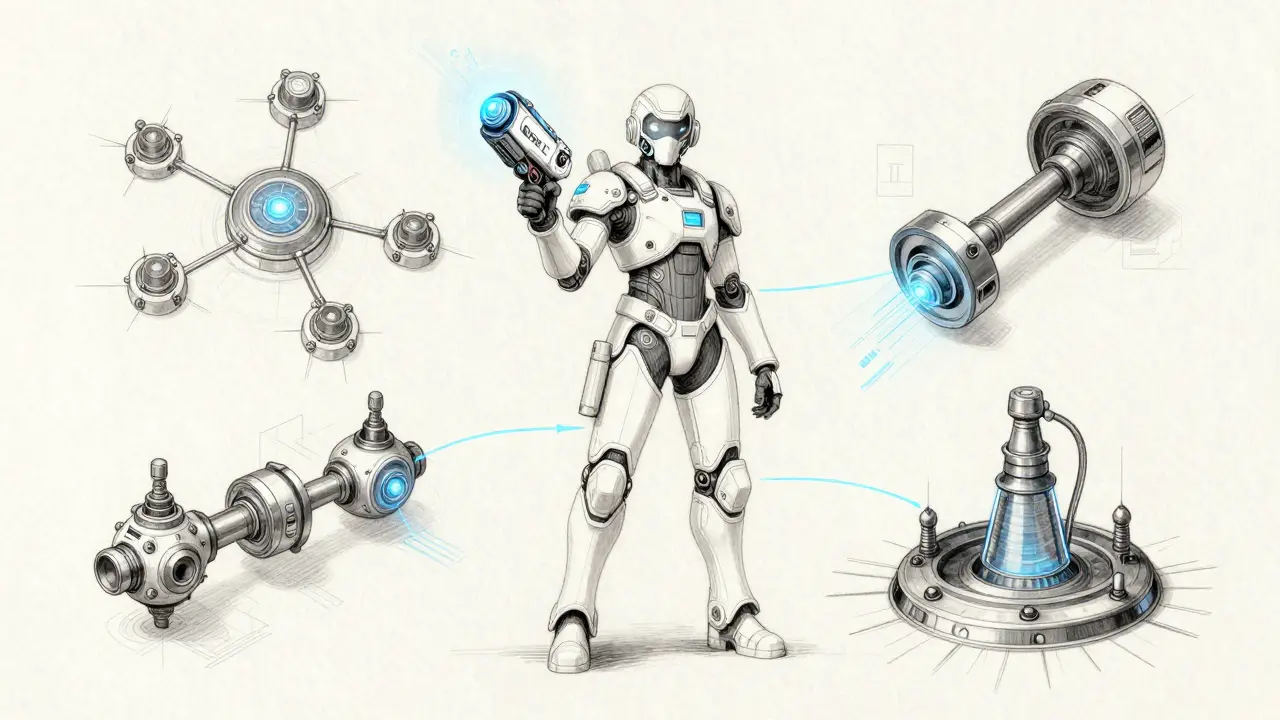
The idea is to move beyond simple click-to-earn mobile games and bring true AAA quality to the blockchain space. In this sci-fi universe, players take on the role of "Seekers." You aren't just shooting pixels; you’re hunting monsters, mining resources, engaging in player-versus-player combat for equipment, and searching for ancient technology. The twist? All these items have real-world value because they are tied to the blockchain. If you find a rare weapon, you can own it, trade it, or sell it using the native currency.
Understanding the QBIT Token
The fuel for this entire ecosystem is the QBIT token. Technically, QBIT is a BEP-20 token operating on the Binance Smart Chain (now often referred to as BNB Chain). This means it shares the same infrastructure as thousands of other tokens, offering fast transactions and low fees compared to Ethereum. However, the way QBIT handles money is where things get interesting-and potentially risky.
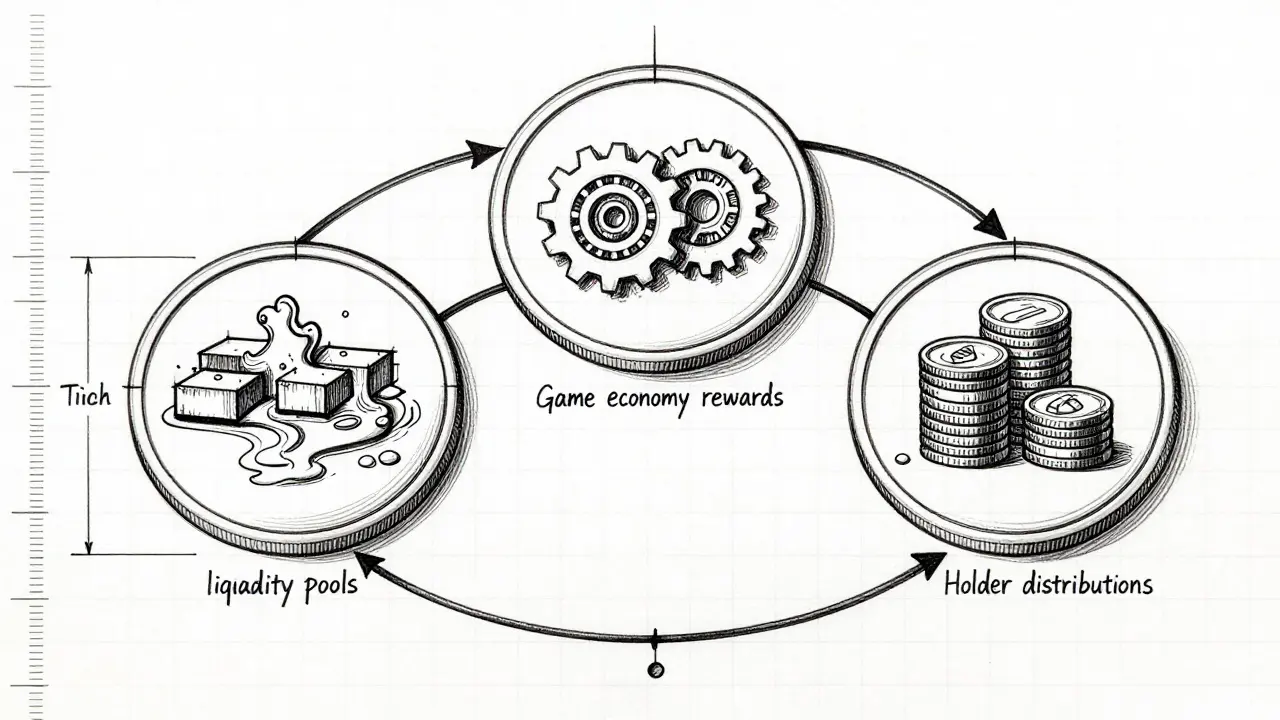
Every time you buy, sell, or transfer QBIT, a 10% tax is automatically deducted from the transaction. Here is exactly where that money goes, according to founder Fraser Gordon:
- 3.5% is swapped to BNB: This helps maintain liquidity and supports the network gas fees.
- 3.5% is reinjected into the game economy: These funds go toward rewards for players and maintaining the value of in-game items.
- 3% is distributed back to holders: This acts as a passive reward mechanism for people who hold the token in their wallets.
This redistribution model is designed to keep the community engaged and theoretically support the token's price floor. However, it also means every trade costs you more than standard tokens, which can deter active traders.
Market Reality: Price, Volume, and Rankings
If you are looking at Project Quantum from an investment perspective, the current data paints a stark picture. As of late 2025 and early 2026, QBIT trades at a microscopic price point-often cited around $0.0000001786 USD. While the number looks small, the bigger red flag is the trading volume. On major tracking platforms like CoinMarketCap, the 24-hour trading volume is frequently listed as $0.
This zero-volume status is significant. It suggests that there is almost no active buying or selling happening. When a token has no volume, it becomes extremely difficult to enter or exit a position without drastically affecting the price. Currently, Project Quantum sits at rank #6653 on CoinMarketCap, placing it far outside the top tier of cryptocurrencies. For context, established gaming tokens like GALA (Gala Games), SAND (The Sandbox), and AXS (Axie Infinity) consistently rank much higher and handle millions of dollars in daily trades.
| Feature | Project Quantum (QBIT) | Axie Infinity (AXS) | The Sandbox (SAND) |
|---|---|---|---|
| Blockchain | Binance Smart Chain (BEP-20) | Ethereum / Ronin Sidechain | Ethereum |
| Game Status | In Development / Unreleased | Live & Active | Live & Active |
| Daily Volume | $0 (Negligible) | High ($M+) | High ($M+) |
| Token Tax | 10% | 0% | 0% |
| Engine | Unreal Engine 5 (Planned) | Custom Unity-based | Unity |
The disparity in volume highlights a key issue: speculation versus utility. AXS and SAND have active player bases generating real economic activity. QBIT, lacking a released game, relies entirely on future promises.
Technical Infrastructure and Development Status
One of Project Quantum’s unique selling points is its technical approach. Quantum Works claims to be building a custom plugin for Unreal Engine 5 that facilitates seamless interaction between blockchain data and off-chain game data. The plan is not only to use this for their own MMOFPS but to license the plugin to other developers, helping them integrate blockchain features into traditional AAA games.
However, development timelines in the crypto gaming sector are notoriously fluid. While the GitHub repository for the project exists (github.com/electro-magic/projectquantum), public activity metrics are sparse. There is no verifiable evidence of a fully launched, playable game as of 2026. Most information comes from promotional interviews and social media updates rather than independent reviews or beta test results. This lack of transparency makes it hard to assess if the "AAA" claim is realistic or merely marketing hype.
Risks and Challenges for Investors
Investing in early-stage gaming tokens like QBIT carries substantial risk. Here are the primary concerns you need to weigh:
- Liquidity Issues: With near-zero trading volume, you might find yourself unable to sell your tokens when you want to. Buying QBIT often requires using decentralized exchanges like PancakeSwap with high slippage allowances, which can lead to unexpected losses during execution.
- Price Volatility: Speculative sites offer wildly varying predictions. Some suggest QBIT could rise to $0.00007 by 2025, while others predict a decline. These forecasts are algorithmic guesses based on historical volatility, not fundamental value, given the lack of product release.
- Regulatory Uncertainty: The 10% tax structure, particularly the portion distributed to holders, can sometimes trigger regulatory scrutiny regarding securities laws in various jurisdictions. Always check local regulations before holding such tokens.
- Competition: The blockchain gaming market is crowded. With over 1,400 projects competing for attention, standing out requires a truly exceptional product. Without a live game, Project Quantum struggles to attract users away from established platforms.
How to Buy QBIT (If You Choose To)
If you decide the potential upside outweighs the risks, purchasing QBIT is not as straightforward as buying Bitcoin on Coinbase. Since it is not listed on major centralized exchanges like Binance or Kraken, you must use a decentralized exchange (DEX).
Here is the general process:
- Set Up a Wallet: You will need a Web3 wallet compatible with the Binance Smart Chain, such as MetaMask or the Binance Web3 Wallet.
- Acquire BNB: Buy BNB (Binance Coin) on a centralized exchange and transfer it to your Web3 wallet. You’ll need this to pay for gas fees and to swap for QBIT.
- Connect to PancakeSwap: Navigate to the PancakeSwap interface and connect your wallet.
- Paste the Contract Address: Search for QBIT carefully. Always verify the contract address from official sources like the Project Quantum website or verified social channels to avoid scam tokens.
- Adjust Slippage: Due to the 10% tax, you may need to set your slippage tolerance to 12% or higher to ensure the transaction doesn’t fail.
- Execute Swap: Confirm the transaction. Remember, once sent, blockchain transactions cannot be reversed.
Note that Holder.io and other trackers sometimes list the token as "awaiting listing," which reflects its limited accessibility. Always do your own due diligence.
Future Outlook: Is It Worth Watching?
The long-term viability of Project Quantum hinges entirely on one factor: the successful launch and adoption of its Unreal Engine 5 MMOFPS. If the game delivers a genuinely high-quality experience that attracts thousands of daily active users, the demand for QBIT could organically grow, driving up volume and price. The redistributive tokenomics could then help sustain the ecosystem.
Conversely, if the game remains in development hell or fails to meet AAA standards, the token likely faces continued stagnation or decline. The crypto gaming sector is ruthless; projects that delay too long lose momentum to faster competitors. For now, Project Quantum remains a high-risk, speculative asset rather than a proven investment. Keep an eye on their GitHub activity and official announcements for concrete signs of progress, but proceed with caution.
Is Project Quantum a scam?
There is no definitive proof that Project Quantum is a scam, as it has a known founder (Fraser Gordon), a registered company (Quantum Works), and a transparent tokenomics model. However, the lack of a released product, zero trading volume, and reliance on speculative promises raise significant red flags. It is crucial to treat it as a high-risk investment and never invest more than you can afford to lose.
When will the Project Quantum game be released?
As of 2026, there is no confirmed public release date for the Project Quantum MMOFPS. The project has been in development since 2021, but delays are common in AAA game development, especially when integrating complex blockchain technologies. Check their official Twitter (@projectquantum_) or Discord for the latest updates.
Why is the QBIT price so low?
The price of QBIT is extremely low (sub-microdollar range) primarily due to low market capitalization, minimal trading volume, and high supply. Additionally, the 10% transaction tax reduces liquidity, making it harder for the price to stabilize or grow without significant buyer interest.
Can I buy QBIT on Binance?
No, QBIT is not listed on the Binance centralized exchange. You can only purchase it through decentralized exchanges (DEXs) like PancakeSwap using the Binance Smart Chain. You will need to transfer BNB to a Web3 wallet first.
What is the 10% tax on QBIT used for?
The 10% tax is split into three parts: 3.5% is converted to BNB for liquidity, 3.5% is reinvested into the game economy for rewards, and 3% is distributed to existing QBIT holders as a passive income mechanism.
How does Project Quantum compare to Axie Infinity?
Axie Infinity is a live, widely adopted play-to-earn game with high trading volume and a mature ecosystem. Project Quantum is still in development, aims for AAA graphics via Unreal Engine 5, and currently has negligible market activity. Axie is a proven product; Quantum is a speculative promise.