
What is TRALA (TRALA) Crypto Coin? Web3 Gaming Token Guide

Most people assume that if a game has millions of players, adding blockchain technology will automatically make it successful. The TRALA project tried to prove this theory by taking established mobile games and wrapping them in a Web3 economy. Launched in March 2023 as an ERC20 token on the Ethereum blockchain, TRALA aims to bridge the gap between traditional gamers and crypto investors. But does it actually work, or is it just another speculative asset with a flashy marketing deck?
If you are looking at the chart and wondering why the price looks so different from its launch day, you are not alone. Understanding what TRALA is requires looking past the hype at the underlying mechanics: a dual-token system, specific game integrations, and a revenue model that relies on real-world spending rather than pure speculation.
Key Takeaways
- TRALA is a governance token for a Web3 gaming platform that integrates proven AAA-rated mobile game IPs.
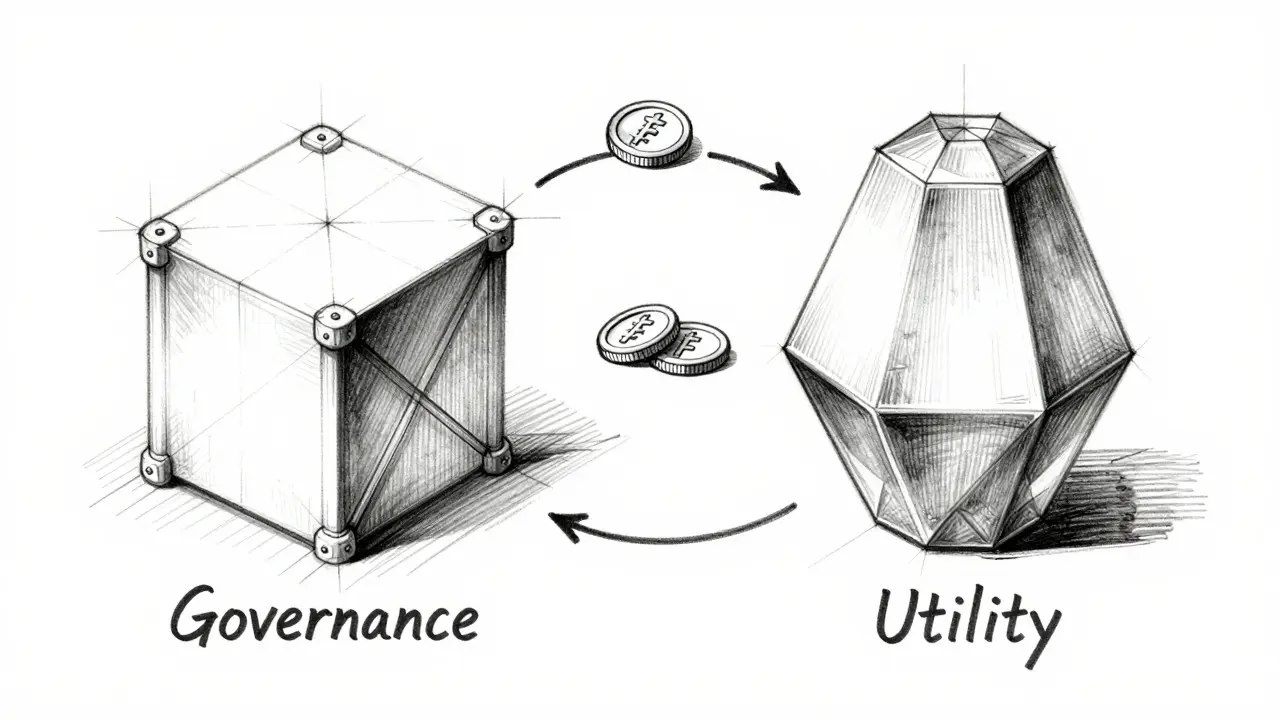
- The platform uses a dual-token economy: TRALA for governance and TOPAZ for in-game utility.
- Major backers include Animoca Brands and Matter Labs, lending credibility to the tech stack.
- Token performance has been volatile, with prices significantly below the Initial Exchange Offering (IEO) levels.
- Liquidity is limited, with trading primarily occurring on the Gate.io exchange.
How the TRALA Platform Works
At its core, TRALA is not just a coin; it is the engine behind a specific type of gaming ecosystem. The platform’s strategy is distinct from many "play-to-earn" projects that start from scratch. Instead, they take games that already have massive user bases-specifically titles like Gunship Battles and Freestyle-and add a blockchain layer on top.
This approach targets two audiences simultaneously. Traditional Web2 players can keep playing their favorite games without needing to understand wallets or gas fees. Web3 users can participate in the same environment but with access to tokenized assets and rewards. This "dual-market" model is designed to ensure that the game remains fun first and financial second, a common critique of other blockchain gaming attempts.
The technical foundation is built on the Ethereum network. As an ERC20 token, TRALA benefits from Ethereum’s security and wide wallet compatibility, such as MetaMask. However, this also means it is subject to Ethereum’s network conditions, including transaction costs, unless the team utilizes Layer 2 solutions effectively.
Tokenomics and the Dual-Token Economy
One of the most critical aspects of any crypto project is how its money moves. TRALA employs a dual-token single economy structure. This might sound complex, but here is the simple breakdown:
- TRALA (Governance): Used for voting on platform decisions and securing the ecosystem’s future direction.
- TOPAZ (Utility): The in-game currency used for purchases and transactions within the specific game titles.
The maximum supply of TRALA is fixed at 1,000,000,000 tokens. A key feature of their economic model is the buyback mechanism. A portion of the revenue generated from fiat currency purchases (regular money spent in the game) is used to buy back TRALA tokens. In theory, this creates a floor for the token’s value because every dollar spent by a non-crypto gamer directly supports the token price.
| Attribute | Value |
|---|---|
| Total Supply | 1,000,000,000 TRALA |
| Circulating Supply (Est.) | ~47,980,959 TRALA (approx. 5%) |
| Blockchain | Ethereum (ERC20) |
| Primary Use | Governance & Ecosystem Utility |
| Companion Token | TOPAZ (In-game utility) |
It is worth noting that data on circulating supply can vary across different tracking sites. Some sources list it as unknown or zero due to reporting discrepancies, while others estimate around 5% of the total supply is active. Always verify current figures on multiple platforms before making decisions based on market cap calculations.
Market Performance and Investor Backing
Let’s talk numbers, because in crypto, sentiment often drives price more than fundamentals in the short term. TRALA launched its IEO in June 2024 at a price of $0.09 per token. Since then, the price has experienced significant volatility. At its peak, the token reached an all-time high of approximately $0.1477, offering early investors a gain of over 300%. However, the current trading range is much lower, often hovering between $0.0008 and $0.0010.
This decline reflects broader trends in the blockchain gaming sector, where many tokens struggle to maintain value once the initial hype fades. Despite the price drop, the project retains strong institutional support. Animoca Brands, a major venture capital firm in Web3 gaming, backs the project. Additionally, Matter Labs, the developer behind zkSync (a popular Ethereum scaling solution), is involved. These partnerships suggest that the technology stack is robust, even if the token price hasn’t reflected that confidence yet.
Liquidity is currently concentrated on the Gate.io exchange, which handles nearly 100% of the trading volume. For traders, this means that large orders could impact the price more significantly than on larger exchanges like Binance or Coinbase. Daily trading volumes have been modest, typically ranging between $40,000 and $90,000, indicating that TRALA remains a niche asset compared to mainstream cryptocurrencies.
Risks and Considerations for Users
Before you decide to hold or trade TRALA, it helps to understand the specific risks involved. Unlike Bitcoin, which is a store of value, or Ethereum, which powers a decentralized internet, TRALA is tied directly to the success of specific video games.
- Game Dependency: If the flagship games lose popularity, the demand for TOPAZ drops, which indirectly affects TRALA through the buyback mechanism.
- Regulatory Uncertainty: As with all crypto assets, regulatory changes in major markets (like the US or EU) can impact trading availability and investor sentiment.
- Liquidity Constraints: Being listed on fewer exchanges makes it harder to enter or exit positions quickly without moving the market price.
- Supply Transparency: The discrepancy in reported circulating supplies can make valuation difficult for fundamental analysts.
On the flip side, the "real-world revenue" model offers a safety net that purely speculative tokens lack. If the games continue to generate consistent revenue from millions of existing players, there is a tangible cash flow supporting the ecosystem. This is a crucial distinction for long-term holders who believe in the product rather than just the price action.
Frequently Asked Questions
Where can I buy TRALA coins?
As of late 2025, TRALA is primarily traded on the Gate.io exchange. You can purchase it using stablecoins like USDT or directly with fiat currencies supported by the exchange. Due to limited listing presence, check other exchanges regularly, as new listings may appear.
Is TRALA a good investment for beginners?
TRALA is considered a high-risk, speculative asset. It is best suited for investors who understand the blockchain gaming sector and are comfortable with volatility. Beginners should only allocate a small portion of their portfolio to such niche tokens after conducting thorough research.
What is the difference between TRALA and TOPAZ?
TRALA is the governance token used for platform-level decisions and holding value in the ecosystem. TOPAZ is the utility token used specifically for in-game purchases and transactions. Think of TRALA as the stock of the company and TOPAZ as the gift card you use inside the store.
Which games are available on the TRALA platform?
The platform focuses on integrating established mobile game IPs, with Gunship Battles and Freestyle being the flagship titles. These games have been popular for over a decade and have a combined player base of hundreds of millions globally.
Does TRALA require mining?
No, TRALA is not mineable. It is an ERC20 token on the Ethereum network, meaning all tokens were created at launch. You acquire them by purchasing on exchanges or earning them through platform incentives.