
What is Unibase (UB)? The Decentralized AI Memory Layer Explained
Key Takeaways
- Purpose: Provides a permanent, verifiable memory storage for AI agents.
- Network: Operates primarily on Ethereum and BNB Chain.
- Token: UB is used for storage fees, staking, and governance.
- Edge: Uses zk-backed verification to ensure memory integrity without sacrificing privacy.
How Unibase Actually Works
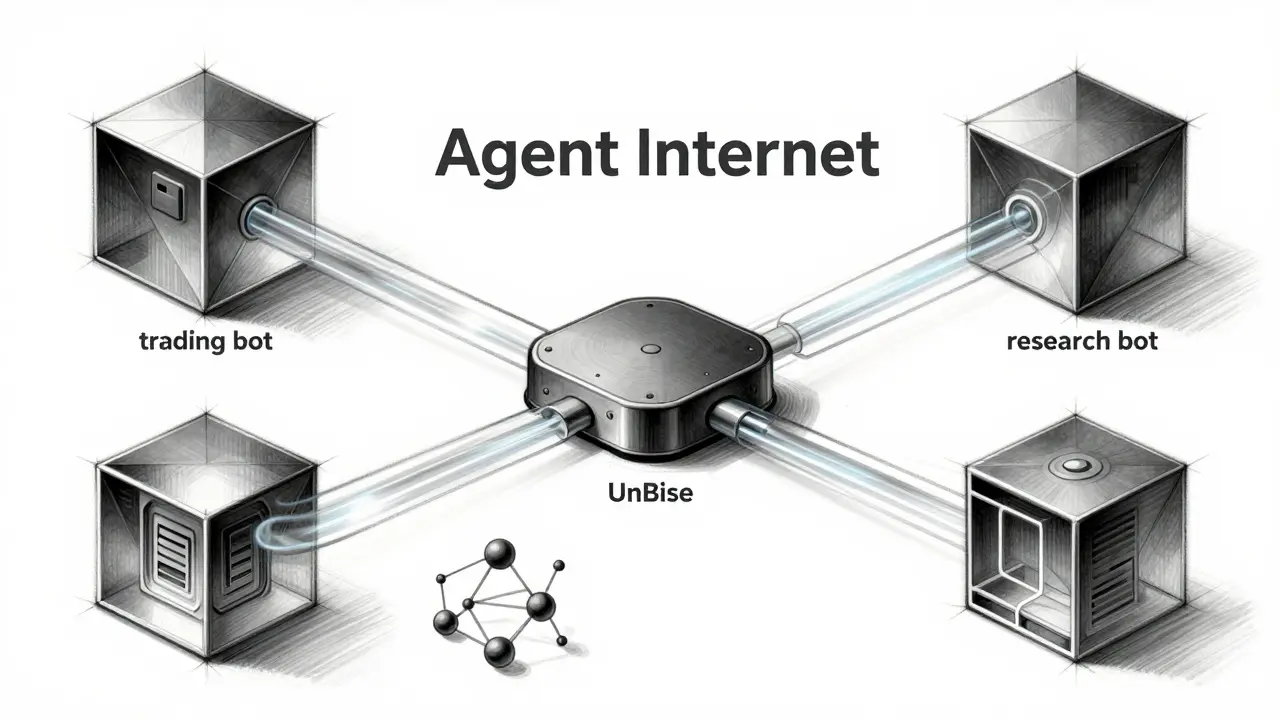
To understand why Unibase UB crypto is different from a standard coin, you have to look at the "Agent Internet." Currently, if you move an AI agent from one platform to another, it loses all its context. Unibase acts as the external hard drive for these agents, but instead of one company owning that drive, it is decentralized.The architecture relies on four main pillars to keep things running:
- On-Chain Identity: Every agent gets a secure, verifiable ID. This means an agent can prove who it is across different apps.
- Decentralized Memory: Instead of a central server, memory is stored across a network of nodes, making it scalable and resistant to censorship.
- Multi-Agent Interoperability: This allows a trading bot to "talk" to a research bot and share learned knowledge seamlessly.
- Continuous Self-Evolution: Because agents can remember past failures and successes, they can autonomously improve their logic over time.
The UB Token: Utility and Economics
UB is the native utility token that powers the entire ecosystem. It isn't just a speculative asset; it's the "fuel" required for agents to function. For instance, writing a memory entry isn't free-it costs approximately $0.001 per KB.If you're looking at the numbers, the total supply is capped at 10 billion UB. As of late 2025, about 2.5 billion are in circulation. This means a large portion is still locked for ecosystem growth, which can lead to price volatility when those tokens are released. For those who want more influence, the protocol uses veUB (vote-escrowed UB), allowing holders to lock their tokens to gain governance rights over the network's future.
| Function | Requirement / Cost | Purpose |
|---|---|---|
| Memory Storage | $0.001 per KB | Paying for persistent data writes |
| Premium Agents | 10,000 UB Stake | Unlocking advanced agent capabilities |
| Governance | veUB Locking | Voting on protocol upgrades |
| Knowledge Mining | Variable Rewards | Incentivizing data contribution |
Comparing Unibase to Other AI Projects
It's easy to lump all AI coins together, but Unibase fills a very specific gap. Most AI projects focus on either the "brain" (the model) or the "marketplace" (buying/selling data). Unibase focuses on the "memory."Take Fetch.ai, for example. It's great for creating an economy where agents trade services, but it doesn't provide a dedicated, decentralized memory layer. Similarly, Ocean Protocol is all about data marketplaces. Unibase is the middleman that lets these agents actually *remember* the data they've processed. A standout feature is its "zk-backed memory verification," which uses zero-knowledge proofs to prove that a piece of memory is authentic without revealing the sensitive data inside.
Real-World Use Cases and Performance
This isn't just theoretical. Projects like TradingFlow have already integrated Unibase to build autonomous trading agents. In a real-world test, agents using Unibase memory showed 47% better performance because they could remember market patterns and user preferences across different sessions, whereas "stateless" agents had to start from scratch every time.Other operational projects include:
- BitAgent: A platform where multiple AI agents collaborate on complex tasks.
- TwinX: A platform for agents that self-evolve based on user interaction.
- Beeper: An AI agent integrated directly into Twitter (X) that maintains a persistent personality and memory of conversations.
From a technical side, the speed is impressive. Some developers have reported that memory retrieval latency dropped from 2.1 seconds to just 0.35 seconds after switching to Unibase. However, it's not without flaws. Because it lives on Ethereum, gas fees can be a nightmare. During peak congestion, a simple memory write can spike from $1.27 to over $3.50, which can eat into the profits of smaller agent operators.
How to Get Started and Node Requirements
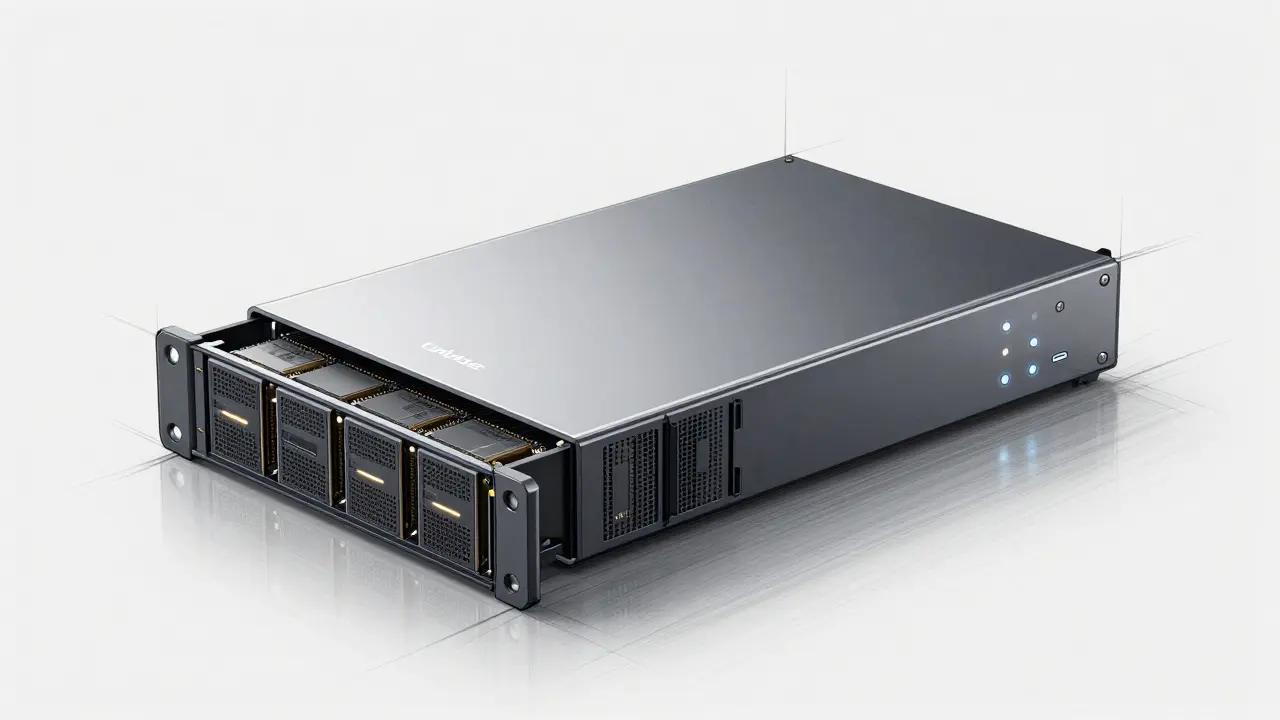
If you're a developer or a node operator, you'll need to prepare your hardware. Running a storage node isn't something you can do on an old laptop. You'll need at least 16GB of RAM, a 500GB SSD for fast data access, and a stable 100Mbps internet connection.For those looking to build, you'll need a grasp of Solidity if you're doing custom smart contract work, and TypeScript for the agent logic. Integration usually takes a few days for blockchain pros, but if you're coming purely from an AI background, expect a 2-3 week learning curve to get comfortable with Web3 wallets and gas management.
Potential Risks and the Road Ahead
No investment is without risk. The biggest concern for UB is the token release schedule. With only 25% of the supply currently circulating, a massive unlock of 1.25 billion tokens is scheduled for Q1 2026. This could create significant downward pressure on the price if the demand doesn't keep up.Furthermore, while the technology is sound, Unibase has to fight the "gas war." To survive, it needs to move more of its operations to Layer 2 solutions like Arbitrum or Optimism to lower costs. The roadmap suggests these expansions are coming, along with integration into DePIN (Decentralized Physical Infrastructure Networks) by mid-2026. If they can scale to handle 10,000+ concurrent agents without lagging, they could realistically capture a huge chunk of the AI infrastructure market.
What exactly does "AI Memory Layer" mean?
In simple terms, it's a decentralized database where AI agents store their experiences and user data. Unlike a standard database, it's owned by no one and can be accessed by any compatible agent, allowing an AI to "remember" a user even if they switch from one app to another.
Is UB a safe investment?
Like all crypto, it's volatile. While the tech solves a real problem, be aware of the token unlock schedule in early 2026 and the dependence on Ethereum's gas prices. Always check the current circulating supply versus the total supply before investing.
Which wallets support Unibase (UB)?
Currently, UB is supported by MetaMask, Trust Wallet, and the native Unibase wallet. Support for other wallets is limited at this time.
How is UB different from Fetch.ai or Bittensor?
Fetch.ai focuses on agent communication and economies, and Bittensor focuses on decentralized machine learning (the "brain"). Unibase focuses on the "memory"-the storage and retrieval of long-term data that allows agents to be persistent and self-evolving.
What are the requirements to run a Unibase node?
You need a machine with at least 16GB of RAM, a 500GB SSD, and a minimum 100Mbps internet connection to maintain the stability required for storage or Data Availability (DA) nodes.
Next Steps for Users
If you're a trader, keep a close eye on the Q1 2026 token unlocks and the protocol's expansion into Layer 2 networks, as this will directly impact price and usability. If you're a developer, head over to the Unibase GitHub or join their Discord to start experimenting with the MCP or ElizaOS integrations. Finally, if you're just curious about AI, try out projects like Beeper or TradingFlow to see the "memory" effect in action before diving into the token itself.
Matthew Morse
April 21, 2026 AT 08:14gas fees are the real killer here
Kathleen Bergin
April 23, 2026 AT 04:39It is just a database on a blockchain. Not that deep.
Greg Reynolds
April 23, 2026 AT 09:38The claim that this solves the amnesia problem is a gross oversimplification. Most "stateless" issues are actually handled via vector databases and RAG in centralized environments far more efficiently than any zk-backed on-chain layer could ever hope to achieve. Why would a developer trade milliseconds of latency for the privilege of paying Ethereum gas fees just to store a preference for a dark-mode UI?
Alex Hunter
April 24, 2026 AT 19:33That is a fair point, but the value isn't in the speed-it's in the ownership. Moving your AI persona from one platform to another without a corporate middleman is the real win here. It's about digital sovereignty.
Jagdish Sutar
April 25, 2026 AT 19:29I really appreciate how this allows different bots to collaborate. Imagine a research bot and a trading bot sharing a memory bank to find alpha more effectively. It creates a very inclusive ecosystem for AI development!
Sarah Fisher
April 26, 2026 AT 19:45It makes me wonder about the nature of identity. If an AI has a persistent memory across all platforms, is it becoming a digital extension of the self, or just a very sophisticated mirror of our past inputs?
Keith Garcia
April 28, 2026 AT 00:16Utterly pedestrian analysis of the tokenomics 🙄. The Q1 2026 unlock is a ticking time bomb for the retail sheep who don't understand dilution. Only a complete amateur would ignore the massive overhead of maintaining a node just to avoid a centralized server. Absolutely laughable 💅.
Liz Ariza
April 29, 2026 AT 02:02The idea of a memory layer is just so sparkly and exciting! ✨ Imagine never having to explain your coffee order to a bot twice! ☕️ It's like giving AI a little heart and a brain that actually remembers us! 💖
Yvette P
April 30, 2026 AT 02:22Oh honey, please. If you think a 500GB SSD and 16GB of RAM is a "high-performance" requirement, you've clearly never dealt with actual high-throughput data availability layers in a production environment. The sheer audacity of calling this a solution while still tethered to Ethereum's prehistoric gas model is just precious. I've seen more scalable architectures in a high school coding club's first project. We're talking about zk-proofs for memory integrity, yet they're still fighting the "gas war" like it's 2021. It's practically a comedy of errors at this point, wrapped in a fancy Web3 wrapper to attract VCs who can't spell "latency" but love the word "decentralized." Just a little tip: maybe look into actual L2-native storage before you bet your life savings on a token with a 75% unlock pending. Good luck with that!
Alex Wan
May 1, 2026 AT 19:35I am most hounored to see such progress in the AI field! It is truly a marvel. Pleease let us consider how we can all work together to make this more accessible for the novice developers who may struggle with the 3-week learning curve. It would be quite a tragedy if only the elite could utilize such a laungwage!
Tony Gurley-Ward
May 2, 2026 AT 19:40Memory is just a social construct for silicon, man. We're basically building a digital ghost that follows us around. Pretty wild that we're paying $0.001 per KB to keep our ghost's memories fresh. Totally psychedelic way to look at data!
Caiaphas Konkol
May 2, 2026 AT 23:34Wait, who actually owns these nodes? I bet it's just three servers in a basement in the Caymans. They talk about "decentralization" to hide the fact that the data is being harvested by the protocol architects anyway. Wake up.
Jennifer L
May 3, 2026 AT 00:50I feel so moved by the laidea of AI agents helping us!! Although I am a bit worried about the technical partss, it sounds so wonderful that they can grow and learn from failurs. Truly a poetic approach to technology!
Clair Geary
May 3, 2026 AT 04:25this is such a vibe honestly just thinking about a bot that actually gets me without the reset button being hit every time i close the tab is a total dream 🌈 love the way they handled the zk stuff too
Sarah Ingrams
May 5, 2026 AT 00:06sounds a bit expensive for the average person
Gloris Young
May 5, 2026 AT 14:28It's definitely a journey. Just take it slow and see how it fits into your workflow!
Hannah Rubia
May 5, 2026 AT 16:09I believe the transition to Layer 2 solutions will be the deciding factor for the longevity of the Unibase ecosystem.
Mary Tawfall
May 6, 2026 AT 23:41This is such an encouraging step forward for AI agents. I'm sure the developers will find a way to optimize the gas costs soon!
Tara Aman
May 7, 2026 AT 18:37I'm sure the token unlock will be fine, as long as the utility is there. We should just stay positive about the growth!
debashish sahu
May 9, 2026 AT 07:19The hardware requirements for the node are quite reasonable compared to some other DePIN projects I have seen.
Charlie Queen
May 9, 2026 AT 15:39Can't wait to see Beeper on X actually remembering my weird jokes from three months ago! 😂 That's the kind of AI interaction I'm here for! 🚀