
What is XNET Mobile (XNET)? A Guide to the DePIN Crypto Network
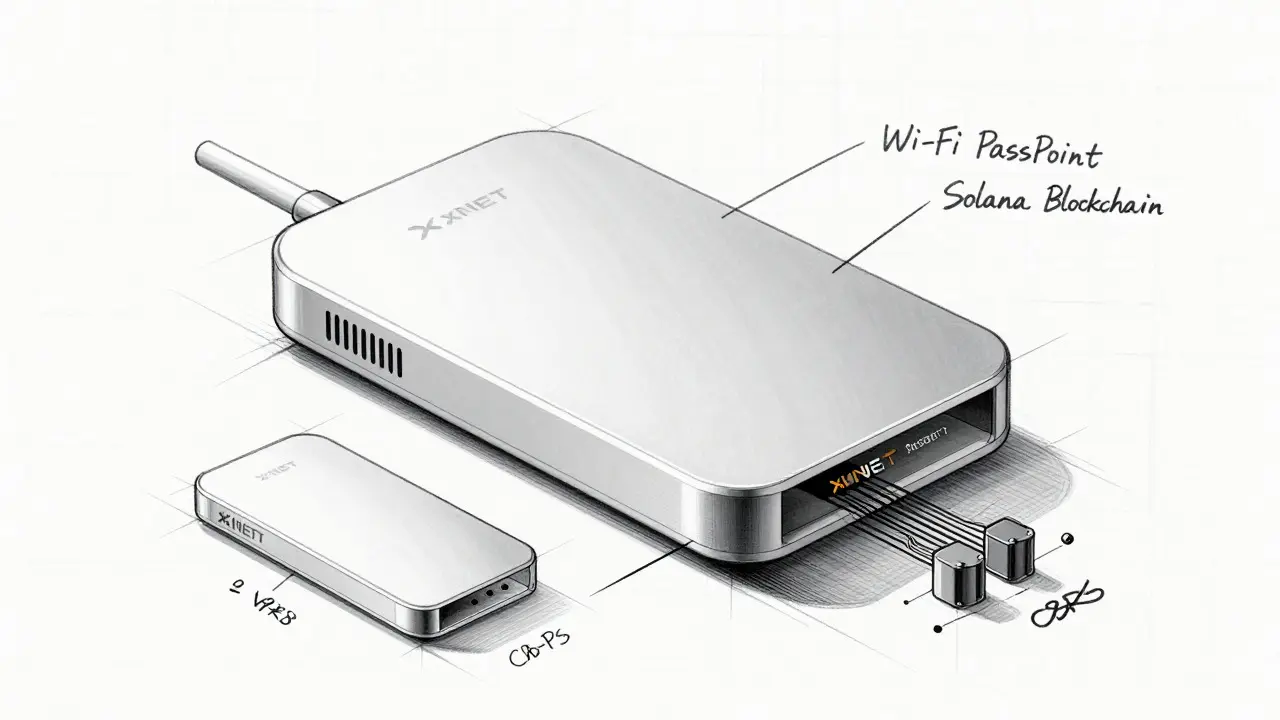
Have you ever walked into a crowded stadium or a busy downtown area and watched your phone signal drop to zero? You aren't alone. Traditional mobile networks struggle to handle high-density traffic without massive infrastructure costs. Enter XNET Mobile, a project that turns everyday locations into profitable mobile hotspots using cryptocurrency incentives. But what exactly is this coin, and is it just another speculative token or does it have real-world utility?
In this guide, we break down how XNET works, who backs it, and whether it’s worth your attention in the current crypto landscape.
Key Takeaways
- XNET Mobile is a Decentralized Physical Infrastructure Network (DePIN) built on the Solana blockchain.
- It creates a neutral-host mobile network using Wi-Fi Passpoint technology to offload data from major carriers like AT&T.
- Node operators earn rewards when users connect to their hardware, with revenue coming directly from carrier payments rather than pure token inflation.
- The project features a unique "shard" system allowing global investors to buy shares of US-based hotspot revenue.
- Current market data shows low liquidity and small market cap, indicating high risk for new investors.
What Is XNET Mobile?
To understand XNET Mobile, you first need to grasp the concept of DePIN. Decentralized Physical Infrastructure Networks are projects that use blockchain tokens to incentivize people to build real-world physical infrastructure. Think of it as Airbnb for internet connectivity.
Instead of a single telecom company building every cell tower, XNET allows individuals and businesses to deploy small wireless devices. These devices create a mesh network that provides fast, reliable mobile connectivity. The core technology relies on Wi-Fi Passpoint (also known as Hotspot 2.0). This standard allows your phone to automatically connect to secure Wi-Fi networks without needing to log in via a captive portal or download an app. It feels just like connecting to a cellular network.
The XNET token serves as the economic layer of this ecosystem. It connects three main groups:
- Node Operators: People who own and deploy the physical hardware.
- Mobile Network Operators (MNOs): Major carriers like AT&T, Verizon, or T-Mobile who pay to access the network for their customers.
- Users: Consumers whose phones automatically offload data to the nearest XNET hotspot when cellular coverage is weak.
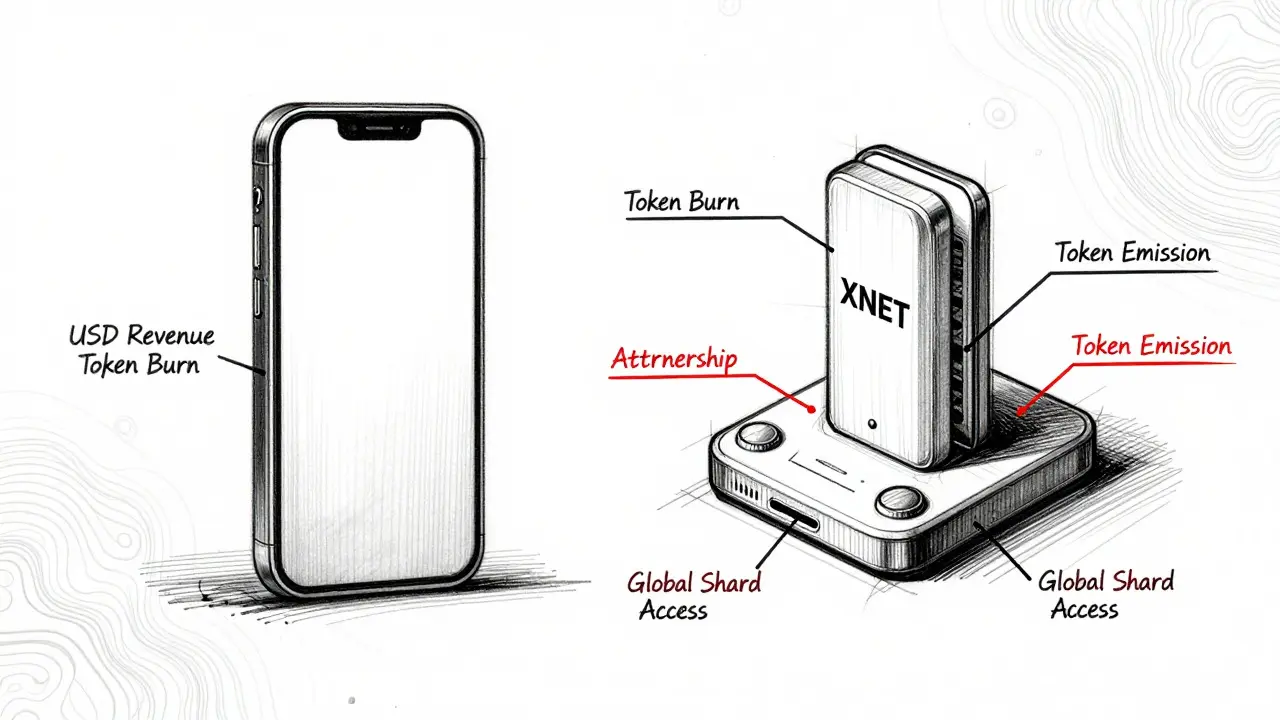
When a user connects to an XNET node, the carrier pays for that data usage. That payment flows into the XNET treasury, where a portion is used to buy back and burn XNET tokens from the open market, while the rest is distributed as rewards to the node operator. This model attempts to solve the traditional crypto problem of infinite token emission by tying rewards to actual revenue generation.
How Does the Technology Work?
The technical backbone of XNET is the Solana blockchain. Solana was chosen for its high throughput and low transaction fees, which are critical for processing millions of micro-transactions generated by data usage events. Without a scalable chain like Solana, the gas fees would eat up all the profits for node operators.
Physically, the network uses Citizens Broadband Radio Service (CBRS) spectrum. This is a mid-band frequency range in the United States that offers a balance between range and capacity. It’s the same spectrum used by many private LTE networks today. By leveraging CBRS alongside standard Wi-Fi frequencies, XNET aims to provide industry-grade reliability.
Here is the step-by-step flow of value creation:
- Deployment: An individual buys an XNET device and installs it in a location with high foot traffic, such as a coffee shop, office lobby, or apartment complex.
- Connection: A nearby user’s phone, configured to support Passpoint, detects the XNET signal. If their primary cellular connection is congested, their phone seamlessly switches to the XNET network.
- Payment: The user’s home carrier (e.g., AT&T) recognizes the connection as valid roaming or offload data. The carrier pays XNET in fiat currency (USD) for this data transmission.
- Reward Distribution: The USD revenue is converted into XNET tokens. According to the project’s model, 40% of network revenue goes toward buying and burning tokens, reducing supply. The remaining revenue is split between the node operator and any "shard" owners.
The Shard System: Global Participation
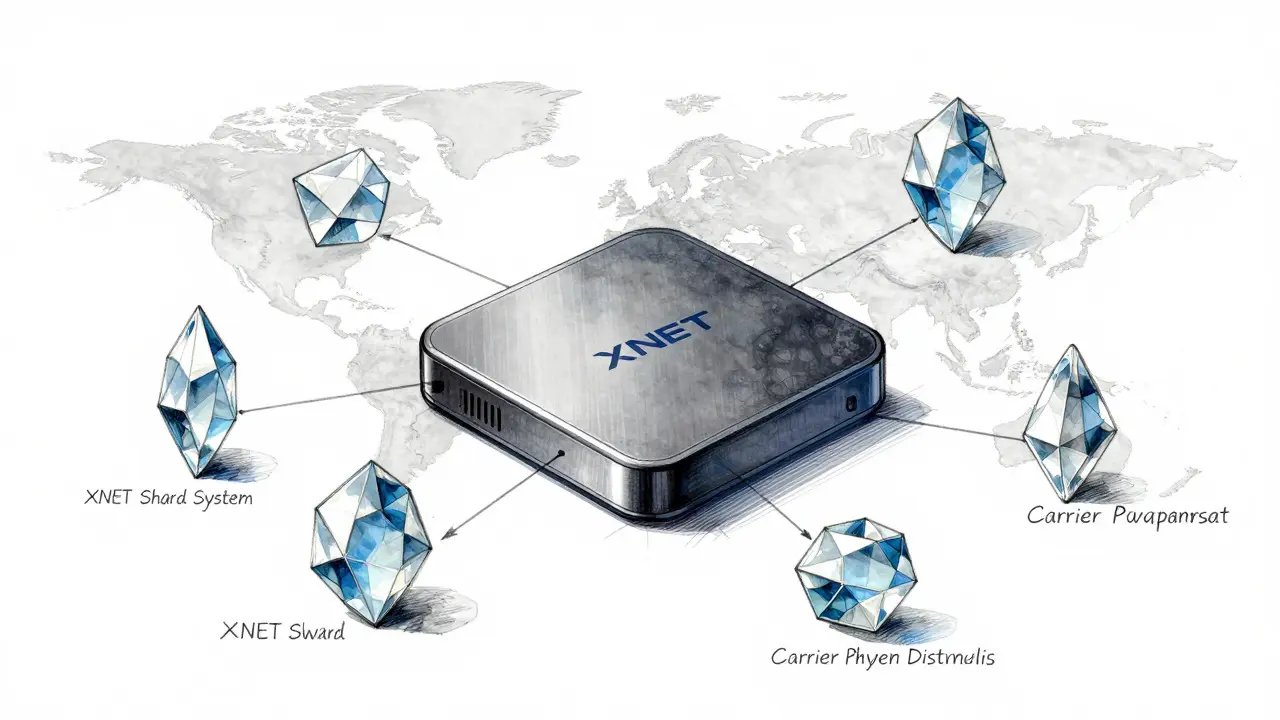
One of the most interesting aspects of XNET is its approach to geography. Physical infrastructure is hard to move. A hotspot in New York generates revenue from New York users. Historically, this meant only locals could benefit from deploying hardware there. XNET solves this with its "shard" system.
A shard represents a fractional ownership stake in the future revenue of a specific deployed device. Here is how it breaks down:
- Physical Owner: Keeps 20% of the device’s earnings. They handle the installation, power, and maintenance.
- Shard Owners: Collect the remaining 80% of the earnings. These can be anyone, anywhere in the world.
This means if you live in Europe but believe a hotspot in Chicago will generate significant traffic, you can purchase shards of that Chicago device. You don’t need to touch the hardware; you just hold the digital token representing your share of the revenue stream. This democratizes access to infrastructure investment, turning passive real estate income into a liquid crypto asset.
XNET vs. Helium: Key Differences
You’ve likely heard of Helium, the pioneer of decentralized wireless networks. While both projects fall under the DePIN umbrella, they operate quite differently. Understanding these differences is crucial for evaluating XNET’s potential.
| Feature | XNET Mobile | Helium Mobile |
|---|---|---|
| Blockchain | Solana | Solana (migrated from Ethereum) |
| Revenue Model | Direct carrier payments (USD) converted to tokens | Token emissions + carrier partnerships |
| Carrier Partnerships | Verified partnership with AT&T | Partnerships with multiple carriers (US Cellular, etc.) |
| Hardware Cost | ~$249.48 per device | Varies ($150-$300+ depending on type) |
| Global Access | Yes, via Shard system | Limited; mostly requires local deployment |
| Market Cap | Small (~$590k) | Large (~$1B+ historically) |
The biggest differentiator is the revenue source. Helium initially relied heavily on token emissions (printing new coins) to reward miners, which led to inflationary pressure. XNET structures its economy so that rewards are funded by actual dollars paid by carriers. This makes the tokenomics potentially more sustainable in the long run, provided the network continues to grow and attract users.
Investment Risks and Market Reality
While the technology sounds promising, the financial reality of XNET right now is starkly different from established projects. As of early 2026, XNET operates as a micro-cap asset. Let’s look at the hard numbers.
According to recent data from CoinMarketCap and CoinGecko, the circulating supply sits around 64 million to 140 million tokens, with a market capitalization hovering near $590,000 USD. The trading volume is extremely thin, often dipping below $20,000 in a 24-hour period. This lack of liquidity means that buying or selling even a moderate amount of XNET can cause significant price swings.
Furthermore, some platforms like TradingView have marked the XNETUSD pair as "Delisted" or inactive on certain exchanges. This suggests that finding a reliable place to trade the token might be difficult for retail investors. Always verify exchange listings before attempting to buy.
There are also discrepancies in reported metrics across different tracking sites. For instance, CoinMarketCap and CoinGecko sometimes show different circulating supply figures. In the world of crypto, transparency is key. Investors should dig into the official whitepaper or audit reports to understand the true token distribution.
Who Should Consider XNET?
XNET isn’t for everyone. It appeals to a specific type of participant:
- Infrastructure Enthusiasts: If you have access to high-traffic commercial spaces (offices, malls, universities) and want to monetize unused bandwidth, XNET offers a tangible ROI path. With an average daily earning estimate of ~$2.97 per device and a hardware cost of ~$249, the break-even point is roughly 84 days. This is relatively fast compared to other hardware investments.
- DePIN Believers: Those who believe decentralized infrastructure will replace or supplement traditional telecoms may view XNET as an early-stage bet on a larger trend.
- High-Risk Tolerators: Given the low market cap and liquidity issues, XNET is highly volatile. Only invest what you can afford to lose.
Conversely, if you are looking for a stable store of value or easy liquidity, XNET is likely not the right fit. The project is still in its early adoption phase, with only around 111 active devices verified on-chain. Scaling from dozens to thousands of nodes is a massive operational challenge.
Future Outlook and Challenges
The success of XNET hinges on two factors: scale and carrier adoption. Currently, the verified partnership with AT&T is a strong validation signal. It proves that major carriers see value in neutral-host networks. However, one partner is not enough. To compete with legacy infrastructure, XNET needs widespread deployment.
Regulatory hurdles also exist. Using CBRS spectrum requires compliance with FCC regulations in the US. As the network expands internationally, navigating different spectrum laws and telecom regulations will become increasingly complex.
Long-term price predictions vary wildly. Some analysts project growth based on successful network expansion, suggesting prices could reach higher levels by 2030-2034. However, these forecasts assume perfect execution, no regulatory crackdowns, and sustained carrier interest. In crypto, assumptions often fail. Treat long-term price targets with skepticism.
Final Thoughts
XNET Mobile represents an innovative attempt to merge physical telecommunications with blockchain economics. By shifting from speculative token mining to revenue-backed rewards, it addresses a fundamental flaw in earlier DePIN projects. The shard system further enhances accessibility, allowing global participation in local infrastructure.
However, the project remains small, illiquid, and risky. It is a niche player in a vast market. If you are interested in DePIN, XNET deserves a spot on your watchlist, but proceed with caution. Do your own research, verify the latest exchange listings, and consider starting with a small position or by monitoring the network’s growth metrics before committing significant capital.
Is XNET Mobile a scam?
There is no evidence suggesting XNET is a scam. It has a functional product, verified partnerships with major carriers like AT&T, and transparent on-chain data regarding active nodes. However, like all small-cap cryptocurrencies, it carries high investment risk due to low liquidity and market volatility. Always conduct your own due diligence.
How do I buy XNET tokens?
Due to limited exchange listings, buying XNET can be challenging. You may need to use decentralized exchanges (DEXs) on the Solana network, such as Raydium or Jupiter. Ensure you have a compatible wallet like Phantom or Solflare. Check current liquidity pools and slippage settings before trading, as low volume can lead to poor execution prices.
What is the minimum investment to start a node?
The primary cost is the hardware itself, which averages around $249.48 per device. Additionally, you need a location with reliable high-speed internet and power. There are no mandatory monthly subscription fees to join the network, but you must maintain the hardware for it to remain online and earning rewards.
Can I earn XNET without owning hardware?
Yes, through the Shard system. Shards represent fractional ownership of a specific hotspot's revenue. You can purchase shards from existing node owners or secondary markets. Shard owners receive 80% of the revenue generated by the associated device, allowing you to participate in the network's profitability without handling physical equipment.
Which blockchain does XNET use?
XNET is built on the Solana blockchain. Solana’s high speed and low transaction costs make it ideal for processing the frequent, small-value transactions required for a decentralized wireless network. This ensures that network fees do not erode the earnings of node operators.
Don Fizy
August 6, 2026 AT 18:34Hey folks, just wanted to drop a quick note about the shard system mentioned in the post. It’s actually pretty clever how they split the revenue between the physical owner and the global investors. If you’re thinking about getting into DePIN but don’t want to deal with hardware, shards are your best bet right now. :)
Just remember to check the liquidity before you buy though, because as the article says, volume is super low. Don't get caught holding the bag if you need to exit fast! :)
Candice Cornett
August 7, 2026 AT 00:16another overhyped project promising the moon while running on fumes
the whole concept of neutral host networks has been around for decades and telcos have failed at it repeatedly
why would a crypto startup succeed where giants like verizon and att struggle
sounds like a classic pump and dump scheme wrapped in buzzwords
Dominic Greco
August 7, 2026 AT 02:49The AT&T partnership is definitely suspicious 🚩🚩🚩 Big Tech loves to announce partnerships with tiny startups to boost their own 'innovation' metrics while leaving the small guys to hold the bag. I bet the contract is riddled with clauses that allow them to walk away anytime. Trust nothing. The government will regulate CBRS out of existence within two years anyway. 🕵️♂️💸
Lance Jantz
August 8, 2026 AT 05:52Oh, the sheer audacity of this project is simply breathtaking! To think that one might democratize telecommunications infrastructure through the alchemy of blockchain tokens... it is positively delightful. I find the shard system to be a most ingenious contrivance, allowing the layperson to partake in the fruits of digital labor without so much as lifting a finger. Truly, we stand on the precipice of a new era, where the very airwaves themselves become liquid assets. One must admire the chutzpah required to challenge the telecom oligarchs with nothing but Wi-Fi routers and hope. Bravo! 👏✨
Kat Bennett
August 9, 2026 AT 18:21I’ve been following DePIN projects for a while now, and honestly, the approach XNET is taking with actual carrier payments rather than just token emissions feels like a breath of fresh air in such a crowded space. It’s always exciting to see technology that tries to solve real-world problems like dead zones in stadiums or busy city centers, which something we all experience regularly. The idea that everyday people can contribute to infrastructure and earn rewards is genuinely empowering, especially when compared to the old model where only massive corporations could afford to build cell towers. While the market cap is undeniably small and the risks are high, the potential for growth if they can scale effectively is quite intriguing. It’s always good to keep an eye on these early-stage innovations because they often pave the way for future standards in connectivity.
Sean Rowland
August 10, 2026 AT 10:50The semantic implications of "neutral-host" architecture are frequently misunderstood by the retail investor class who lack the requisite technical literacy to comprehend the underlying mesh topology dynamics.
Furthermore, the reliance on Solana introduces a single point of failure regarding consensus mechanisms which is antithetical to the purported decentralization ethos. One must question the epistemological validity of a network that depends on centralized validator sets for its economic layer.
Aryan MISHRA
August 11, 2026 AT 20:20Market cap $590k?? Seriously?
This is not an investment opportunity; this is a charity case for whales looking to dump bags on unsuspecting retail.
Liquidity is non-existent. Slippage will eat you alive.
Stay away unless you enjoy losing money.
Sus Sawyer
August 12, 2026 AT 03:57hey everyone! just wanted to share my thoughts on the hardware aspect. i looked into the cost vs return and while $250 isnt cheap, the break-even point of ~84 days is actually pretty decent if the node stays online consistently. the key here is location location location! you really need high foot traffic areas to make this work. also dont forget about the electricity costs and internet bandwidth usage which aren't always factored into those simple ROI calculators. do your homework before buying any gear!
Ryan Robinson
August 13, 2026 AT 07:05i mean its cool tech i guess but seems like another one of those projects that sounds better on paper than in reality. hard to tell if it will actually take off or just fade away like so many others. probably gonna wait and see what happens before putting any money into it myself lol
amy miranda
August 14, 2026 AT 07:15It is frankly disheartening to see yet another cryptocurrency project promising to disrupt a regulated industry with half-baked solutions. The environmental impact of deploying thousands of additional wireless devices is rarely discussed, nor is the e-waste generated when these nodes inevitably fail or become obsolete. We are drowning in digital noise and more hardware does not seem like the answer. Perhaps we should focus on repairing existing infrastructure rather than chasing speculative gains.
Ed Wallace
August 15, 2026 AT 23:52There is a profound philosophical shift occurring here, moving from ownership of infrastructure to participation in a shared utility. It reminds me of the early days of peer-to-peer file sharing, where the collective power of individual nodes created a robust network that traditional entities struggled to control. Whether XNET succeeds or fails, the experiment itself is valuable. It challenges the monopoly mindset of telecom providers and asks us to imagine a world where connectivity is a commons rather than a commodity. Fascinating stuff indeed.
Subhash Kashyap Dm
August 17, 2026 AT 04:41cbrs spectrum allocation is heavily regulated by the fcc and requires precise coordination to avoid interference with incumbent users like military bases and hospital equipment
most retail deployers have no idea how to configure their devices correctly leading to signal degradation across the entire local area
this is a regulatory minefield waiting to explode
not to mention the security vulnerabilities inherent in open wi-fi passpoint implementations
Earl Kott65
August 19, 2026 AT 01:04Oh wow, look at all these serious analysts talking about tokenomics and spectrum regulation 😂 Meanwhile, the price is doing absolutely nothing. But sure, let's pretend this is the next big thing. I'll be over here laughing all the way to the bank (or the poorhouse). Keep dreaming, people! 🤡💰
Michael Mostyn
August 19, 2026 AT 03:20One must consider the fundamental nature of value in this context. If the token is backed by fiat revenue from carriers, does it truly function as a store of value, or merely as a medium of exchange for a specific service? The distinction is crucial. Furthermore, the reliance on third-party validation from entities like AT&T introduces a centralization vector that contradicts the decentralized ideal. Is it possible to achieve true decentralization when the primary revenue stream is controlled by centralized monopolies?
Ethan Yuwono
August 20, 2026 AT 04:37it is interesting to observe how different people perceive risk here some see opportunity others see danger
i tend to believe that both perspectives hold merit depending on one's personal financial situation and tolerance for uncertainty
perhaps the most prudent path is to remain observant and engaged without committing significant resources until clearer patterns emerge
Jack Delasquez
August 21, 2026 AT 14:52gud write up tho im confused bout the sharding part like do u buy shares of the router or wut?? seems complicated but maybe thats just me being dumb lol
Phil Babb
August 23, 2026 AT 04:15LISTEN UP EVERYONE!!!
If you live in the USA and have a spare room with a window facing the street, YOU ARE MISSING OUT!
This is not just crypto; this is AMERICAN INNOVATION!
Get your hardware NOW and start earning dollars while supporting our national infrastructure!
Don't let the haters stop you from achieving financial freedom!!! 🇺🇸💪🚀
Candice Cornett
August 23, 2026 AT 22:04@2796 calm down patriot boy
you sound like a used car salesman trying to sell a lemon
infrastructure innovation usually comes from governments not crypto bros with wifi routers
save your money
Phil Babb
August 25, 2026 AT 06:08@2793 TYPICAL NEGATIVE ENERGY!!!
GOVERNMENTS MOVE SLOWLY AND INEFFICIENTLY!!!
THE FREE MARKET IS THE ONLY WAY FORWARD!!!
KEEP YOUR CYNICISM AND WATCH ME PROFIT!!! 💸📈
Lance Jantz
August 26, 2026 AT 07:15@2793 Oh, Candice, your perpetual gloom is simply exhausting! Why dwell in the shadows of skepticism when one can bask in the radiant light of possibility? Lance Jantz here, reminding you that every great endeavor begins with a spark of defiance against the status quo. Embrace the chaos! Embrace the change! ✨🎭
Harman Singh
August 26, 2026 AT 07:19why does nobody talk about the mental toll of maintaining these nodes?? i feel like everyone just focuses on the money but what about the stress of keeping uptime?? its draining honestly
Joy Kwant
August 27, 2026 AT 02:21it is morally questionable to profit from public spaces without proper compensation to property owners or communities
these hotspots extract value from shared environments while enriching a few tech enthusiasts
we need stricter regulations to prevent digital gentrification