XMS Airdrop Guide: Mars Ecosystem Token Details, Eligibility & Safety
Remember the days when you could just sign up for a new platform and instantly receive free tokens? Those golden days of easy crypto wealth are mostly behind us. Today, if you’re looking into the XMS airdrop by Mars Ecosystem, you need to know exactly what you’re getting into. The short answer? The major campaigns are over. But that doesn’t mean the story is finished.
Mars Ecosystem isn’t just another meme coin project hoping for a quick pump. They are building a full decentralized finance (DeFi) infrastructure centered around their stablecoin, USDM, and their governance token, XMS. If you missed the big drops, you might be wondering if there’s still value here or if it’s too late. Let’s break down the facts, the mechanics, and whether this ecosystem deserves a spot in your portfolio.
What Is Mars Ecosystem and Why Does It Matter?
To understand the value of the XMS token, you first have to understand the problem it tries to solve. Most stablecoins today rely on centralized banks or opaque reserves. Mars Ecosystem claims to fix this by creating a "New Decentralized Paradigm." Their goal is ambitious: to become the central bank and reserve currency for DeFi.
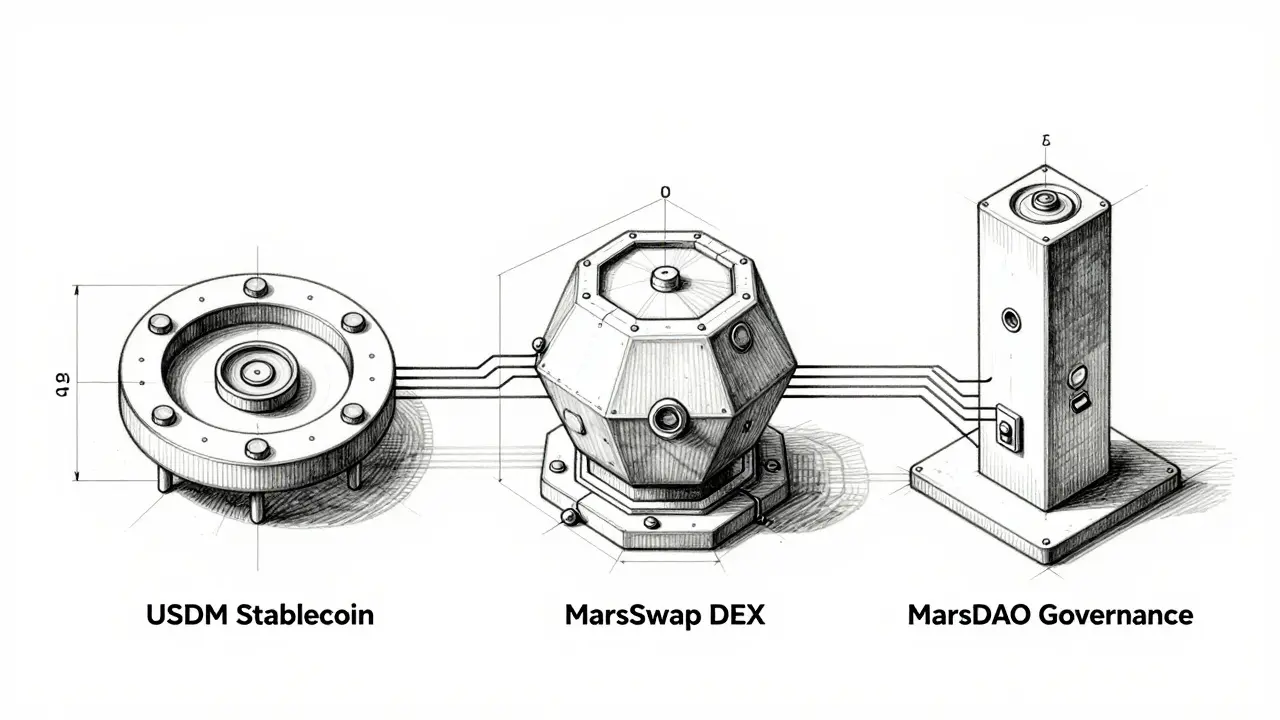
The ecosystem consists of three main pillars:
- USDM Stablecoin: A decentralized stablecoin designed to offer high stability without relying on traditional banking systems.
- MarsSwap: A decentralized exchange (DEX) that allows users to trade assets with low fees and high efficiency.
- MarsDAO: The governing body where XMS holders vote on future developments, treasury usage, and protocol upgrades.
This structure means XMS isn’t just a speculative asset; it’s a utility token. You hold it to influence the direction of the protocol. In the world of DeFi, governance power is often more valuable long-term than trading pairs alone.
XMS Airdrop History: What Happened?
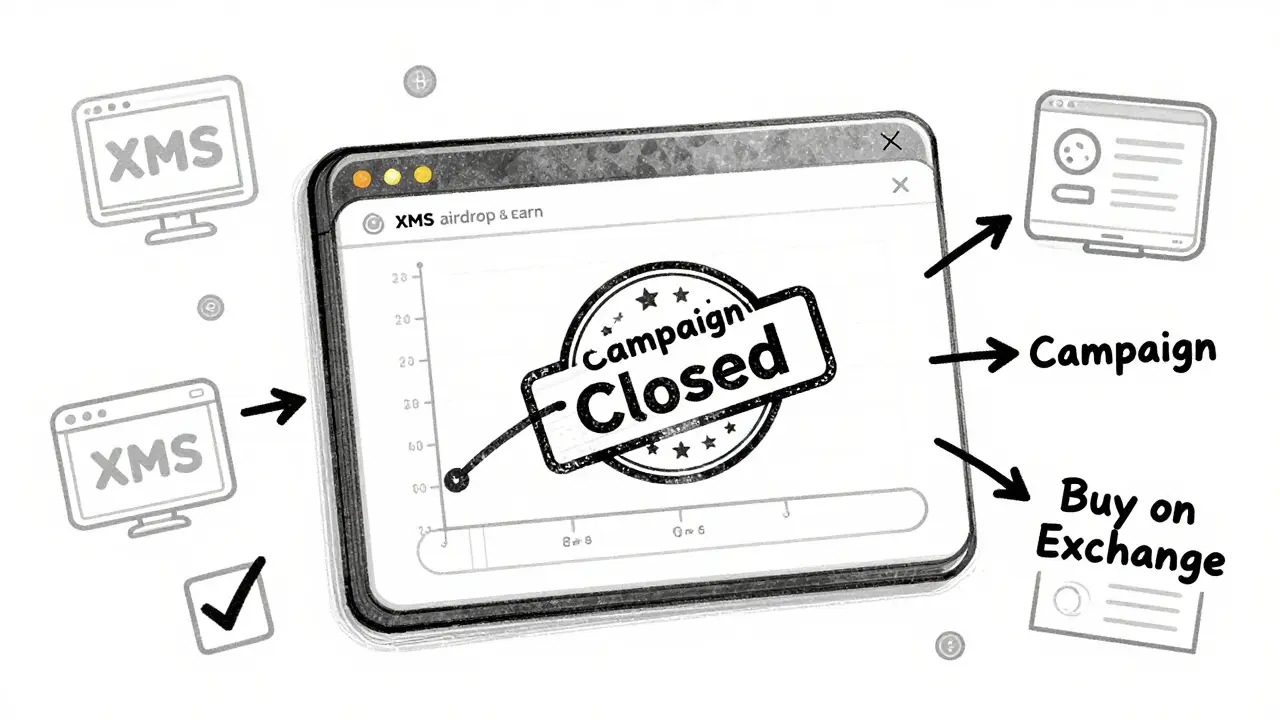
If you’re searching for an active link to claim free XMS right now, you’ll likely hit a dead end. The two major distribution events have already concluded. Here is exactly how they worked, so you can recognize similar patterns in future projects.
| Campaign Name | Reward Pool | Winners | Requirements | Status |
|---|---|---|---|---|
| Primary Mars Ecosystem Airdrop | 50 XMS per winner | 1,000 participants | Lucky draw selection | Closed |
| CoinMarketCap Learn & Earn | $200,000 in XMS | 40,000 winners | Watch videos, pass quiz, Binance account | Closed |
The CoinMarketCap collaboration was the biggest event. It required users to have both a CoinMarketCap and a Binance account. Participants had to watch educational videos about the Mars Ecosystem and pass a quiz with 100% accuracy. Each successful participant received $5 worth of XMS tokens sent to their BEP-20 wallet address. This approach ensured that recipients actually understood the technology before receiving the tokens, which helps reduce bot activity and improves community quality.
Tokens were distributed within three days after each event ended. Since these campaigns are closed, any website currently claiming to offer "free XMS" via a simple form submission is likely a scam. Always verify official announcements through the project’s verified social channels.
How to Get XMS Tokens Now
Since the free rides are over, how do you get involved? The primary method is purchasing XMS on cryptocurrency exchanges. Because XMS operates on the Binance Smart Chain (BSC), it uses the BEP-20 standard. This makes it compatible with most major wallets like Trust Wallet or MetaMask, provided you configure them for the BSC network.
You can buy XMS directly on Binance or transfer it from other exchanges that support BEP-20 tokens. When buying, keep an eye on the slippage settings. Due to the token’s market size, large orders might experience price impact. For small amounts, standard settings usually work fine.
Market Reality: Price, Liquidity, and Risks
Let’s talk numbers. As of mid-2026, XMS is a micro-cap asset. Data from tracking platforms shows significant discrepancies, which is common for low-volume tokens. Binance lists the price around $0.000297 USD, while CoinMarketCap shows closer to $0.0004989 USD. This gap indicates low liquidity and potential arbitrage opportunities, but also higher risk for traders.
The market capitalization hovers around $314,000 USD, ranking it outside the top 5,000 cryptocurrencies globally. The daily trading volume is approximately $2,300 USD. What does this mean for you? It means you can easily buy small amounts, but selling large positions could crash the price temporarily due to thin order books.
Historical performance shows volatility. Over the last 90 days, gains have ranged between 3% and 16%, depending on the timeframe. While these percentages look healthy, they represent tiny absolute dollar amounts given the low base price. Don’t confuse percentage gains with real profit potential in illiquid markets.
Security and Technical Infrastructure
In DeFi, security isn’t optional-it’s existential. Mars Ecosystem takes this seriously. They run a bug bounty program through Immunefi, offering rewards up to $10,000 for discovering critical vulnerabilities. This is a strong signal. Many smaller projects skip formal audits or bounties to save money, leaving user funds at risk.
The bounty covers serious attack vectors, including:
- Malicious wallet interactions
- Transaction parameter modification
- Contract address substitution
- Persistent content injection
Additionally, their partnership with MugglePay, a leading C2B payment service provider, adds a layer of real-world utility. MugglePay integrates MarsSwap for stablecoin exchanges, allowing merchants to accept digital payments more efficiently. This move shifts the narrative from pure speculation to actual commercial use cases.
Is XMS Worth Your Attention in 2026?
Here’s the honest take. If you’re looking for a quick flip, XMS probably isn’t the best choice due to its low liquidity and low market cap. However, if you believe in the thesis of decentralized stablecoins replacing centralized ones, XMS offers early exposure to a growing niche.
The project has moved past the hype phase. With closed airdrops, ongoing development, and strategic partnerships, Mars Ecosystem is focusing on sustainability rather than viral marketing. Holding XMS gives you a voice in MarsDAO, meaning you can vote on how the treasury is spent and which features get built next.
For beginners, start small. Buy a modest amount of XMS to test the waters. Connect your wallet to MarsSwap to see how the interface works. Participate in the DAO discussions. These actions build genuine understanding, which is far more valuable than any free token drop ever could be.
Is the XMS airdrop still open?
No, the major XMS airdrop campaigns, including the CoinMarketCap Learn & Earn program, have concluded. Tokens were distributed to eligible winners shortly after the events ended. Any current offers claiming to give away free XMS are likely scams.
What blockchain does XMS use?
XMS operates on the Binance Smart Chain (BSC) using the BEP-20 token standard. This means you need a wallet that supports BSC, such as Trust Wallet or MetaMask configured for BSC, to store and transact with XMS.
How much is one XMS token worth?
The price of XMS varies by exchange due to low liquidity. As of mid-2026, prices range between $0.0002 and $0.0005 USD. Always check multiple sources like Binance and CoinMarketCap for the most accurate real-time data.
What is the purpose of the XMS token?
XMS is the governance token for the Mars Ecosystem. Holders can participate in MarsDAO to vote on protocol upgrades, treasury management, and future development priorities. It also provides access to certain ecosystem benefits and staking rewards.
Is Mars Ecosystem secure?
Mars Ecosystem prioritizes security through a bug bounty program on Immunefi, offering up to $10,000 for vulnerability reports. They also partner with established services like MugglePay, indicating a focus on robust, audited infrastructure.