AST Unifarm Airdrop: What We Know About AST.finance and the Hype
There is a lot of noise in the crypto space right now. If you have been scrolling through Twitter or Discord lately, you have likely seen mentions of an AST Unifarm airdrop linked to AST.finance. The promise is simple: free tokens for participating in a protocol. But here is the hard truth that most hype-driven articles skip over-there is currently no verified, official information confirming the existence, mechanics, or eligibility criteria for an "AST Unifarm" airdrop by AST.finance.
This lack of clarity isn't just a minor inconvenience; it is a major red flag in the world of decentralized finance (DeFi). When projects announce massive distributions without clear documentation, smart money stays on the sidelines while retail investors risk getting scammed. In this guide, we will break down what AST.finance actually is, why the "Unifarm" label might be confusing you, and how to safely navigate this specific opportunity-or decide to walk away.
Understanding AST.finance and the Token Ecosystem
To understand whether this airdrop is real, we first need to look at the entity behind it. AST.finance is a decentralized finance platform focused on yield optimization and liquidity provision. While the exact nature of its protocols can shift as the project evolves, platforms like this typically operate by aggregating liquidity from various sources to offer higher returns than single pools.
The token, often referred to as AST, serves as the governance and utility asset within this ecosystem. Holders usually use it to vote on protocol upgrades, stake assets to earn rewards, or pay fees. However, there is a critical distinction you must make immediately: do not confuse AST.finance with other projects using similar acronyms. For example, AsterDEX is a completely separate perpetual exchange platform that has had its own distinct airdrop programs. Mixing these up leads to wasted time and potential security risks.
If AST.finance is launching a new product called "Unifarm," it likely refers to a unified farming mechanism. In DeFi terms, "farming" involves providing liquidity to a pool in exchange for rewards. A "unified" approach suggests the protocol allows users to farm across multiple chains or pools simultaneously without manually moving assets. This is a powerful feature, but it requires deep technical integration and trust in the smart contracts.
Why There Is No Official Data on the Airdrop
You might be wondering why you cannot find a clear FAQ page or announcement post about this specific drop. There are three main reasons for this silence:
- Pre-Launch Secrecy: Many DeFi projects keep airdrop details hidden until the last minute to prevent "sybot" attacks. Sybots are bots created solely to farm points for airdrops, which dilutes the rewards for genuine users. By keeping the rules secret, teams try to ensure only active, organic participants benefit.
- Project Pivot: The crypto landscape moves fast. A project might plan an airdrop in Q1 2026 and cancel it by Q2 due to market conditions or regulatory concerns. Without a recent update from the official team, any old roadmap is irrelevant.
- Misinformation: This is the most dangerous reason. Scammers create fake websites and social media accounts claiming to represent AST.finance. They post fake "claim" links that ask for your wallet connection. Once you connect, they drain your funds. The absence of official info often means the "airdrop" doesn't exist yet.
How to Verify Legitimacy: A Safety Checklist
Before you spend hours interacting with any contract or clicking any link, you need to verify if this is real. Here is a step-by-step process to protect yourself:
- Check Official Channels Only: Go directly to the official website of AST.finance. Look for a "Blog" or "Announcements" section. Do not rely on third-party news sites or YouTube videos unless they explicitly cite an official source. Check their official Twitter/X account and Discord server. Look for pinned messages from verified admins.
- Analyze the Smart Contract: If a contract address is provided, check it on a blockchain explorer like Etherscan or Solscan. Look at the transaction history. Does it look like a legitimate protocol interaction, or does it send funds to unknown wallets? Use tools like Revoke.cash to manage your wallet permissions safely.
- Look for Audits: Legitimate DeFi protocols undergo security audits by firms like CertiK, OpenZeppelin, or Trail of Bits. If AST.finance claims to be secure, where is the audit report? If there is no audit, treat the project as high-risk.
- Community Sentiment: Join the official Discord. Ask questions directly. If the moderators ban anyone asking for proof or if the chat is filled with bots saying "GM" and "Airdrop soon," leave immediately. Real communities discuss technology, bugs, and features.
The Risk of "Sybot" Hunting and Gas Wars
Even if the airdrop is real, participating comes with costs. In the past, airdrop hunters used hundreds of wallets to game systems. Projects now fight back by implementing "proof of humanity" checks or requiring significant capital locks. This creates a phenomenon known as "gas wars."
When an airdrop claim opens, thousands of people click the button at the same second. This clogs the blockchain network, causing transaction fees (gas) to skyrocket. You might spend $50 in gas fees to claim $20 worth of tokens. It is crucial to calculate the cost of participation. If the potential reward is low and the competition is high, the expected value becomes negative.
Furthermore, interacting with unverified contracts carries the risk of malicious code. Even if the contract itself is safe, the interface you use to interact with it might be compromised. Always use hardware wallets like Ledger or Trezor for significant interactions, and never approve unlimited spending allowances.
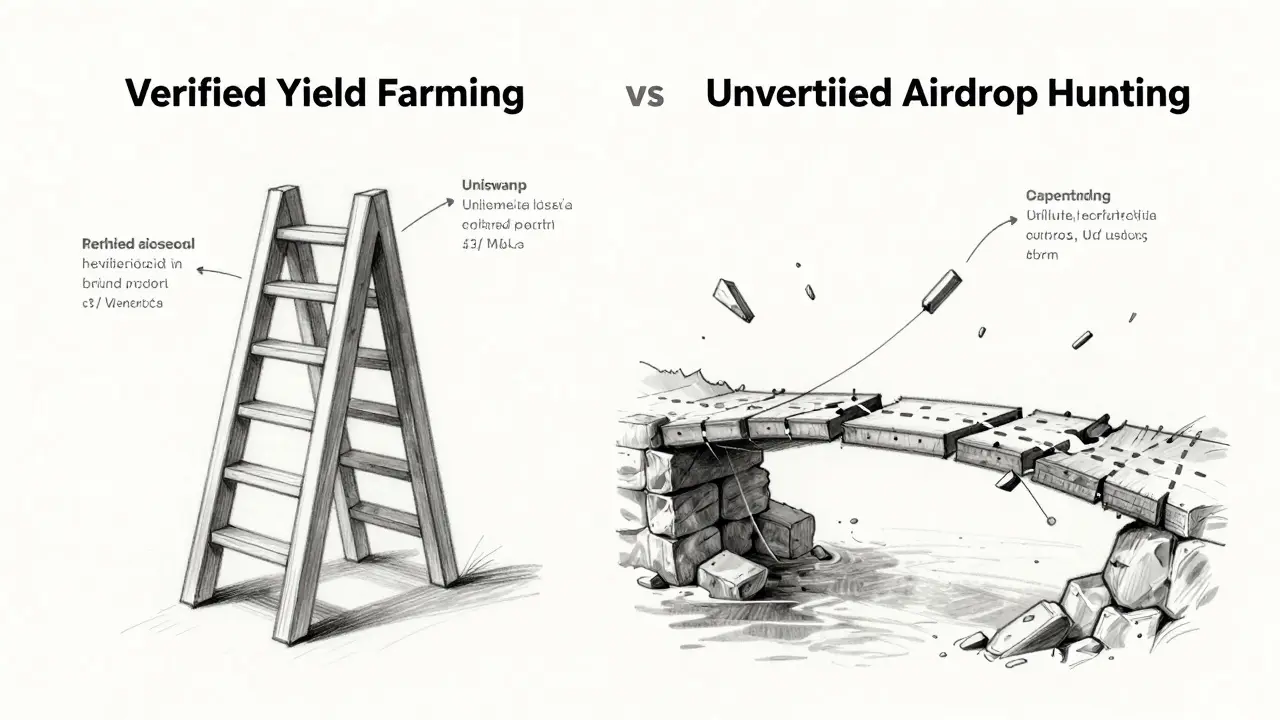
Alternative Opportunities in the DeFi Space
If the AST Unifarm airdrop remains vague or too risky, there are other ways to engage with the DeFi ecosystem that offer more transparency. Established platforms often have clearer reward structures:
| Strategy | Risk Level | Transparency | Potential Reward |
|---|---|---|---|
| Yield Farming (Verified) | Medium | High | Stable APY |
| Airdrop Hunting (Unverified) | Very High | Low | Speculative/Low |
| Liquidity Provision | Medium-High | High | Fees + Rewards |
| Governance Voting | Low | High | Token Bonuses |
Instead of chasing ghosts, consider providing liquidity to established pools on platforms like Uniswap or Curve. These protocols have proven track records, audited code, and transparent fee structures. You earn trading fees immediately rather than hoping for a future token drop.
What To Do Next: Actionable Steps
So, you are interested in AST.finance but unsure about the airdrop. Here is your action plan:
First, bookmark the official AST.finance website and enable notifications for their blog updates. Second, set up a dedicated "burner" wallet for experimental DeFi activities. Never use your main wallet holding long-term assets for unverified interactions. Third, monitor the project's development activity on GitHub. Are developers actively pushing code? Or is the repository empty? Active development is a strong signal of legitimacy.
If an official announcement drops, read the terms carefully. Look for snapshot dates, minimum balance requirements, and exclusions. Most importantly, wait for the community to react. Let others test the waters first. If early adopters report issues or scams, you save yourself the trouble.
Is the AST Unifarm airdrop officially confirmed?
As of May 2026, there is no widely recognized, official confirmation from AST.finance regarding a specific "Unifarm" airdrop. Be extremely cautious of unofficial sources claiming otherwise, as they may be scams.
What is AST.finance?
AST.finance is a decentralized finance (DeFi) platform that focuses on yield optimization and liquidity aggregation. It uses the AST token for governance and utility within its ecosystem.
How can I avoid airdrop scams?
Always verify links through official social media channels, never share your private keys, use a burner wallet for new interactions, and check for smart contract audits before connecting your wallet.
What is the difference between AST.finance and AsterDEX?
They are completely separate entities. AsterDEX is a perpetual exchange platform, while AST.finance is a yield optimization protocol. Confusing them can lead to interacting with the wrong contracts or missing out on relevant opportunities.
Should I provide liquidity to AST.finance?
Only if you have thoroughly researched the protocol's audit status, tokenomics, and smart contract security. Start with small amounts to test the user experience and withdrawal processes before committing significant capital.