Avascriptions Crypto Exchange Review: Red Flags, Risks, and What You Need to Know
You’ve heard about the next big thing on Avalanche. Maybe you saw a tweet, clicked through a Telegram link, or found a guide on how to buy AVASC tokens. The promise is exciting: a new way to mint, trade, and inscribe assets using the Avalanche blockchain a high-performance smart contract platform known for speed and low fees. But before you connect your wallet or deposit funds, we need to talk about the silence surrounding this project. In the crypto world, noise can be marketing, but silence? Silence is often a warning sign.
This isn’t just another generic exchange review. When you look at Avascriptions a protocol and centralized exchange built for ASC-20 token trading on Avalanche, the data doesn't just lean towards "caution"; it screams it. From missing security audits to being flagged by scam-detection databases, the picture that emerges is one of extreme risk. If you are considering putting any capital into this ecosystem, you need to understand exactly what you are walking into.
The Core Problem: A Lack of Transparency
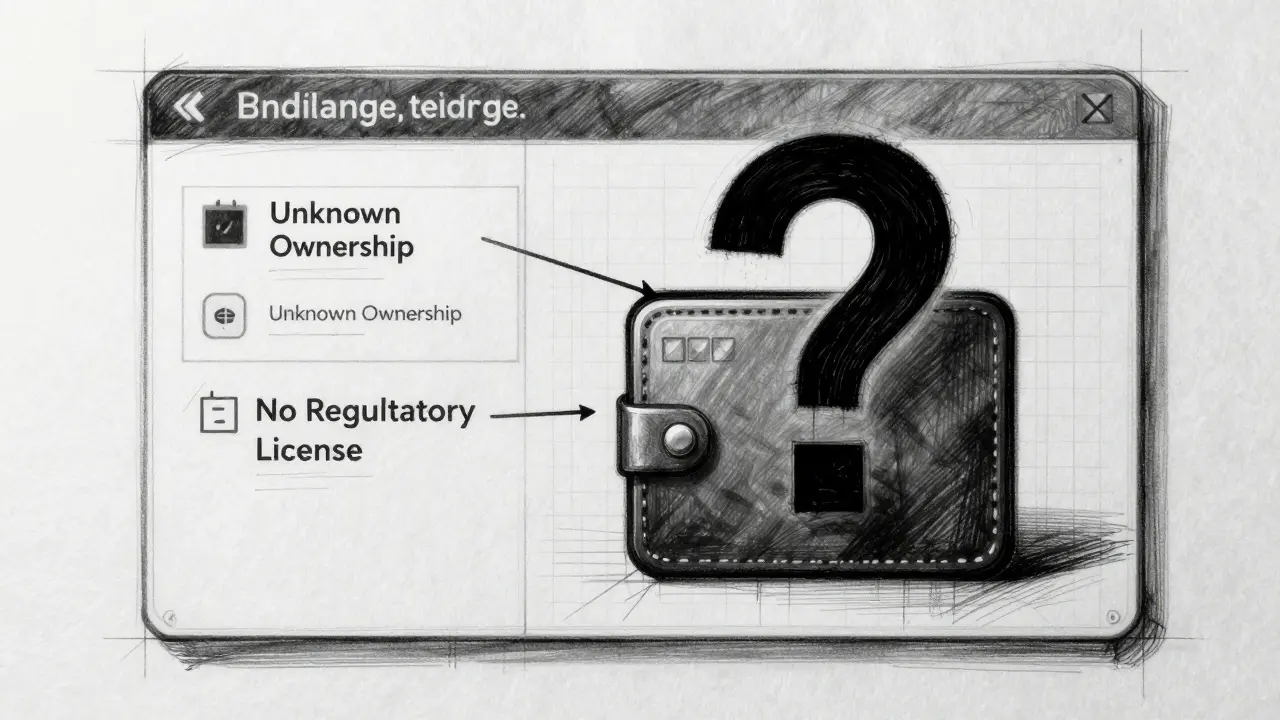
Let’s start with the basics. Any legitimate financial platform, whether it’s a bank in Wellington or a major exchange like Coinbase, operates on transparency. You know who runs it, where they are regulated, and how much money they hold. With Avascriptions, the opposite is true. The most glaring issue is its inclusion in the CryptoLinks a database tracking cryptocurrency scams and suspicious platforms "Crypto Scams Sites" list. This isn’t a minor footnote. CryptoLinks specifically flags projects that hide their team members, have a history of deception, or lack a proper whitepaper. For a platform asking you to trust them with digital assets, this is a massive red flag.
Think about it. If you were hiring a contractor to renovate your kitchen, would you choose the one who refuses to show you their license, won’t tell you their name, and has been reported for fraud? Probably not. Yet, many crypto traders rush in because the technology sounds cool. Avascriptions lacks a written project whitepaper that meets industry standards. Without this document, there is no clear roadmap, no technical specification of their security measures, and no accountability structure.
Understanding ASC-20 and the Technical Hype
To understand why people are looking at Avascriptions, you have to understand the tech they are betting on. The platform focuses on ASC-20 tokens a token standard on the Avalanche blockchain similar to BRC-20 on Bitcoin, used for creating inscribed assets. These are essentially inscribed tokens-data written directly onto the blockchain. Avascriptions claims to support ASIP-1 Smart Contract Avascription ASC-20 Transfers, a protocol enabling smoother transfers of these inscribed tokens and is developing ASIP-2 to give smart contracts more power over these assets.
On paper, this sounds innovative. It attempts to solve liquidity and transferability issues common with inscribed tokens. They even offer an open API for developers to build wallets and browsers. However, innovation does not equal safety. Just because a technology is novel doesn’t mean the company building it is trustworthy. In fact, complex, unproven protocols often provide cover for bad actors to create confusion and exit scams. The gap between "cool tech" and "secure exchange" is wide, and Avascriptions hasn’t bridged it.
The Badge System: Gamification or Distraction?
Avascriptions uses a verification badge system to categorize traders. It looks professional at first glance:
- ASC20 Eco-Builder (Blue Badge): Requires 20,000 AVAX in trading volume.
- ASC20 Eco-Pioneer (Gold Badge): Requires 100,000 AVAX in trading volume.
- ASC20 Eco-Navigator (Red Badge): Requires 500,000 AVAX in trading volume.
- ASC20 Eco-Legend (Legendary Badge): Requires 2,500,000 AVAX in trading volume.
This system is designed to create status and encourage high-volume trading. But ask yourself: who benefits from this? If you are chasing a Gold Badge, you are locking up significant capital and generating fees for the platform. Meanwhile, the platform itself remains anonymous. This is a classic tactic in questionable exchanges: use gamification to drive volume while keeping operational details hidden. Real exchanges focus on security audits and proof of reserves, not just leaderboard badges.
Data Gaps: The Numbers Don’t Add Up
If you check independent data aggregators like CoinCarp, the profile for Avascriptions is empty. Here is what is missing:
| Metric | Status | Why It Matters |
|---|---|---|
| 24-Hour Trading Volume | Unknown | Without volume data, you can't verify if real users are trading or if it's just wash-trading. |
| Proof of Reserves | Unavailable | No evidence that user funds are actually held and backed 1:1. |
| Cybersecurity Rating | Unknown | No third-party audit confirms the platform is safe from hacks. |
| User Reviews | Absent | No presence on Trustpilot, Reddit, or G2 suggests either zero users or suppressed feedback. |
| Regulatory License | Undocumented | No known jurisdiction regulates their operations, meaning no legal recourse if things go wrong. |
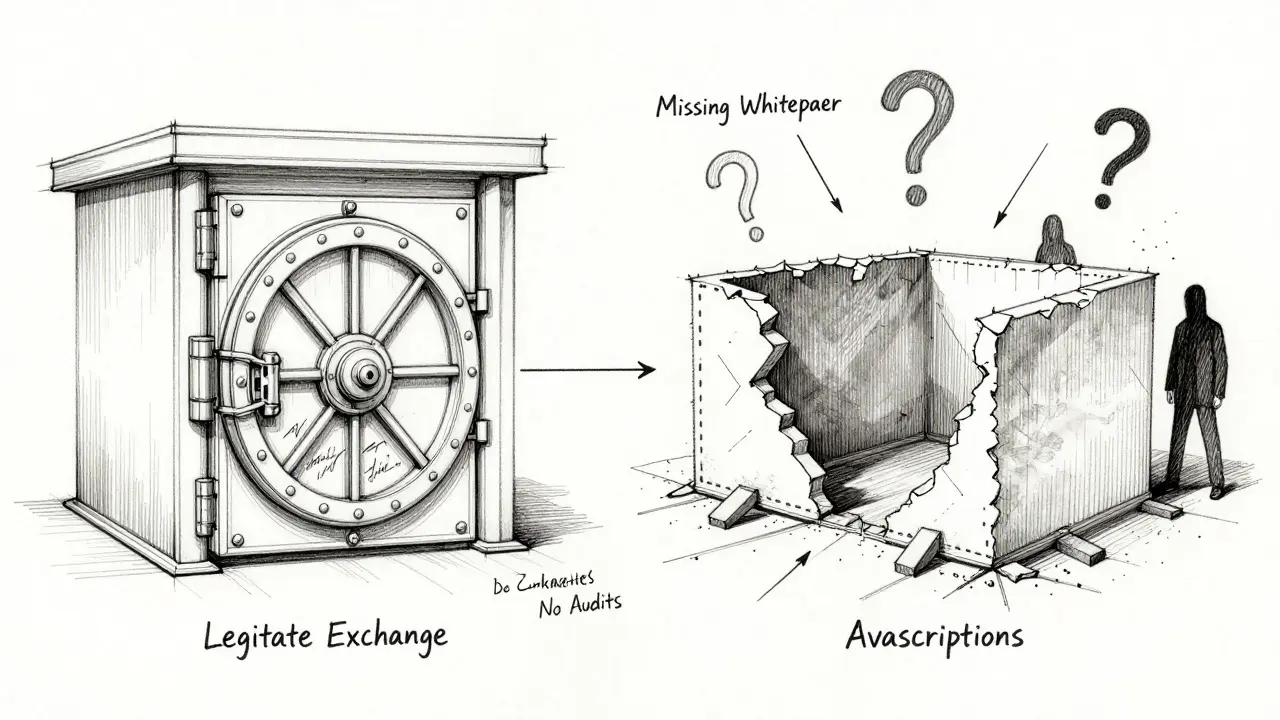
For context, established exchanges publish monthly proof-of-reserves reports. They undergo audits by firms like CertiK or Hacken. Avascriptions has none of this. The absence of expert analysis from recognized publications or blockchain security auditors is telling. Legitimate projects court these reviewers. Avascriptions seems to be operating in the shadows.
Buying AVASC: How People Are Getting Exposed
Despite the risks, the AVASC token is available on third-party exchanges like Bitget. Guides exist for buying it with credit cards in regions like Zambia. This creates a false sense of security. Just because a token is listed on a larger exchange doesn’t mean the underlying project (Avascriptions) is safe. You might own the token, but if the Avascriptions platform itself collapses, gets hacked, or turns out to be a rug pull, the utility and value of those tokens could vanish overnight.
Furthermore, the lack of KYC (Know Your Customer) documentation is a double-edged sword. While some users love anonymity, for a centralized exchange handling large volumes of AVAX, it means there is no regulatory oversight. If the platform freezes your funds or disappears, there is no regulator to complain to. No insurance fund. No customer support hotline that actually answers.
Comparison: Avascriptions vs. Established Alternatives
Let’s compare Avascriptions to what you should probably be using instead. If you want to trade on Avalanche, there are safer, transparent options.
| Feature | Avascriptions | Binance / Coinbase | Trader Joe (DEX) |
|---|---|---|---|
| Team Identity | Hidden | Public & Verified | Open Source / Community Driven |
| Security Audits | None Found | Regular Third-Party Audits | Contract Audits Available |
| Regulatory Status | Unknown/Unlicensed | Licensed in Multiple Jurisdictions | Non-Custodial (User Controlled) |
| User Feedback | None | Millions of Reviews | Active Community Forums |
| Risk Level | Extremely High | Low to Moderate | Moderate (Smart Contract Risk) |
When you see this comparison, the choice becomes clearer. Why gamble on a platform with no track record when proven alternatives exist? Trader Joe, for example, is a decentralized exchange on Avalanche that lets you trade without giving up custody of your funds. That is a fundamentally safer model than trusting a centralized entity with no reputation.
What Should You Do Now?
If you already hold AVASC tokens, consider moving them to a self-custody wallet like MetaMask or Rabby Wallet immediately. Do not leave them on the Avascriptions platform. Self-custody means only you have the keys. If the exchange goes down, your tokens remain in your wallet (though their market value may fluctuate).
If you haven’t bought anything yet, wait. There is no FOMO (Fear Of Missing Out) here worth risking your savings. The crypto market is full of opportunities. Look for projects with:
- Public teams with LinkedIn profiles.
- Published security audits from reputable firms.
- Active, organic communities on Twitter and Discord (not just bots).
- Clear regulatory compliance or non-custodial architecture.
Avascriptions currently fails all these checks. The combination of a scam-database flag, missing metrics, and anonymous leadership makes it a prime candidate for a loss. Protect your capital. Stick to platforms where the lights are on, the doors are open, and the books are balanced.
Is Avascriptions a scam?
While not definitively proven as a criminal enterprise in court, Avascriptions is flagged by CryptoLinks as a potential scam site due to hidden team members, lack of a whitepaper, and poor reputation. The absence of verifiable data and security audits strongly suggests it is unsafe for investment.
What are ASC-20 tokens?
ASC-20 is a token standard on the Avalanche blockchain, similar to BRC-20 on Bitcoin. They are inscribed tokens, meaning data is written directly to the blockchain. Avascriptions facilitates the minting and trading of these specific tokens.
Can I trust my funds on Avascriptions?
Currently, no. There is no proof of reserves, no insurance fund, and no regulatory oversight. Keeping funds on a centralized exchange with these characteristics carries an extremely high risk of total loss.
Where can I buy AVASC tokens safely?
AVASC tokens are available on third-party exchanges like Bitget. However, buying the token does not validate the safety of the Avascriptions platform itself. Always use a personal hardware or software wallet for storage after purchase.
What is the Avascriptions badge system?
It is a tiered reward system based on trading volume in AVAX. Tiers include Blue (20k AVAX), Gold (100k AVAX), Red (500k AVAX), and Legendary (2.5M AVAX). Critics view this as a tactic to encourage risky high-volume trading without addressing underlying platform safety issues.