CBDC Development vs. Private Crypto: Who Wins the Digital Money Race?
Imagine a world where your government controls every byte of your digital money, or one where no one can freeze your assets but you might lose them to a bad password. That’s the tension defining finance right now. Central Bank Digital Currencies (CBDCs) are no longer just whiteboard experiments; they’re real code running in dozens of countries, directly challenging the dominance of private cryptocurrencies like Bitcoin and Ethereum.
You’ve probably heard the hype on both sides. Crypto enthusiasts argue that decentralized networks offer freedom from banks. Central bankers counter that CBDCs offer stability and legal tender status. But what’s actually happening on the ground? As of August 2026, the race is tighter than ever. With 134 countries exploring these systems, representing 98% of global GDP, the question isn’t if digital money will change how we pay-it’s which version wins your wallet.
The State of Play in 2026
Let’s look at the hard numbers because they tell a different story than the headlines. The momentum behind CBDCs has exploded. In 2023, about 114 nations were looking into it. Today, that number sits at 134. It’s not just small economies experimenting anymore; major players like India, Japan, and China are deep in development phases. The Reserve Bank of India, for example, has expanded its retail and wholesale digital rupee pilots throughout 2025, adding offline functionality to reach people without reliable internet.
Meanwhile, private crypto hasn’t sat idle. While Bitcoin remains the "digital gold" store of value, stablecoins have become the workhorse for daily transactions. But here’s the catch: CBDCs are gaining ground in areas where crypto struggled-regulatory clarity and cross-border speed. If you’re trying to send money internationally today, traditional banking takes days and costs a fortune. Crypto is faster but often lacks regulatory safety nets. CBDC projects like mBridge are solving this by processing billions in cross-border transactions with near-instant settlement.
Why Central Banks Are Building Their Own Money
Why would governments spend billions building a digital dollar or euro when Bitcoin already exists? It’s not just about being trendy. It’s about control and efficiency. Central banks see private crypto as a threat to monetary policy. If everyone uses Bitcoin, the Federal Reserve can’t easily adjust interest rates to manage inflation because Bitcoin’s supply is fixed, not flexible.
Cross-border payments are the biggest battleground. Currently, sending money across borders involves correspondent banks, high fees, and slow settlement times. CBDC initiatives aim to cut out the middlemen. In 2025 alone, $59 billion worth of cross-border transactions were processed via CBDC pilots, a 45% jump from the previous year. This efficiency is a direct hit to the value proposition of using crypto for international transfers.
There’s also the issue of financial inclusion. In many developing nations, millions lack access to basic banking services. A CBDC can be designed to work on simple mobile phones, even offline, giving people access to a secure, government-backed payment system without needing a traditional bank account. Private crypto requires smartphones, data plans, and technical know-how-a barrier for many potential users.

The Regulatory Wall: Compliance vs. Freedom
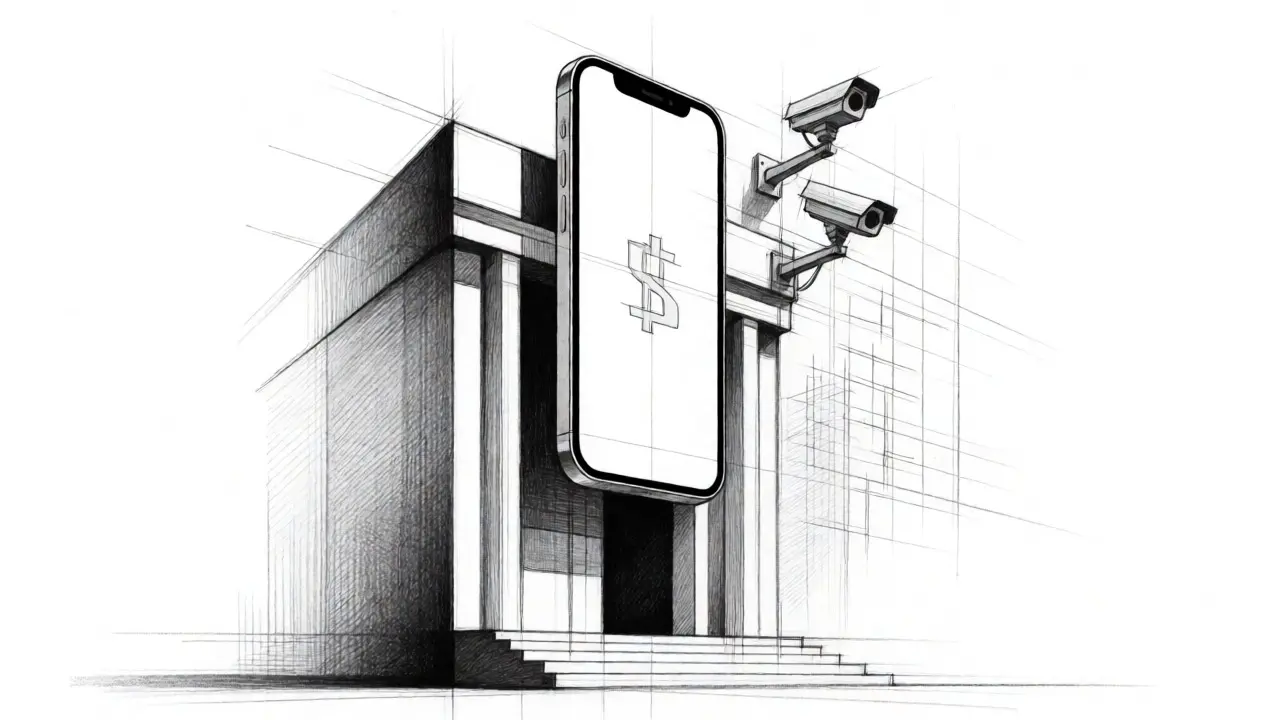
If you love crypto for its anonymity, CBDCs might feel like a surveillance nightmare. And you wouldn’t be entirely wrong. One of the main selling points of CBDCs for governments is improved oversight. About 48% of countries involved in cross-border CBDC projects have aligned their anti-money laundering (AML) rules to make compliance smoother. They want to track flows to prevent illicit financing, something that’s harder to do with privacy-focused coins like Monero.
Private cryptocurrencies operate in a gray zone. You don’t need permission to open a Bitcoin wallet, and no one can stop you from transacting. This censorship resistance is a feature, not a bug, for many users. However, this same lack of regulation creates uncertainty. Will your exchange get hacked? Is your token classified as a security or a commodity? CBDCs remove this ambiguity. They are legal tender, meaning merchants must accept them, and disputes are handled under existing consumer protection laws.
| Feature | CBDCs | Private Crypto |
|---|---|---|
| Issuer | Central Bank | Decentralized Network / Protocol |
| Legal Status | Legal Tender | Asset / Commodity (varies by region) |
| Privacy | Low (Traceable by Govt) | Medium to High (Pseudonymous) |
| Volatility | Stable (1:1 with fiat) | High (Market-driven) |
| Adoption Barrier | Low (Mandatory acceptance) | High (Technical learning curve) |
Security Risks: Different Flavors of Danger
Both systems face security threats, but they’re completely different. For private crypto, the risk is often user error or protocol bugs. Lose your private key, lose your money. Forget your seed phrase, and you’re locked out forever. There’s no customer service line to call. On the flip side, CBDCs introduce systemic risks. If a central bank’s infrastructure goes down, the entire nation’s payment system could halt.
The International Monetary Fund (IMF) highlighted this in recent research, noting that while CBDCs can modernize payment resilience, they also create complex ecosystems that amplify existing vulnerabilities. Imagine a cyberattack on a national CBDC ledger. Unlike a bank run where only some deposits are withdrawn, a digital panic could happen instantly across millions of wallets. Central banks are spending heavily on cybersecurity to mitigate this, viewing it as a chance to build more robust infrastructure than legacy banking systems.
Private crypto faces its own set of issues, primarily around smart contract exploits and exchange collapses. Remember FTX? That wasn’t a blockchain failure; it was a centralized entity failing. CBDCs avoid this specific type of counterparty risk because the issuer is the sovereign state. But they add political risk. Can the government freeze your funds if you violate new regulations? With Bitcoin, the answer is generally no. With a CBDC, the answer is likely yes.

Interoperability: Can They Coexist?
It doesn’t have to be winner-takes-all. Many experts believe we’ll see a hybrid future. CBDCs could serve as the backbone for large-scale settlements and government payouts, while private cryptocurrencies act as alternative investment vehicles or niche payment rails. Interoperability is key here. Some central banks are designing CBDCs to interact with private stablecoins, allowing seamless conversion between government money and crypto assets.
For instance, 26 central banks have cited interoperability with private digital payment systems as a strategic focus. This means you might hold USDC (a private stablecoin) in your wallet, but use it to buy coffee paid for in a digital dollar CBDC. The backend handles the swap automatically. This coexistence reduces friction for users who want the best of both worlds: the stability of fiat and the innovation of blockchain tech.
What This Means for Your Wallet
So, should you sell your Bitcoin and wait for the digital dollar? Probably not. But you should understand the landscape. CBDCs will likely dominate everyday transactions, especially for salaries, taxes, and retail purchases. They offer convenience and zero volatility. Private cryptocurrencies will remain popular for those seeking decentralization, speculative gains, or protection against inflationary policies.
Keep an eye on pilot programs in your country. If your central bank launches a retail CBDC, try it early. Understand the privacy settings. Does it require KYC (Know Your Customer) verification? Can you hold anonymous balances? These details matter. Meanwhile, keep your crypto keys safe. As CBDCs mature, the demand for truly decentralized assets may increase as a hedge against increased government financial oversight.
Are CBDCs the same as Bitcoin?
No. CBDCs are issued and regulated by a central bank, making them legal tender with stable value. Bitcoin is decentralized, volatile, and not controlled by any single authority. CBDCs prioritize stability and compliance, while Bitcoin prioritizes scarcity and censorship resistance.
Will CBDCs replace cash entirely?
Not necessarily. Most central banks plan to keep physical cash available alongside CBDCs to ensure accessibility for all citizens, including those without digital literacy or devices. However, cash usage may decline significantly over time.
How do CBDCs affect privacy?
CBDCs typically offer less privacy than cash or some cryptocurrencies. Transactions are recorded on a ledger accessible to the central bank, allowing for better tracking of money flows for tax and law enforcement purposes.
Can I use CBDCs for international transfers?
Yes, this is a primary use case. Projects like mBridge allow multiple countries' CBDCs to interact, enabling faster and cheaper cross-border payments compared to traditional SWIFT transfers.
What happens if my bank fails with a CBDC?
Since CBDCs are a liability of the central bank, not a commercial bank, they carry lower credit risk. Your digital money is backed by the state, similar to holding physical cash, so a bank failure doesn't directly impact your CBDC holdings.