Deflationary Cryptocurrency Examples: Bitcoin, Ethereum, BNB & How They Work
Imagine you own a rare trading card. If the manufacturer announces they are destroying half of their remaining inventory, what happens to the value of the card in your hand? It likely goes up, assuming people still want it. This is the core logic behind deflationary cryptocurrencies, which are digital assets designed to decrease in supply over time. Unlike traditional fiat money, where central banks can print more currency at will-often leading to inflation and reduced purchasing power-deflationary crypto relies on artificial scarcity to potentially drive up value as demand remains steady or grows.
You might be wondering why this matters right now. With global economic uncertainty and fluctuating inflation rates, many investors are looking for assets that hold value rather than lose it. Deflationary tokens offer a mathematical guarantee that supply will shrink or stay capped, creating a unique dynamic compared to standard investment vehicles. But not all deflationary coins work the same way. Some rely on rigid caps, others on automated burns, and some on complex protocol upgrades. Understanding these differences is crucial before you decide where to put your capital.
How Deflationary Mechanisms Actually Work
To grasp why certain coins are considered deflationary, you need to look under the hood at their code. There isn't just one way to reduce supply; developers use three primary technical mechanisms to achieve this goal.
The first method is a capped supply. This is the simplest approach. The protocol sets a hard limit on how many coins can ever exist. Once that number is reached, no new coins are created. While the supply doesn't actively shrink, it stops growing, which becomes deflationary relative to an economy where money supply expands annually. Think of it like a gold mine that has been completely mined out; no new gold can enter the market, so existing gold becomes scarcer as lost coins are destroyed or forgotten.
The second method is token burning. This is where it gets interesting. Burning means permanently removing tokens from circulation by sending them to an address from which they cannot be retrieved. This can happen automatically with every transaction, manually through periodic buybacks, or based on network activity. When tokens are burned, the total supply drops immediately. If demand stays the same but supply decreases, basic economics suggests the price per unit should rise.
The third method involves halving events. This reduces the rate at which new coins are created. By cutting the issuance rate in half periodically, the growth of the supply slows down dramatically, eventually approaching zero. This creates a predictable schedule of increasing scarcity over decades.
| Mechanism Type | How It Works | Predictability | Primary Risk |
|---|---|---|---|
| Capped Supply | Hard limit on total coins (e.g., 21 million) | High (fixed date) | Slow appreciation if demand stalls |
| Token Burning | Permanently destroys tokens via fees or buybacks | Variable (depends on usage/profits) | Centralization risk if controlled by one entity |
| Halving Events | Cuts new coin issuance rate by 50% | High (scheduled blocks) | Market volatility around event dates |
Bitcoin: The Original Deflationary Asset
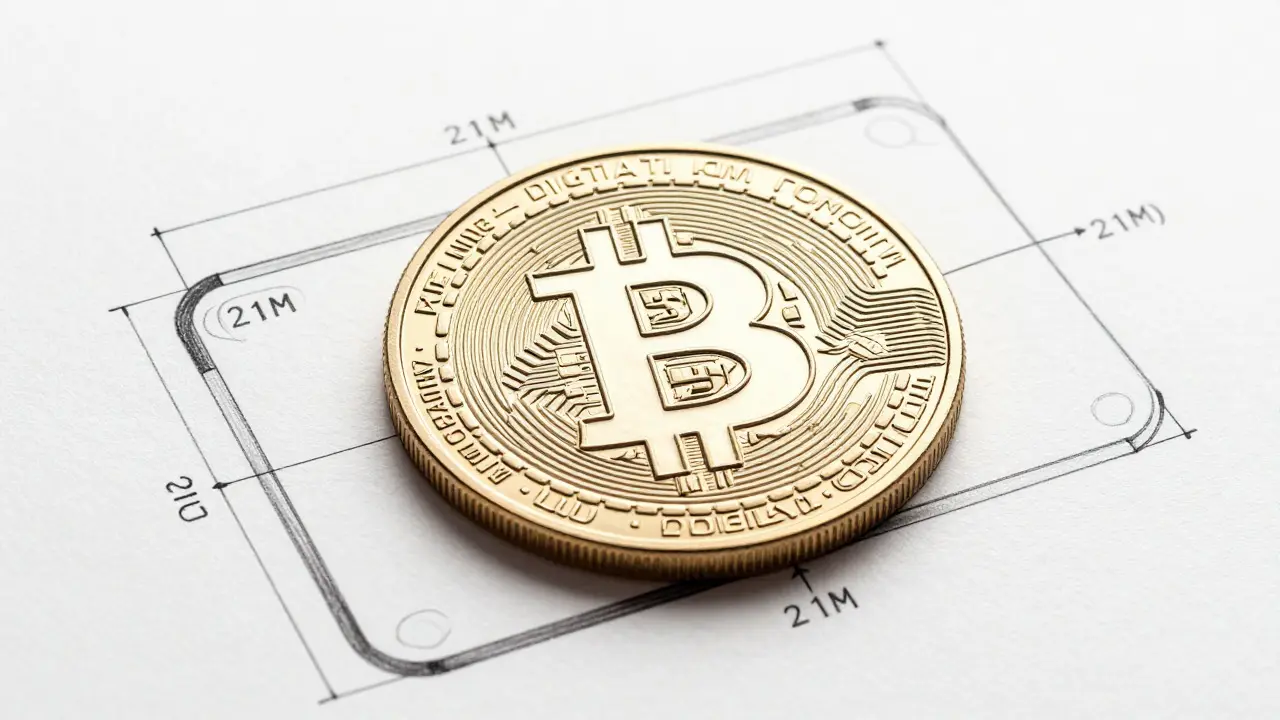
When people talk about deflationary crypto, they almost always start with Bitcoin (BTC). Created by Satoshi Nakamoto in 2009, Bitcoin introduced the concept of a fixed monetary policy to the world. Its supply is hard-capped at exactly 21 million coins. You won't see a 22nd millionth Bitcoin appear, ever. This absolute ceiling is what gives Bitcoin its "digital gold" reputation.
But Bitcoin’s deflationary nature isn't just about the cap; it's about the halving. Approximately every four years (or every 210,000 blocks), the reward miners get for securing the network is cut in half. The most recent halving occurred on April 19, 2024, reducing the block reward from 6.25 BTC to 3.125 BTC. The next one is scheduled for roughly Q2 2028, which will drop rewards to 1.5625 BTC.
Why does this matter to you? Because it creates a predictable supply shock. As fewer new Bitcoins enter the market each day, buyers must compete for a shrinking pool of available coins. According to CoinShares research, annual supply growth is projected to fall below 0.5% by 2025. This slow, steady reduction in new supply makes Bitcoin highly attractive as a long-term store of value, especially during periods when fiat currencies are losing purchasing power due to inflation.
Ethereum: Dynamic Deflation Through Usage
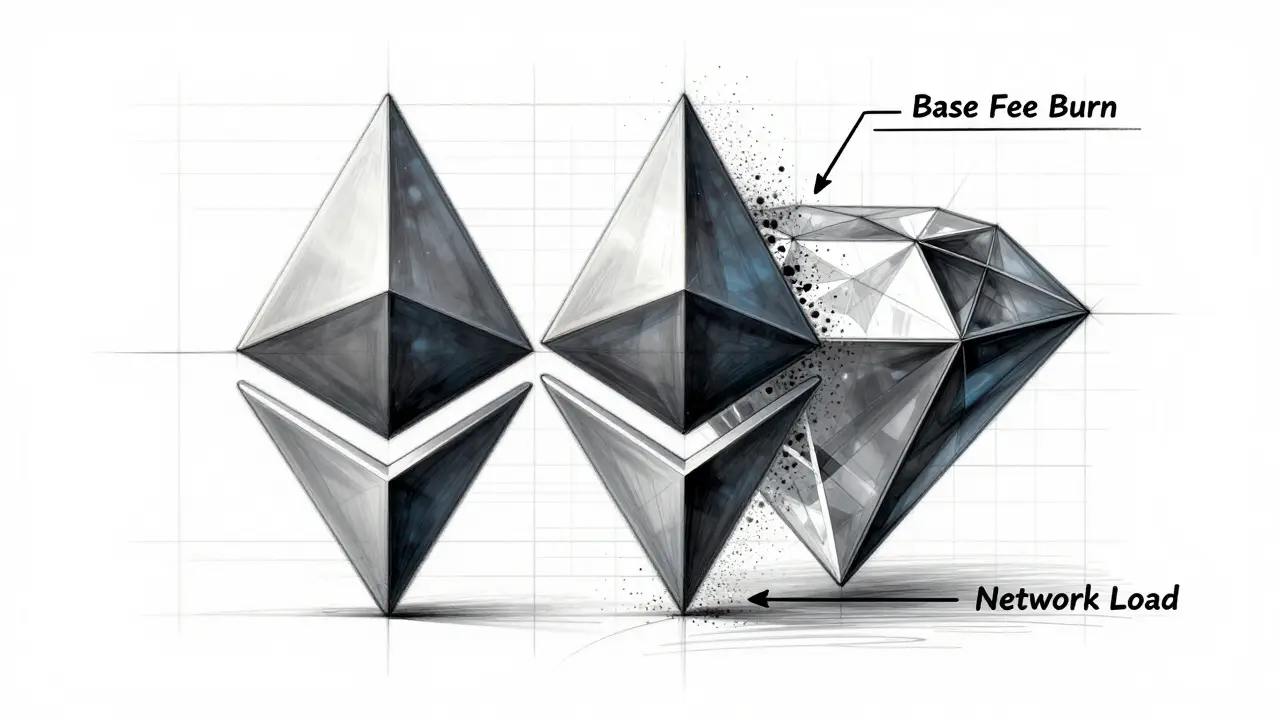
Ethereum (ETH) took a different path. For years, Ethereum was actually inflationary, issuing new ETH to validators and stakers. That changed with the implementation of EIP-1559 on August 5, 2021. This upgrade fundamentally altered how transaction fees work. Instead of paying all fees to miners, a portion of every transaction fee-the "base fee"-is now burned forever.
This makes Ethereum’s deflationary status dynamic. It depends entirely on network activity. When the network is busy and gas prices are high, more ETH is burned. During quiet periods, less is burned. Data from Ultrasound.money shows that during peak usage in Q2 2023, Ethereum burned approximately 1,200 ETH per hour. In low-activity periods, that number dropped to around 200 ETH per hour.
Between August 2021 and December 2023, EtherScan data confirmed that 2.52 million ETH (about 2.1% of the total supply) had been burned. Delphi Digital noted in their Q4 2023 report that Ethereum operated in a net-deflationary environment during 63% of trading days since the upgrade. This means that if you use Ethereum for transactions, smart contracts, or DeFi activities, you are directly contributing to the scarcity of the asset. This utility-driven deflation ties the coin’s value directly to its usefulness, unlike Bitcoin’s purely monetary model.
Binance Coin (BNB): Centralized Burns and Utility
Binance Coin (BNB) represents a third approach: centralized, profit-driven burning. Launched in July 2017 by Changpeng Zhao and the Binance team, BNB was originally an ERC-20 token but later migrated to its own chain, BNB Chain. Its deflationary mechanism is tied to the exchange’s performance.
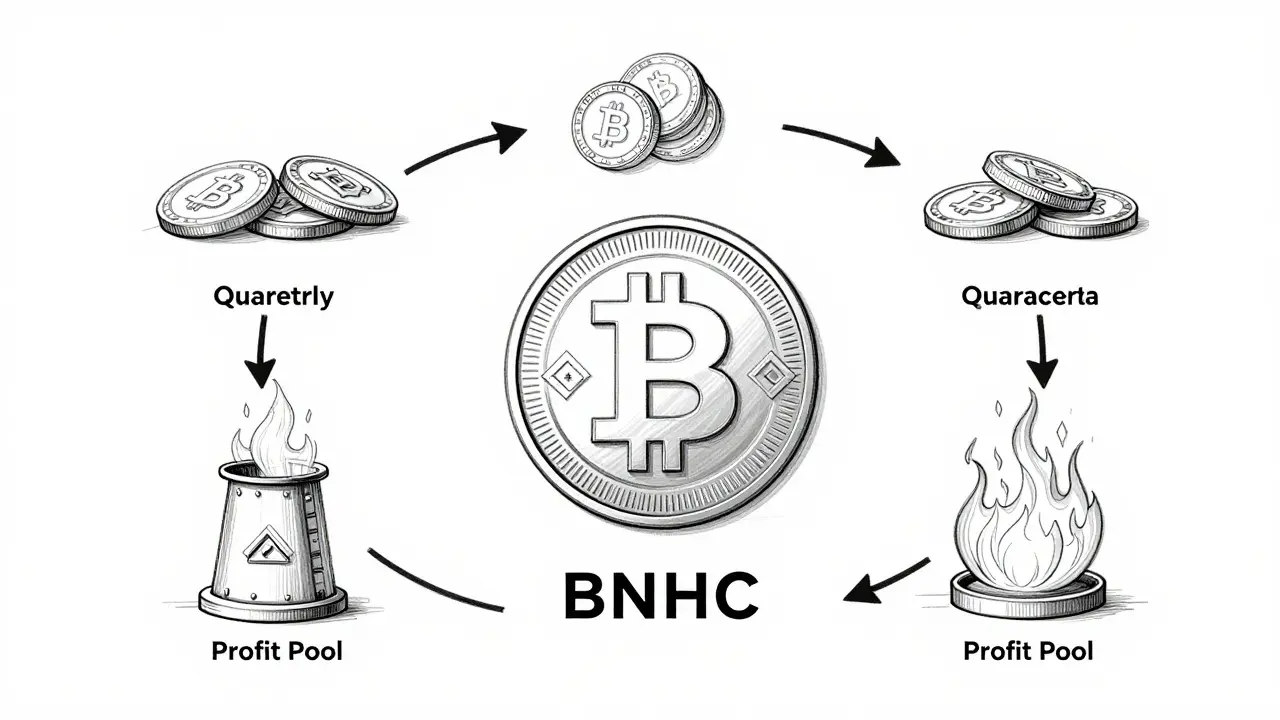
Binance conducts quarterly burns, using 20% of its quarterly profits to buy back and destroy BNB tokens. The goal is to remove 50% of the original 200 million supply-meaning 100 million BNB will eventually be burned. As of Q3 2023, Binance had already burned 48,888,888 BNB across 23 events. This creates a clear, visible roadmap for scarcity.
What makes BNB unique is its utility within the Binance ecosystem. Users who pay trading fees with BNB receive a 25% discount. This encourages holding and spending BNB, while the burns ensure that the supply shrinks regardless of whether users spend or hold. However, critics point out the centralization risk: Binance controls the burn schedule and the calculation of profits. A November 2023 Trustpilot review highlighted this tension, noting, “BNB burns definitely create scarcity, but I wish Binance published more detailed metrics on how profits are calculated for burn amounts.” Despite this, BNB has seen significant appreciation, with some holders reporting gains of over 1,200% since 2019, largely driven by this predictable scarcity model.
Other Notable Deflationary Models
While Bitcoin, Ethereum, and BNB dominate the market, other projects experiment with more aggressive deflationary tactics. One common model is the transaction tax burn. Tokens like SafeMoon implemented a model where a percentage of every transfer (e.g., 10%) is taken as a fee, with half of that fee burned and the other half redistributed to holders. While this sounds attractive, it often leads to high trading costs that make exiting positions difficult, as noted by users on Bitcointalk.org who struggled to sell during downturns due to excessive fees.
Another emerging trend is staking-based deflation, where tokens are locked up for extended periods, effectively removing them from liquid circulation. While not technically "burned," locked tokens behave similarly to removed supply because they cannot be sold to drive down prices. Projects in the DeFi space increasingly combine staking rewards with burn mechanisms to balance incentive structures.
Investment Risks and Market Realities
Deflationary mechanics sound perfect on paper, but real-world markets are messy. Here are the key risks you need to consider:
- Hoarding Behavior: Economist Nouriel Roubini warned in October 2023 that deflationary assets encourage hoarding. If everyone expects the price to go up because supply is shrinking, nobody spends the currency. This can kill its utility as a medium of exchange, turning it into a pure speculative asset.
- Demand Dependency: Scarcity only increases value if there is demand. If interest in a specific blockchain fades, burning tokens won’t save the price. The token could become scarce but worthless-a phenomenon known as "dead scarcity."
- Regulatory Uncertainty: The US SEC has indicated that tokens with complex burn mechanisms may still be classified as securities under the Howey Test. The EU’s MiCA framework also imposes strict disclosure requirements on asset-referenced tokens. Regulatory crackdowns can impact liquidity and investor confidence regardless of tokenomics.
- Volatile Burn Rates: For Ethereum, the burn rate is unpredictable. If network activity drops, the deflationary pressure eases. Investors relying solely on burn metrics for price predictions can be caught off guard by sudden shifts in network usage.
Despite these risks, the market data is compelling. As of Q4 2023, deflationary cryptocurrencies represented approximately 37% of the total crypto market cap, with Bitcoin dominating 52% of that segment. Bernstein predicts that by 2027, 65% of the top 100 cryptocurrencies will incorporate some form of deflationary mechanism. This shift suggests that the industry itself is moving toward models that prioritize scarcity and value retention.
How to Start Investing in Deflationary Crypto
If you’re ready to explore this space, here’s a practical checklist to get started safely:
- Choose the Right Wallet: Security comes first. Use a hardware wallet like Ledger or Trezor for long-term holds, or a reputable software wallet like MetaMask (for ETH/EVM chains) or Trust Wallet (for BNB). Setup takes about 15 minutes.
- Understand the Tokenomics: Before buying, read the whitepaper. Is the supply capped? Is there a burn schedule? Who controls the burns? Avoid projects with vague or overly complex fee structures.
- Check Liquidity: Ensure the token trades on major exchanges with high volume. Low liquidity means you might struggle to sell your position without crashing the price.
- Diversify: Don’t put all your eggs in one basket. Consider a mix of established assets like Bitcoin and Ethereum alongside smaller, higher-risk deflationary tokens.
- Monitor Network Activity: For coins like Ethereum, track gas prices and transaction volumes. High activity often correlates with higher burn rates and potential price strength.
Getting comfortable with these concepts typically takes 2-4 weeks for beginners, according to CoinRule Academy surveys. Take your time to study the charts and understand the underlying technology before committing significant capital.
What is the difference between deflationary and inflationary cryptocurrency?
Inflationary cryptocurrencies have a supply that increases over time, either through unlimited minting or regular issuance rewards. Deflationary cryptocurrencies have mechanisms that reduce their total supply over time, such as burning tokens or capping issuance, aiming to increase scarcity and value.
Is Bitcoin truly deflationary?
Yes, Bitcoin is considered deflationary because its supply is capped at 21 million coins, and its issuance rate is cut in half every four years through halving events. This means the rate of new supply entering the market continuously decreases, making it scarcer over time.
How does Ethereum's EIP-1559 make it deflationary?
EIP-1559 introduced a base fee for every transaction that is burned (destroyed) rather than paid to validators. When network activity is high, the amount of ETH burned exceeds the amount of new ETH issued, resulting in a net decrease in total supply.
What are the risks of investing in deflationary tokens?
Key risks include lack of demand (scarcity without value), regulatory changes that could restrict trading, centralization risks in projects controlled by single entities, and the potential for hoarding behavior that reduces the currency's utility as a medium of exchange.
Which deflationary cryptocurrency is best for beginners?
Bitcoin is generally considered the safest entry point due to its established track record, decentralized nature, and clear monetary policy. Ethereum is also a strong choice for those interested in utility-driven deflation. Beginners should avoid obscure tokens with complex or unproven burn mechanisms.