Global Crypto Regulations in 2026: A Guide to Staying Compliant Worldwide

The rules of the game changed dramatically in 2025. If you thought cryptocurrency regulation was just about avoiding SEC lawsuits or guessing which token is a security, that era is effectively over. We are now living in a world where major economies have moved from vague enforcement actions to concrete legislative frameworks. For anyone holding, trading, or building in crypto, staying informed isn't just good practice-it's survival.
In 2026, the landscape is defined by three distinct poles: the United States' shift toward clarity and federal licensing, the European Union's strict but unified MiCAR regime, and Asia's aggressive push for innovation-friendly hubs. Ignoring any one of these can mean frozen assets, heavy fines, or being shut out of entire markets. Here is how you navigate this complex web without getting lost in legal jargon.
The US Shift: From Enforcement to Legislation
For years, the United States relied on "regulation by enforcement." Agencies like the Securities and Exchange Commission (SEC) would sue companies to define the rules after the fact. That strategy collapsed in early 2025. The new administration explicitly pivoted toward providing regulatory certainty, marking a fundamental departure from previous tactics.
The turning point came with Executive Order 13987, issued in January 2025, which established an inter-agency task force dedicated to digital asset clarity. By February 2025, the SEC had closed investigations into major platforms like OpenSea and Robinhood without further action and dismissed claims against Coinbase. Most notably, the agency announced that memecoins would no longer be classified as securities under its oversight. This wasn't just a policy tweak; it was a redefinition of the market.
However, don't mistake this for a lawless free-for-all. Congress accelerated comprehensive legislation. The Stablecoin Trust Act, projected to pass in 2025, introduced federal licensing requirements for stablecoin issuers. It mandates strict reserve transparency, segregated reserves, and audits overseen by the Federal Reserve and the Office of the Comptroller of the Currency (OCC). Simultaneously, the Financial Innovation and Technology for the 21st Century (FIT) Act proposed a dual-regulatory framework, assigning securities-like tokens to the SEC and commodities to the CFTC. This aims to end the long-standing jurisdictional tug-of-war between agencies.
Yet, enforcement remains selective. In February 2025, OKX pleaded guilty to operating an unlicensed money business, agreeing to substantial fines despite the generally more permissive tone. This sends a clear message: while the government wants industry growth, it will not tolerate violations of existing banking laws. The fragmentation between federal goals and state-level money transmitter licenses continues to create a patchwork compliance environment that requires careful navigation.
Europe’s MiCAR: The Global Standard?
If the US is moving toward clarity through new laws, Europe has already implemented its answer: the Markets in Crypto-Assets Regulation (MiCAR). Throughout 2025, EU member states navigated the transitional periods of this comprehensive framework, which sets strict standards for crypto-asset service providers, issuers, and market operators.
MiCAR is not optional. It requires extensive documentation, significant capital reserves, and robust consumer protection measures. The phased implementation meant different rules kicked in at different times, creating a complex timeline for businesses. However, once fully active, it provides a single passport for operating across all EU member states. This has turned major financial centers within the EU into competitive hubs for compliant crypto firms.
For users and investors, MiCAR means higher safety nets. Issuers must disclose detailed information about their assets, and service providers are held accountable for custody and operational risks. While the compliance burden is high, the regulatory certainty attracts institutional capital that previously stayed on the sidelines due to fear of sudden bans or unclear rules.
Asia’s Rise: Hong Kong and Singapore Lead the Way
While the West debates classification, Asian financial centers have been busy building infrastructure. In 2025, Hong Kong SAR and Singapore solidified their positions as global leaders in balanced crypto regulation. They aren't trying to ban crypto; they are trying to tame it and make it profitable for their economies.
Hong Kong introduced new licensing regimes for exchanges, including over-the-counter trading and custody services. Regulators actively reviewed rules for crypto derivatives and lending while drafting strict stablecoin requirements. This comprehensive approach allows them to attract international businesses that want clear rules rather than gray areas.
Singapore finalized its stablecoin framework during this period, maintaining rigorous licensing requirements for crypto firms. The goal is explicit: balance innovation encouragement with investor protection. These jurisdictions are proving that you can have both. By offering clear pathways for compliance, they are drawing talent and capital away from regions with uncertain or hostile regulatory environments.
International Standards: FATF, BIS, and the Travel Rule
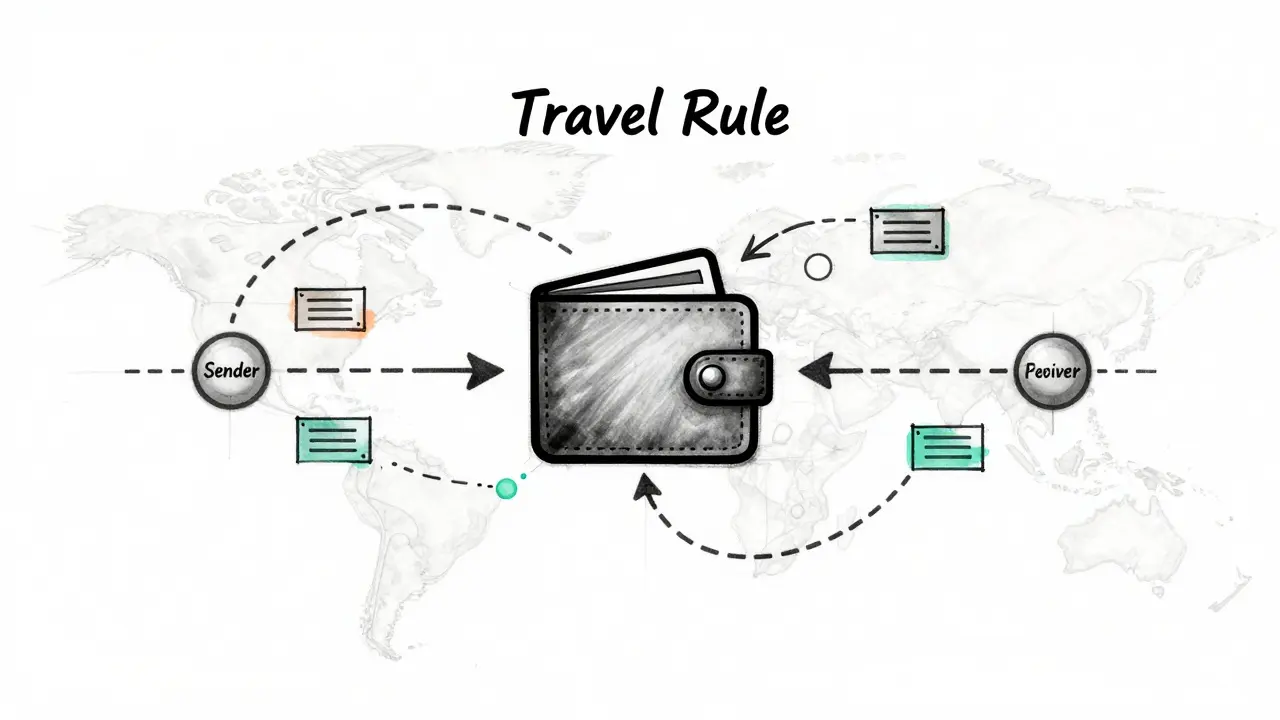
No matter where you operate, you cannot ignore international standard-setting bodies. The Financial Action Task Force (FATF) continues to drive global anti-money laundering (AML) efforts. Their updated guidance in 2025 emphasized the "Travel Rule," which requires crypto businesses to share sender and receiver information for transactions above certain thresholds.
This is critical for cross-border compliance. If your exchange operates in the US but your user is in Europe, you need to comply with both local laws and FATF recommendations to avoid being cut off from the traditional banking system. The Bank for International Settlements (BIS) and the Basel Committee on Banking Supervision (BCBS) are also shaping how traditional banks interact with crypto. New capital requirements and risk management standards mean that banks are more cautious but also more structured in their engagement with digital assets.
For decentralized finance (DeFi) projects, this creates a unique challenge. How do you comply with the Travel Rule when there is no central entity? Regulators are increasingly looking at intermediaries-wallet providers, front-end interfaces, and liquidity pools-as potential points of control. Ignoring these international standards can lead to de-risking, where traditional financial institutions refuse to serve your business entirely.
Practical Steps to Stay Compliant in 2026
So, what does this mean for you? Whether you are a retail investor, a startup founder, or a compliance officer, here is how to stay ahead of the curve:
- Monitor Federal vs. State Laws in the US: Even with federal progress, state money transmitter licenses vary wildly. If you operate in multiple states, consult legal experts to understand the specific requirements in each jurisdiction.
- Prepare for MiCAR Compliance: If you have any presence in the EU, ensure your documentation meets MiCAR standards. This includes proof of reserves, clear disclosure documents, and adequate capitalization.
- Implement Robust AML/KYC Procedures: The FATF Travel Rule is not going away. Invest in technology that can automatically collect and transmit required transaction data. Failure to do so will block your access to fiat on-ramps and off-ramps.
- Track Stablecoin Regulations: With the Stablecoin Trust Act and similar frameworks in Asia and Europe, stablecoins are becoming heavily regulated. Ensure your stablecoin holdings are backed by transparent, audited reserves.
- Engage with Local Regulatory Bodies: Don't wait for enforcement. Proactively engage with regulators in key jurisdictions like Singapore and Hong Kong to understand their expectations and build trust.
The days of flying under the radar are over. The regulatory net is tightening, but it is also becoming clearer. Use this clarity to your advantage. Build compliant products, protect your users, and position yourself for long-term success in a maturing market.
What happened to the SEC's enforcement actions in 2025?
In early 2025, the SEC shifted from aggressive enforcement to seeking regulatory clarity. They closed investigations into major platforms like OpenSea and Robinhood without further action and dismissed claims against Coinbase. They also announced that memecoins would no longer be considered securities under their oversight. However, selective enforcement continued, as seen with OKX's guilty plea for operating an unlicensed money business.
How does MiCAR affect crypto businesses in Europe?
MiCAR imposes strict licensing, capital, and consumer protection requirements on crypto-asset service providers and issuers. It creates a single passport for operating across all EU member states, but compliance costs are high. Businesses must provide extensive documentation and maintain segregated reserves for stablecoins.
Are stablecoins heavily regulated in 2026?
Yes. The US Stablecoin Trust Act introduces federal licensing and audit requirements. Similarly, the EU and Asian hubs like Singapore have implemented strict stablecoin frameworks requiring transparent reserves and regular audits. Non-compliant stablecoins face significant legal and operational risks.
What is the FATF Travel Rule and why does it matter?
The FATF Travel Rule requires crypto businesses to share sender and receiver information for transactions above certain thresholds. It is crucial for anti-money laundering (AML) compliance. Failure to comply can result in being cut off from traditional banking services and facing international sanctions.
Which Asian countries are leading in crypto regulation?
Hong Kong SAR and Singapore are leading the way. Hong Kong introduced licensing for exchanges and custody services, while Singapore finalized its stablecoin framework. Both aim to balance innovation with investor protection, attracting international crypto businesses with clear regulatory paths.