
How NFTs Work on Blockchain: A Clear Breakdown of Tokens, Standards, and Real-World Use
When you buy an NFT, you’re not downloading a JPEG. You’re buying a digital certificate of ownership stored on a blockchain - and that’s where things get interesting. Most people think NFTs are just fancy pictures. But the real magic is in how they use blockchain to prove who owns something digital, even if that thing can be copied a million times.
What Makes an NFT Different From Bitcoin?
Bitcoin is fungible. That means one Bitcoin is exactly the same as another. You can swap them, split them, trade them like cash. NFTs are the opposite. Each one is unique. Think of them like a limited-edition baseball card. There might be thousands of the same player, but only one card has the specific serial number that makes it rare. That’s what an NFT is - a digital serial number tied to something specific. This uniqueness comes from the token standard. The most common one is ERC-721, created in 2017 for Ethereum. Each ERC-721 token has a unique ID number that can’t be changed. It’s like a fingerprint. Even if two NFTs look identical, their IDs are different. That’s how the blockchain knows which one you own. There’s also ERC-1155, a more efficient standard that lets one smart contract manage multiple types of tokens. This is why games like Axie Infinity use it - they can issue both rare characters and common items in the same contract, cutting costs and complexity.How NFTs Are Built on Blockchain
NFTs don’t live in a vacuum. They’re built on blockchains - decentralized ledgers that record every transaction. Ethereum is still the king here, handling about 80% of all NFT activity as of mid-2023. But it’s not the only player. Solana, for example, processes NFT trades in under a second and costs around $0.00025 per transaction. That’s 60,000 times cheaper than Ethereum at peak times. Polygon offers Ethereum compatibility with fees as low as $0.02. Flow, built by Dapper Labs for NBA Top Shot, handles 10,000 transactions per second and charges users nothing - the platform pays the fees. Each NFT has two parts: the token and the metadata. The token lives on the blockchain. The metadata - the name, description, image, creator info - usually lives elsewhere. Early NFTs stored this on Amazon servers. That was a problem. When those servers went down, the images disappeared. In 2021, over a third of CryptoPunk images were lost because the hosting company shut down. Now, most serious NFT projects use decentralized storage like IPFS or Arweave. These systems store files across thousands of computers. Even if one node fails, the file stays up. By Q2 2023, over 62% of newly minted NFTs used decentralized storage. That’s the difference between owning a digital asset and owning a broken link.The Minting Process: Creating an NFT
Minting is the act of creating an NFT and recording it on the blockchain. It’s not free. On Ethereum, minting an NFT can cost between $1.20 and $1.80 in gas fees - and that’s when the network isn’t busy. During peak times, it can hit $50 or more. Here’s how it works:- You connect your wallet (like MetaMask or Phantom) to an NFT marketplace.
- You upload your digital file - art, music, video.
- You fill in metadata: title, description, properties.
- You set royalties - typically 5-10% - so you earn every time it’s resold.
- You pay the gas fee and click ‘mint’.
Who Owns What? The Role of Smart Contracts
Smart contracts are self-executing code on the blockchain. They’re what make NFTs more than just digital receipts. For example, when you buy an NFT, the smart contract automatically transfers ownership from the seller’s wallet to yours. No middleman. No paperwork. Just code. The real innovation? Royalties. Before NFTs, artists got paid once - when the original piece sold. Now, every time an NFT changes hands, the smart contract can automatically send a cut (say, 7%) back to the creator. About 87% of major NFT marketplaces now enforce this. That’s changed how creators earn. But not all smart contracts are equal. A 2023 study found that 33% of NFTs have broken royalty systems. Sometimes the code is missing. Sometimes the marketplace ignores it. That’s why some creators now use platforms like OpenSea or Blur that have standardized royalty enforcement.Real Uses Beyond Art and Monkey Pictures
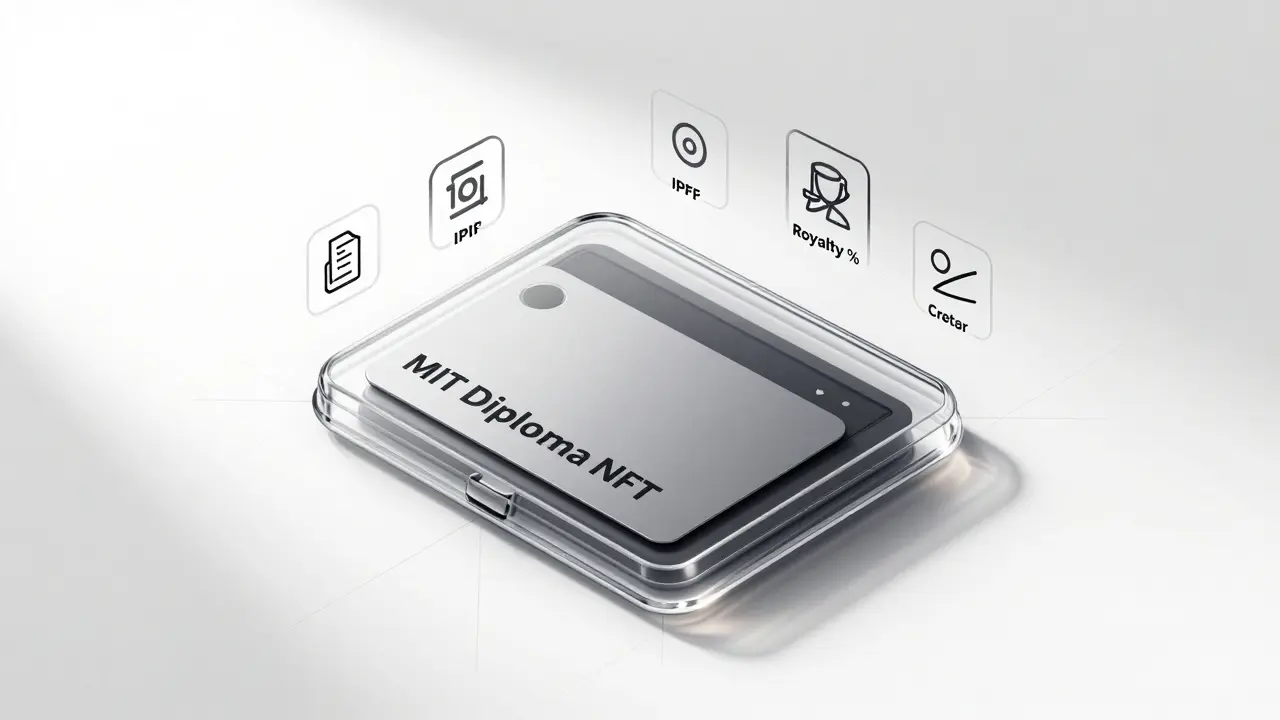
NFTs aren’t just for JPEGs. They’re being used in real industries. Walmart uses NFTs to track 2.1 million products through its supply chain. Each item gets a digital twin - an NFT that records where it came from, who handled it, and when it shipped. This cuts fraud and speeds up recalls. LVMH (Louis Vuitton’s parent company) uses NFTs on its AURA blockchain to verify the authenticity of luxury goods. If you buy a $10,000 handbag, you get an NFT proving it’s real - not a knockoff. Ticketmaster issued 1.2 million NFT tickets for Taylor Swift’s Eras Tour. These tickets can’t be copied or resold illegally. They also give fans access to exclusive content and future events. Even universities are experimenting. MIT has issued NFT diplomas. They’re tamper-proof, instantly verifiable, and can’t be forged.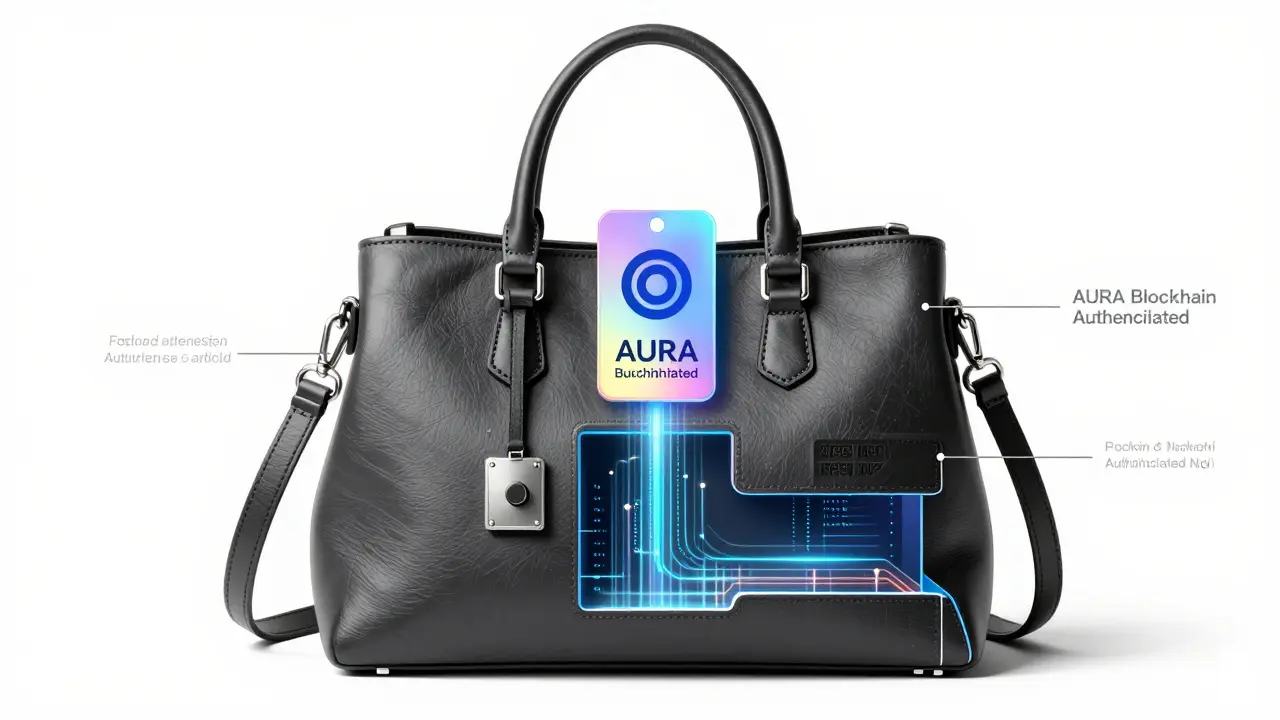
Why NFTs Fail - And How to Avoid It
Most NFTs lose value fast. Only 1.3% of collections hold value above their mint price after a year. Why?- Scams: Rug pulls. Fake projects. Teams vanish with the money. In 2023, over $45,000 was stolen in one Solana rug pull.
- Storage failures: If your NFT’s image is hosted on a dead server, it’s gone.
- Lost keys: 12% of NFT owners who lost their wallets recovered only a fraction of their assets.
- Gas traps: People pay $50 to mint a $10 NFT and then can’t afford to sell it.
- Decentralized storage (IPFS/Arweave)
- Verified creators
- Clear smart contracts
- Active communities
The Future: Cheaper, Cleaner, More Useful
Ethereum’s upcoming Cancun upgrade in early 2024 will introduce proto-danksharding. This could cut NFT minting costs by 80-90%. That’s huge. Tezos and Flow are already using proof-of-stake - using 2 million times less energy than old Ethereum. That’s solving the environmental criticism. Adobe now lets creators embed NFT ownership data directly into Photoshop files. Visa is launching NFT-backed credit cards. The NYSE is building a regulated NFT marketplace for financial assets. The truth? NFTs aren’t going away. They’re evolving. The hype is over. The utility is just starting.Can I copy an NFT and own it too?
No. You can copy the image, but you can’t copy the ownership record. The NFT is the digital certificate tied to your wallet on the blockchain. Anyone can download a JPEG, but only one person owns the verified original - just like anyone can print a Picasso, but only one person owns the real painting.
Do I need cryptocurrency to buy an NFT?
Yes, currently. You need crypto like ETH, SOL, or MATIC to pay for the NFT and the gas fees. Some platforms allow credit cards, but those are just gateways - behind the scenes, they’re still using crypto. You’ll need a wallet like MetaMask or Phantom to store your NFTs securely.
What’s the difference between ERC-721 and ERC-1155?
ERC-721 is for one-of-a-kind tokens - like a single piece of digital art. ERC-1155 lets you bundle multiple token types in one contract. That’s useful for games where you have rare items and common ones. ERC-1155 is cheaper and more efficient, which is why it’s becoming popular for gaming and collectibles.
Are NFTs a good investment?
Most aren’t. Only 1.3% of NFT collections keep value after a year. NFTs are not stocks. They’re speculative digital collectibles. Buy them because you like the art, the community, or the utility - not because you expect to get rich. Treat them like rare vinyl records, not mutual funds.
Can NFTs be used for real estate?
Yes. Some companies are tokenizing physical property - dividing ownership into NFTs. A building could be split into 100 NFTs, each representing 1% ownership. These NFTs can be traded, rented, or sold. It’s still early, but pilot programs exist in places like Miami and Singapore. The blockchain ensures transparent, tamper-proof records of ownership.
Rishav Ranjan
December 25, 2025 AT 12:53chris yusunas
December 25, 2025 AT 20:42Ellen Sales
December 26, 2025 AT 01:39Janet Combs
December 26, 2025 AT 12:36Luke Steven
December 27, 2025 AT 17:30Radha Reddy
December 29, 2025 AT 08:27Charles Freitas
December 31, 2025 AT 01:53Aaron Heaps
December 31, 2025 AT 09:24Sophia Wade
January 1, 2026 AT 18:33Shubham Singh
January 2, 2026 AT 17:21Megan O'Brien
January 4, 2026 AT 13:24Tristan Bertles
January 6, 2026 AT 06:47Dustin Bright
January 6, 2026 AT 19:10Earlene Dollie
January 8, 2026 AT 02:04Helen Pieracacos
January 9, 2026 AT 16:43Dan Dellechiaie
January 9, 2026 AT 19:32Dusty Rogers
January 11, 2026 AT 08:03Jordan Renaud
January 12, 2026 AT 12:16Zavier McGuire
January 14, 2026 AT 04:46Sheila Ayu
January 15, 2026 AT 08:36Kevin Karpiak
January 16, 2026 AT 00:44Charles Freitas
January 17, 2026 AT 20:41Melissa Black
January 18, 2026 AT 14:31