
Kuma Inu Airdrop Alert: Is the Event Real or a Scam?
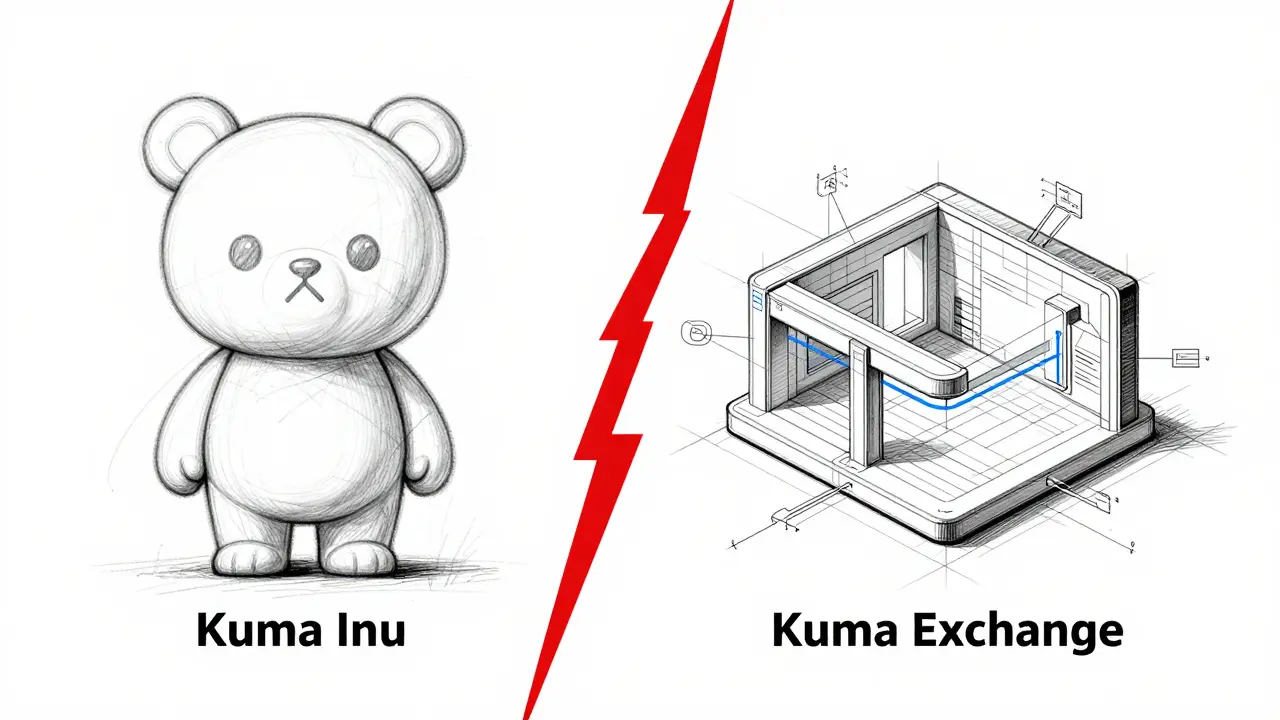
You’ve likely seen the buzz on social media about a massive Kuma Inu airdrop. The promises are tempting: free tokens, high yields, and a chance to get in early on the next big meme coin. But here is the hard truth that most hype trains ignore. As of mid-2026, there is no verified, official airdrop event for the specific token known as Kuma Inu (KUMA). In fact, digging into the details reveals a confusing mix-up between two completely different projects, and this confusion is exactly what scammers are exploiting right now.
If you are looking to claim free KUMA tokens, you need to pause. The landscape is messy. On one side, you have Kuma Inu, a dormant meme token with near-zero trading volume. On the other, you have Kuma (formerly IDEX), a legitimate decentralized exchange that rebranded in 2025 and offers rewards through the Berachain ecosystem. Mixing these up could cost you your private keys or send your funds into a black hole. Let’s break down exactly what is real, what is fake, and how to stay safe while navigating this noise.
Two Different Projects, One Confusing Name
The root of the problem is simple: naming collision. In the crypto world, names get reused constantly, but rarely with such direct overlap. To understand whether an airdrop is legit, you first have to identify which "Kuma" you are dealing with.
Kuma Inu (KUMA) is a community-driven meme token that attempted to pivot into DeFi features. It launched with the typical meme coin playbook-cute branding, community governance promises, and a yield farming protocol called "Kuma Breeder." However, market data tells a stark story. The token trades at fractions of a penny (around $0.000000003) with effectively zero 24-hour trading volume. When a token has no liquidity and no active traders, it usually means the project has stalled. There are no recent roadmap updates, no major partnerships, and crucially, no official announcement from the Kuma Inu team regarding a new airdrop event.
In contrast, Kuma (formerly IDEX) is a hybrid decentralized exchange founded by Alex and Philip Wearn. This platform underwent a strategic rebranding on March 24, 2025, to align itself with the Berachain ecosystem. Unlike the dormant Kuma Inu, this Kuma is highly active. It operates as a professional trading venue for Ethereum assets, combining centralized order matching with on-chain settlement. They launched a reward program in April 2025 where users earn BGT (Berachain Gas Token) rewards by trading perpetual futures. This is a structured, utility-based incentive system, not a random "free money" giveaway. If you saw news about "Kuma rewards," it was almost certainly about this exchange, not the meme coin.
| Feature | Kuma Inu (Meme Token) | Kuma (Formerly IDEX) |
|---|---|---|
| Type | Meme Coin / DeFi Experiment | Decentralized Exchange (DEX) |
| Status | Dormant / Low Volume | Active / Rebranded 2025 |
| Reward Program | None confirmed | BGT Rewards for Trading |
| Ecosystem | Standalone | Berachain Integration |
| Airdrop Risk | High (Scam Target) | Low (Legitimate Platform) |
Why "Kuma Inu Airdrops" Are Likely Scams
Here is the reality check: if someone is telling you that you can claim free Kuma Inu tokens right now, they are lying. Or worse, they are trying to steal your wallet contents. Because the actual Kuma Inu project shows no signs of life, any website claiming to host an official airdrop is operating without authorization.
Scammers thrive on ambiguity. They know people confuse Kuma Inu with the more active Kuma Exchange. They create fake landing pages that look professional, using logos and language borrowed from both projects. These sites often ask you to connect your MetaMask or Phantom wallet to "verify eligibility." Once you sign that transaction, you aren’t receiving tokens; you are approving a malicious smart contract that drains your existing assets.
Look at the technical evidence. Legitimate airdrops in 2025 and 2026 require clear infrastructure. Think of projects like Yei Finance or Sidekick, which announced specific registration dates, snapshot blocks, and claim windows. Kuma Inu has none of this. There are no smart contract addresses published for distribution, no voting proposals on their governance forums, and no announcements on verified social channels. The absence of these basics is a red flag the size of a billboard.
How to Verify Any Crypto Airdrop
Before you click any link promising free KUMA or any other token, run it through this mental checklist. It takes ten seconds and can save you thousands of dollars.
- Check the Official Website: Go directly to the project’s verified URL. Do not use Google Ads or social media links. If the homepage doesn’t mention the airdrop prominently, it doesn’t exist. For Kuma Inu, the site is largely static with no active campaigns.
- Verify Social Media Handles: Look for the blue checkmark or verified badge on X (Twitter) and Discord. Scammers create lookalike accounts with slight spelling variations (e.g., @KumaInu_Official_1 instead of @KumaInuOfficial). Check the follower count and engagement. Real teams have active communities asking questions; fake ones have bots posting generic hype.
- Analyze the Token Contract: Use tools like Etherscan or BscScan. Search for the token address provided in the airdrop offer. Does it match the official contract listed on CoinGecko or CoinMarketCap? If the address is new or has low liquidity, walk away.
- Look for a Snapshot Date: Real airdrops take a snapshot of wallets at a specific block height. If the offer says "claim now" with no reference to past activity or holding periods, it’s likely a phishing attempt designed to harvest wallet signatures.
- Read the Fine Print: Legitimate platforms disclose risks, fees, and terms. If the language is vague, overly enthusiastic, or uses broken English, treat it as hostile.
The Reality of Kuma Inu’s Market Position
Even if a legitimate airdrop were announced tomorrow, you should consider the token’s fundamental value. Kuma Inu currently sits at a price point so low it borders on negligible ($0.000000003235 USD). While some investors chase "low cap" gems hoping for a hundred-fold return, the lack of trading volume suggests there is no buyer interest.
Price predictions from various analysts show extreme volatility and skepticism. Some models suggest a potential rise to $0.00000001094 by late 2025, while others predict further decline. Without active development, marketing, or a working product beyond the basic Kuma Breeder protocol, the token lacks the catalysts needed for sustainable growth. The broader meme coin market has become saturated, and regulatory scrutiny in 2025 has made it harder for low-effort projects to survive.
Compare this to the trajectory of successful meme coins that transitioned into utility projects. They did so by building genuine communities and launching functional products. Kuma Inu’s governance system, described as "fully decentralized," lacks detailed documentation on how votes are counted or implemented. This opacity makes it difficult for serious investors to trust the long-term viability of the project.

Safer Alternatives for Airdrop Hunters
If your goal is to find legitimate airdrop opportunities, shifting your focus away from dormant meme coins will yield better results. The current crypto landscape favors projects with clear utility and active ecosystems. Here are three areas where real opportunities exist in 2026:
- Berachain Ecosystem: Since the rebranding of IDEX to Kuma, the Berachain network has seen increased activity. Engaging with testnets, providing liquidity, or trading on integrated DEXs can lead to future token distributions. This is where the "Kuma" name has actual weight.
- Layer 2 Solutions: Networks like Arbitrum, Optimism, and zkSync continue to reward early adopters who bridge funds and interact with dApps. These programs are transparent, documented, and backed by substantial venture capital.
- DeFi Protocols with Governance Tokens: Platforms like Aave, Uniswap, and Curve have established histories of rewarding users. Participating in yield farming or lending within these protocols builds a track record that often qualifies you for future governance incentives.
Instead of chasing ghost projects like Kuma Inu, spend your time learning how to interact safely with these robust ecosystems. The returns may be slower, but they are real.
Protecting Your Wallet in a Phishing Era
Given the high volume of scams targeting confused Kuma Inu seekers, reinforcing your security posture is non-negotiable. Even if you never intend to buy KUMA, having a wallet connected to risky sites puts you in danger.
Use a hardware wallet like Ledger or Trezor for significant holdings. Never store large amounts of crypto on a hot wallet connected to multiple websites. Enable two-factor authentication (2FA) on all exchange accounts, preferably using an authenticator app rather than SMS. Regularly audit your wallet permissions using tools like Revoke.cash to ensure no old contracts still have access to your funds.
Remember, legitimate projects will never ask for your seed phrase. Ever. If a site requests those twelve words, close the tab immediately. That is the golden rule of crypto safety.
Is there an official Kuma Inu airdrop happening in 2026?
No. There is no verified official airdrop for the Kuma Inu (KUMA) meme token. Any claims suggesting otherwise are likely scams or confusion with the separate Kuma Exchange (formerly IDEX) project.
What is the difference between Kuma Inu and Kuma Exchange?
Kuma Inu is a dormant meme token with minimal trading volume. Kuma Exchange is a decentralized trading platform that rebranded from IDEX in 2025 and offers legitimate BGT rewards within the Berachain ecosystem. They are unrelated entities.
How can I tell if a Kuma Inu airdrop website is fake?
Check if the website is linked from the official Kuma Inu social media channels. Look for poor grammar, requests for your seed phrase, or pressure to act quickly. Legitimate airdrops have clear terms, snapshot dates, and official announcements.
Is it safe to connect my wallet to claim Kuma Inu tokens?
It is highly unsafe. Since no official airdrop exists, connecting your wallet to these sites exposes you to phishing attacks and malicious smart contracts that can drain your funds.
Where can I find legitimate airdrop opportunities?
Focus on active ecosystems like Berachain, Layer 2 networks (Arbitrum, Optimism), and established DeFi protocols. Always verify information through official project channels and reputable tracking platforms like Airdrops.io.