
Paradex Crypto Exchange Review: Is This Zero-Fee DEX the CEX Killer?
Imagine a trading platform that gives you the lightning speed of a centralized exchange like Binance, but lets you keep your keys and pay absolutely zero fees. For a long time, you had to pick two: speed, security, or low cost. Paradex is a decentralized derivatives exchange built as an independent Layer 2 appchain on Starknet. It claims to solve the "DeFi trilemma" by combining institutional-grade liquidity with total self-custody. If you're tired of handing over a percentage of every trade to a middleman, this might be the shift you've been waiting for.
The Core Engine: How Paradex Actually Works
Most decentralized exchanges (DEXs) feel sluggish because they fight for space on a crowded mainnet. Paradex takes a different route. It runs on its own proprietary Layer 2 blockchain called DimeVM. By using zk-rollup technology, it bundles thousands of transactions together and sends a single proof to Ethereum to confirm everything is legit.
In plain English, this means you get sub-second order execution. While some DEXs struggle to hit 500 transactions per second (TPS), the DimeVM architecture is built for 10,000+ TPS. For a day trader, this is the difference between getting your price and watching a market order slip by 1% while the chain lags. It's specifically designed for high-frequency trading where every millisecond counts.
Trading Features and the Zero-Fee Edge
The biggest draw here is the cost. Paradex offers 0% maker and 0% taker fees for retail users. When you compare this to competitors like GMX or Kwenta, who typically charge around 0.1% to 0.15%, the savings add up fast-especially if you're scaling positions.
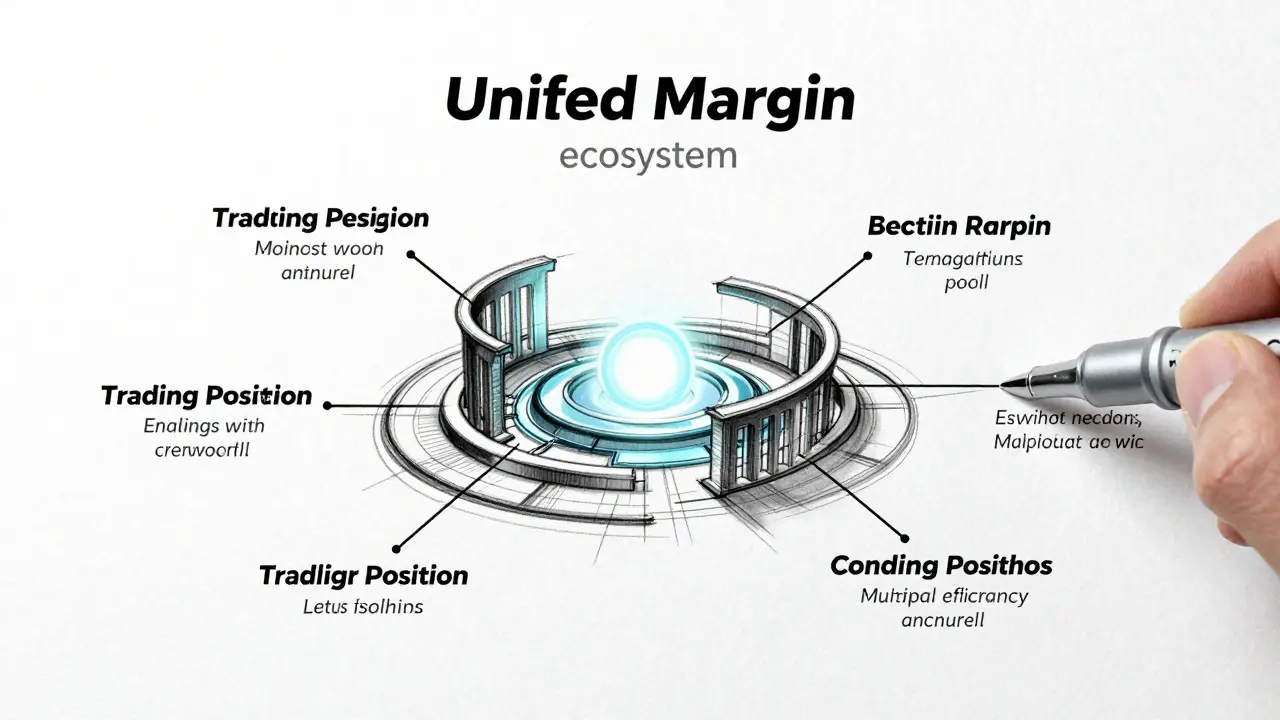
But it's not just about the cost. The platform supports over 250 markets across perpetual futures, perpetual options, and spot trading. You can use up to 50x leverage, which is plenty for most aggressive strategies. One of the standout features is the unified margin system. Instead of isolating funds for every single trade, you can use a single pool of collateral to back multiple positions, which maximizes your capital efficiency.
| Feature | Paradex | GMX / Kwenta | Hyperliquid |
|---|---|---|---|
| Trading Fees | 0% (Retail) | ~0.1% - 0.15% | Variable |
| Execution Speed | Sub-second (DimeVM) | Slower (L1/L2 dependent) | Fast |
| Privacy | zk-Account Masking | Transparent | Transparent |
| Max Leverage | 50x | Varies by asset | Up to 50x |
Privacy: The Secret Weapon
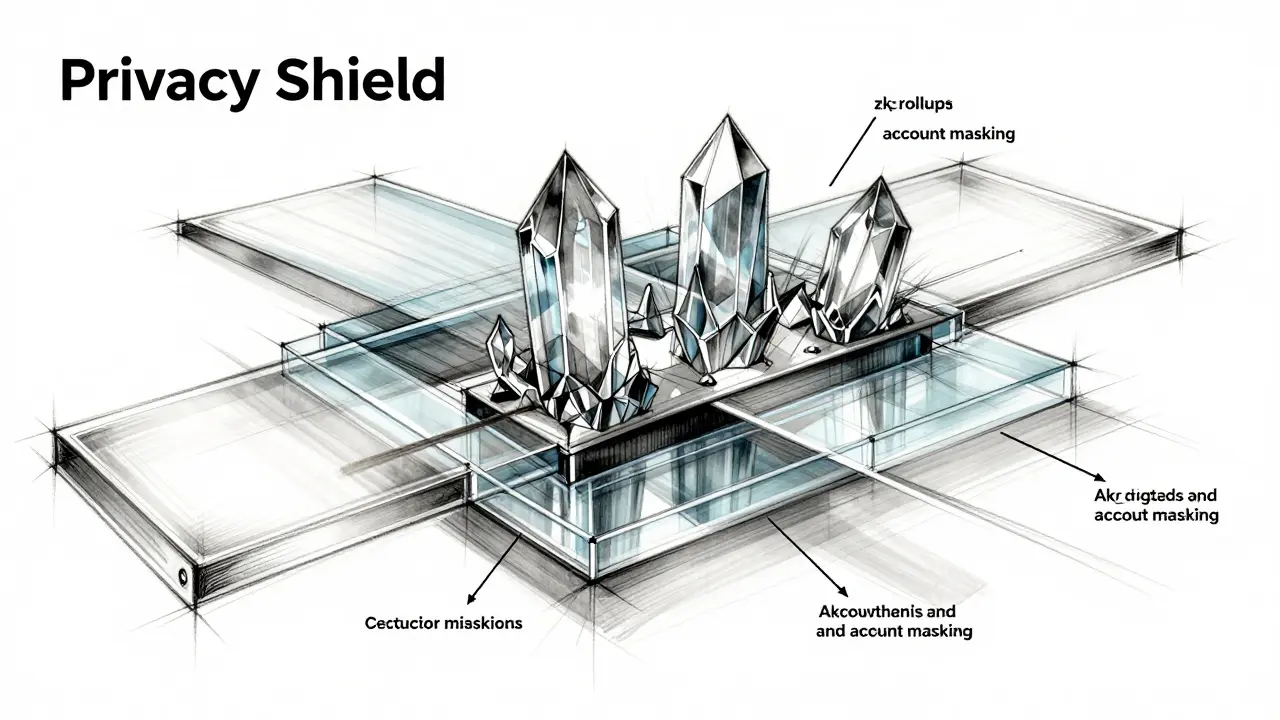
In the world of DeFi, everything is usually public. Anyone with a block explorer can see your entries, your exits, and exactly when you get liquidated. It's a bit like trading with a giant billboard over your head. Paradex introduces zk-style account masking. This hides your positions and PnL from prying eyes, giving you a level of privacy usually reserved for the internal ledgers of centralized exchanges.
This isn't just a gimmick; it's a necessity for institutional traders who don't want their strategies front-run by bots. By encrypting these details while still proving the trade is valid on-chain, Paradex bridges the gap between the transparency of blockchain and the confidentiality of professional trading.
The Ecosystem: DIME and XUSD
The platform is powered by the $DIME token, which handles the economics of the DimeVM chain. But the real utility for the average user often comes down to XUSD. This is a yield-bearing, censorship-resistant stablecoin that acts as the primary collateral for the exchange. Instead of your USDC just sitting there, XUSD allows you to earn a return on your balance while you wait for a trade setup.
Connectivity is another strong point. You aren't locked into one ecosystem. Paradex connects to over 20 chains, including Solana, Arbitrum, and Avalanche, making it easy to bridge your assets and get started without a dozen different wallet swaps.
The Risks: What You Should Watch Out For
No platform is perfect, and Paradex has a few hurdles. First, there's the learning curve. If you've never traded derivatives, the unified margin system can be confusing. There have been reports of new users accidentally over-leveraging because they didn't realize how their collateral was being shared across positions. If you're a beginner, definitely use their interactive margin calculator before diving in.
Then there's the "centralization" debate. In its current phase, Paradex relies on a centralized operator for block proposals. While they use a "least authority" design and undergo audits by firms like OpenZeppelin, it's not yet as fully decentralized as some older protocols. Additionally, the unified margin system creates correlated risk. If one massive position crashes, it can impact your other trades because they all share the same collateral pool.
Final Verdict: Who is this for?
Paradex is a powerhouse for the experienced trader. If you're doing high-volume trading and you're tired of paying thousands in fees to CEXs, the Paradex crypto exchange review consensus is clear: the cost savings and speed are unmatched in the DEX space. It's also a dream for those who value privacy and want to avoid being "tracked" on-chain.
However, if you're just starting your crypto journey, be careful. The interface is designed for pros, and the risks of leveraged trading are magnified when you're using a system you don't fully understand. Start small, use cross-margin conservatively, and read the docs. For the rest of us, this is a glimpse into the future of "Open Finance"-where the efficiency of Wall Street meets the sovereignty of Bitcoin.
Are the trading fees on Paradex actually zero?
Yes, for retail traders using the UI, Paradex offers 0% maker and 0% taker fees. This is a strategic move to attract liquidity from centralized exchanges and other DEXs that charge a percentage per trade.
Is Paradex safe and secure?
Paradex uses zk-rollups to anchor its state to Ethereum, meaning the final security is backed by the Ethereum mainnet. It also undergoes regular audits by OpenZeppelin. However, like all leveraged platforms, it carries smart contract risk and market volatility risk.
What is the difference between isolated and unified margin?
Isolated margin assigns a specific amount of collateral to a single trade; if that trade fails, only that collateral is lost. Unified margin allows all your assets to back all your positions. It's more efficient but means a failure in one large position can put your entire account at risk.
How does the privacy feature work?
Paradex uses zk-style account masking. This hides your specific trade entries, exits, and liquidation levels from the public blockchain, preventing other traders or bots from analyzing and copying your strategy.
Can I use assets other than USDC?
While USDC and the yield-bearing XUSD are the primary options, the platform is moving toward multi-collateral support. You can bridge assets from over 20 different chains to fund your account.
Mark Pfeifer
April 15, 2026 AT 21:04The unified margin system is a double-edged sword. It's great for capital efficiency, but it basically means one bad trade can wipe out your entire portfolio if you aren't monitoring it 24/7.
Michael Harms
April 16, 2026 AT 08:37This looks like a great step forward for everyone! Just remember to start small and learn the ropes before going all in.
John and Lauren Busch
April 17, 2026 AT 11:24Zero fees. Totally believable.
Abhinav Chaubey
April 19, 2026 AT 04:55It is quite obvious that the DimeVM architecture is the only way to achieve the throughput necessary for real high-frequency trading. Most people simply do not understand that Layer 1s are fundamentally incapable of this speed, and Paradex is merely applying basic engineering principles that any competent developer should already be utilizing if they wanted to compete with the likes of Binance.
Yuhan Mo
April 21, 2026 AT 00:21From a quantitative perspective, the integration of zk-Account Masking is a significant upgrade for reducing MEV (Maximal Extractable Value) and preventing toxic flow from front-running institutional strategies. The sub-second latency on the appchain effectively mitigates the slippage issues usually associated with asynchronous settlement in traditional DeFi protocols.
Kim Smith
April 21, 2026 AT 20:42i just think its wild how we've gone from trustless money to these complex l2 chains that still need a central opterator to propose blocks, like, are we actually decentralizing or just building a faster version of the same old system with a different name and some fancy math to make us feel safer while we gambul our life savings on 50x leverage in a world that's already falling apart anyway lol.
Luke George
April 22, 2026 AT 23:17The centralized operator for block proposals is the real red flag here. They say "least authority" but that's just marketing speak for "trust us while we hold the keys." It's the same pattern every time a "revolutionary" DEX launches.
Sean Mitchell
April 24, 2026 AT 10:26The user interface is a complete disaster for anyone who isn't a professional trader. I can't believe we're expected to navigate this labyrinth just to avoid a tiny fee!
siddharth narula
April 25, 2026 AT 03:15One must ponder if the pursuit of zero fees is a virtuous endeavor or merely a siren song leading the masses toward precarious leverage 🧐. The moral hazard of such a system is profound.
Anna Grealis
April 26, 2026 AT 22:26Probablly just another honey pot to get people to bridge assets so they can rug it later. Too good to be true.
Karen Mogollon Gutierrez
April 27, 2026 AT 18:22It is absolutely scandalous that beginners are being lured into unified margin accounts without a more rigorous warning system! The potential for total account liquidation is simply catastrophic!
Tracy Sperandio
April 28, 2026 AT 00:18This is an absolute game-changer for the DeFi scene! The sheer audacity of offering zero fees while keeping the speed is just electric. Get those portfolios moving!
nathan jones
April 28, 2026 AT 20:49Cool features. Seems solid.
Robert Preston
April 29, 2026 AT 04:32If you're using the unified margin, make sure you have a strict stop-loss strategy. Without it, you're essentially gambling with your entire collateral pool on every single trade.
Alex Long
April 29, 2026 AT 10:35Mid. Boring.
Thomas Jewett
April 30, 2026 AT 04:16I dont trust these L2s one bit because they all just end up being controlled by some guy in a basement in another country and we are suposed to believe the audit from OpenZeppelin means everything is perfect when we all know the real patriots know that only true L1 security matters and anything else is just a house of cards waiting to blow away in the wind of a market crash.
Kaitlyn Wu
April 30, 2026 AT 04:44We need to be very clear: leverage is not for everyone. If you don't understand how XUSD yield works, stay away from this platform until you do your research.
nikki krinkin
May 1, 2026 AT 07:49The privacy aspect is actually the most interesting part for me. Not having every single trade broadcasted to the world is a huge relief.
Keri Pommerenk
May 1, 2026 AT 18:40honestly the xusd thing is pretty sweet if you just want your money to work for you while you wait for a dip
Evan Iacoboni
May 2, 2026 AT 23:31How exactly is the retail 0% fee sustained long-term? There has to be a catch in the order flow or the DIME tokenomics.