
The Future of Layer 2 Scaling: How ZK-Rollups and Optimistic Rollups Are Reshaping Blockchain in 2026
Remember the days when sending a simple token swap on Ethereum cost more than your morning coffee?
If you’ve been in the crypto space since 2021, you know exactly what I’m talking about. Network congestion turned basic transactions into expensive luxuries. But fast forward to mid-2026, and that anxiety is largely gone. Why? Because Layer 2 scaling solutions have stopped being experimental side projects and become the actual backbone of the blockchain economy.
We are no longer debating *if* Layer 2 is the future. We are living in it. Today, these secondary protocols process thousands of transactions per second for pennies, handling everything from high-frequency trading to micro-transactions in gaming. This article breaks down how we got here, which technologies are winning the race, and what this means for developers and users alike.
What Exactly Is Layer 2 Scaling?
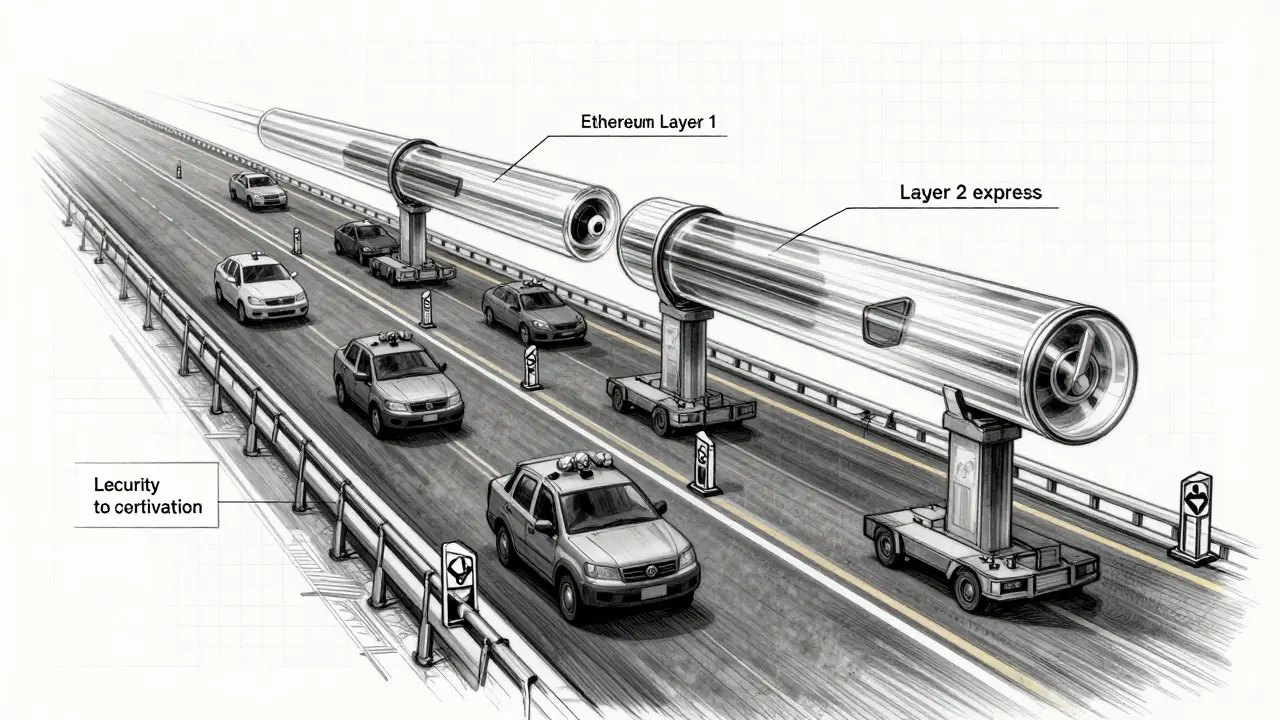
To understand where we are going, we need to look at the problem Layer 2 solves. The main blockchain network-often called Layer 1 or L1-is designed for maximum security and decentralization. In Ethereum’s case, this meant limiting throughput to about 15 transactions per second (TPS). It’s like building a highway with only two lanes because you want every car to be inspected by police officers at every mile marker. Safe? Yes. Fast? Absolutely not.
Layer 2 scaling is the solution. It moves transaction processing off the main chain. Think of it as adding express toll lanes above the highway. These lanes handle the heavy traffic quickly and cheaply, then bundle all those transactions together and submit a single summary back to the main chain for final verification. You get the speed of a centralized system but keep the security guarantees of the decentralized mainnet.
By late 2025, this model had matured significantly. Instead of theoretical whitepapers, we saw real-world implementations achieving between 4,000 and 65,000 TPS. More importantly, transaction fees dropped by up to 90% compared to Ethereum mainnet costs. This shift didn’t just help whales; it opened the door for everyday users to participate in decentralized finance without needing a trust fund to pay for gas.
The Two Titans: Optimistic vs. Zero-Knowledge Rollups
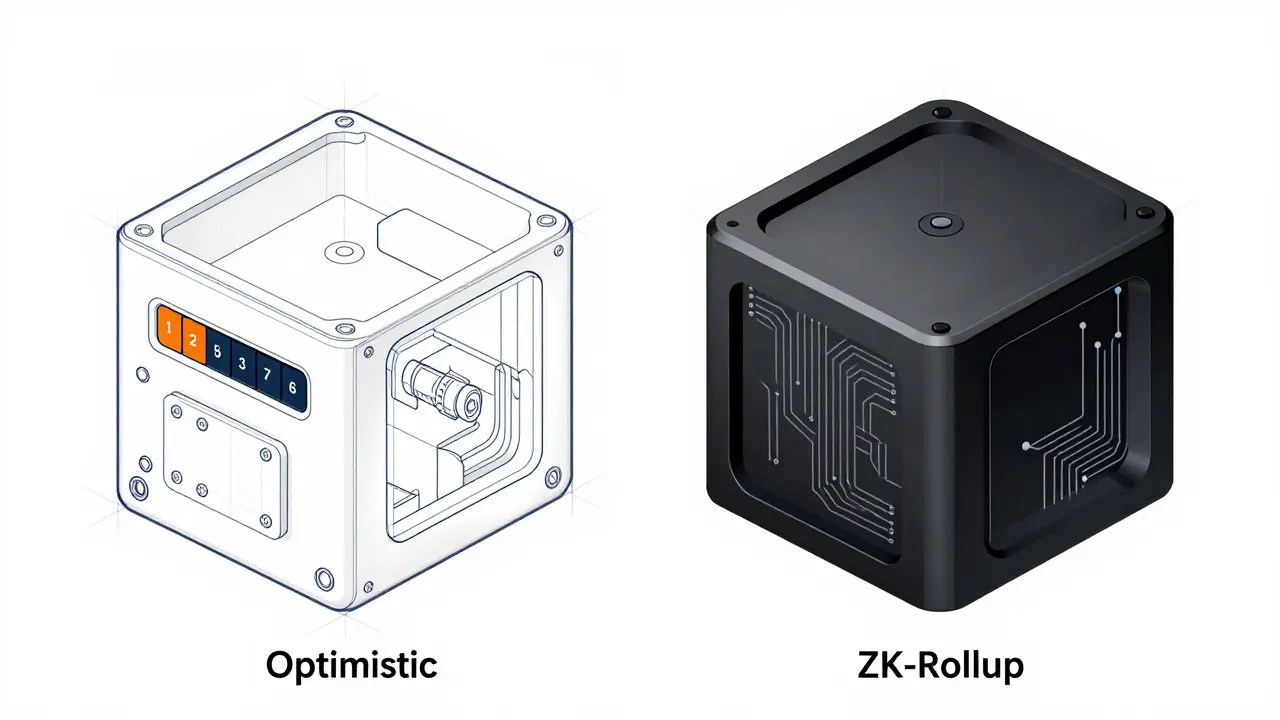
Not all Layer 2 networks are built the same. While there are various approaches, the industry has consolidated around two dominant architectures: Optimistic Rollups and Zero-Knowledge Rollups (ZK-Rollups). Understanding the difference between them is crucial for choosing the right platform for your needs.
Optimistic Rollups: The Compatibility Kings
As the name suggests, Optimistic Rollups assume transactions are valid by default. They post data to the main chain immediately. If someone suspects fraud, they can challenge the transaction during a dispute window (usually seven days). If no one challenges it, the transaction is finalized.
This approach offers near-perfect compatibility with existing Ethereum smart contracts. Developers can deploy their code with minimal changes. This ease of use fueled the rapid growth of networks like Arbitrum, Optimism, and Coinbase’s Base.
In 2025, Arbitrum became the heavyweight champion of TVL (Total Value Locked), securing over $6.2 billion in assets. It supports more than 600 decentralized applications (dApps) and processes roughly 4,000 TPS. Its success comes down to reliability and ecosystem depth. If you’re a developer wanting to launch a DeFi protocol quickly, Optimistic Rollups remain the go-to choice because the tooling is mature and familiar.
ZK-Rollups: The Privacy and Speed Powerhouses
Zero-Knowledge Rollups take a different mathematical approach. Instead of assuming validity, they generate cryptographic proofs (zero-knowledge proofs) that verify the correctness of transactions before posting them to the main chain. This eliminates the need for a dispute window, allowing for instant finality.
Leading ZK-Rollup platforms like zkSync and StarkNet offer enhanced privacy features. Since the proof verifies the logic without revealing the underlying data, sensitive transaction details remain confidential. This makes ZK-Rollups ideal for enterprise applications, healthcare data, and financial services where confidentiality is paramount.
While historically harder to develop for due to complex coding requirements, advancements in 2025 have smoothed out these rough edges. ZK-Rollups are now pushing the boundaries of throughput, with some implementations capable of handling tens of thousands of transactions per second while maintaining rigorous security standards.
| Network | Type | Throughput (TPS) | Key Advantage | Best For |
|---|---|---|---|---|
| Arbitrum | Optimistic | ~4,000 | Largest dApp Ecosystem | DeFi, General Purpose |
| Polygon | Hybrid/ZK | Up to 65,000 | High Performance | Gaming, High-Freq Trading |
| Optimism | Optimistic | ~4,000 | Low Cost, OP Stack | Social Apps, DAOs |
| zkSync | ZK-Rollup | ~10,000+ | Privacy & Instant Finality | Enterprise, Payments |
| Base | Optimistic | ~4,000 | Coinbase Integration | Retail Onboarding |
The Role of Polygon and High-Performance Needs
While Arbitrum and Optimism dominate the conversation for general-purpose scaling, Polygon stands apart as the performance specialist. By leveraging a hybrid approach that includes ZK-tech, Polygon achieves staggering throughput rates of up to 65,000 TPS.
Why does this matter? Imagine a blockchain-based game where players trade items every few seconds. Or a high-frequency trading bot executing hundreds of swaps per minute. On slower networks, these actions would clog the system or incur prohibitive fees. Polygon’s architecture handles this volume effortlessly, making it the backbone for NFT marketplaces and gaming economies that require rapid, frequent interactions.
In 2025, Polygon hosted over 1,000 decentralized applications, proving that high performance doesn’t have to come at the cost of ecosystem breadth. For businesses looking to scale consumer-facing products, Polygon often represents the sweet spot between speed, cost, and developer support.
How Layer 2 Changes the User Experience
The technical specs are impressive, but do they actually change how regular people use crypto? Absolutely. The biggest shift is the elimination of "gas fee anxiety."
Previously, users would check current gas prices before every interaction, sometimes waiting hours for fees to drop. With Layer 2, transaction costs are consistently measured in cents. A token swap that used to cost $20 might now cost $0.05. This small change has massive implications:
- Micro-transactions become viable: Paying creators fractions of a cent for content or tipping streamers is now economically feasible.
- Gaming economies thrive: Players can trade in-game assets frequently without worrying about draining their wallet on fees.
- DeFi accessibility: Retail investors can provide liquidity to smaller pools without paying more in fees than they earn in yield.
User feedback from 2025 highlights this transformation. DeFi traders report smoother experiences on Arbitrum and Optimism, while gamers praise the seamless asset transfers on Polygon. Even enterprise users note the predictability of costs, allowing for accurate budgeting in blockchain-based operations-a stark contrast to the volatile fee environment of the Ethereum mainnet.
Getting Started: Bridging and Development
For users, adopting Layer 2 is straightforward. Most major wallets (like MetaMask or Coinbase Wallet) automatically detect Layer 2 networks. To move assets, you simply use a bridge. Bridging from Ethereum mainnet to Arbitrum or Optimism typically takes 15-30 minutes for experienced users. Newcomers might spend an hour or two familiarizing themselves with the interface, but the learning curve is gentle.
For developers, the landscape varies slightly. Optimistic Rollups offer near-complete Ethereum Virtual Machine (EVM) compatibility. This means if you wrote a smart contract for Ethereum mainnet, you can likely deploy it to Arbitrum or Base with zero code changes. This "lift and shift" capability accelerated adoption massively in 2025.
ZK-Rollups require more adaptation. While tools are improving, leveraging full privacy features often involves writing custom circuits or using specific SDKs. However, the payoff is worth it for applications requiring strict compliance or confidentiality. Support quality across all major networks has improved dramatically, with grant programs totaling over $50 million available to developers building on these ecosystems.
Market Trends and Institutional Adoption
The numbers tell a compelling story. In Q2 2025 alone, over $10 billion in funding was deployed into Layer 2 infrastructure. This isn’t just retail money; institutional financial powerhouses are betting big on this technology. Banks and asset managers are increasingly using Layer 2 frameworks for tokenized assets and exchange-traded funds (ETFs).
Regulatory clarity has also improved. Positive developments from bodies like the U.S. Federal Reserve have provided supportive frameworks for Layer 2 implementation. This regulatory tailwind encourages traditional finance (TradFi) to integrate with decentralized finance (DeFi) via Layer 2 rails, creating a harmonious blend of old and new financial paradigms.
Vitalik Buterin, Ethereum’s co-founder, has explicitly endorsed this transition. He views Layer 2-centric architecture as essential for achieving global-scale blockchain infrastructure. His advocacy signals that the Ethereum roadmap itself is evolving to support Layer 2 as the primary execution layer, rather than competing with it.
Challenges and What’s Next
Despite the progress, hurdles remain. Cross-chain interoperability is still complex. Moving assets between different Layer 2 networks (e.g., from Arbitrum to zkSync) often requires multiple bridge steps, introducing friction and potential security risks. Enhanced cross-chain protocols are being developed to enable seamless transfers without intermediate bridges, but widespread adoption is still pending.
Decentralization is another concern. As transaction volumes grow exponentially, ensuring that sequencers (the entities ordering transactions) remain decentralized is critical. Centralized sequencers could introduce censorship risks. Ongoing research focuses on decentralized sequencer sets to mitigate this.
Looking ahead, the focus is shifting from pure speed to user experience (UX). Simplified onboarding, account abstraction (allowing users to log in with email instead of seed phrases), and better error messaging will make Layer 2 invisible to the end-user. The goal is for blockchain to feel as easy to use as the internet today.
Is Layer 2 safer than Ethereum mainnet?
Layer 2 inherits its security from Ethereum mainnet. Transactions are settled on L1, meaning you benefit from Ethereum’s robust validator network. However, Layer 2 introduces new attack vectors related to bridge security and sequencer centralization. Always use reputable, audited bridges and networks.
Which Layer 2 should I choose for my dApp?
If you need quick deployment and broad compatibility, choose an Optimistic Rollup like Arbitrum or Base. If your app requires high throughput for gaming or trading, consider Polygon. For privacy-sensitive enterprise applications, ZK-Rollups like zkSync or StarkNet are the best fit.
How long does it take to bridge assets to Layer 2?
Depositing assets from Ethereum mainnet to Layer 2 usually takes 15-30 minutes. Withdrawing assets back to mainnet takes longer due to security checks: Optimistic Rollups require a 7-day withdrawal period, while ZK-Rollups can finalize withdrawals in minutes to hours depending on the network.
Will Layer 2 replace Ethereum mainnet?
No, they serve different roles. Ethereum mainnet acts as the settlement layer and source of truth, providing ultimate security. Layer 2 serves as the execution layer, handling daily transactions. This rollup-centric roadmap ensures scalability without sacrificing decentralization.
Are Layer 2 fees really that low?
Yes. Most Layer 2 transactions cost between $0.01 and $0.10, regardless of network congestion. This is achieved by batching thousands of transactions into a single calldata submission to Ethereum, sharing the cost among all participants.